Acting Locally to Address Sea Level Rise


The author is a member of the PPIC Water Policy Center research network.

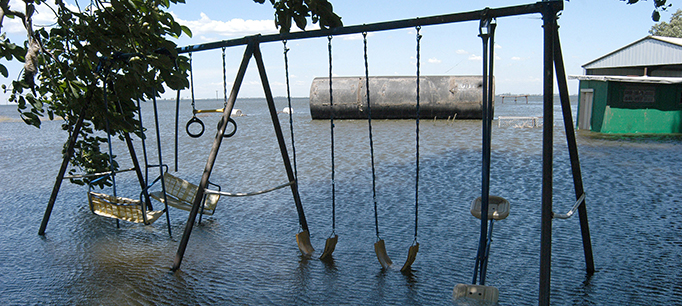
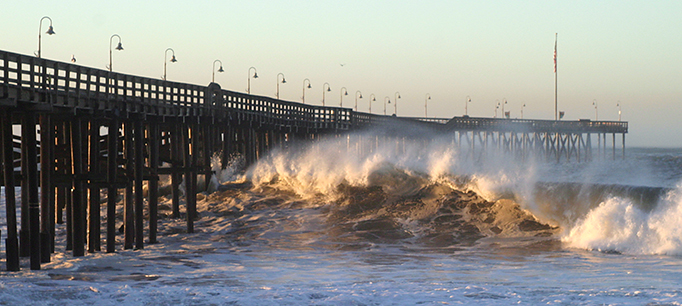
October brought a preview of some of the climate risks that coastal regions face. Hurricane Matthew wreaked havoc from Haiti to the eastern seaboard and the West Coast’s first “atmospheric river” storm brought flood warnings in some areas. The risk of coastal flooding is growing as a warming climate causes more intense precipitation and a gradual rise in sea level from Earth’s melting ice sheets. Both worsen the effect of high tides and large storms.

We have a few decades and perhaps up to a century to adjust to sea levels that are at least three feet higher than they are today. Coastal communities can expect a host of costly and dangerous problems from storms, including flooded wastewater treatment plants, shoreline erosion, industrial facilities spilling chemicals into waterways, and water supply systems inundated by seawater. The effects of floods are projected to be the most costly part of climate change. Some estimates put the global losses at $1 trillion a year by 2050, or roughly two percent of global GDP.

Although seas are rising relatively slowly, change will not be gradual at the community level. A series of strong winter storms that combine high tides, large waves, and intense rainfall can radically reshape a community in a matter of days.

For California to adapt, every coastal community will need a plan that envisions a future with higher sea levels and greater risk of coastal erosion and flooding. The plans will need to outline specific projects needed to weather changing conditions over coming decades. Communities will need to figure out how to raise roads, buildings, and critical infrastructure, and ways to enhance natural protective systems, such as beaches. Some combination of building codes and assistance programs is likely to be necessary. So far, most California communities are in the early stages of planning to adapt to rising seas.

Research shows that increasing awareness and knowledge of hazards is not enough to head off losses from disaster. A complicating factor in adaptation planning is how to make the scientific information actionable at the local level.

One new approach shows promise. A UC Irvine program called FloodRISE is bringing together experts in flood disasters, engineering, and the social sciences with local experts and community members in a number of Southern California communities and Tijuana, Mexico. As part of that program, we’re working with decision makers, community groups, NGOs, and personnel from key departments such as public works, city planning, emergency management, and environmental resources. The teams work together to create advanced visualizations of flooding. Using the latest climate science and data, local knowledge and flood modeling technology, they focus on addressing specific issues that communities care about the most.

How well we manage the problem of rising seas will to some degree depend on funding choices we make now. My FloodRISE collaborator Richard Matthew, a political scientist and disaster expert at UCI’s Blum Center for Poverty Alleviation, notes that funding for planning and preventing disaster risks is dwarfed by the resources that pour into communities after disaster strikes. In the chaos of emergency management, decisions must be made quickly and with very limited information, which too often leads to wasteful spending. Allocating more funds to climate-risk planning efforts would not only help local communities prepare for a rising sea and coastal flooding—it could help reduce wasteful spending later.

Learn more

Read California’s Water: Preparing for Floods (from California’s Water briefing kit, October 2016)
Read “Floods in California” (PPIC Water Policy Center fact sheet, February 2016)
Visit the PPIC Water Policy Center’s floods resource page

A Weatherman Explains California’s Volatile Climate

What does the future hold for California’s weather and climate? Is drought the new normal? And what about La Niña? We talked to Daniel Swain—founder of the popular California Weather Blog and a Stanford University climate scientist—about our volatile climate.

PPIC: La Niña is looming, bringing the possibility of another dry winter. What issues does it raise for the state?

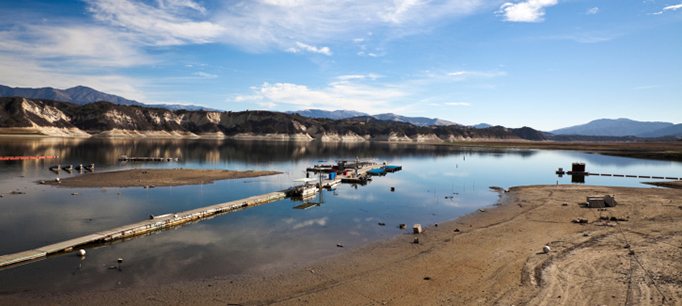
Daniel Swain: It’s ingrained in California folklore that El Niño means rain and La Niña means no rain. Climate scientists often emphasize that the effects of both can be highly variable in California. El Niño and La Niña do give us much more predictability than we would have in a typical year, but that’s not always enough to help us predict exactly what’s going to happen. Last year we had a bit of a predictive failure when a very strong El Niño didn’t translate to extremely wet conditions for California as a whole. Northern California got a break this winter, with near-average precipitation. It didn’t actually earn back its accumulated water deficit, but at least it didn’t get larger. The La Niña situation is even more uncertain, bringing a wider range of possible outcomes than with El Niño. But it’s reasonable to say there is an increased risk of dry conditions this coming winter. So La Niña is certainly not good news. Another dry and warm winter would be bad news for the environment and groundwater, because these systems haven’t recovered from previous dry winters.

PPIC: Talk about the role of climate change in the California drought.

DS: There are two things to think about: what’s going on with precipitation and with temperature. We’ve seen record warmth by a really wide margin for most of the latest drought. It’s been a much more severe drought than it would have been with cooler temperatures and the same amount of rain. These extremely warm temperatures are clearly linked to global warming. The question of precipitation is much harder to answer. There hasn’t been much of a trend in California’s average precipitation. But that doesn’t mean the character of precipitation isn’t changing—in fact, we’re seeing an increase in atmospheric patterns associated with both very dry and very wet conditions. The central cause of our really dry conditions during the present drought is the “ridiculously resilient ridge” anchored over the Pacific, which has been keeping big storms away. The question of whether or not global warming affects the risk of very low precipitation years is essentially equivalent to asking whether climate change has increased the chance of big ridges like this—and recent research suggests that it does. Between our high confidence in the role of rising temperatures and the less-certain linkage to these ridge patterns, we can say there is a substantial climate change fingerprint on this drought.

PPIC: Climate scientists have made it clear that we can’t attribute a single event to climate change, but at what point do we start talking about “a new normal” in California?

DS: It’s quite clear that global warming is rarely if ever the singular cause of an extreme climate event—there is always some degree of weather or randomness involved. A more important question is: does global warming influence the likelihood of a specific event? We have high confidence that global warming has increased the likelihood of drought in California. It’s clearly not the only factor, but asking the question in this way provides a useful frame for evaluating risk. As for “a new normal,” it’s pretty unlikely that California’s future will be characterized by a permanent shift to low rainfall. The state’s climate is already characterized by extremes—we see a lot of year-to-year variation, particularly in precipitation. A more useful way to think about our certainly warmer future is to ask whether the driest or wettest years are occurring more frequently or more intensely. Having wider swings between drought and flood—that might actually be the new normal.

One bit of good news is that we’re getting a lot better at predicting atmospheric rivers, which bring our biggest rain storms. We may be able to use these much improved forecasts to allow more leeway in managing water storage in reservoirs. Our increasing ability to forecast weather is going to give us new ways to address our water challenges—to better manage increased risk.

Learn more

Read California’s Water: Climate Change and Water (from California’s Water briefing kit, April 2015) Read Daniel’s California Weather blog

Flood Insurance: Why Don’t People Buy It?

The author is a member of the PPIC Water Policy Center research network.

Flood damage has been increasing in the US, largely due to where we build. Climate scientists are concerned that as the climate warms, there will be more intense downpours, stronger hurricanes, and rising seas, all of which could increase flood risk. Despite this, people have been dropping flood insurance nationwide. The number of policies from the National Flood Insurance Program (NFIP)—the main provider of flood coverage in the US—has been falling since 2011, perhaps due to changes in pricing. But Californians have recently bucked the trend. The Federal Emergency Management Agency (FEMA) reports that flood insurance sales in the state are up 12 percent this winter (compared to 3 percent last fall) as residents prepared for possible El Niño flooding.

This increase in California is all the more notable since, generally speaking, most people don’t voluntarily buy disaster insurance. Low demand for flood insurance led Congress, early in the history of the NFIP, to make purchase mandatory for homes located in a FEMA-mapped 100-year floodplain that had a mortgage from a federally backed or regulated lender. Yet just half of these homes are insured, with more in coastal areas. Outside the 100-year floodplain, even where there is flood risk, few homes are insured.

This can have ripple effects in flood-prone communities. Insurance protects families against the financial impacts of substantial flood damage. Insured properties were 37 percent more likely to have been rebuilt after Hurricane Katrina. And when people rebuild, economies can come back to life. Len Shabman and I found that post-disaster aid to households is usually quite limited, making insurance the main tool for households unable to cover rebuilding expenses.

So why don’t more people buy disaster insurance? People may think floods won’t happen to them. Insurance may be too expensive, or they may believe it isn’t worth it. They may be uninformed about flood risks. People seem to insure when recent events raise awareness about the risks. My recent research shows that a federal requirement for disaster-aid recipients to purchase flood coverage explains much of this increase.

For people living in a floodplain or behind a levee, flood coverage is important well beyond El Niño. Yet past experience suggests many newly insured Californians will not keep their policies after El Niño passes. Many NFIP policies are dropped in a few years; only a third of policies are held for six years or longer. Although some of this can be explained by people moving, fading concern about floods is likely also a factor. In 1998—a year after California’s last widespread flooding—flood insurance sales were at an all-time high of nearly half a million policies. Ten years later, that number had fallen by half.

Several policy changes could encourage more at-risk households to insure. Informing residents of the likelihood of flooding, potential damage, and the limitations of disaster aid can help them make better decisions. FEMA outreach at times of increased risk, such as El Niño events or after major wildfires, can help alert homeowners to times when coverage may be warranted. Finally, a recent report from the National Research Council addressed ways to help lower premiums when insurance is too costly for low- or middle-income families in risky locations.

Learn more

Read “California’s Water: Preparing for Floods” (from California’s Water briefing kit, April 2015)
Read “A Look at 35 Years of Flood Insurance Claims” (from Resources magazine, winter 2016)
Visit the PPIC Water Policy Center

State’s Ecosystems Face a Flood of Changes

With El Niño making an impressive new year’s debut, talk of drought has turned to worries about floods. How will the state’s drought-starved ecosystems adapt to the taps being turned on again? We talked with Joshua Viers, an ecological engineer at UC Merced and a member of the PPIC Water Policy Center research network, about California ecosystems’ response to flooding.

PPIC: Are floods “natural disasters” for nature?

Josh Viers: Disturbances like floods, droughts, and fire are regular features in California, and our ecosystems are fairly well adapted to these extreme events. There has been a lot of evolutionary adaptation to these disturbances over time, and this is one reason California has such high biodiversity. What compromises our ecosystems’ ability to be resilient to extreme events is that many habitats and species populations have been degraded by human activities. That makes it harder to gauge an ecosystem’s ability to snap back after extreme drought or floods.

Flooding can be quite good for aquatic ecosystems, especially after years of drought, because it reorganizes the physical habitat by moving rocks, logs, and sediments. If water overflows into the floodplain, it can recharge shallow groundwater, replenish soil nutrients, distribute seeds from native plants, and create new habitat for animals and plants.

PPIC: How does California’s flood-control infrastructure affect the ability to manage water for the environment?

JV: California has one of the most elaborate water infrastructure systems in the world. Over the decades, it has had both positive and negative effects on our ecosystems. Our system of dams and canals has degraded habitat, and severely altered the natural variability of river flows, which can disrupt ecosystem functioning and species’ life cycles. But we’re increasingly able to manage the system to mimic rivers’ natural flows and improve long-term ecosystem functioning. As the climate warms, however, we will need to manage water flows to ensure downstream water temperatures don’t get too high for many of our native fish species.

PPIC: What changes to our flood management system could improve environmental conditions?

JV: We need better forecasting on the amount of water coming into reservoirs, so we can minimize the impacts of sudden high releases from dams, which can damage ecosystems downstream. Being able to “pre-wet” ecosystems dried from the drought can help reduce the effects of a sharp change. For example, in fall the Cosumnes River had many native fish waiting to swim upstream to spawn, but its dry channel forced them to wait longer than normal. The first rains just saturate the streambed. Pre-wetting it allows these rains to become streamflow and help get those fish moving upstream on time.

A longer term fix would be to set back more levees, which would give rivers room to flood. This can have ecosystem benefits and reduce property damage from floods. We’ve identified a number of aquatic ecosystem benefits from this approach. The wider channel slows floodwaters and supports growth of phytoplankton, which are the base of the food chain for a whole host of creatures. Juvenile salmon grow much bigger and more quickly in this environment. That means they can survive their ocean migration much better and are more likely to come back to spawn. Additional benefits include forest regeneration, nutrient and sediment deposition (which creates new habitat for riparian plants), and local groundwater recharge. These whole-ecosystem responses have human benefits as well.

Learn more


Read our policy brief California’s Water: Preparing for Floods (from California’s Water briefing kit, April 2015)
Visit the PPIC Water Policy Center ecosystems resource page

California Depends on Rivers—in the Air

Climate change could bring both bigger rains and longer droughts to California. What do the bigger rains mean for the state’s water management? We talked to Mike Dettinger—a research hydrologist with the US Geological Survey and a PPIC Water Policy Center research partner—about the weather phenomenon known as “atmospheric rivers.”

PPIC: What are atmospheric rivers?

Mike Dettinger: They are long pathways that transport water across the atmosphere. Typically they’re at least 1,200 miles long; the biggest can be five times that. They tend to evolve as they cross the Pacific. Those that manage to reach the West Coast meet a more-or-less abrupt end when they hit the mountains, dumping rain and snow in the process. These storms carry a lot of water—a big one can move up to 20 times the amount of water that comes down the Mississippi River. They can provide a third to half of our annual precipitation in just a few storms.

Because they’re usually warmer than other types of storms, larger areas of our river basins get rain rather than snow, which increases flood risk. In the past 60 years nearly all of our largest storms and most damaging floods were caused by atmospheric rivers. The largest ones have brought 12–16 inches of rain in a few days. On the plus side, they also bring ecologically beneficial flooding for wetlands and are a major factor in ending our droughts.

PPIC: Can we predict when these storms are coming?

MD: We’ve got about a decade of understanding atmospheric rivers in practical and useful ways. The California Department of Water Resources and others have responded by investing in an enhanced water monitoring network. These efforts and a lot of basic research have revolutionized forecasting of California’s largest storms, which is critical for reducing flood risks and managing water supply. A decade ago the weather service wouldn’t forecast storms beyond three days. Now we routinely receive forecasts of major storms a week or more in advance. We’re working to improve forecasting even more, especially in terms of the details of where and how intensely the storms will land. The hope is that better forecasting can allow dam operators to keep more water in reservoirs at the end of the rainy season while better managing flood risks.

PPIC: How might climate change affect these storms?

MD: As the world warms, the atmosphere will be able to hold more water. Climate models agree that we’ll see more atmospheric rivers—likely a doubling by the end of 21st century. How much water they’ll bring is less clear—some models show a 10–15% increase. But most of the increased rainfall will come from a larger number of these storms than from how much water they hold.

About half of climate projections show California getting wetter, while half show it getting dryer. If you dig a little bit, nearly all projections show an increase in the number of atmospheric rivers, and virtually all show a decline in other types of storms. That decline will bring more dry days, punctuated by these major storms. So if we indeed do get the wetter future, it’s because of more potentially dangerous atmospheric rivers. It’s a Faustian bargain.

We’ve spent a century building up a flood control system that tries to take the peaks off the worst floods. This has put our ecosystems at a disadvantage, as they evolved with regular floods. I think we’ll find it harder to control floodwaters as climate change builds, and that might tend to bring us back to something more like what California’s natural systems evolved under—allowing bigger areas to absorb floodwaters in winter. It will be interesting to see how we achieve balance and who will be the winners and losers. We have a lot to learn.

Learn More

TABLE SOURCE: Chart excerpted from The Meterorology of Extreme Orographic Precipitation in California—A Synthesis of 2014 (Ralph and Dettinger).

Video: What If California’s Drought Continues?

Four years into a historic drought, the environment and some rural communities are most at risk if hot, dry conditions persist. At an event in Sacramento last week, Ellen Hanak, director of the PPIC Water Policy Center, gave an overview of findings from the new report What If California’s Drought Continues, touching on the higher risk of large wildfires, increasing land subsidence from groundwater pumping, and the growing crisis affecting freshwater ecosystems and species. A panel of experts then dove deep into the drought’s perils—and success stories—before a capacity crowd.

Jeffrey Mount, senior fellow at PPIC and a co-author of the report, moderated the panel, which included Wade Crowfoot, deputy cabinet secretary and senior advisor to Governor Brown; Laurel Firestone, cofounder and co-executive director of the Community Water Center; and Kevin Hunting, chief deputy director of the California Department of Fish and Wildlife.

Asked to describe the successes and “pleasant surprises” in the state’s efforts to manage the drought, Hunting said his department has had to redefine success. “In the past success for us would be stable populations, recovering populations of endangered species,” he said. “Unfortunately, we’re in a situation now where success means avoiding extinctions … and really, plugging the gaps in the biggest risk areas.”

He said the agency has also brought creative approaches to managing fisheries and wildlife with a dwindling amount of water, including partnering with private water users to deliver water at critical times to support fish and waterbirds.

Firestone said major strides have been made in state-run efforts to get emergency water supply to rural communities facing water shortages. Beyond the state’s programs, she cited the efforts of volunteer and local agencies in these communities—”local people just trying to help their neighbors.”

Crowfoot gave his short list of drought successes, topped by water conservation across the state. “The real heroes of the California drought are actually everyday Californians,” he said, noting the latest water conservation statistics showing a statewide reduction in water use by over a quarter. He also cited the work of local water agencies, legislation—such as groundwater management reform—that crossed political boundaries, and unprecedented cooperation by state and federal agencies.

The panelists noted that much more needs to be done to both build on these successes—and strengthen efforts to address the challenges of continued drought.

Reminder: Droughts Often End with Floods

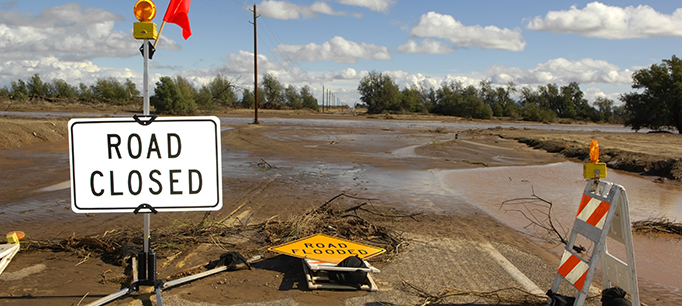
Just a year ago, Texas and Oklahoma were experiencing a crippling drought. In May, record rainfall and deadly floods swept through these recently parched states, with devastating results. It was the same story in Australia in 2010: two years of record floods followed a decade-long record-breaking drought.

There’s a reminder here for California: droughts can end with a deluge.

About one in five California residents now lives in a flood-prone area. The replacement value of buildings vulnerable to floods exceeds $575 billion. Climate change could increase these risks. Yet the amount we spend on flood management is currently just a fraction of state water spending.

Now is the time to look at improving flood responses across the state, not when rivers are overflowing. If we’re serious about reducing flood damages, we will need to adopt an “all of the above” approach to managing flood risks. The palette of solutions includes reinforcing and improving structural protections such as levees and floodwalls, encouraging residents and businesses to buy flood insurance, utilizing green approaches like wetlands, and avoiding new development on the most flood-prone lands.

The first line of defense—particularly for those in the so-called 100-year flood zone, which is prone to more frequent floods—has typically been levees. Our system of levees is in great need of improvement, and funds from a 2006 state bond have boosted investments to shore up these flood defenses. Yet we still have a large funding gap. We need to increase spending to protect our most vulnerable communities, while ensuring we get the biggest bang for our bucks with these investments. For example, setting back levees to allow rivers to have more room to flood can reduce flood damages, boost habitat benefits and even increase recharge to aquifers.

While necessary in many places, structural systems are also the most costly and environmentally damaging elements of our flood-protection system. They’re also far from infallible, particularly in light of a changing climate. Flood insurance is an underutilized tool that complements structural protections, and can help people recover more quickly. Yet too few at-risk Californians carry flood insurance. State and local agencies must find new ways to promote greater adoption of insurance. One novel approach would give local or regional flood management agencies authority to buy insurance for the community. Pooling resources this way would increase coverage and cut costs. The legislature could encourage this by creating mechanisms to recover costs through assessments or fees.

Finally, one of the best defenses against flooding is land-use planning and regulation that keeps people out of harm’s way. Many communities already discourage development in the most at-risk zones, but more needs to be done. The state doubled the protection standard for urban areas in the Central Valley in 2007. The state should consider using the higher standard major urban areas elsewhere in the state, which also face significant risk.

There is only one certainty about California’s variable climate: the drought that is hitting the state today will, at some point, give way to floods. Strengthening flood management could have big pay-offs in protecting the public health and safety and the state’s economy.

Learn more: Read our policy brief about preparing for floods.

FIGURE SOURCE: California Department of Water Resources and U.S. Army Corps of Engineers, California’s Flood Future: Recommendations for Managing the State’s Flood Risk (2013).

FIGURE NOTES: The figure shows population and structures in the 500-year floodplain—the area susceptible to floods so large that they have just a 0.2 percent chance of occurring in a given year. Levees protect much of this area from a “100-year flood,” which has a 1 percent chance of occurring in a given year. Population is adjusted to 2010 levels. Value of structures is based on the depreciated replacement value of structures and their contents in 2010 dollars.

Governor’s May Revision Continues Cautious Approach

Governor Brown released his revised 2015–16 budget last week. It includes $8 billion more in new spending than his January proposal but continues his cautious approach to taking on new spending commitments. The new funding proposals are the result of setting modest expectations for future revenue growth. Because actual growth from the improving state economy has far exceeded forecasts, the administration has significant additional funds available.

Only about two-thirds of the $8 billion increase comes from the General Fund. The other third stems from increased special funds and revenues from bonds.

  • General Fund. General Fund revenues are estimated to increase by about $6.3 billion—$4 billion to reflect the major influx of tax receipts collected since January 2015 and $2.3 billion next year. Almost all of that—$5.8 billion—must be spent on K–12 education and community colleges. This leaves little room for spending in other areas.
  • Cap-and-Trade Funds. The May Revision proposes to more than double spending of cap-and-trade revenues, going from $1 billion in the January budget to $2.2 billion today. Under the state’s greenhouse gas reduction program, businesses pay fees for the right to emit carbon into the atmosphere. In 2015, producers of transportation fuels joined the program, significantly boosting revenues. As a consequence, revenues are expected to jump $1.2 billion above the level proposed in January. The additional funds would be spent for transportation, housing, energy, and natural resources programs—consistent with the long-term expenditure plan approved by the legislature in 2014.
  • Proposition 1 Bond Funds. The May Revision also significantly increases spending for water quality and conservation projects. Proposition 1, approved by voters in 2014, includes $7.5 billion in bond funds for a variety of water quality, flood protection, and storage programs. The budget proposes to dedicate $1.8 billion in bond funds over the next three years. This increase builds on $1.9 billion in spending (from a variety of funding sources) approved by the legislature in the spring of 2015.

The $8 billion growth in revenues and expenditures represents a 4.8% increase from January, and an 8.1% increase from the 2014–15 budget passed by the legislature last June. So how can this be considered cautious? The answer is that the administration uses modest assumptions about future growth in revenues—until there is solid evidence of additional available resources.

The pattern of projected revenues for 2014–15 reveals how this strategy works. The following chart illustrates how recent budget projections have grown as revenues have increased.

In January 2014, the administration estimated revenues of $106 billion—up 6% from 2013–14 anticipated revenues. The 2014 May Revision boosted that figure to $107 billion. Actual revenue collection was up significantly in the fall of 2014, which led to a January 2015 estimate increase to $109.7 billion. From January to April 2015, revenues exceeded expectations by $3.2 billion, bringing the most recent estimate of General Fund revenues to $112.9 billion. This is truly exceptional revenue growth. Compared to 6% growth projected in January 2014, the May Revision figure for 2014–15 translates into General Fund revenue gains of 12.8%.

Despite the projected gains for this year, the current May Revision continues to take a cautious approach to revenue estimates for the coming year. The administration’s initial revenue estimates for 2015–16 are quite modest—the May Revision anticipates 4.1% growth in General Fund revenues. This low growth estimate limits the amount of new spending that can be added to the base budget. At the same time, the large increase in current-year revenues gives the governor flexibility to boost support for education and other critical areas. In this way, Governor Brown can significantly increase spending today while maintaining a cautious approach to the future.

Chart Source: California Department of Finance, 2015-16 May Revision.

Video: Water in Silicon Valley

Once a productive farming region, today Silicon Valley is a high-tech hub for the world, and a major driver of the state’s economy. As the valley has transitioned from fruits and nuts to bits and bytes, its water challenges have evolved—along with the approaches to dealing with them.

To explore how the region is coping with the current drought and preparing for future challenges, the PPIC Water Policy Center, with Cal Water and the Silicon Valley Leadership Group, hosted an event on April 24 with local leaders and experts. Ellen Hanak, center director, set the stage with an introductory talk on the statewide drought, opportunities for more water conservation in Silicon Valley, and regional climate-related concerns such as floods and sea level rise.

The mayor of San Jose, Sam Liccardo, brought it back to the local perspective. To achieve its 30% conservation target for 2015, he noted that the city of San Jose is taking innovative small and large steps, including a summer jobs program for youth focused on turf removal and the development of city-wide recycled water re-use system. The mayor emphasized that strong leadership at the local and statewide levels is needed to remove barriers to better-integrated and more advanced water management that can sustain the region through the coming challenges.

A panel of experts then offered wide-ranging views on the current drought, and posed a host of common-sense solutions, from increased public education to greater adoption of proven technologies such as using recycled wastewater to recharge groundwater basins. The impact of climate change on water systems, from increased temperatures to a reduced snowpack, was a major topic, with panelists agreeing that we will need to adjust to a new normal.

The participants were Angela Cheung, deputy operating officer of the Santa Clara Valley Water District; Juliet Christian-Smith, climate scientist at the Union of Concerned Scientists; and David Sedlak, co-director of the Berkeley Water Center at UC Berkeley. The panel’s moderator was Paul Rogers, an environment writer with the San Jose Mercury News and managing editor of the KQED Science Unit. As the drought continues, the PPIC Water Policy Center will be partnering with other local organizations and experts to bring similar conversations to other parts of the state.

Experts Weigh In on Drought Solutions

Along with their morning coffee, readers of Sunday’s Los Angeles Times were treated to an offering of nine bite-sized opinion pieces on solutions to help California better manage droughts. Contributors included representatives of urban and agricultural water agencies, environmental organizations, the private sector, and research institutions. The topics were equally broad. We both participated in this forum, and our two pieces highlight the importance of strategic investments in a couple of key areas: water storage and water accounting systems.

On storage, the message is that we need to think comprehensively about our water system when deciding how to invest the $2.7 billion in state bonds that voters recently authorized for new projects. People often assume that these funds will go to expanding surface reservoirs and tend to forget that storing water underground in the state’s aquifers is often more cost-effective. An especially promising approach to preparing for future droughts and adapting to our warming climate is to manage our storage network as an integrated system. This means putting more water for dry years into groundwater basins, which can free up space in surface reservoirs for summer irrigation needs and the higher flood flows likely to come with a shrinking snowpack.

On accounting, the message is that California has some serious catching up to do to better understand where, when, and how much water is used in different watersheds. This drought has exposed the tremendous challenges in managing scarce supplies because of an antiquated, incomplete, and inconsistent set of water use and water availability measurements. Updating our water accounting systems is a top priority we identified in a recent check-up on how California is faring during this drought. State officials have begun to take up this challenge. But more work is required to make this information sufficiently transparent, consistent, and integrated across the various state agencies and offices that deal with water management to facilitate allocation decisions that benefit the state’s economy, society, and environment during droughts.