Video: Water Priorities for California’s Next Governor

California’s many water challenges are complex, with many possible solutions and even more opinions about best approaches. How can a new governor forge a path forward in this critical area?

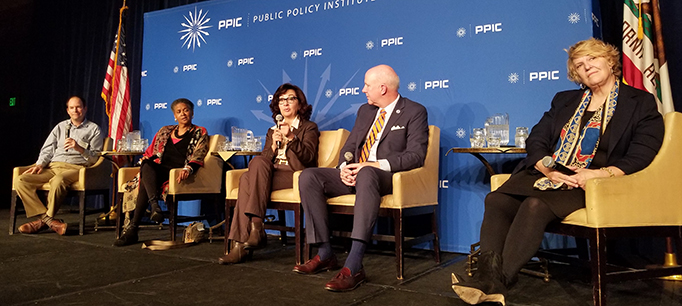
The PPIC Water Policy Center assembled a group of 16 experts this week for a half-day workshop in Sacramento to discuss how the new administration can promote water policies and practices that benefit the state’s people, economy, and environment. Lively discussions addressed three overarching topics: how local and state water policies intersect with California’s most pressing economic issues; innovations in policy, practice, and technology that offer better solutions for key water problems; and steps needed to adapt the state’s water systems to a changing climate.

Ellen Hanak, director of the PPIC Water Policy Center, summarized some major water challenges the new administration will face, including increased risks of drought and floods; poor water quality and drying wells in disadvantaged rural communities; and finding durable ways to pay for needed water system improvements. Leadership will be key to advancing solutions, she said.

“California has been a leader both nationally and internationally” on climate change mitigation and reducing emissions, Hanak said. “We think California has the potential to be a leader when it comes to climate adaptation as well.” She noted that water is a lynchpin issue for addressing the effects of a changing climate.

The first panel shed light on the links between water and the state’s leading economic challenges, from housing affordability to jobs. For example, growing water scarcity in the San Joaquin Valley—one of California’s fastest-growing areas―will affect plans to build new housing there. And regulation can complicate efforts to build affordable housing. Dan Dunmoyer of the California Building Industry Association noted that some water-related regulations—such as strict rules to prevent runoff from construction sites during the rainy season—can significantly increase building costs. Panelists agreed that better coordination could help open up many of these bottlenecks.

Denise Fairchild of Emerald Cities Collaborative highlighted the potential for job training programs in the water sector—which is grappling with the “silver tsunami” of an aging workforce—to create economic opportunities for low-income communities. “If we take this opportunity to rebuild California’s water infrastructure, it has great job generation potential” in communities affected by a historical lack of water sector investment.

The next panel looked at technical and policy-related innovations that can improve water management, such as weather forecasting tools that enable more nimble water management in dams—key to adapting to an increasingly volatile climate. Also, better information on agricultural water use can “empower communities to stop arguing about numbers and start working on solutions,” said Robyn Grimm of Environmental Defense.

The final panel explored opportunities to modernize the state’s water “grid”—its vast network of reservoirs, aquifers and conveyance systems—to make it more resilient in the face of five climate pressures: warming temperatures, shrinking snowpack, shorter and more intense wet seasons, more volatile precipitation, and rising seas. Improving water conveyance and reworking the current system would enable the state to “take advantage of bigger storms” linked to climate change by capturing their water for recharge, said Ashley Boren of Sustainable Conservation.

Each panel discussion included a quick round of “elevator pitch” advice for the governor-elect. Jennifer Pierre of the State Water Contractors captured the mood of the group with her pitch: “In water, flexibility is the name of the game—we need it for managing the existing grid, and for grid improvements. Don’t wait for the perfect plan; we’ll suffer every year that we delay.”

We invite you to watch the videos from this event and hope you find the discussions helpful:

Tackling Safe Drinking Water in the San Joaquin Valley

Unsafe drinking water is a significant problem in parts of California, especially in small, disadvantaged rural communities. We talked to Maria Herrera—a California water commissioner and community development manager at Self-Help Enterprises—about how to tackle this ongoing problem.

Maria HerreraPPIC: What’s behind California’s safe drinking water problem?

Maria Herrera: Too many California residents still lack access to safe drinking water. In the San Joaquin Valley, drinking water delivered by small water systems and private domestic wells is contaminated by many natural and manmade contaminates. Typical water quality issues for valley communities are contamination from nitrate, arsenic, uranium and a chemical called 1,2,3-TCP. Small community systems and private well owners often don’t have the resources to address these issues. They face a lot of challenges—for starters, they have little to no staff and lack the resources to maintain or upgrade aging infrastructure. Some rely on just one or two wells. Historically, these communities haven’t been prioritized for state funding or in planning processes.

PPIC: How should we be tackling this problem?

MH: I grew up in communities experiencing these problems and have worked on these issues for more than 10 years, and I’ve seen a big shift in visibility over safe drinking water in recent years. California has taken a number of steps to address the problem, especially with the passage of the human-right-to-water law (AB 685), which makes it state policy that every Californian should have safe and affordable drinking water. That was the biggest signal that this issue is now being prioritized. Also, Proposition 1 prioritized safe drinking water in disadvantaged communities by increasing technical assistance funding and giving communities an opportunity to hire consultants to develop shovel-ready projects and fund safe drinking water projects.

We need to continue on that path in order to make these communities less vulnerable to drought. We need to not only fund mitigation of contaminated wells and treatment plants, but also help communities develop redundant water sources, promote consolidation of small systems to larger ones, and help them with drought contingency planning. Communities need guidance and technical assistance in order to develop solutions and participate in water planning.

This year California came close to establishing a safe drinking water fund, which would have created an ongoing fund for disadvantaged communities to improve their water infrastructure and clean up contamination. A safe drinking water fund is still a priority for drinking water advocates going forward.

PPIC: How might the Sustainable Groundwater Management Act (SGMA) affect the safe drinking water effort?

MH: SGMA creates a good opportunity for people to come together and identify ways to protect and improve drinking water supplies. But achieving sustainability will bring some tough decisions and will have some impact on agriculture. We want farmers to thrive—and rural communities to have adequate water supplies. SGMA provides groundwater sustainability agencies (GSAs) an opportunity to play a very meaningful role in improving groundwater supplies. We’d like to work with GSAs and communities to develop joint solutions, improve coordination between GSAs and the agencies that work on water quality, and ensure that good information is available regarding groundwater supplies used by these communities. We’d like to encourage GSAs to look more closely at domestic wells. We’re trying to encourage them to develop more protections for vulnerable communities. Our ultimate objective is to ensure that rural communities have the information and resources they need to play a meaningful role in developing and implementing their groundwater sustainability plans.

PPIC: What gives you hope?

MH: I’m inspired by the interest of rural residents in building capacity and leadership skills to engage on water issues. There’s a new generation of young adults that know the issues, have lived in impacted communities, and are now ready to a make change in their communities by participating in water management and planning. I’m also energized by the partnerships we’ve helped establish between the communities, irrigation districts, cities, and agencies. It gives me hope that they are interested in finding common ground. And, I’m  encouraged by the attention the issue is getting at the state level—the legislature, governor, the voters have all shown interest in funding propositions and programs that will help bring safe water to these communities.

Watch a video with Maria Herrera and other panelists discussing managing drought in a changing climate.

Connecting Water Systems for Safe Drinking Water

Although most Californians have safe drinking water supplies, pockets of unsafe or inadequate water remain in parts of the state. Persistent water quality challenges mostly affect smaller, economically disadvantaged rural communities. About 90% of the affected water systems distribute water to fewer than 3,300 people each; most are very small, serving fewer than 500 people. Some small communities also face water shortages because their wells went dry during the latest drought. Solutions are financially out of reach for many poor communities, which lack resources and economies of scale to pay for expensive new treatment and supply facilities.

However, the state is actively encouraging one solution: the consolidation of smaller systems into larger ones. Consolidation can occur physically, by extending service connections to these communities, or administratively, by sharing managerial resources. Both approaches can improve the reliability and quality of water in a cost-effective, long-term manner. A 2015 law gives the State Water Board authority to mandate mergers if necessary. There have been 11 mandatory consolidations since then and more are pending. Voluntary consolidations are also on the rise: since the beginning of 2017, there have been 72 mergers.

Although consolidations can reduce costs over the long run, they entail some up-front expenses. Financial assistance is available in the form of state bonds, revolving funds, and some federal programs. Proposed legislation would create a new source of funding (from a voluntary donation on water bills and fees on agricultural chemicals) that would also provide resources. Several state bonds approved over the past decade dedicate funds for this purpose, and Proposition 3 on this November’s ballot would allocate an additional $500 million for infrastructure improvements that ensure access to safe drinking water.

To receive state funding, a water system that plans to extend safe water to a disadvantaged community typically applies for grants that support planning and construction costs as well as technical assistance. The Drinking Water State Revolving Fund (DWSRF) has supported a number of successful consolidation projects, such as one in Sutter County, where four water systems—including an elementary school—had ongoing arsenic and nitrate violations. DWSRF grants, in addition to funds from Yuba City, were used to finance the connection to Yuba City’s public water system, giving 995 people access to clean and reliable drinking water.

Getting grants can be challenging. The application for planning and construction is a complex, multi-year process, and many small, disadvantaged communities lack the capacity to navigate the application process. The State Water Board, along with some local organizations and programs, are helping affected communities with this process. The State Water Board also offers financial incentives to larger water systems that voluntarily consolidate with these communities, but additional support may be needed to encourage more widespread participation in consolidation programs.

While there are sources to finance capital improvements, other important needs are currently overlooked, including support for operation and maintenance costs, protections against unaffordable water rates, and legal services for consolidation.

Drinking water vulnerabilities in disadvantaged rural communities could worsen with climate change, and more can be done to encourage and streamline the consolidation process. There is growing awareness and action around providing safe and reliable drinking water to all Californians. With dependable funding and a clear state-level action plan, this goal could be achieved in the near term.

A Path to Progress for the Salton Sea

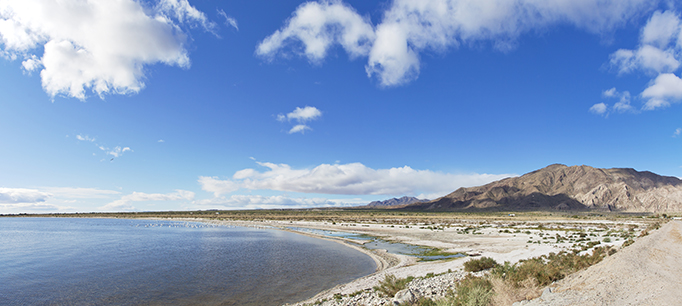
The Salton Sea—created by a break in a Colorado River irrigation canal more than a century ago and for decades dependent on irrigation runoff for sustenance—has a water problem. The already-shrinking desert lake used to receive a temporary water supply as part of a Colorado River water trading agreement that sent some irrigation water to Southern California cities. But this temporary supply was cut off at the end of 2017, which has worsened environmental and health problems caused by the sea’s declining water levels.

We talked to Kurt Schwabe—a professor at UC Riverside and an adjunct fellow of the PPIC Water Policy Center—about possible solutions. Schwabe helped organize a recent symposium on the sea that explored impacts on local communities, new research, and policy solutions.

PPIC: Why does the Salton Sea need more water right now?

Kurt Schwabe: In 2003 the State Water Board allocated water to temporarily manage the dust and ecosystem problems associated with the shrinking sea. The board set a deadline of 15 years for the state and the parties in the water trading agreement to develop a plan to address these impacts. Although the state is behind in implementing solutions, the water allocation cutoff wasn’t postponed, and now the sea is shrinking at a faster pace. The increase in dust has a direct impact on respiratory illnesses and life expectancy in the region, which raises equity issues.

Another problem is that water salinity is increasing as the sea shrinks. Time is running out for the wildlife the sea supports. As explained by researchers at the symposium, fish populations have crashed and won’t recover, thereby resulting in the loss of birds that depend on the fish. We may see new populations of birds that eat brine flies, yet without an effective management plan those birds will last only about a decade until the sea becomes too salty even for brine flies. In a nutshell, the ecosystem doesn’t have 10 years for us to find a solution. More water and less saline water―similar to the water allocation provided from 2003 to 2017―would slow the decline and buy the state time to further develop or implement solutions.

So it’s time to come up with quick and cost-effective ways to mitigate the problems. Recent passage of Proposition 68 will provide around $200 million to support construction costs in the state’s 10-year plan, but this plan is a short-term and imperfect fix. There’s growing interest in finding ways to import water from elsewhere―but that could take a decade or so to implement, is extremely costly, and does not address the worsening public health and environmental impacts happening now. An obvious near-term solution would be to extend the allocation of water to the sea until the actual rollout of the management plan. It’s a reasonable and quick fix: the conveyance to move water is already in place, it’s a tried and true solution, and it’s very cost-effective.

PPIC: What role could a water market play in managing the sea’s problems?

KS: Water markets could be a longer-term fix to replace the temporary water allocation, and would allow growers to make choices about how to best get needed water to the sea. A market would let farmers choose how best to free up that water—either by installing more efficient irrigation, shifting to less water-needy crops, fallowing land, or some combination of these. From a technical standpoint, a water market could be implemented almost immediately.

PPIC: What are the key stumbling blocks to getting more water to the sea quickly?

KS: The stumbling blocks are mostly political. Water transfer schemes have been used in the region for more than 20 years and typically involve Southern California municipal water agencies leasing water from irrigation districts in Imperial County. This isn’t to say that getting such a fix approved is an easy task, since the politics surrounding California water are notoriously challenging. Yet I would argue that the dire and worsening human health consequences being borne every day by local communities near the sea justify urgent action.

An Alternative Approach to Managing the Delta

The State Water Board is updating the water quality plan for the Sacramento–San Joaquin Delta. This plan sets flow and water quality standards for the Delta and its watershed, affecting water supply to more than 25 million Californians and millions of acres of Central Valley farmland. Parties that would be affected by this plan—water suppliers, fish and wildlife managers, environmental nonprofits—are negotiating voluntary agreements to present to the board for consideration.

Members of Governor Jerry Brown’s administration asked PPIC to assemble a small group of independent experts on the Delta to develop ideas about how to resolve the linked challenges of water quality, habitat, and water supply in the Delta and its watershed. This group—most of whose members are in the PPIC Water Policy Center research network—proposed a new approach, detailed in three commentaries posted on UC Davis’s California Waterblog. The recommendations are summarized below.

Tackle a manageable set of problems. Rather than trying to solve all of the Delta’s problems simultaneously, the board and those involved in negotiations should identify a smaller, well-defined set of issues that can be addressed over the next 15 years through this plan. Priorities include: (1) reversing declines in food resources for the Delta ecosystem, (2) maximizing a high-quality habitat that favors native plants and animals, and (3) managing nutrient pollution to reduce harmful algal blooms. Given the inadequacies of past efforts focused on single species recovery, these actions should instead focus on improving overall ecosystem function and condition.

Coordinate the management of freshwater flows, tides, and changes in the landscape. Traditional approaches to improving habitat in the Delta have tended to focus separately on freshwater flows and landscape changes. Where possible, an integrated, ecosystem-based approach—in which freshwater flows, tidal flows, and landscapes are managed together—is more likely to be successful and to result in a more efficient use of water and financial resources. Efforts should be concentrated in the north Delta and Suisun Marsh, and include strategies for reducing harmful algal blooms.

Bolster current science programs to guide implementation of the plan. Although there is a strong scientific basis for undertaking the approach outlined here, there are still many uncertainties about which specific strategies will bring success. This is why a robust science effort is needed to guide actions and evaluate progress. Scientific research on the Delta and its watershed is not well organized to do this. A new program—housed within the state’s existing Delta Science Program—should develop the science necessary to implement the Water Quality Control Plan. To make this program successful, a Delta Science Joint Powers Authority (JPA)―made up of the various agencies engaged in Delta management―should be established. The JPA would pool resources to fund the Delta Science Program and broader efforts in Delta science. The JPA would also be a forum for agencies, water users, and other stakeholders to develop consensus on science-based management. This will increase the efficiency of scientific efforts and reduce conflict over findings.

Is this ecosystem-based approach legal? In a word, yes. Management of the Delta needs to shift away from efforts to recover a few species of endangered fish and toward improving ecosystem conditions to meet a broader range of objectives. If the regulatory agencies can document the benefits of this approach, there are no barriers under current law.

These recommendations challenge some historical approaches to management of the Delta.  But ecosystem-based approaches that use an array of tools have the prospect of being a more efficient use of resources—including the critical resource of water for the environment—with broad benefits for fish and wildlife as well as the people who rely on Delta water.

Learn more
Read California’s Water: The Sacramento–San Joaquin Delta (PPIC Briefing Kit)
Watch a short video on the Delta
Visit the PPIC Water Policy Center’s Delta resource page

Governor’s Budget Banks on Voters Passing Water Bond

Governor Brown’s proposed budget―the last of his tenure―highlights his priorities for the state. For water, the proposal includes new funding to address some pressing public safety and environmental health issues, including improving drinking water quality in low-income communities, flood protection, groundwater management, and air and water quality at the Salton Sea.

Carrying out this proposal will depend not only on passing the budget, but also on getting additional approvals from California voters and the legislature for some of the needed funds.

To pay for most of the new initiatives, the governor is banking on California voters approving a $4 billion parks and water bond (SB 5) that will be on the ballot in June. More than $400 million in proposed spending on water for 2018–19 is contingent on SB 5, including safe drinking water projects ($63 million), flood management ($99 million), groundwater sustainability ($146 million), and restoration of the Salton Sea ($30 million).

To improve water quality in impoverished communities, the budget proposes using $4.7 million of general fund dollars to administer a new program to cover the ongoing costs of providing safe water. But the governor is counting on the legislature to approve a funding stream for the program itself—on the order of $100 million annually. One current measure (SB 623) would do this by assessing fees on agricultural chemicals and water bills. Or the governor may propose a similar measure as a trailer bill to the budget. Like any new tax, this kind of fiscal measure requires approval by at least two-thirds of both houses, which can be a significant hurdle. To date, water agencies have opposed this measure.

The budget proposal’s heavy reliance on bonds to pay for water projects continues a tradition that voters have supported over the past two decades. Since 2000, seven state general obligation bonds—voter-approved debt reimbursed with general fund taxes—have provided roughly $22 billion for water projects. State agencies are still awarding funds from Proposition 1—a $7.5 billion bond approved in November 2014. Bond funds have generally gone to “fiscal orphans”—areas of public and environmental health that do not have adequate alternative sources of funding. But bonds have not created a reliable way to fund ongoing needs.

The current proposal to create a steady stream of funding for the costs of safe drinking water programs is one way to break from this tradition. But it can also be a more difficult path. Setting up long-term funding streams, such as new taxes and fees, will require going beyond bonds. Leadership at the state and local levels are needed to pave the way.

Information Gaps Hinder Progress on Safe Drinking Water

The short answer to the question, “How many Californians lack access to safe drinking water?” is, “Too many.” Everyone deserves to have ready access to clean water. But understanding the extent of the problem is less straightforward. Some recent strides have been made in compiling data on communities with drinking water violations, but more work is needed to help scope solutions, prioritize actions, and track progress.

The biggest data gaps are for domestic wells or very small water systems that are not regulated by the federal Safe Drinking Water Act (SDWA). Estimates of this population vary widely—from 1 to 2 million—and the state lacks good data on how many of these residents face water safety problems. Developing tracking systems for this population is an ongoing priority.

California also has data gaps for the thousands of water systems regulated by the SDWA that serve the vast majority of the state’s residents: community water systems with more than 15 connections and other public systems such as schools. The State Water Board’s new Human Right to Water (HR2W) portal reports monthly compliance, population served, location, and pollutants present in the water. It provides an easier way to see which systems are currently failing to meet safe drinking water standards. But information gaps in the new system make it hard to translate the data into action.

As of November 2017 this portal showed that just over 300 water systems, serving roughly 490,000 people, were out of compliance. About 13% of these systems are schools, serving roughly 13,000 people; the rest are community water systems. More than 90% of the non-compliant community systems are small, serving fewer than 3,300 people; 75% serve fewer than 500 people. Small systems are more likely to violate drinking water standards and to lack the technical, financial, and managerial capacity to resolve these issues on their own.

While the HR2W portal provides a valuable snapshot, it falls short of providing the detail needed to understand and track drinking water challenges in public systems. The information is not organized to enable users to see relevant patterns, such as long-running violations or multiple violations per system. Knowledge of safe drinking water regulations is required to parse which systems are in the most trouble. This tool would be more useful if the data were summarized by water system, with an overview of how long a system has been out of compliance and how serious the violations are.

A useful model for organizing safe drinking water data comes from the US Environmental Protection Agency, which publishes Enforcement and Compliance History Online (ECHO) to track a variety of regulatory programs. ECHO reports the number of quarters within the past three years in which drinking water systems were out of compliance. It also uses a point system to reflect the seriousness of the problem. For instance, systems exceeding standards for nitrate and pathogens get 10 points per violation, since EPA considers those problems most acute. Systems exceeding less serious standards get 5 points per violation, and each monitoring and reporting violation gets 1 point. Points accumulate for issues that remain unaddressed. ECHO provides a compliance summary for each system, and enables the user to drill down into violation details.

Using information from ECHO, we find that more than 80% of California’s non-compliant drinking water systems, serving 280,000 residents, have been out of compliance for at least three years (see figure). Nearly three-quarters of these systems have at least 20 unaddressed violation points. As expected, problems are most persistent and severe in small—and especially very small—systems. And they are most prevalent in the San Joaquin Valley—home to roughly 10% of California’s population and nearly half of the state’s non-compliant water systems.

California should draw from the federal ECHO model to improve its HR2W. The state might want to customize the ECHO point system to reflect local conditions―for instance, where state standards are stricter than federal standards. The state is working on adding new metrics, such as water affordability, to HR2W. Additional priorities include providing indicators of progress in addressing violations, such as funds allocated. And instead of flagging only systems that have a safety violation, the state could track systems that are behind on monitoring and reporting because this could foreshadow future violations of water quality standards.

More accessible and transparent data would help build momentum for action. This is especially important in light of ongoing efforts to create a sustainable funding source for safe drinking water in affected communities—such as the current legislative proposal to levy surcharges on agricultural chemicals and urban water bills. Such a program would require a robust tracking system for efficient governance of the funds. With some improvements, HR2W could help prioritize actions and investments in communities that need it most.

Modernizing Water Systems in Disadvantaged Communities

The water supply problems of disadvantaged rural communities can reflect not only a lack of resources, but also weak connections to the broader professional water community. The Mojave Water Agency in California’s southern desert has an innovative program to help small systems under its jurisdiction make improvements. We talked to Lance Eckhart, the agency’s director of basin management and resource planning, about this program.

PPIC: Describe the program.

Lance Eckhart: It started a few years ago when we to updated the agency’s regional water management plan, which included getting public input. Our agency covers 5,000 square miles—so we took our planning process on the road and visited many disadvantaged communities that previously had been underrepresented.

We have 40 small water districts scattered across the region, which are a backbone of these rural desert communities. We learned that they needed a lot of help. They hadn’t been keeping up with system upkeep. The rules had changed over time, and they weren’t always aware of best management practices. Maybe they hadn’t raised water rates in 20 years. They didn’t have the capacity to make many upgrades that the county wanted.

We’re a water wholesaler—we have no experience running very small community water systems, and we needed help. We engaged a local nonprofit, the California Rural Water Association, to join us. They help build technical, managerial, and financial capacity. We initially asked our board for $200,000 in “seed money” for the program. Half of that was to “get stuff done”—basic engineering, legal analysis, audits, system checks—anything that can be stapled to a grant application to help raise funds for capital improvements. One condition to get our help is that agencies have to upgrade their technical, managerial, and financial practices. It’s more of a leg up than a handout.

Another really important element was to develop training systems so these agencies can manage themselves. We hold free quarterly operator trainings on skills tailored to the region’s needs. This allows people who were fairly isolated to talk to each other in one place, and gives us a venue to share information about the program.

PPIC: What are some problems that rural water suppliers in your basin need help with?

LE: There’s a general lack of maintenance. Many have inadequate flow to fight fires. Too many have no redundancy if the local reservoir fails. Some are dealing with natural contaminants. Many systems have no financial reserves, so if a pump breaks they have to pass the hat. Many don’t have emergency plans if the well goes down or a fire or power outage cuts off water. A lot of these systems don’t have meters, so they don’t know if they have leaks or when to conserve.

With our help, water suppliers are now talking to each other and looking for ways to back up neighboring systems—for example, with interties. We are starting to bundle many systems in to one grant for the region.  For example we grouped 26 disadvantaged systems together for a leak detection grant program, which will be the foundation for future capital improvement grants—something likely not possible if individually pursued.  Also, some systems are realizing their best path forward is to consider consolidation with bigger agencies, which is a big change.

PPIC: What are your hopes for the future with this program?

LE: We’re excited that this model is now being adopted for a much bigger area. The granting agencies and state Department of Water Resources are beginning to encourage local nonprofits to partner with water agencies. I’d like to see this kind of partnership expand even more. While each underserved water system is unique, there are repeating problems. We know we can create a formula that can be used over and over again. We’ve shown how to bundle different small systems into a single grant. Being efficient in addressing this problem is good for the state, and good for the locals.

I also hope that the disadvantaged communities continue to realize they are not alone. I hope they continue to have a collective voice and stay cohesive—because that’s the best way to keep this issue alive and on the radar of the state and bigger agencies.

Read Priorities for California’s Water (PPIC policy brief)

New Water Rules for Marijuana Growers

Marijuana growers who plan on growing cannabis on private land next season will encounter new state requirements to address the crop’s impact on California’s creeks and streams. The success of the policy will be tested by the state’s ability to bring growers into the legal cannabis sector. Currently, an estimated 80% of the state’s cannabis crop is grown for the black market.

The CalCannabis cultivation licensing system is a new program by the California Department of Food and Agriculture (CDFA) for permitting the crop to be grown legally on private land. The State Water Board recently adopted interim policies that will affect the license, including checks on a grower’s water rights, restrictions on the diversion of water for irrigating cannabis crops, and site-specific requirements to control runoff into local streams from growing operations. Many elements of the new statewide requirements are based on pioneering regional efforts to regulate cannabis cultivation in the North Coast.

As a prerequisite for the cultivation license, growers relying on water from local tributaries must have valid water rights or apply for a new surface water right that allows them to divert and store water. This requirement is critical to the State Water Board’s new policies that compel growers to divert surface water to storage in winter for irrigating cannabis during the dry months when streams are low. Diversions are allowed to resume in winter once a stream’s minimum flow target is met. Many growers will need to obtain necessary permits and capital for constructing water storage on site. Water measuring and recording requirements will also compel growers to install devices to track their stream diversions and usage.

The new statewide requirements also seek to reduce the risk of contamination to tributaries from cannabis farm runoff. For example, licensed growers across the state will be required to provide adequate distance between cultivation operations and streams and wetlands. The requirements also establish rules for reducing erosion from access roads, increasing irrigation efficiency, minimizing runoff, and handling fertilizers, pesticides, and herbicides safely.

These new requirements will result in additional costs to many growers looking to enter the legal market, on top of new compliance costs, taxes, and reduced revenues that legalization could bring. Some experts suggest that the high cost of “going legal” could jeopardize the state’s ability to enroll enough growers to make the policies effective.

Van Butsic, an assistant cooperative extension specialist at UC Berkeley and a member of the PPIC Water Policy Center research network, conducts research on cannabis cultivation in the state. “The State Water Board’s interim policy may have a better chance of achieving desired environmental outcomes if compliance can be obtained at a reasonable price,” Butsic says. He suggests that small growers—the majority of cannabis operations in the state—will especially find it difficult to absorb the costs of compliance.

This raises difficult public policy questions on how to reduce the cost of compliance while continuing to protect water quality and the environment, how to encourage small farmers to join the legal sector, and how to effectively enforce the new rules in a sector dominated by very small farms. Resolving these issues will be vital to meeting water quality objectives in the emerging legal cannabis sector.

Learn more
Read “California Streams Going to Pot from Marijuana Boom” (PPIC Blog)
Read the report Regulating Marijuana in California (PPIC, April 2016)
Visit the PPIC Water Policy Center

Videos: Priorities for California’s Water

This past year brought drought-busting rain and snow and severe wildfires—extremes that tested California’s systems for managing water supply and the natural environment and foreshadow conditions of a changing climate. In light of these challenges, a PPIC Water Policy Center event in Sacramento last week brought together experts to discuss ways forward in three areas: legislative priorities for cities, farms, and rural communities; partnerships that improve the health of ecosystems; and decisions for the Colorado River and Sacramento–San Joaquin Delta.

Ellen Hanak, director of the PPIC Water Policy Center, began the program by summarizing priorities for California water outlined in a new PPIC report. These include California’s ability to recharge aquifers, maintain dams and levees, manage headwater forests and aquatic ecosystems, and provide safe drinking water to rural communities.

The first panel examined a host of proposed, passed, and pending water bills, covering topics as diverse as funding water infrastructure, improving water-use reporting, and addressing safe drinking water problems.

The lack of safe drinking water in disadvantaged communities prompted a lively conversation on how to pay for a lasting solution to the problem. Laurel Firestone, codirector of the Community Water Center, noted that while California has passed a resolution declaring a human right to water, the state’s drinking water crisis—which she said dwarfs that of Flint, Michigan—will take a more concerted effort to resolve.

One possible funding solution the panel discussed is a tax on fertilizers to pay for cleaning up groundwater contaminated by nitrate, which can cause health problems. “This is a legacy problem that stems from the over-application of nitrogen fertilizer for many, many decades,” said Dave Puglia, executive vice president of Western Growers.

The second panel tackled a problem even longer in the making: the crisis in California’s aquatic ecosystems. “We spent 150 years fundamentally changing the ecosystem… We’ve spent about 40 years actively failing to do something about it,” noted Lewis Bair, a water resource engineer with Reclamation District No. 108. “Our system is so modified, and there’s so much work to do, it will probably take a generation to make significant change.” The panelists discussed innovative projects and partnerships that are providing multiple benefits while also improving habitat for aquatic species—and how to scale them up to get broader effects at the ecosystem level.

The final panel looked at two watersheds that have outsized importance to California’s water supply: the Sacramento–San Joaquin Delta and the Colorado River. While the multi-state effort to improve management of the Colorado River has become a model of cooperation, efforts to make progress in the Delta have been more contentious.

Much of the conversation focused on WaterFix, the state’s proposal to modernize the Delta’s water export infrastructure with a pair of tunnels. Grant Davis, the new director of the California Department of Water Resources, called the Delta “the heart of the state’s water supply delivery,” and said that “the status quo will take us into unreliability and ultimately a crisis—and no one wants to manage water in a crisis.” The conversation turned to the long and difficult history of trying to resolve water conflict in the Delta, the need for reliable water supplies for agriculture, and the costs of the tunnels project.

We invite you to watch the videos from this event and hope you find the discussions illuminating and useful:


Learn more

Visit the Policy Priorities for California’s Water YouTube playlist
Visit the PPIC Water Policy Center