California’s Environment Needs a Water Budget

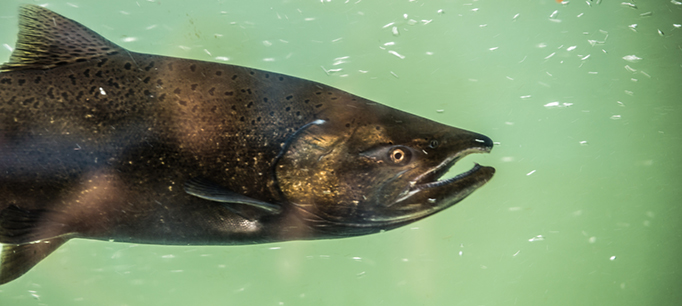
Allocating water for environmental needs has been one of the more controversial, and perhaps most misunderstood, aspects of water management during this drought. The aquatic environment has been particularly hard hit, with many fish species close to extinction.

California needs to change course to prevent extinctions and further declines in our river and wetland ecosystems. Our recent report Allocating Water in California: Directions for Reform calls for modest changes in how we manage water in times of scarcity that could significantly reduce the social, environmental and economic costs of drought. A practical solution to the aquatic ecosystem crisis is to establish “environmental water budgets” (EWBs) for priority watersheds where threats to ecosystem health and native species are high.

It would work like this: the State Water Board, in partnership with the California Department of Fish and Wildlife and other agencies, would use available information to prescribe the water needed to maintain fish and other species in good condition. Local water users would help develop procedures for meeting these requirements (much as they are now required to do under the Sustainable Groundwater Management Act). As part of this effort, local stakeholders—with state support—would be encouraged to improve the scientific basis for setting these allocations and propose alternative ways to meet environmental needs.

A novel principle is that this baseline water budget would belong to the environment and be managed by a designated environmental water manager. The manager could purchase, trade, and even sell water to best serve environmental needs. Surplus water sales would raise funds for other environmental uses, such as habitat improvements, or for water purchases during dry times. This system would provide greater flexibility and security than the current approach of setting minimum environmental flow and water quality standards (which are often relaxed when times get tough for other water users).

There are two ways to implement this idea. The water board could establish the EWB as a regulatory set-aside—which would ensure that the EWB water could not be diverted by other water right-holders. Or, similar to the Australian approach, the water board could define the EWB as a water right—one that would have top priority within the water rights system, with the exception of emergency public health and safety needs.

Some existing water right-holders may be resistant to the environment leap-frogging ahead of them in seniority. But the environment already effectively has the senior right under a variety of laws protecting water quality, critical habitat, and endangered species. The problem is that these regulatory standards are often ignored or too easily modified when water is scarce.

The EWB approach offers value for water right-holders. It reduces regulatory uncertainty by giving the environment a water budget that it has to operate within. It provides flexibility in managing environmental water. And it encourages cooperation with local water users, who have a stake in its successful implementation.

This proposal makes the environment a cooperating partner in water management—one that sits at the table when tough decisions are being made. Partnerships, rather than competing interests, are a more effective approach to managing water during challenging times.

Learn More

Read our policy brief California’s Water: Water for the Environment (from California’s Water briefing kit, April 2015)

Read our report What If California’s Drought Continues? (August 2015)

California Depends on Rivers—in the Air

Climate change could bring both bigger rains and longer droughts to California. What do the bigger rains mean for the state’s water management? We talked to Mike Dettinger—a research hydrologist with the US Geological Survey and a PPIC Water Policy Center research partner—about the weather phenomenon known as “atmospheric rivers.”

PPIC: What are atmospheric rivers?

Mike Dettinger: They are long pathways that transport water across the atmosphere. Typically they’re at least 1,200 miles long; the biggest can be five times that. They tend to evolve as they cross the Pacific. Those that manage to reach the West Coast meet a more-or-less abrupt end when they hit the mountains, dumping rain and snow in the process. These storms carry a lot of water—a big one can move up to 20 times the amount of water that comes down the Mississippi River. They can provide a third to half of our annual precipitation in just a few storms.

Because they’re usually warmer than other types of storms, larger areas of our river basins get rain rather than snow, which increases flood risk. In the past 60 years nearly all of our largest storms and most damaging floods were caused by atmospheric rivers. The largest ones have brought 12–16 inches of rain in a few days. On the plus side, they also bring ecologically beneficial flooding for wetlands and are a major factor in ending our droughts.

PPIC: Can we predict when these storms are coming?

MD: We’ve got about a decade of understanding atmospheric rivers in practical and useful ways. The California Department of Water Resources and others have responded by investing in an enhanced water monitoring network. These efforts and a lot of basic research have revolutionized forecasting of California’s largest storms, which is critical for reducing flood risks and managing water supply. A decade ago the weather service wouldn’t forecast storms beyond three days. Now we routinely receive forecasts of major storms a week or more in advance. We’re working to improve forecasting even more, especially in terms of the details of where and how intensely the storms will land. The hope is that better forecasting can allow dam operators to keep more water in reservoirs at the end of the rainy season while better managing flood risks.

PPIC: How might climate change affect these storms?

MD: As the world warms, the atmosphere will be able to hold more water. Climate models agree that we’ll see more atmospheric rivers—likely a doubling by the end of 21st century. How much water they’ll bring is less clear—some models show a 10–15% increase. But most of the increased rainfall will come from a larger number of these storms than from how much water they hold.

About half of climate projections show California getting wetter, while half show it getting dryer. If you dig a little bit, nearly all projections show an increase in the number of atmospheric rivers, and virtually all show a decline in other types of storms. That decline will bring more dry days, punctuated by these major storms. So if we indeed do get the wetter future, it’s because of more potentially dangerous atmospheric rivers. It’s a Faustian bargain.

We’ve spent a century building up a flood control system that tries to take the peaks off the worst floods. This has put our ecosystems at a disadvantage, as they evolved with regular floods. I think we’ll find it harder to control floodwaters as climate change builds, and that might tend to bring us back to something more like what California’s natural systems evolved under—allowing bigger areas to absorb floodwaters in winter. It will be interesting to see how we achieve balance and who will be the winners and losers. We have a lot to learn.

Learn More

TABLE SOURCE: Chart excerpted from The Meterorology of Extreme Orographic Precipitation in California—A Synthesis of 2014 (Ralph and Dettinger).

Video: PPIC Survey Examines Election Landscape

As California heads into an election year, the PPIC Statewide Survey looks at residents’ views on a broad range of issues that are already flashpoints in the presidential primary races and will likely surface in statewide campaigns next year.

PPIC research associate Lunna Lopes presented the survey’s key findings at a Sacramento briefing last week. She was joined by Mark Baldassare, PPIC president and CEO, for a question and answer session afterward. He noted a link between Californians’ “modestly optimistic view of the economy,” their belief that there is income inequality in the state, and their attitudes about which ballot issues are important. Twice as many residents say that increasing the state minimum wage is very important than say legalizing marijuana is very important.

“In California, the belief that this state is divided into the haves and have-nots—and the feeling among many Californians that they are among the have-nots—are going to be driving forces in the election,” he said. The survey briefing was held just after the mass shooting in San Bernardino, and the briefing touched on Californians’ views about gun laws. PPIC research associate David Kordus provided findings from the September survey on this issue: Compared to adults nationwide, Californians are more likely to favor stricter laws than we have now. Most also say that controlling gun ownership is more important than protecting the right of Americans to own guns.

Improving Water Allocation During Droughts

The drought has been a stress test for California’s water system. Brian Gray—an adjunct fellow at the PPIC Water Policy Center and professor emeritus at UC Hastings College of the Law in San Francisco—is a coauthor of our new report Allocating California’s Water: Directions for Reform. We talked to him about its findings.

PPIC: How did our water allocation system fare during the drought?

Brian Gray: California is straining to meet a range of demands while also maintaining a healthy environment. Water rights matter most during times of shortage. In fact, their purpose is to define who is entitled to use water when there isn’t enough for all right-holders.

This drought was the first time the State Water Board curtailed water rights since 1977. Some senior water right-holders successfully challenged the board’s authority to apply the priority system to them. The board found it difficult to ensure that enough water remained in rivers to support at-risk fish species (many of which are protected by federal and state endangered species acts).

Because this drought is a harbinger of a “new normal,” we wanted to harvest its lessons. We found three key areas for improvement.

First, we believe the state can maintain its water-rights seniority system, but it must improve how water rights are administered. We should eliminate an archaic distinction between categories of water rights by bringing all surface water rights under the water board’s jurisdiction. We also need better information on water use and availability to enable more effective, real-time decision making.

Second, although we have legal protections for the environment, we don’t have a clear process for allocating water to critical environmental needs during droughts. We recommend that the water board define the amount of water required to protect fish, wildlife, and water quality within each watershed. This environmental water, along with water needed to protect public health and safety, would have top priority.

Finally, during droughts we need flexibility to allocate water to vital uses (such as domestic supply, permanent crops, and the environment) that may be short of water. Trading water can provide that flexibility. Yet during this drought trading was limited, in part because California’s water transfer rules are fragmented and inconsistent. We need to make it easier to trade water during droughts.

PPIC: Why shouldn’t the state create a new water rights system?

BG: There have been calls for a complete overhaul of California’s water rights system, which is quite complex and doesn’t always work smoothly. It’s unlikely that anyone would design this system today if starting from scratch. But water rights are property rights, so a wholesale change would raise significant constitutional questions under federal and state law. It’s probably better to maintain our system as long as we strengthen the water board’s oversight of water rights, and increase transparency and flexibility of water allocations. Improving information is key. Effective management requires that we know who has what water rights, how much they are diverting, and how much they are returning to the system following use.

We think the time is right to start making these changes toward a more efficient and fairer water rights system. The Sustainable Groundwater Management Act, the governor’s emergency drought orders, and other initiatives demonstrate that the state is ready for reforms. Many of our recommendations are not nearly as challenging as these. And they will help us manage water better during the next drought.

Learn More

Read our report What If California’s Drought Continues? (August 2015)

Video: Governing in a Time of Change

At a time when economic, environmental, and demographic forces are changing California, Governor Jerry Brown’s chief aide, Nancy McFadden, was asked to describe three administration priorities requiring bold leadership.

The first priority is keeping the state on a fiscally stable road, she told PPIC president and CEO Mark Baldassare before a Sacramento audience last week. This requires tough choices, she said, as the governor demonstrated when he vetoed bills that were worthy ideas but had budget implications for the state General Fund.

“Sometimes bold leadership means saying no,” she said.

Second, the administration will continue to implement the far-reaching changes adopted in past years, such as corrections realignment and the Local Control Funding Formula for schools, which targets money to the state’s neediest students and shifts funding control to the local level.

McFadden said the third priority is the “whole panoply of climate change and environment issues facing not only our state but our world.” Extreme weather events—drought, wildfires, and flooding—pose immediate challenges that have to be managed.

McFadden’s conversation with Baldassare was followed by a panel discussion about leadership—what it takes and when elected officials have demonstrated it. The panelists were Jim Brulte, chair of the California Republican Party and former state senate Republican leader; state senators Loni Hancock and Carol Liu; and Darrell Steinberg, chair of the California Government Law and Policy Practice at Greenberg Traurig and former senate president pro tem. The moderator was John Myers, Sacramento bureau chief of the Los Angeles Times.

Testimony: Planning for Future Droughts

In a week that began with Governor Brown extending the statewide water conservation mandate into next year, a panel of experts testified about how to improve drought management. They spoke before the Assembly Select Committee on Water Consumption and Alternative Sources on November 17.

Nine experts covered a range of topics, including the state of our water infrastructure and management systems and options for improving water security as our climate becomes warmer.

Jay Lund, director of the UC Davis Center for Watershed Sciences and an adjunct fellow at the PPIC Water Policy Center, gave an overview of California’s complex water system and ways the drought has tested it. He noted the state suffered a water shortfall equivalent to three full Folsom reservoirs.

“We can’t drought-proof the state,” Lund said. “But we can do better in managing drought. In the future, there should be greater emphasis on improving our water markets and on storing more water in groundwater basins.”

I talked on key areas where we need to do better, as documented in our report What If California’s Drought Continues?:

  • Cities and suburbs: The state’s urban areas have weathered the drought well so far. But we’ve boxed our water agencies in by making it hard for them to raise rates and requiring cost accounting that is too precise. This makes it more difficult to invest in options like capturing stormwater and recycling wastewater.
  • Agriculture: Farmers increased groundwater pumping to make up for losses in surface water—a smart short-term thing to do. It can be smart for the long term too, as long as we get better at storing groundwater for drought years.
  • Rural communities: Our most vulnerable populations suffered from drying wells in areas that already had water quality problems. There’s a need for more sustained investment in safe water for rural communities.
  • Ecosystems: Our habitats and the animal life they support are in crisis from the dry, hot conditions. Wildfire risks are extreme, and many fish species are at risk of extinction. Rebuilding environmental resilience will be key to sustaining the state’s iconic biodiversity.

Noah Diffenbaugh, a climate scientist with the Stanford Woods Institute, described some risks that climate change brings to the state’s water systems. Warm years are becoming the norm, making droughts much harsher by shrinking the snowpack and drying out soils.

Peter Gleick, president of the Pacific Institute, talked about increasing conservation and prioritizing water investments. “We saved almost 800,000 acre-feet of water this summer. This is far more water than any of the proposed reservoirs would provide,” he said.

Buzz Thompson, director of the Stanford Woods Institute, talked about the role of technology in increasing California’s water security and resilience. “New technologies will be coming along in the next 5–20 years that will reduce our costs and give us more options. We need to do more to support them.”

The hearing also featured remarks from top administration officials, who described progress in implementing the governor’s Water Action Plan. An Israeli water expert shared that country’s experiences in wastewater recycling, desalination, and pricing to combat water scarcity.

The committee plans to hold additional hearings on water supplies and sources in the coming months.

Learn More
Read California’s Water: Climate Change and Water (PPIC fact sheet, April 2015)

Testimony: Paying for California’s Water Needs

How can we fund California’s most pressing water needs? And where are we falling behind in paying for a water system that works for all? A hearing convened by the Senate Natural Resources and Water Committee yesterday looked at these and other questions. I joined other speakers from nonprofit groups focused on water, local governments, and water agencies to discuss these challenges and how to address them.

Lester Snow, executive director of the California Water Foundation, set the stage, stating that California is “falling behind in central water resource investments, especially in terms of public health and climate adaptation.” Investing in watershed health and ecosystems will help our water supply and our ability to weather climate change, he noted.

My testimony focused on the need for adequate funding to ensure the long-term success of our water system. In some areas—such as water supply and wastewater treatment—we’re doing fairly well in keeping up with needed investments. As documented in our report What If California’s Drought Continues?, investments in water supply for cities and suburbs helped us weather the current drought. It will be important to maintain the momentum in those areas. But in other key areas, we’ve found significant funding gaps, including safe drinking water in many rural areas, ecosystem management, stormwater management, and flood protection. The total annual funding gap for these “fiscal orphans” is roughly $2–$3 billion.

Local governments have the most responsibility when it comes to funding water systems. But there are looming concerns—including rising costs to address aging infrastructure and new treatment standards—and more uncertainty about the ability of local agencies to raise rates to cover them.

The state’s funding mechanisms “remain fundamentally unchanged,” Snow noted, even as California strains to meet various needs for water. I noted that California must go beyond water bonds, which at best provide $1 billion per year in support, to create the sustainable funding we need for this essential service.

Snow and I both spotlighted how efforts intended to improve accountability have made it more complicated to fund water systems locally. Three constitutional reforms passed by voters since the late 1970s—Propositions 13, 218, and 26—changed the way Californians pay for water services. These measures have made it more difficult for agencies to raise money locally for water infrastructure and services.

Laurel Firestone, co-executive director of the Community Water Center, talked about the many challenges facing California’s rural poor and underserved communities, where access to safe and reliable drinking water has been a particularly challenging problem in recent years.

Addressing our ability to provide a safe water supply for the poor, enable local water providers to charge appropriate water rates to cover needed investments, and maintain healthy watersheds and ecosystems are some key areas where change is needed. In January, a second hearing by this committee will look more closely into scaling up solutions for meeting these challenges.

Learn More

View slides from Hanak’s presentation
Read the PPIC Water Policy Center’s briefing on paying for water
Read the in-depth PPIC report on water system funding


Video: Farming Solutions to Weather Drought

How is California’s drought affecting farming, rural communities, and the environment? How much water do farms use, and how do they benefit the state’s economy? What are farmers doing to improve how water is managed? These were some of the big questions discussed by a panel of experts at the October 20 event “Weathering Drought: Farming Solutions for a Thriving California,” organized by the nonprofit group Sustainable Conservation and held at PPIC’s Bechtel Conference Center.

Ashley Boren, Sustainable Conservation’s executive director, moderated the discussion with Ellen Hanak, director of the PPIC Water Policy Center; Karen Ross, secretary of the California Department of Food and Agriculture; Don Cameron, general manager of Terranova Ranch; and Kat Taylor, co-owner of TomKat Ranch.

The panelists talked about a range of water-management efforts that are being tried on the state’s farms. Terranova Ranch is the site of a particularly promising approach to water storage. Cameron said the farm is building infrastructure to funnel excess flood waters from the Kings River to fields, where it will soak into the ground. This helps replenish the groundwater basin—which has dropped after serving as a vital reserve over three years of drought—as well as reducing flood risk to downstream communities. Taylor described efforts to rebuild the health of the soils—another vital store of moisture—on the grazing lands at TomKat Ranch.

While acknowledging the challenges California is facing from the drought, the panelists also described positive changes underway. Ross noted that in her travels around the state’s agricultural regions, people are talking about unprecedented levels of cooperation to help each other get through the dry times. The message she’s hearing is we’re all in this together, and we’ll get through it by working together.

Learn More

Read Sustainable Conservation’s blog about the event
Read Reforming California’s Groundwater Management (PPIC fact sheet, June 2015)
Read our report What If California’s Drought Continues? (August 2015)

Saving Native Fishes from Extinction

Native fishes have been hit hard by the drought, with 18 species—including many salmon runs—at high risk of extinction if warm, dry conditions persist. But there are actions we can take now to avert what could be the largest loss of native freshwater fish biodiversity since the arrival of Europeans in California.

The state and federal fish agencies entrusted with preventing these extinctions face formidable challenges. The species at risk cover a very large geographic area and in many regions the options for emergency management actions are limited. Additionally, the total amount of funding allocated to managing the environment during this drought is very modest: $66 million, or roughly 2% of total state drought spending. (We showed this in our report What If California’s Drought Continues? in Table 1.)

The California Department of Fish and Wildlife has taken many actions despite limited resources (see this summary), with more than 30 projects underway. But more can—and should—be done now to prepare for continued drought. Here are some suggestions:

  • Initiate an emergency conservation hatchery program. This should start with fish at risk of extinction that are not already the focus of intense conservation. These efforts can be as simple as building temporary holding tanks or as elaborate as temporarily converting production hatcheries to rebuild these populations.
  • Establish a robust environmental water emergency fund. This would enable fisheries managers to purchase or trade water to maintain adequate flows and water quality for at-risk fish. It could be modeled after projects by The Nature Conservancy and the Natural Resources Conservation Service. These initiatives use temporary water transfers to flood farm fields in key locations to create waterbird habitat. During times of high stress for native fishes—usually due to low flows and high temperatures—strategic investments that temporarily return water to streams can help keep fish healthy.
  • Develop a reservoir drought-operations plan. State and federal agencies should conserve cold, fish-friendly flows at strategic reservoirs next summer. A margin of safety should be built into these allocations to address unusually warm conditions and modeling uncertainties, such as those that decimated winter-run Chinook salmon below Shasta Reservoir the past two years.
  • Develop a drought biodiversity management plan. The state should harvest the lessons from management successes and failures during this drought to develop this plan. Environmental management will be more efficient and effective if we have a plan in place before a drought that sets priorities for emergency actions intended to improve species’ resilience. We need to start on this now, while the lessons are fresh.

Many more actions can be taken (examples are outlined in California Species of Special Concern). However, it’s essential that some actions be taken now to prepare for continued drought. While it’s tempting to hope that the record El Niño now building in the Pacific will solve our drought problems, the only sure thing about El Niño is that it is not a sure thing.

Learn More

Visit the PPIC Water Policy Center’s ecosystems resource page
Read “Extinction Risk for Native Fish if Drought Persists” (PPIC Blog, September 10, 2015)

Building a Better Water Safety Net

California’s poor rural communities have been hard hit by the current drought, which has brought drying wells and reduced water quality. Laurel Firestone is co-director of the Community Water Center, where she focuses on advocating for safe, reliable and affordable water supplies for vulnerable communities in the San Joaquin Valley. She was a speaker at an event to launch the PPIC Water Policy Center report What If the California Drought Continues?, which found maintaining safe rural water supply to be one of the biggest challenges of ongoing drought. Here she describes some of our water inequities, and ways to solve them.

PPIC: What are some successes arising from this drought?

Laurel Firestone: I think some of the biggest successes have been at the state level. First of all, the voter-approved water bond included half a billion dollars for small disadvantaged communities. The budget includes a lot of money for emergency drought response. Additionally, the drinking water program at the State Water Board has made huge strides in getting money to the communities. Bigger picture, the passage of the Sustainable Groundwater Management Act was essential. About 90 percent of communities in the San Joaquin Valley rely on groundwater, with many households using shallow wells that have gone dry as commercial wells have been drilled deeper.

On the local level, people are stepping up, too. Some cities have reached out to neighboring communities whose wells are running dry—for example, the city of Farmersville hooked up close to 100 homes whose wells were about to go dry. Some amazing volunteer and local service providers have been going door to door in some of the hardest hit areas. They’re helping get water to people who were already in dire circumstances and now also have to deal with turning on the tap and figuring out how they’re going to shower, feed their children, meet basic sanitation needs.

PPIC: If the drought continues, what needs to be done to improve water supply for poor, rural communities?

LF: There are a few main areas we’ll need to focus on. The first is that we have inadequate information on where households are going dry. We really don’t have a handle on this problem, particularly for private wells. The state’s plan for identifying vulnerable private-well communities and funding solutions to this problem is completely inadequate. We’ll have to quickly come up to speed to address this.

Renters have not been able to get state assistance to buy emergency water tanks. They have been able to get bottled water delivery, or have gotten help from private charities or churches. But we have millions of dollars in emergency drought funding, and it needs to get to people whether they own property or not. I know the state has been trying to get better at this, but there’s an urgent need for better coordination between the state and locals to make sure that the money is getting to those who need it most and in the most effective ways.

As part of our emergency response, we should address inefficiencies in areas that are most acutely impacted by the drought. For example, installing water meters will let people know how much water they’re using and help local water systems find leaks more quickly.

We also must accelerate long term solutions. We need to fundamentally shift how we’re delivering water to rural communities and look at ways we can build resiliency and get economies of scale. That means not having individual homes or small neighborhoods rely on a single well, which makes them incredibly vulnerable to any changes to that water supply. I think there’s a lot of promise with the way the state is looking at drinking water and pushing for consolidation and shared water supplies. More needs to be done to make sure there is diverse water supply in these areas.

The water bond brings a large chunk of capital and technical assistance; we need to invest it in solutions that are sustainable and affordable, and supply safe water to our most vulnerable even in future droughts.

Learn More

Watch a video of the panel discussion What If California’s Drought Continues? (August 2015)