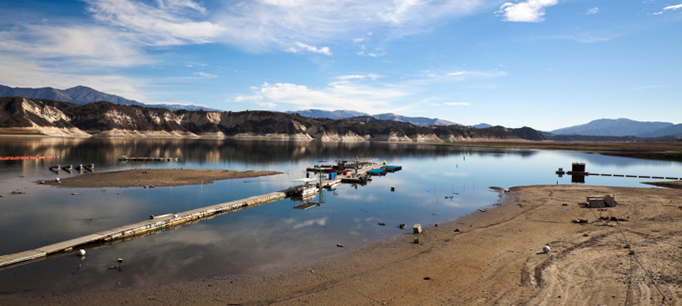
Drought Watch: Rethinking Urban Water Pricing

This is part of a continuing series on the impact of the drought.

The California Water Resources Control Board adopted a statewide policy last month requiring local agencies to implement drought plans, including restrictions on outdoor water use. Local agencies have responded in a variety of ways. Some have imposed mandatory cutbacks while others are still only asking their customers to make voluntary cutbacks. Mandatory water use restrictions can be more effective and, according to the July PPIC Statewide Survey, 75 percent of Californians say they strongly favor them. So why aren’t more water agencies enacting mandatory cutbacks during this crisis?

Last month, Jay Lund—a professor of civil and environmental engineering at UC Davis and an adjunct research fellow at PPIC— outlined some of the factors that might cause local agencies to shy away from mandatory restrictions. One important factor is that when conservation measures work, agencies sell less water and their revenues fall. But the costs of providing water services do not decrease as much, so agency balance sheets can end up in the red. As a result, investments in system maintenance and upgrade generally take a hit, and agencies often have to increase rates. This sends a confusing signal to customers, who just did what was asked of them.

There is an alternative: drought pricing. Charging more per gallon during drought years provides an additional conservation incentive and ensures that agencies can cover costs while they are selling less water. According to a June survey by the State Water Resources Control Board, only 4 percent of urban agencies have enacted drought pricing strategies. The city of Roseville is one community using the drought pricing tool, which was adopted—and vetted with customers—before the drought hit. In June, Roseville implemented a temporary 15 percent drought surcharge while also mandating a 20 percent reduction in water use.

Like most things that alter the status quo, drought pricing policies require effective communication with ratepayers. Agencies need to emphasize the need for higher prices alongside increased conservation during droughts to ensure customer buy-in. But a big advantage of a drought pricing policy is that customers understand in advance that prices need to go up to keep their water system solvent, rather than feeling blindsided by a rate increase after the fact. While they require additional effort—and advance planning—by local agencies, drought pricing policies result in better financials and customer relations while contributing to the primary goal of reducing water use during times of scarcity.

Drought Watch: Trends in Urban Water Use

This is part of a continuing series on the impact of the drought.

Most of California is now in an exceptional drought, but water use statewide has actually increased over the last year. In response, the state has imposed short-term restrictions intended to help us get through the current drought. As state and local water agencies look beyond the current emergency for ways to adapt to a future in which droughts are likely to be more frequent and more severe, it is instructive to examine and compare urban use in two relatively normal water years, 2000 and 2010.

First, the good news: Total statewide urban water use (for residential, commercial, and industrial purposes) decreased by 12 percent from 2000 to 2010, even as California’s population increased by more than three million. Reductions have been especially significant in central and southern California, where investments in conservation programs and new technologies seem to be paying off. In the commercial and industrial sectors, water use fell 36 percent and 18 percent, respectively, while residential interior water use declined by 20 percent overall and 27 percent per capita. The Great Recession probably played a role in these reductions, so it will be interesting to see if this trend holds as the economy continues its recovery.

Now for the bad news: Outdoor water use for both residential exteriors and large (commercial or public) landscapes rose 12 percent across the state between 2000 and 2010. This trend was largely driven by increases in southern California—in marked contrast to the region’s reductions in indoor water use. And it is likely to persist as California’s population continues to grow, especially in hot and arid inland areas with a higher proportion of single-family homes (which use twice as much water outdoors per household as multi-family buildings) and large lots.

One important takeaway is that more stringent building codes, increasing efficiency requirements, and new technologies seem to have resulted in more efficient indoor water use. But when it comes to landscaping, any improvements in irrigation technology seem to have been offset by our taste for large lawns and plants that need a lot of water (and our habit of overwatering them). To encourage long-term reductions in outdoor water use, agencies can implement new pricing structures, turf buy-back programs, and public education programs emphasizing drought-friendly landscaping. After our current water emergency ends, these long-term incentives and outreach efforts can help us be better prepared for future droughts.

(The map below shows the change in per capita outdoor urban water use between 2000 and 2010 in each hydrologic region. To see details of the state’s hydrologic regions, including county boundaries, visit our Map Room.)

Chart source: California Department of Water Resources.

Drought Watch: Support for the Water Bond

This is part of a continuing series on the impact of the drought.

With the effects of the drought intensifying, the water bond is at the top of the legislature’s to-do list. Unless an agreement is reached on a new version, the $11.1 billion bond built in 2009 will go before voters this November. This year we have seen a range of proposals for a smaller water bond—including one by Governor Brown and one by Senate Republicans that designates more funding for storage than the governor’s. The debate continues.

Getting approval by two-thirds of both houses of the legislature is just the first step. The next hurdle is voter approval. According to the July PPIC statewide survey, 51 percent of likely voters said they would vote yes on the current $11.1 billion bond, with support increasing to 59 percent if the bond amount were smaller. This is higher than in March 2013, when only 42 percent of likely voters said they would vote yes on the $11.1 billion bond, and 55 percent supporting a smaller bond.

While the size of this bond may be important for voter approval, the central policy debate is about how the money should be allocated. Most funding for California’s water system comes from local water bills and taxes, but a new state water bond could help close critical funding gaps facing some parts of the water sector. The PPIC report Paying for Water in California highlighted the lack of sustainable and reliable funding for drinking water quality in small systems, flood protection, stormwater management, aquatic ecosystem management, and integrated water management.

Even if the legislature and the voting public do come together to approve a new bond, there is still work to be done to ensure sustainable funding for our water system. A bond can be expected to provide about $1 billion per year in new funds, leaving a $1 to $2 billion annual funding gap for critical water services. To close this gap, Californians will need to go beyond bonds and approve a broader mix of revenues, such as water use surcharges or state sales tax increases.

Climate Change, Fracking, and Drought—Oh My!

Last week’s release of the PPIC Statewide Survey: Californians and the Environment prompted a discussion of several major policy issues under consideration in Sacramento. A panel convened by PPIC talked about the survey’s findings on climate change policy, particularly public attitudes toward a potential increase in gas prices when new regulations for transportation fuels begin next year.

PPIC research associate Sonja Petek set the stage for the panel discussion by presenting the survey findings. The panel included Assemblyman Richard Bloom (D-Santa Monica); Anne Baker, a senior advisor at the Center for Energy Efficiency and Renewable Technologies; and Rob Lapsley, president of the California Business Roundtable. The panelists said they supported the goals of the state’s climate change policies. They encouraged a public education effort about the extension of the cap-and-trade program to transportation fuels. The survey found that most Californians also support the policy change, but support drops sharply if it means higher gas prices.

The panel was divided on the state’s approach to fracking, a controversial process for extracting underground oil. Bloom is the author of a bill calling for a moratorium on fracking. Lapsley described the economic benefit of having more in-state oil production. The survey found most Californians opposed to fracking.

The panel also discussed water policies and the drought. In the survey, Californians name water as the number one environmental issue this year, and a narrow majority of likely voters support an $11.1 billion bond that is scheduled for the November ballot. Support is higher for a lower bond amount, something that is under discussion in the Capitol.

Drought Watch: Water for the Environment

This is part of a continuing series on the impact of the drought.

The ongoing drought has heightened tension over how water is allocated in California. In our recent publication on overall water use in California, we show that the environment uses the largest share—50%—of the state’s water. In contrast, agriculture uses 40% and urban users account for only 10%.

The amount going to the environment may look surprisingly high, but this number is not as straightforward as it may seem. Most of what we call “environmental” water is simply too remote for people to use—or is actually reused for irrigation, drinking water, or other human benefits. In other words, most of the water that goes to the environment does not significantly detract from the overall amount of water available for other purposes.

Here, we look more closely at how the California Department of Water Resources breaks down environmental water use (also see related figure below):

  • Managed wetlands make up state and federal wildlife refuges and account for only 4% of total environmental water use. These wetlands provide critical habitat for migratory and resident birds, along with fish, plants, and other wildlife. Some provide other important ecosystem services like flood protection.
  • Delta outflow accounts for 16% of total environmental water use. The state sets standards for how much water should flow into the Delta from the Sacramento and San Joaquin Rivers, and how much should flow out of it, into San Francisco Bay. These standards seek to meet two primary objectives: protection of native fishes listed under state and federal Endangered Species Acts, and maintenance of water quality standards within the Delta—most notably for salinity—to allow irrigation of farms in the Delta and exports of water to cities and farms elsewhere.
  • Instream flows constitute 18% of statewide environmental use. These are minimum river levels set by state regulatory agencies to meet habitat needs for fish and wildlife in waterways.
  • Rivers designated as “Wild and Scenic” use the bulk of water assigned to the environment—63%. Under federal and state laws, these rivers are protected from the construction of water resources projects—such as dams or diversions—that would adversely impact them. However, most of these rivers are in the state’s remote north coast, where there is little agricultural or urban demand for water and no economically viable way to use it elsewhere. Outside of the north coast, most water in Wild and Scenic Rivers (such as those on the west slope of the Sierra Nevada) is captured in downstream reservoirs and used again for hydropower generation, irrigation, and drinking water.

As this discussion shows, the allocation of limited water supplies is not a matter of simple tradeoffs between the environment and humans. Sometimes, water counted toward environmental use gets used again for something else. Other times, there is no practical alternative use (such as in the north coast). Understanding these basic facts is essential to resolving differences over how to manage water in California.

Drought Watch: Our Thirsty Lawns

This is part of a continuing series on the impact of the drought.

The unprecedented restrictions on outdoor water use that the state enacted this week send a message that Californians need to conserve more water. But we can do more to move toward sustainable consumption. To help the state get through this drought—which may continue into 2015—and prepare for a future that will include repeated droughts, local agencies should go further to encourage long-term changes in how we use water outdoors.

Outdoor water demands—which account for roughly half of all urban water use—are highest during the hot, dry summer months. Experts regularly cite reductions in landscape watering as “low hanging fruit” during droughts. But, as we’ve learned, it is not enough to just ask people to cut back: during the 2007–2009 drought, outdoor water use did not significantly decline despite repeated calls for conservation.

The main culprit is Californians’ love affair with lawns. Not only do lawns require a lot of water to look good, but people also tend to overwater them. Water agencies should seize the opportunity presented by the drought—and the publicity surrounding the new restrictions—to offer incentives for switching out thirsty lawns. For instance, Long Beach has a turf buyback program that offers rebates to customers who replace grass lawns with low-water-using plants—which have the added benefit of lending themselves to more-efficient irrigation systems. Finding attractive alternatives to lawns is easier than ever before, now that major garden retailers offer a range of California-friendly plants. Gone are the days of cacti and gravel being the only options.

Water pricing can also motivate customers to make the switch. Tiered rate structures—which charge a higher price per gallon for higher use—help send a message about the real costs of our landscaping choices. More than half of urban water agencies currently have some form of tiered rates, though recent legal challenges to their constitutionality under Prop 218 threaten to undermine these very important tools.

During droughts, it makes sense for water agencies to charge higher prices per gallon than they do in normal years. This provides additional conservation incentives while ensuring that agencies bring in enough to cover costs when they are selling less water. The city of Roseville, for example, implemented a temporary 15 percent drought surcharge starting in June. But according to a State Water Resourses Control Board survey, only 7 percent of agencies have enacted drought pricing strategies this year.

So far, no region has reached the governor’s 20 percent conservation goal, and water use has actually increased in some regions. Over the next few months we will see whether increased watering restrictions and threat of fines can deliver the conservation message to all Californians.

Drought Watch: Putting Some Myths to Rest

This commentary was first published by the Sacramento Bee on July 6, 2014. Drought Watch is a continuing series on the PPIC Blog.

As the effects of the drought worsen, two persistent water myths are complicating the search for solutions. One is that environmental regulation is causing California’s water scarcity. The other is that conservation alone can bring us into balance. Each myth has different advocates. But both hinder the development of effective policies to manage one of the state’s most important natural resources.

Let’s consider the first myth, that water shortages for farms are the result of too much water being left in streams for fish and wildlife.

Continue reading on Sacbee.com.

Allow Water Rights Trading

This commentary was published by the New York Times on June 29, 2014, in a discussion of The Water Crisis in the West.


We have an outdated water rights system in the American West: Water goes to those who claimed it first, whether or not they are putting it to the best use.

This system originated out of practicality. The climate in the West is dry for much of the year, and with Western rivers few and far between, it’s often necessary to invest in storage and conveyance to get water to where it is needed. But the rights to use water were allocated many decades ago, when the region had far fewer people, and before it was widely recognized that the system often short-changed the environment. …

Continue reading on nytimes.com.

Drought Watch: Regional Solutions

This is part of a continuing series on the impact of the drought.

Across California, local water agencies are scrambling to apply for new state matching grants authorized under February’s emergency drought legislation. The program aims to accelerate the use of remaining state bond funds for integrated regional water management: activities in which local agencies team up to generate mutual benefits. One example—water suppliers and stormwater agencies that work together to incorporate captured stormwater into local water supplies. Such projects can simultaneously enhance water supply reliability and the quality of water in rivers and coastal areas.

Regional integration has already led to some significant successes, most notably the enhanced ability of urban water suppliers in Southern California and the Bay Area to cope with the current drought. Successes include ramping up water conservation and recycled wastewater storage to increase supplies in storage, and building new connections between local water systems to enable emergency sharing. Outside funds are often needed to jump start these collaborations, both to encourage innovation and to enable some partners—such as stormwater agencies – to participate even if they don’t have the necessary funds.

But as we showed in our study Paying for Water in California, integrated regional water management is on the brink of fiscal failure because state bond funds are running out. Both the legislature and local water agencies have pushed the idea that bonds should continue to provide these dollars, and the major bond proposals under consideration include substantial new funds for this purpose.

But there might be a better way: adding a small statewide surcharge on water use to support regional projects. Local water agencies have often rejected this idea, arguing that if they send money to Sacramento they won’t see it again. But what if the funds go directly to the regions?

Here’s how we think this could work. The legislature (or state voters) would pass the surcharge and set broad criteria for funding eligibility. The funds would be apportioned to the state’s 12 principal hydrologic regions—the large basins that are already used to divvy up bond funds. But rather than having state agencies award the grants, this task would go to new Regional Water Commissions—regional counterparts to the California Water Commission, the state body tasked with awarding matching grants for storage projects under most bond proposals.

Though more politically tricky to pass than a bond, the statewide water surcharge would have numerous advantages. The revenues would be more reliable than bond funds. And relying on Regional Water Commissions to allocate these dollars could encourage broader collaborations than we have seen from the state-sponsored grant program, which has nearly 50 planning regions, often too small to reap the real benefits of integration. Many groundwater basins, for instance, have different boundaries than the current planning regions, and groundwater agencies could use assistance from these regional funds to support better management.

Finally, this statewide option is preferable to creating local or regional surcharges, which can be difficult to raise without approval of two-thirds of local voters. To raise $200 million annually—the amount that’s been available through bonds—a surcharge 7.5 cents/1,000 gallons on urban water bills would suffice. This would increase the average cost of tap water by just 2.8 percent, while creating a valuable incentive fund that helps local water managers enhance the quality and reliability of regional water supplies. As part of a package with a new bond devoted to areas of true statewide need, a statewide water surcharge would help ensure that our water system can support a healthy economy, society, and environment.

Drought Watch: Lessons from Kansas

This is part of a continuing series on the impact of the drought.

As summer approaches, signs of the drought are intensifying, with early season wildfires, new reductions in supplies from California’s depleted rivers, and many farmers scrambling for appointments with well drillers to access more groundwater. In Sacramento, there is also a heightened sense of urgency regarding money for the water system, as the June 26th deadline looms for legislative action on a new bond for the November 2014 ballot. The drought has drawn policymaker attention to water system investments, and it has raised hopes that the public will be willing to support new borrowing. While this is good news for California’s water system, the focus on bonds is a missed opportunity to go bigger.

As we showed in our March 2014 study, Paying for Water in California, a new bond can at best provide about $1 billion per year in new funds for water. So even if a bond passes in November, California will still be facing an annual funding gap of $1– $2 billion to meet critical needs. Bonds alone can’t do the job, and now’s the time—during, not after the drought—to consider a broader package of solutions.

One important place to look for additional funds is new state fees and taxes dedicated to underfunded areas like safe drinking water, flood protection, and healthy watersheds. And here’s where Kansas comes in: Since 1989, Kansas has had a small surcharge on urban water use (6 cents/1,000 gallons) to help fund projects of statewide importance. A small surcharge on agricultural chemicals also goes into this fund, as do fines charged to water polluters. And Kansas is not alone. Missouri and New Jersey both have surcharges on urban water use (1 cent/1,000 gallons) to support safe drinking water programs. Maryland, whose environmental problems in the Chesapeake Bay rival those of California’s Delta, has small parcel taxes to fund stormwater control. Minnesota uses a small increment on the state sales tax (0.12 cents/dollar) to support healthy watersheds.

For perspective, the typical price of tap water in California is $2.67/1,000 gallons, so a 6 cent surcharge (as in Kansas) would raise this to $2.73/1,000 gallons, an increase of just 2.2 percent. And the typical California sales tax is 8.5 cents/dollar, so a 0.12 cents/dollar surcharge (as in Minnesota) would raise this to 8.62 cents/dollar, an increase of just 1.4 percent. And these small surcharges would bring in some badly needed cash: About $175 million/year for a Kansas-style urban water fee, and about $575 million/year for a Minnesota-style sales tax increment.

These surcharges could be passed by California’s legislature (by a simple majority or two-thirds vote of both houses, depending on whether they qualify as regulatory fees or taxes) and then signed into law by the governor. Or they could be put before voters alongside a new bond. Of course, the politics of new fees and taxes are trickier than those of new state bonds, for which the bill comes later, when most current officeholders will be termed out. But for the sake of a healthy and secure economy, society, and environment, the time for bold action is now. California will have plenty of company.