Fellow to Explore Central Valley Groundwater Problems

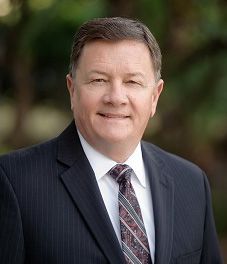
Josué Medellín-Azuara headshotI am pleased to announce the appointment of Josué Medellín-Azuara, a member of the PPIC Water Policy Center’s research network, as the 2017 Steyer-Taylor Fellow. This is the second year of a three-year fellowship―supported with funding from the TomKat Foundation, established by Tom Steyer and Kat Taylor―to explore solutions to some of California’s toughest groundwater policy challenges.

Medellín-Azuara is associate professor at the UC Merced School of Engineering. He focuses on water resources economics with expertise in water management for agricultural, environmental and urban uses, and farm adaptation to drought and climate change, among other topics.

This fellowship not only advances the water center’s work, it also adds to the state’s body of knowledge on how to address many of the challenges of sustainable groundwater management.

Medellín-Azuara will explore how California agriculture can adapt to future challenges of managing groundwater—especially in the stressed groundwater basins of the San Joaquin Valley, which is the state’s most important agricultural region and largest water user.

“We’ll be looking at future scenarios involving a changing climate, urbanization, technological advancement, and water scarcity, which will shape California’s agricultural mosaic,” said Medellín-Azuara.

The state’s groundwater law requires the valley’s water users to develop sustainable groundwater management plans by 2020.  Medellín-Azuara is part of a team of PPIC Water Policy Center researchers working on a comprehensive analysis of possible sustainable water management solutions for the region.

Learn more
Read the report Water Stress and a Changing San Joaquin Valley (March 2017)
Read “Groundwater in California” (PPIC fact sheet, May 2017)
Visit the PPIC Water Policy Center

Groundwater Quality Is Key to Quantity

To improve groundwater management we need to focus on more than the quantity our aquifers can supply. We also need to focus on quality.

Groundwater levels have been dropping in many of the state’s major aquifers, especially in parts of the Central Valley. This chronic issue was made worse by increased pumping during the latest drought. Lower water tables have resulted in increased pumping costs, the need for deeper wells, land subsidence, and salt-water intrusion into groundwater.

But groundwater supply is also harmed by pollutants, particularly nitrate and salt. Nitrate is widespread in many rural areas. Its major source is nitrogen fertilizer and manure. Salt, one of the most common pollutants, is in fertilizers, manure, and treated urban wastewater, and also occurs naturally. Both pollutants can compromise and ultimately reduce drinking water supplies. Salty groundwater is damaging to crops. In some areas, other contaminants such as naturally occurring arsenic also pose problems for drinking water.

Recently passed regulations seek to address both aquifer depletion and contamination issues with the goal of protecting groundwater resources for the long run. A suite of policies extended existing water quality protections to groundwater: the Central Valley Dairy Order, the Irrigated Lands Regulatory Program (ILRP), and the Central Valley Salinity Alternative for Long-Term Sustainability (CV-SALTS). More broadly, the Sustainable Groundwater Management Act (SGMA) directs agencies in charge of addressing groundwater depletion also avoid degrading water quality.

These regulations mark a historic shift in how groundwater is managed in California. They each provide distinct frameworks for addressing quality and quantity challenges. To reap the most benefits from their implementation, it will be important to coordinate management activities.

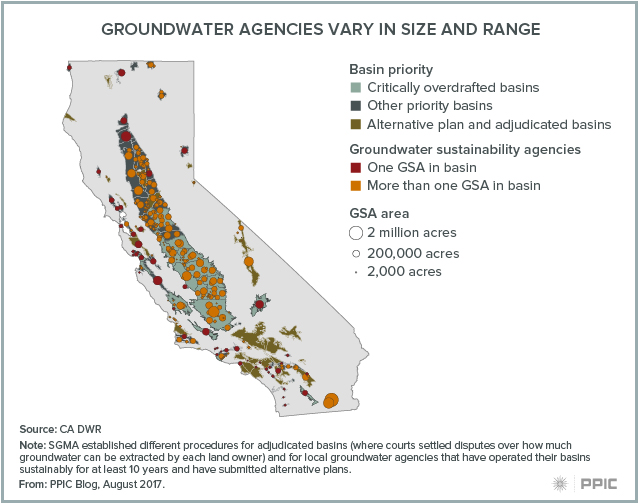
Under SGMA, more than 250 newly formed groundwater sustainability agencies will be in charge of managing groundwater resources. The jurisdiction and size of these agencies vary, and most groundwater basins have multiple  groundwater sustainability agencies. The ILRP, which regulates runoff from irrigated lands, includes 12 coalitions statewide and thousands of farmers with individual waste discharge permits. The most effective solutions will require coordination and collaboration beyond the boundaries of these individual entities.

For instance, one way to address groundwater depletion is through intentional groundwater recharge. Because groundwater doesn’t respect property lines, recharge is best managed at a larger scale than most farms―ideally at the scale of an entire basin. Groundwater recharge can also affect water quality.

Depending on the soil type and crop choices, intentional recharge can improve or degrade the underlying water quality. Recharging in ways that benefit groundwater quality will entail coordinating cropping patterns, irrigation systems, and agronomic practices. The ILRP coalitions have already taken steps to assess areas that could be vulnerable to groundwater quality problems, promote farm practices that reduce pollution, and improve water quality monitoring. There are likely to be opportunities for GSAs to benefit from sharing resources on monitoring and planning with entities that manage water quality, such as ILRP coalitions. Forming partnerships in the early stages of drafting groundwater sustainability plans would be a good next step.

Coordinated management has the potential to address some tough, persistent water quality and quantity challenges, but it will generally take years before the benefits become apparent. Since groundwater depletion and quality degradation affect poor rural communities most acutely, more expeditious approaches are also needed. The state has been working on solutions to address the urgent public health issues these communities face. The SGMA also brings new opportunities to coordinate with local institutions to distribute and prioritize available resources.

Learn more

Read “Groundwater in California” (PPIC fact sheet, May 2017)
Read “California’s Water Quality Challenges” (PPIC fact sheet, October 2015)
Visit the PPIC Water Policy Center

Testimony: Managing California’s Headwater Forests

Van Butsic, a forestry expert with UC Berkeley’s cooperative extension and a member of the PPIC Water Policy Center’s research network, testified before the Little Hoover Commission in Sacramento today (August 24, 2017).


The hearing focused on California forest management and was held in response to the sharp increase in the number of trees dying in headwater forests. Butsic drew his prepared remarks from the PPIC policy brief California’s Water: Protecting Headwaters. Here is a summary.

The committee asked Butsic to explain the risks to the state’s forested upper watersheds and ways to improve forest health. He described a number of risks, including:

  • Policies aimed at extinguishing fires as quickly as possible—combined with reduced timber harvesting—have resulted in exceptionally dense vegetation in many California forests, increasing the risk of extreme wildfires;
  • The expansion of rural communities into wildland areas has complicated efforts to manage fire risk, and;
  • Stress from drought and a changing climate.

Butsic said California stands to lose timber production, wildlife habitat, recreational opportunities, and water supply if this natural infrastructure continues to decline. He noted that the bulk of forestry funding is spent on putting out fires rather than managing forests for long-term resilience.

Butsic explained that to improve health of headwater forests, California must increase the pace and scale of management tools such as fire and forest thinning. This will require management, regulatory, and legal reforms. He described ongoing research being undertaken by PPIC into ways to improve forest management. And he noted that due to a diverse mix of land ownership in the headwaters area, collaborative approaches will be critical.

Learn more
PPIC is preparing a report on California’s headwater forests. Register to attend the related event, Improving the Health of California’s Headwater Forests.

New Water Official’s Views on Salton Sea, Other Priorities

California’s State Water Board has a broad mandate to oversee our complex water system and balance all beneficial uses of water. Joaquin Esquivel―the newest member of the board and a member of the PPIC Water Policy Center’s advisory council―brings broad experience working on state and federal water issues, and personal and professional experience with the challenges of the Salton Sea. We talked with him about his priorities for California’s water issues.

PPIC: You’ll be engaged with the board’s effort to reduce environmental and public health problems at the Salton Sea. Why is this issue important?

JOAQUIN ESQUIVEL: The health and viability of the sea is important in many ways. It’s important to the health of our families and communities throughout the Imperial and Coachella Valleys. Many people who live there already struggle with poor environmental quality. It’s critical to the Pacific Flyway and the more than 400 bird species that use the sea. It’s key to the economies of surrounding communities, which could take an estimated $29–70 billion hit over the next few decades if the sea declines unchecked. And it’s important to California’s water future.

People sometimes forget how much water California gets from the Colorado River, which was significant to Southern California’s resiliency during the recent drought. There is a deep and abiding connection between the sea’s success and our success at better managing the Colorado River, which itself has been stressed by drought.

The issues facing the sea are not unlike other big challenges we face in many other watersheds in California: overlapping public health, economic, and ecosystem needs; limited resources; legacy challenges; and insufficient funding for the scope of work that needs to be undertaken.

Resolving the Salton Sea’s issues requires a tremendous amount of cooperation. The good news is that we’re at the right moment for decisive action. The California Natural Resources Agency has developed a common vision and plan with stakeholders on projects we need to undertake immediately and over the next 10 years.

PPIC: What are you most optimistic about regarding California’s water issues? And what are you most concerned about?

JE: I’m excited by the fact that the drought really focused Californians on water and brought forward communities, voices, and leaders with a passion to break through the old fights and work together to tackle the state’s most difficult water challenges. The drought has created incredible opportunities for collaboration. For example, we’re seeing collaborative efforts in the Central Valley to find solutions to the lack of safe drinking water in some of our poorest and most disadvantaged communities. There’s growing understanding of the importance of expanding and maintaining watershed health, along with growing partnerships between farmers—our greatest assets as stewards of our land—academia, and NGOs to rebuild and strengthen the resilience of our ecosystems. I’m excited that there’s a new generation of engagement on water policy, and it couldn’t come at a better time.

What keeps me up at night is the huge amount of work that needs to be done to resolve our greatest challenges and always feeling that we don’t have the dollars we need to undertake it all. Inadequate funding is always going to be a challenge, so we need to figure out how to better align local, state, and federal dollars, policies, and priorities. It’s really important that we solve the problem of underfunding our water systems and the ecosystems that underpin them.

PPIC: Talk about the governor’s new joint project with the governor of Maryland to develop a “water policy learning network” for other governors.

JE: The National Governors Association staff had been hearing from its members that states were interested in learning about managing water resources, and they approached Governor Brown and Governor Larry Hogan about co-chairing an initiative. I was fortunate to have been tapped as the advisory group co-chair, along with Maryland’s secretary of the environment. The first of two Water Policy Institutes was held earlier this week in Maryland. The second will be held next year in California. The initiative is an opportunity for states to share and discuss best practices in the management of water resources. While it will be useful to share the ways in which California has been a leader on conservation, recycling, and integrated water management, this is also an opportunity for us to learn from other states. We’re right to feel proud of the leadership California has shown on water, but we still have a long way to go in many respects. This initiative is the ideal opportunity to learn from the wealth of experience in other states.

Learn more

Read “Remaking the Salton Sea” (PPIC Blog, April 6, 2017)
Read California’s Water: The Colorado River (from the California’s Water briefing kit, October 2016)
Visit the PPIC Water Policy Center

Bringing Order to Groundwater Management

California’s water management is a complex stew with many cooks. At the local level, hundreds of irrigation districts and urban water agencies and a few thousand small drinking water suppliers are responsible for a wide variety of water-related issues. And it just got more complex: as of June 30, more than 250 newly formed Groundwater Sustainability Agencies (GSAs) were added to the mix.

The 2014 Sustainable Groundwater Management Act (SGMA) directed local agencies to develop institutions, plans, and implementation strategies to sustainably manage their groundwater resources for the long run. As a result, more than 250 local agencies have formed GSAs in 140 “priority basins” (those that account for most of California’s groundwater use). More than 70 percent of the new GSAs are in the San Joaquin Valley and the Sacramento Valley—regions whose large groundwater basins supply farms, cities, and small rural communities.

A variety of parties can form GSAs, though most are made up of local agencies such as counties, cities, and irrigation districts. A GSA can also be formed by a single entity, such an irrigation district—Westlands Water District has formed one. It can be formed by groups of agencies, as is the case with the Merced Subbasin GSA, which includes six public agencies with water management or land use authority. These parties vary widely in their interests and experience in groundwater management.

The first task of the GSAs will be to develop groundwater sustainability plans for their basins. In basins with multiple GSAs, the agencies will either have to create a common plan or have an agreement to coordinate plans. This is no small task, given the number of agencies and their institutional diversity. Anticipating some of these complexities, the Department of Water Resources has already published a set of documents to guide plan development.

Although GSAs and their local partners will have the lead responsibility for developing and implementing groundwater sustainability plans, the state can play a pivotal supportive role. Given the varying technical and institutional capacity at the local scale and the challenges of coordinating different plans, a number of tools could help GSAs implement effective programs in ways that reduce conflict and foster success.

Developing common accounting standards is a top priority. GSAs must speak the same language to ensure consistency in groundwater budgets across agencies and basins. Statewide standards are needed on matters such as units used and frequency of measurement to enable comparability, auditability, and consistent analysis and management. Accounting templates and modeling standards could help guide this process. The Department of Water Resources has developed online reporting standards for other water sectors—such as the templates for submitting Urban Water Management Plans that standardize basic information agencies must submit—which might be a good model to follow. This might also help bridge some chronic water data gaps that have made it more difficult to manage California’s water.

The state could also provide technical guidance on developing local monitoring and enforcement regulations, which will be key to implementing the plans. Critically overdrafted basins—where long-term pumping has exceeded the rate of replenishment—will need to develop strategies to increase recharge and reduce pumping. Doing this well will require measuring groundwater extraction, setting overall pumping limits, and establishing pumping allocations. These tasks will help to establish a water budget, and are also essential to implementing innovative mechanisms such as incentives for recharge, storing groundwater for later use, and trading, which can add flexibility in groundwater management. Making these tools available for every agency, no matter its size and capabilities, will help ease the transition to sustainable management with minimal economic disruptions.

Getting to groundwater sustainability might be the most challenging issue in California’s water management for the foreseeable future. But it also provides opportunities to overcome some chronic water management gaps and encourage stakeholders to work cooperatively in a basin-scale approach. Local leadership is key to defining the proper solutions for each basin. But state guidance will also be essential to coordinate efforts and to promote innovation and knowledge sharing across the intricate landscape of agencies.

Learn more

Read the report Accounting for California’s Water (July 2016)
Read the report Water Stress and a Changing San Joaquin Valley (March 2017)
Read “Groundwater in California” (PPIC fact sheet, May 2017)
Visit the PPIC Water Policy Center

In Memoriam: Dave Cogdill

Dave CogdillFormer state senator Dave Cogdill’s death this week at 66 leaves us saddened for his family and friends and appreciative of the many ways he served California as a public servant and policy leader. Among his many efforts to address the state’s various policy challenges, Dave was a valued friend and trusted advisor to PPIC and a respected member of the PPIC Water Policy Center’s advisory council. We will greatly miss his contributions.

Dave served three terms in the state Assembly and was the Senate Republican leader from 2008–09. He also served as commissioner on the California Water Commission, assessor for Stanislaus County, chairman of the Maddy Institute at Fresno State University, and most recently as president and chief executive officer of the California Building Industry Association (CBIA).

Dave wasn’t afraid of taking on tough issues or working across the aisle. In 2010, he was awarded the Profile in Courage Award from the John F. Kennedy Library Foundation for his work on the 2009 California budget crisis. He took on the daunting issue of water with diligence and determination, playing a key role in the passage of a bipartisan package of reforms in 2009 that included the Delta Reform Act, bills to improve water use measurement and efficiency, and a water bond to support various programs, including new water storage.

“Dave negotiated some of California’s biggest water legislation ever, over two administrations,” said Deborah Gonzalez, PPIC’s director of government affairs, who worked with Dave on various policy initiatives over the years. “Water bonds are hard to negotiate under any circumstances, but he carried this one through two different governors and in true bipartisan fashion. He was instrumental in getting it passed.” The water bond that Dave helped craft was ultimately approved by voters in November 2014. Applications for state matching grants for storage projects—a priority for Dave—are due to the California Water Commission this August, with decisions due early in 2018.

At CBIA he took on the challenge of expanding housing supply to meet the needs of a growing state and made a strong effort to ensure that California’s new homes would be as water efficient as possible.

We’re thankful we had the opportunity to work with Dave.

Learn more

Read our interview with Dave on making homes more water efficient.
Read an obituary of Dave Cogdill in the Fresno Bee.

Video: Building Bay Area Drought Resilience

As water supplies dwindled statewide during the recent drought, Bay Area cities struggled with the consequences—including dying trees and landscaping and reduced revenues to run water systems. But overall, Bay Area water districts weathered the drought remarkably well, according to local water experts—in part, thanks to planning, cooperative efforts among neighboring water suppliers, and enthusiastic conservation on the part of their customers.

These were some of the observations from experts gathered at a recent event at PPIC’s San Francisco headquarters. Speakers included John Marchand, the mayor of Livermore, in conversation with Ellen Hanak, director of the PPIC Water Policy Center. A panel discussion moderated by KQED public radio’s Lauren Sommer followed. Panelists were Alexander Coate of the East Bay Municipal Utility District, Peter Drekmeier of the Tuolumne River Trust, Ken Jenkins of California Water Service, and Steven Ritchie of the San Francisco Public Utilities Commission.

“There are two components to drought resilience,” said Hanak in her introductory presentation. “One is having supply investments that reduce the risk of extreme shortages, and the other is the ability to manage demand in the short term.”

Speakers discussed a range of supply and demand tactics they used to build resilience in their cities and additional ways to prepare for droughts. Topics ranged from the use of treated wastewater for recharging groundwater basins and potable uses; the use of different financial mechanisms to maintain revenue as water sales dipped; and unintended consequences that arose, such as the potentially permanent loss of street trees and other landscaping as water conservation took hold.

Some essential takeaways included:

  • Regional diversification of water supply is key to getting through dry times.
  • Mandated conservation from the state was a blunt instrument; targets based on utilities’ local water conservation plans are more appropriate for such decisions.
  • Planning for “conservation rates” is essential for water districts’ fiscal resilience and maintenance of reserves to pay for fixed costs.
  • Aquatic ecosystems took a hit during the drought. Even though Bay Area cities embraced water conservation throughout the drought, flows to the Tuolumne River and Delta were inadequate. Addressing this before the next drought hits is key to maintain ecosystem health and at-risk species.

Learn more

Read the report Building Drought Resilience in California’s Cities and Suburbs (June 2017)
Read California’s Water: Water for Cities (from the California’s Water briefing kit, October 2016)
Visit the PPIC Water Policy Center’s drought resource page

The Search for Sustainability in the Colorado River Basin

The Colorado River is a crucial water source for seven states (Wyoming, Colorado, Utah, New Mexico, Arizona, Nevada, and California) and Mexico, and like many shared rivers has its share of challenges. We talked to Doug Kenney—director of the Western Water Policy Program at the University of Colorado and a member of the PPIC Water Policy Center research network―about balancing priorities in managing the river.

PPIC: What’s the basin’s biggest challenge currently?

DOUG KENNEY: That depends on what part of the basin you’re in and what sector you work in. There’s no shortage of things to worry about. Right now, most would probably say it’s the effort to maintain the levels of water stored in the big reservoirs, Lake Mead and Lake Powell. Those reservoirs provide a lot of benefits—drought protection, recreation, and hydropower—but only if they have enough water in them. They’re about half full right now, which is about as low as they can go before mandatory cuts in water deliveries—or curtailments—kick in. It’s a math problem, essentially—managing water coming in versus what’s going out. So far in this century, people have pulled more water out than consistently flows in. Obviously, that has to change.

The more chronic issue is that the Colorado has been treated more like a plumbing system than a river, so there’s been a lot of environmental damage to the river. The big environmental concerns in the basin are a result of reduced flows and some water quality issues, such as high salinity, loss of valuable sediments, and increased water temperatures. The real challenge is to remind people we’re talking about a river—the most important ecological resource of the southwest United States.

PPIC: What efforts are underway to address the problems?

DK: The big effort at the moment in the Lower Basin is called drought contingency planning, which would help stabilize (and ultimately increase) the amount of water stored in Lake Mead. The negotiations among California, Arizona, and Nevada have gone remarkably well in this regard, although each state still has internal challenges to work through. For example, Arizona is concerned about looming curtailments of their water supply, while in California the big sticking point is the Salton Sea. The sea has become a critical issue as successful efforts to use water more efficiently in Southern California agriculture have reduced inflows, resulting in a host of environmental and public health issues. In both of the situations, the underlying desire is to protect water supplies for urban users in a way that doesn’t impose undue burdens on agricultural regions.

Another issue worth watching is the 2012 agreement between the US and Mexico that laid out cooperative efforts to manage the river. The agreement expires at the end of this year, and a new one is needed to maintain positive momentum and cooperation. Key issues between the US and Mexico include restoring the river’s delta ecosystem, enabling Mexico to store water in Lake Mead, and sharing water shortages during drought. While cooperation on the Colorado between the US and Mexico has gotten dramatically better in the past decade, people are worried that the tensions arising from the current political environment at the national level could spill over to the negotiations. But so far, the two sides are still talking, and people still seem pretty optimistic about reaching an agreement.

PPIC: How do upstream states view California’s efforts to manage its Colorado River supplies?

DK: Everyone in the basin pays attention to what’s going on in California. California has the largest and arguably the most legally secure allocation of Colorado River water rights. California’s dependence on the river is shaped by many factors, including other water issues within the state. For example, the project to build tunnels under the Sacramento-San Joaquin Delta—if it progresses—would go a long way to create some room for compromise and creativity on how Southern California uses its Colorado River supplies. With every passing year it becomes more difficult to talk about the Delta and the Colorado as separate challenges. Everything is connected to everything else.

PPIC: How is climate change affecting the river basin?

DK: We’re already experiencing big climate-related changes in the basin. It’s already nearly 2 degrees Fahrenheit hotter this century compared to last, and by 2050 it will be closer to 5 degrees hotter. That results in higher evaporation rates, increased water demands, and reduced stream flows. Climate change is water change, and more heat works against all our water management goals. During this drought, precipitation has dropped only slightly but stream flows are way down, partly because it’s hotter. And that will continue―this is the part of climate projections we’re most certain of. Continued warming and the related reduction of stream flows is a huge problem.

Water management is traditionally based on the premise that the future will look like the past, but that’s not a safe assumption anymore. Our physical infrastructure isn’t ideally suited to the projected future hydrology. There’s a similar problem with our institutional infrastructure. We have a pretty sophisticated management regime that is increasingly out of step with evolving conditions. The good news is that key players in the basin now understand that the climate is affecting everything they do, and that they have to cooperate to find solutions to tough problems. People in the basin are committed to putting in the work, but there’s still a lot more to be done.

Learn more

Read California’s Water: The Colorado River (from the California’s Water briefing kit, October 2016)
Watch our 4-minute video “Colorado River”
Visit the PPIC Water Policy Center

The Changing Face of California’s Water Leadership

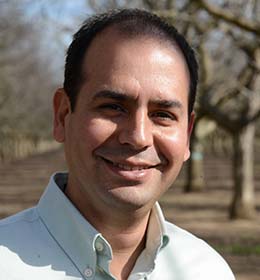
California’s water managers face many challenges—from a changing climate to a growing population. We spoke with Celeste Cantú, chair of the PPIC Water Policy Advisory Council. Cantú served for more than a decade as general manager of the Santa Ana Watershed Project Authority and is stepping down this month. She talked about how the profession must change to better address these issues.

PPIC: What does it mean to be a “water leader” in California today?

Celeste Cantú: Currently, our water leaders primarily draw from an engineering skill set; their goal has been to manage discrete problems with precisely targeted solutions. That approach has proven to be too piecemeal for the water challenges we face today. Going forward, water leaders will need to be change agents. Water leaders will need to step out of their silos and see how their work fits into the larger context of the watershed, and think about upstream and downstream impacts. They’ll need “soft skills” such as conflict management in addition to technical expertise, because key to addressing 21st century water problems will be the ability to collaborate and develop solutions that benefit the larger system or watershed.

How we think about water is also changing. For most of the 20th century we managed water as if it were fuel you burned until it was gone. But water constantly circulates. Every drop delivered goes somewhere else when we’re done with it—usually, it’s treated and returned to a river, where someone downstream is likely to use that drop again. Historically, we water managers haven’t seen ourselves as interacting in that cycle―we see ourselves more in the context of our discipline or local agency. By thinking about the entire water cycle, we can manage the drop to get more beneficial uses from it. We get as many as 10 or 20 uses in the Santa Ana watershed before we release it to the ocean. It’s been said that a drop of water in the Santa Ana River is the hardest working drop in California! Collaborating across boundaries to get more uses from that water drop is the defining challenge of a successful 21st century water strategy.

PPIC: How have the state’s water challenges changed?

CC: I’ve seen an upward spiral of progress over the course of my career. Early on, we mostly were thinking about how to reduce pollution from particular sources. After getting that pretty much taken care of, we moved on to addressing more diffuse pollution that doesn’t come from one place. We’ve made progress but still have quite a ways to go. I’ve also seen an evolution toward integrated water management, an important strategy that addresses multiple water issues more efficiently and synergistically. It means the water supply agencies work with the stormwater agencies and water quality people to get more functionality out of that water drop. We’ve made progress on this as well. Finally, thanks to California’s leadership, we have a much better understanding how much water we use and how to conserve it.

PPIC: Will the next generation of water leaders face new water challenges?

CC: They absolutely will, due to climate change, but they also come much better prepared to address these challenges. They bring a greater understanding of the linked qualities that exist in nature and which define water resource management. They come better prepared for collaboration and not only solving problems but creating a new vision of resiliency. I am optimistic, and committed to sharing knowledge with the new leadership. After I retire this month I’ll be working with Water Education for Latino Leaders (WELL), which helps cultivate water leaders among elected officials working in Latino communities.

The incoming generation of water leaders is much more diverse. California needs water leaders who reflect our demographics, or they will lack standing or legitimacy. We’ll need to make some difficult choices and substantial investments in water in the future. Since we don’t have sufficient revenue streams, water managers will have to have trusting relationships with their ratepayers. People from the community are better able to develop those relationships.

Learn more

Explore the California’s Water briefing kit
Visit the PPIC Water Policy Center’s water supply page

Video: Building Urban Drought Resilience

The recent drought was long, hot, and difficult, and it brought a host of challenges to the state’s water suppliers. Yet California’s urban areas came through the ordeal fairly well, thanks to preparations since the last major drought. Last week a panel of urban water experts explored the various tools California’s cities, suburbs, and the state used to manage water over the past five years. The lessons learned can help us prepare for future droughts.

The panelists at the Sacramento event were David Mitchell of M.Cubed and a co-author of the new PPIC report Building Drought Resilience in California’s Cities and Suburbs; Wade Crowfoot, CEO of the Water Foundation; Thomas Esqueda, public utilities director for the City of Fresno, and Rosemary Menard, water director for the City of Santa Cruz. The panel was moderated by Ellen Hanak, the PPIC Water Policy Center director.

“Water suppliers build resiliency through their water supply investments, which reduce the chance of shortages developing during a drought, as well as through drought contingency plans,” said Mitchell in his presentation on the new report’s key findings. “Both are key to understanding a region’s resiliency to drought.” Around $20 billion has been invested since 1992 in urban drought resiliency, he noted.

Some key takeaways from the event:

  • The state’s conservation mandate resulted in strong water savings. But it threw a wrench into local drought planning and created uncertainty about state and local roles in managing drought going forward.
  • While the urban economy performed well over the course of the drought, most water suppliers were not prepared for the fiscal impacts.
  • Regular communication with water users is essential to get support for conservation, new investments, and changes to rates.
  • Regional cooperation is much more common among the state’s water utilities than it was in past droughts, which has helped make urban areas more resilient.
  • Smaller, rural communities are still struggling to recover from the drought’s effects. It will take a concerted effort to improve their ability to withstand drought and address water quality problems.

Learn more

Read the report Building Drought Resilience in California’s Cities and Suburbs (June 2017)
Read California’s Water: Water for Cities (from the California’s Water briefing kit, October 2016)
Visit the PPIC Water Policy Center’s drought resource page