A Changing Water Landscape

California saw some especially big changes over the past year in its ever-changing water world. New groundwater sustainability agencies finalized their plans to better manage overtapped groundwater supplies, and are poised to begin implementing them. In October, the Trump administration announced plans to pump more water from the Delta, complicating efforts to negotiate solutions to water supply and ecosystem management conflicts in the Central Valley. And the Newsom administration recently released a plan to make the state’s extensive water system more resilient to climate change. All of this—and much more—took place in 2019.
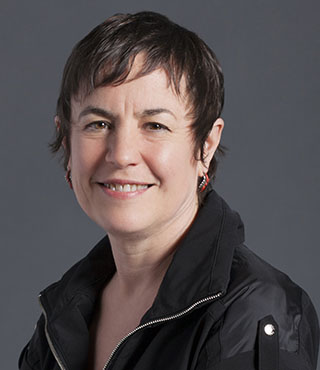
photo - Ellen HanakThe PPIC Water Policy Center continued its engagement on the big water issues facing California, and offered ways to tackle them.

Climate change
Climate change is bringing pressures that will seriously impact California’s water system: warming temperatures, shrinking snowpack, shorter and more intense wet seasons, more volatile precipitation, and rising seas. The issue is a defining element in much of the center’s work. Highlights from this year include:

Sustainable groundwater management
The San Joaquin Valley—California’s largest agricultural region and an important contributor to the nation’s food supply—faces growing water stress. We released a far-reaching report that details the valley’s water-related challenges, and lays out cooperative approaches that can help bring groundwater basins into balance, provide safe drinking water, and manage changes to water and land that will maximize benefits to people and nature. The center partnered with Fresno State’s California Water Institute to host a half-day event to discuss the new report’s findings. Our team also took our findings to the state legislature, various stakeholder groups, the media, multiple state agencies, and more.

Freshwater ecosystems
Our latest report calls for a new approach to protect the many benefits Californians derive from freshwater ecosystems. It lays out a plan to manage water, land, and species simultaneously to improve ecosystem health while also protecting native biodiversity and human uses of ecosystems. The approach, summarized here, is consistent with state and federal endangered species laws. We also held an event to hear from practitioners from around the state, who highlighted the advantages of this approach and the need to implement it more rapidly.

We’re thankful for these opportunities to help find creative and collaborative solutions to California’s most difficult and pressing water challenges. And as always, we thank our supporters who enable this important work.

With best wishes for a hopefully wet (but not too wet!) 2020,

Ellen Hanak

P.S. You can sign up for our weekly blog post. And you can learn more about how to support the center’s work.

California’s Wild and Scenic Rivers Act Hampers Shasta Reservoir Project

This is part of a series on issues facing California’s rivers.

California’s Wild and Scenic rivers have been in the news of late. The US Bureau of Reclamation and its cost-sharing partner, Westlands Water District, proposed to raise Shasta Dam to increase storage capacity in the state’s largest reservoir. They believe that the project would increase water supply reliability and enhance cold water storage to support salmon downstream.

Opponents of the project—including the State of California, environmental organizations, fishing groups, and Native American tribes—argue that the project would flood prime fish habitat and inundate tribal religious sites on the McCloud River, which is protected under the California Wild and Scenic Rivers Act. Given current federal and state laws, it is unlikely that the bureau will be able to raise Shasta dam anytime soon.

Congress enacted the National Wild and Scenic Rivers Act in 1968 to preserve the free-flowing condition of rivers that have outstanding scenic, recreational, geologic, fish and wildlife, historic, and cultural values. It bars federal agencies from actions that would harm these values.

California passed its own Wild and Scenic Rivers Act in 1972. The statute prohibits activities that could damage soil, water, timber, and habitat close to the river. It also bars the State Water Board and other state agencies from assisting or licensing facilities that could harm the wild and scenic values of a protected river.

The state and federal wild and scenic river systems include 26 of California’s rivers. These protected river segments and tributaries encompass about 2,000 river miles, or less than one percent of California’s rivers and streams.

A persistent myth is that wild and scenic rivers are, in effect, wilderness areas and thus protected from any uses except recreation. In fact, although both statutes protect the “free-flowing” condition of segments designated wild and scenic, most of California’s protected rivers are affected by other water and land uses—including dams and water diversions.

Yet, the Wild and Scenic Rivers Acts have had profound influences on some of California’s rivers by restricting new water projects and land uses that may impair the values for which a river was included in the system.

In 2019, the California courts ordered Westlands not to study or participate in other efforts to raise Shasta Dam, because the California Wild and Scenic Rivers Act prohibits “agencies of the state” from cooperating on facilities that could impact the free-flowing condition of the McCloud.

Although the decision did not apply directly to the Bureau of Reclamation, for several reasons it, too, will have difficulty proceeding with the Shasta expansion project. For example:

  • Raising the dam would require a “dredge and fill” permit from the US Army Corps of Engineers. Before the bureau can receive such a permit, federal law requires that it obtain certification from the State Water Board to ensure that the project would comply with state water quality standards and other legal requirements. California law would preclude the board from doing this, however, because the project would inundate a state-designated wild and scenic river.
  • Federal law also requires the bureau to secure at least 50 percent of the funding for new federal facilities from non-federal partners. Currently it has no alternative to Westlands. Moreover, most other potential cost-sharing partners—irrigation districts and other water supply agencies—are also “agencies of the state” and would be bound by the restrictions of the state Wild and Scenic Rivers Act, as was Westlands.
  • Finally, the Central Valley Project Improvement Act requires the bureau to comply with all requirements of state law. This includes the wild and scenic protections for the McCloud River.

Future efforts to expand Shasta Dam by the Bureau of Reclamation or any “agencies of the state” will therefore run afoul of multiple state and federal laws. Of course, the California Legislature and Congress could change these laws or grant a special exemption for the Shasta expansion project. But neither is likely in this time of divided government in Washington, DC, and divergent notions of federalism and environmental protection between the Newsom and Trump administrations. Thus, as the laws now stand, an expanded Shasta Reservoir—at least one that encroaches on the free-flowing stretch of the McCloud River—remains a remote prospect.

Providing Safe Drinking Water in the Face of Disasters: Lessons from Lake County

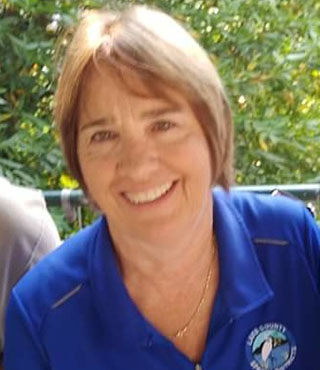
Climate change is already affecting water management across the state. Small rural communities with ongoing drinking water challenges are especially vulnerable to greater extremes brought on by a warming climate. We talked to Jan Coppinger, a special district administrator from Lake County, about how the county’s small water systems have dealt with an especially devastating string of natural disasters.

photo - Jan Coppinger

PPIC: Describe Lake County’s recent water challenges.

JAN COPPINGER: The county is predominantly rural, geographically diverse, and home to a number of small, disadvantaged communities and tribes. As towns in the county were developing, they built small, isolated water systems. We now have almost 100 public water systems, and some are barely getting by. The county tried to encourage consolidation of smaller systems into bigger ones in the late 1980s. Two major consolidations took place at that time: one that merged 41 small suppliers to create the North Lakeport water system—which today is one of our strongest, best water systems—and one that combined 15 systems. The county did feasibility studies on other potential consolidations, but these were met with opposition from local communities, so the issue was dropped altogether until recently.

Over the past several years, a string of natural disasters has kept Lake County in a constant state of emergency. It started with a drought, followed by two massive wildfires, which burned more than 60% of our county. The burn scars made the floods of 2017 and 2019 especially devastating. The 2015 Valley Fire destroyed thousands of homes and eight water systems. One small water supplier—Starview Water System—had 151 customers before the fire and only 14 afterward. Following these disasters, consolidation became a way to get some of the devastated water systems back up and running. We have had success with consolidating and rebuilding nine water systems in the Cobb Mountain area in the last couple of years.

PPIC: Consolidation is a big undertaking. What is the most important lesson from Lake County’s efforts?

JC: It’s a very complicated process, and in most cases, outside technical assistance is needed. We have two other areas now looking at consolidation, and we’re having a hard time identifying which of the small water agencies can take the lead in the process. The agencies are willing but they don’t have the managerial or technical capacity.  We have gotten support from the State Water Board and non-profit partners like the Rural Community Assistance Corporation (RCAC) to walk them through it. Financial assistance is another barrier, because consolidation can be expensive. The costs really vary. For the Cobb Mountain project, the feasibility study alone cost $250,000. We’re probably talking around $21 million for the entire consolidation. In that case, we had to bring some of the small systems up to code, and repair significant damage from the fire.

PPIC: How can small systems best prepare for natural disasters and climate change?

JC: Building physical connections to other systems and sharing resources is critical. Small systems need a backup supply to handle disasters—and because sometimes even the backup burns, they may need a backup to the backup. For instance, in the aftermath of the Valley Fire, the county invested $1.7 million to rebuild the Starview Water System, and connect it to other small systems in the Cobb Mountain area. The floods in early 2019 took out the roads, the culverts, and the brand new water system we built.

I never dreamed that entire water systems would burn to the ground. When I describe what has happened to small water systems in our area from these disasters, it really opens people’s eyes. Educating the people running these small systems has helped change minds about consolidation, in Lake County and across the state.

Watch a video of Jan Coppinger and other panelists talk about providing safe drinking water in California

Video: A Path Forward for California’s Freshwater Ecosystems

“The current approach for ecosystem management is not working. We’re proposing an alternative path,” said Jeff Mount, senior fellow at the PPIC Water Policy Center, at a public briefing in Sacramento last week. He described two ways the current path is failing: in preserving the broad economic and social benefits associated with healthy ecosystems and in reversing the long-term downward trend in native biodiversity and ecosystem conditions. “The Endangered Species Act misses all that. It’s emergency room treatment” of a chronic problem, he added.

The event launched a new report that proposes managing more broadly for ecosystem health while still protecting species at risk of extinction. “We need diverse, complex, and varied ecosystems to recover species,” he noted.

A panel of experts brought real-world experience to the discussion. Panelists have worked on a plan to protect habitats for multiple species in the Upper Santa Ana watershed, a program to restore the San Joaquin River, and the effort to remove dams on the Klamath River, among others.

Heather Dyer, an endangered species biologist with the San Bernardino water district, said that in the Upper Santa Ana watershed, a large group of stakeholders is seeking to “reestablish a community of species” rather than solely focusing on one or two endangered species. She noted that improving the health of ecosystems requires planning at larger scales—and with the full landscape of regulators and stakeholders coming together to work things out.

Ali Forsythe of the Sites Reservoir Project noted that the hardest lift for large-scale projects is building trust among diverse stakeholders—especially when the project has had a long history of litigation behind it, as the San Joaquin River restoration did.

Lester Snow, now with the Klamath River Renewal Corporation, raised the issue of urgency for improving the health of the state’s freshwater ecosystems. Noting that the Klamath dam removal is already at the 13-year point with the four dams still standing, he said, “It’s these lead times that I think are killing us. Climate change and the change of our natural resource system are moving faster than we’re responding,” with grave implications for water supply reliability and ecosystem health. “We cannot have two decades of litigation and negotiation to address a problem that is critical today.”

We invite you to watch the event video.

Commentary: California Must Stop Relying on the Endangered Species Act to Manage the Environment

This commentary was published on CalMatters on November 5, 2019.

In California, state and federal Endangered Species Acts play an important and often outsized role in regulating water and land management. These powerful laws are also often at the center of conflicts between environmental and economic uses of water.

The state and federal acts have helped prevent the extinction of species and encourage better stewardship of water and the environment. But endangered species protection is often used as a proxy for protecting the environment, something the act are not intended to do. Here’s why we need a better tool.

Under the endangered species acts, state and federal agencies narrowly target regulations to protect listed species from direct harm and loss of critical habitat.

To illustrate, the recent dust-up between the Newsom and Trump administrations over proposed increases in water diversions from the Sacramento-San Joaquin Delta is mostly about actions affecting two endangered fish: Delta smelt and winter-run Chinook salmon.

This narrow focus ignores the fact that it is the ecosystems of the Delta watershed, and the diverse array of social, economic, and environmental benefits, that provide value to all Californians.

But given the narrow mandates of the acts, the arguments and lawsuits tend to focus on just one aspect of these ecosystems: the trade-offs between endangered species and water extraction.

To be clear, society places great value on native biodiversity and rightfully seeks to prevent extinctions. For many, protection of threatened or endangered species is a way to leverage improvements in the overall health of ecosystems.

Unfortunately, that is beyond the scope of the state and federal acts.

To promote healthy ecosystems and protect native biodiversity, California needs a different approach.

A new report by the Public Policy Institute of California’s Water Policy Center recommends that California adopt ecosystem-based management. This doesn’t require major reforms to state or federal endangered species acts. Rather, we recommend a shift in the way these acts are implemented.

Widely used in other countries and in marine fisheries and forest management in the United States, ecosystem-based management emphasizes improving ecosystem condition. The goal is to simultaneously protect native biodiversity while improving other uses of freshwater ecosystems.

It integrates human needs such as water supply and quality, flood risk reduction, hydropower, recreation, and spiritual uses into management objectives and promotes actions that create multiple benefits.

Importantly, this approach is consistent with the acts and other state and federal laws that govern water management. A growing body of research suggests that managing at the ecosystem level, rather than emphasizing the protection of a narrow range of habitat deemed critical, improves the likelihood of recovery of listed species. It also helps head off future endangered species act listings by improving conditions for all native species.

Shifting away from single-species to ecosystem-based management will not be easy. It requires three things:

  • The state needs to rethink planning and governance processes to include all beneficiaries of freshwater ecosystems, not just advocates for water supply and endangered fish. This includes finding new ways to align agency priorities and permitting rules—now a major obstacle to ecosystem improvement projects.
  • The state needs to use new tools that go beyond traditional regulatory approaches for environmental water, such as setting minimum flow and water quality standards. One promising approach is to create ecosystem water budgets, which can be stored and traded like a priority water right. This water can be flexibly allocated to improve ecosystem condition, and managed along with habitat changes to maximize benefits.
  • The state needs to incentivize and institutionalize ecosystem-based management. Given its broad water quality and water right authorities, and its mandate to balance all uses of water, the State Water Board should take the lead.

The board would set the criteria for ecosystem-based management plans and incorporate them into water quality control plans. Where possible, these plans would be supported by negotiated agreements between regulatory agencies, water users, and stakeholder communities.

We don’t need to start from scratch. Elements of ecosystem-based management are being employed throughout the state. For example, the Delta Stewardship Council and the Central Valley Flood Protection Board have plans to simultaneously improve ecosystem condition and human well-being.

A novel ecosystem-based approach to water and species management is being implemented in the Upper Santa Ana Watershed in Southern California. And the Newsom administration’s efforts to develop voluntary agreements for environmental water allocation in the Central Valley take a broad approach to improve ecosystem health.

These nascent efforts are not enough. Changing course will require commitment to new ways of planning and managing. Most importantly, it will require risk-taking and leadership from the water users, state and federal officials and legislators.

This won’t be easy. But the alternative is to keep doing what we’ve been doing, which isn’t working for anyone.

Reducing Flood Risk in the Central Valley

The Central Valley has some of the highest risk of flooding in the state, and that risk is growing as the climate changes. We talked to Tim Ramirez, a member of the Central Valley Flood Protection Board, about how this risk is being managed for current and future conditions.

photo - Tim Ramirez

PPIC: Talk about managing flood risk in the valley.

TIM RAMIREZ: The valley has always flooded, especially in spring when snow melts in the high Sierra. Before it was developed, the landscape was often an inland sea in the spring. Now that many more people live there, it’s harder to minimize risk. The flood management system in the valley was envisioned 150 years ago, and in a lot of ways it continues to work. But the climate is changing with more rain and less snow, requiring an update.

That’s where the Central Valley Flood Protection Plan comes in. The plan is meant to not only protect people but also to help restore river ecosystems. We need to give rivers more room to flood, which better protects people and creates floodplains for native fishes, including Chinook salmon. For example, the Sacramento Valley Chinook salmon fall run is the single most important commercial fishery off northern California and southern Oregon, and there’s been a lot of work to ensure the health of those populations. There’s been a big push to restore salmon populations on the San Joaquin River, too. Reconnecting rivers to their floodplains is key to restoring salmon and illustrates the multiple benefits we can get from one project.

Rivers in the San Joaquin Valley in particular need more room. The San Joaquin River and its main tributaries—the Merced, Tuolumne, and Stanislaus—flow through Fresno, Merced, Modesto, Oakdale, and other communities. Each has less than 10,000 cubic feet per second (CFS) peak flow capacity in their floodways. By comparison, the American River has expanded its floodway and can now safely release more than 100,000 CFS. The San Joaquin system is plumbed to store and meter out snowmelt. But almost all climate forecasts show more rain and less snow. The reservoirs and levees on the San Joaquin aren’t designed or operated for large rainfall events or the “pineapple express” floods (like the January 1997 floods) that come from rainfall on large snowpack.

PPIC: Talk about the flood plan.

TR: What’s unique about the valley is that the state—through our board—is responsible for operating and maintaining levees. The plan outlines what needs to be done to minimize flood risk and restore river ecosystems. The first plan was completed in 2012. We’re scoping now for the third update, due for adoption in 2022. The most important thing about this update is the acknowledgment that we need to modify the system for changing climate conditions.

When the next big flood happens we’ll have a lot more people living in harm’s way. The most immediate thing we can do is make better use of new forecasting tools and prepare to execute evacuation plans, so we can get people to high ground.

One of highest long-term priorities is to make investments where the San Joaquin River flows into the Delta near Stockton. A lot of improvements are happening on the Sacramento side of the system—for example, setting back levees to make more room for floods—but not as many on the San Joaquin side. The state needs to support local efforts on the ground and also flesh out the plan so we can start building multi-benefit projects on the San Joaquin side.

PPIC: What is one thing you hope to see accomplished in five years?

TR: That’s easy—create expanded flood capacity, including new floodplain habitat, on the San Joaquin side of the system. I also want the state to set new standards for how much bigger our floodways need to be to protect Central Valley communities, taking into account our changing climate.

Near term, we also need to fund the necessary operations and maintenance for the system we have now. It’s a universal problem that affects flood management and management of other water systems, forests, and the electric grid.

Watch Tim Ramirez and other panelists discuss protecting Californians from fire, floods, and drought at our November 2019 water conference.

Addressing Inequality in Flood Risk

More than 7 million Californians live in places that are at risk of flooding. But not every community is well prepared to recover from floods. A new study, headed by experts at the University of California, Irvine (UCI), is looking at how flooding affects social inequality in flood-prone parts of the state. We talked to project leads Richard Matthew and Brett Sanders about the issue.

PPIC: How can flooding affect social inequality?

RICHARD MATTHEW: Inequity typically grows with disasters. There is a whole range of ways hazards increase social inequity, and these impacts are expected to increase as flooding becomes more frequent and intense because of climate change. Low-income communities and people of color tend to have considerably less access to resources, such as insurance, to help them recover from floods. They often don’t have good access to emergency response information. Floods can affect their health, and impose various costs they weren’t expecting. They may lose their jobs and their affordable housing. They may have poor access to relief funds. At the end of the day, higher-income people usually end up in about same place they were before a disaster, but lower income people largely end up worse off. And these effects can last for years, and sometimes even bring permanent losses.

PPIC: Talk about how we evaluate local and state flood risk currently.

BRETT SANDERS: We basically rely on Federal Emergency Management Agency (FEMA) maps to evaluate flood risk across the state. We make a lot of decisions on the risk to property and people based on whether they live inside or outside of the high flood risk zones those maps show. FEMA maps are fairly cryptic about flood hazard, and they’re not designed to help the average person understand their exposure to floods or what the impacts might be. This approach does a poor job of preparing communities to be more resilient to flooding. What we know from work we’ve done in Southern California is that creating visualizations of flooding in partnership with those affected leads to much more useful information. And fine-resolution data makes a difference. By visualizing flooding at the scale of buildings and streets, we not only increase awareness about flooding, but we can minimize differences in perceptions about flooding. This sets the stage for productive conversations—finding out the issues communities care about and what can be done to minimize future flood impacts. It also presents an opportunity to bring climate science into flood planning. This “collaborative flood modeling” approach is entirely complementary to the FEMA insurance program.

maps - A Sample Visualization of Flood Hazards - Credit: Brett Sanders/UCI
A sample visualization of flood hazards. Credit: Brett Sanders/UCI

PPIC: What are some policy changes that could help California better safeguard those most at risk?

RM: In the short term, we especially need to bring collaborative flood modeling into the state’s climate assessment. Flood maps must be developed with the people who will be affected, so we can understand how flooding will affect people and identify the ways in which they are vulnerable. Our study will be a step in that direction. Longer term, we need fair and affordable ways to reduce flood vulnerability in much of California. That might mean inclusion in risk reduction planning, improved emergency communications, community-based access to resources for people affected by floods—and also policies to protect lower-income communities from the losses they disproportionately incur.

BS: California should have intuitive and actionable flood data available statewide. More graded information is needed for the different kinds of flood risks across the state—levees breaking, sea level rising, intense precipitation, and mudflows coming out of the mountains.

Video: Preparing California’s Water System for Climate Extremes

Climate change is stressing water management across California. This week the PPIC Water Policy Center hosted its annual half-day workshop in Sacramento to discuss how state and local leaders can help prepare California’s water system and ecosystems for greater climate volatility.

“California has the most variable year-to-year climate of any state in the lower 48,” said Ellen Hanak, director of the PPIC Water Policy Center. “This is expected to increase, with drier dries and wetter wets.” Water management of the future will “need to start managing our droughts for floods and our floods for droughts,” she added, because greater volatility will make it harder to manage multipurpose reservoirs for both floods and droughts at the same time. Flexible, multi-benefit approaches—and solutions that are aligned across agencies—are going to be increasingly important in tackling these complex challenges.

The first panel focused on managing fast- and slow-moving disasters—floods, fires, and droughts. Panelists discussed the impacts of the recent fires on communities and local water systems, and the types of tools and partnerships that can help minimize risks. Tim Ramirez of the Central Valley Flood Protection Board described the significant and increasing flood risk in the San Joaquin Valley and called for a flood bypass to protect the growing Stockton region. And Michael Thompson of Sonoma Water called for funding from the state to support the “collaborative infrastructure” that will enable agencies to work together more effectively.

A panel on safe drinking water summarized the current status of the problem and discussed how to best use the new Safe and Affordable Drinking Water Fund to ensure that the water delivery system works for everyone. “I think that in five years we want to see every child in California has safe drinking water in their home,” said Jonathan Nelson of the Community Water Center. “The way we do that will be through multiple strategies, but that’s the vision we want to work toward, and ideally, as quickly as we can.”

Darrin Polhemus of the State Water Board said small water systems pay more for their systems and supplies, have a lack of management and technical capacity, and are particularly hard hit by water contamination and shortages. He noted that “we have to change this whole paradigm” to help improve how small water systems operate.

The final panel brought key state officials to the stage to discuss the governor’s water resilience portfolio, now being developed to address the challenges of a more volatile climate. Wade Crowfoot, secretary of the California Natural Resources Agency, said a top priority is to make it easier to help the environment and get multiple benefits out of water projects. “Permitting wetlands restoration is the exact same process as permitting a strip mall,” he said. “So while we’re threatened by climate change and our ecosystem is under unprecedented threat, state government makes it really expensive and slow to get [such projects] done.” He said his agency is committed to cutting “green tape” that slows ecosystem restoration projects.

Sounding a particularly hopeful note, Karen Ross, secretary of the California Department of Food and Agriculture, said we have “an opportunity of a lifetime for farmers to step up and identify how they can be part of the solution to climate change.” She noted that farm practices can sequester carbon while also building resiliency to help farms weather droughts and floods.

We invite you to watch the videos from this event:

Taking on Tough Challenges at the State Water Board

The State Water Board is central to addressing many of California’s major water challenges, including protecting water quality for drinking and for the environment, addressing drought and water conservation, and managing the allocation of surface water. We talked to Sean Maguire, a civil engineer who was appointed to the board by former governor Brown in December 2018, about priority issues.

Photo of Sean MaguirePPIC: What are the big challenges the board is grappling with right now?

Sean Maguire: At the top of our list is the Bay Delta water quality control plan. The plan, which covers the Sacramento–San Joaquin watershed and Delta, must ensure a reliable water supply and protect the basin’s fisheries and ecosystems. We’re working through a process that is very complex and has a lot of moving pieces—and right now it’s unclear if we’re on track to meet all of these goals. But it’s exciting to think there is a stakeholder-devised solution at hand—the voluntary agreement process—which would set out a plan to manage multiple rivers in a coordinated way, coupled with large-scale habitat restoration and science programs. There is still a long ways to go, but I have hope that voluntary agreements will prove to be the best path forward.

At the same time, we’re preparing for climate change. It’s clear that going forward we have to be incredibly efficient in our water management. The last drought resulted in legislation to establish indoor and outdoor water use efficiency targets and to require urban suppliers to develop stronger drought contingency plans. Many small water systems rely on a single source—most often groundwater—and we’re helping them find opportunities to connect to larger communities and identify new supplies. This is where water portfolios can help build resilience to drought and get us ready for a changing climate.

And finally, the most exciting news is the establishment of the Safe and Affordable Drinking Water Fund earlier this year. California has 7,000 water systems and hundreds of thousands of residents using domestic wells—a situation that presents a lot of challenges because many struggle to meet drinking water standards. The fund is a high priority for us, and we’re committed to coming up with a plan and policies to implement it, while also working on projects that can get started right away.

PPIC: Talk about contamination challenges.

SG: Water contamination is a huge challenge for the whole state. There are so many different sources, and many contaminants of emerging concern. The board is at the beginning of tackling PFAS contamination. This is a class of “forever chemicals” used in a wide range of products—for example, nonstick coatings, water repellants, take-out containers, and fire retardants. We’re moving quickly to better understand the risk by requiring testing wells in close to possible source sites (such as defense facilities, landfills, and airports), and also requiring those facilities to test local groundwater. We are also working to understand the human health effects, which will take some time.

PPIC: What gives you hope?

SG: In the past year, there’s been incredible collaboration surrounding really controversial water issues that have lingered for decades. I’m very hopeful about the stakeholder-informed solutions that are arising out of these processes. In addition to the Bay Delta process, we now have a strong wetlands policy—a collaborative solution that was a decade in the making. We have another stakeholder plan to address legacy pollution from farming and other discharges in the Central Valley. I hope we can repeat this type of collaboration with other issues and in other watersheds across the state. I have a lot of hope for the groundwater sustainability plans that are being developed now in the state’s overdrafted basins. And I believe the governor’s upcoming water resilience portfolio will give us a roadmap to help California prepare for the climate changes to come.

The state has a lot of complex water problems, and we can’t untangle them all with one brilliant policy change. But we’re making progress on many difficult issues, and I’m committed to keeping up the momentum.

New Laws Address Safe Drinking Water, Groundwater Recharge, River Health

It’s been an eventful year for California water policy. A milestone law to address the state’s drinking water challenges, which was signed by Governor Newsom earlier this year, established a $1.3 billion Safe and Affordable Drinking Water Fund. In line with its broader policy focus on climate resilience, the administration is also creating a Water Resilience Portfolio Initiative, a collaborative effort by various state agencies to ensure water resilience in the face of a changing climate. A number of bills recently signed into law build on the progress made in this area. Here are some highlights:

  • Safe drinking water: Continuing the forward momentum of the drinking water fund, two new laws tackle water quality and supply, especially in rural, disadvantaged communities. Assembly Bill (AB) 508 authorizes the State Water Board to order water system consolidations in communities with domestic wells that consistently fail to provide safe drinking water. The bill also requires the board to ensure the consolidation is financially and technically possible, and to compensate for financial losses experienced by the water system that takes over the small system. And Senate Bill (SB) 513 authorizes the State Water Board to provide immediate relief for households whose wells have gone dry due to droughts or other disasters.
  • Groundwater recharge: A new law will also make it easier for water users to bring their groundwater basins into balance—another key to long-term water resilience. AB 658 seeks to enable more recharge of depleted basins, one of the most promising approaches for addressing groundwater overdraft. The bill streamlines the permitting process for groundwater sustainability agencies (GSAs) and other local agencies to divert surface water for groundwater recharge. This tool is timely for the GSAs; those in the most overdrafted basins are now finalizing plans to manage their basins under the Sustainable Groundwater Management Act.
  • Health of rivers, lakes, and streams: Challenges with freshwater quantity and quality for ecosystems were addressed by two new laws. SB 19 addresses a key data gap that makes it harder to manage water for ecosystems, especially during droughts. California currently lacks stream gages—which help monitor water levels—on half of the rivers and streams that support critical habitats. The bill requires the Department of Water Resources and the State Water Board to develop a plan to modernize and expand the state’s stream gage network. And to address a growing water quality threat, AB 834 establishes a program to mitigate harmful algal blooms in California’s rivers, lakes, and estuaries, which pose a health threat to people and animals. The program will assess and monitor algal blooms, and publish the incidents and the resulting action online.

There is no one-size-fits-all solution for California’s complex water challenges. This legislative cycle brought a range of solutions, from those with a broad scope, like data collection, to more targeted tools to address groundwater recharge and dry wells. Both types of approaches are needed to strengthen existing policies and take our water management forward.