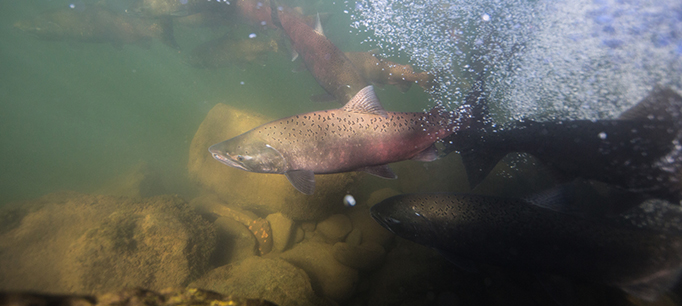
Welcome to the PPIC Water Policy Center

California is at a crossroads in managing water. The drought has sparked significant policy activity, but much work lies ahead. With changes expected in the state’s population, economy, and climate—and pressures from aging infrastructure and a deteriorating environment—California needs to develop meaningful, lasting, forward-looking water policies.

Today, we are pleased to announce the establishment of the PPIC Water Policy Center to help meet the state’s urgent need for timely information and innovative water management solutions. The center builds on the successful model of independent, nonpartisan research and constructive engagement that defines all of PPIC’s work.

Over the last decade, PPIC laid the groundwork for the center with high-quality research on major water policy issues and productive conversations about solutions. The center represents a significant ramping up of investment in this critical area, and we thank the S. D. Bechtel, Jr. Foundation for the seed funding to launch this effort.

The PPIC Water Policy Center will focus on three critical, interrelated water management challenges facing California in the 21st century:

  • Ensuring clean and reliable water supplies. Investigating and encouraging comprehensive, integrated approaches to water quality and quantity.
  • Building healthy and resilient ecosystems. Promoting the development of healthy and sustainable ecosystems using practical approaches to watershed management.
  • Preparing for droughts and floods. Helping California adapt to an increasingly variable climate.

The PPIC Water Policy Center staff will work closely with a broad, interdisciplinary network of top researchers from around the state—and with a wide range of policymakers and stakeholders—to strengthen the bridge between research and real-world policy debates.

In conjunction with the launch of the PPIC Water Policy Center, PPIC is releasing California’s Water, a set of nine short policy briefs on the state’s most critical water management challenges and the actions needed to address them. This briefing kit is designed to inform state leaders and to raise awareness more broadly about the important water management issues facing the state.

We invite you to download California’s Water and visit our new PPIC Water Policy Center online. We also invite you to stay up to date with PPIC Water Policy Center activities:

Drought Watch: The End of the Rainy Season

This is part of a continuing series on the impact of the drought.

California’s rainy season is pretty much over. Most years, 85% of the wet season’s rain and snow has already fallen by late March. While rain often falls in April and May, it is rarely enough to make a big difference in the overall water picture, and the forecast is now quite dry.

That means California’s water managers now have a good idea how much water will be available in the state’s reservoirs, snowpack, and groundwater basins.

The news is not heartening. While parts of the north coast did fairly well, the rest of California did not. The Sierras received about half of annual average precipitation. And as the record warm temperatures of last year have persisted, the snowpack is at an all-time low (now 8% of average). As California’s struggling ski area operators know all too well, most precipitation fell as rain, rather than snow.

Statewide, reservoir storage is about half of capacity. However, the almost non-existent snowpack provides no prospect for improvement in storage this spring—something water managers count on in most years.

This fourth consecutive dry year have led to some dire, even apocalyptic predictions, including that California will run out of water within a year. While managing this drought will be difficult, even painful in some regions, the state is not going to run out of water and there is no need to panic. Rather, prudent adjustments to water scarcity that began earlier in the drought will continue and intensify. These include:

  • Increased urban conservation. Californians cut their per capita water use last year, but they can do more. In particular, there is ample room to reduce outdoor watering, which makes up roughly half of urban water use. The State Water Resources Control Board has tightened restrictions on outdoor water use, and many municipalities will increase their conservation efforts.
  • Increased water trading. Robust water markets, involving willing sellers and buyers, are an effective way to manage scarcity. The Australians found this to be helpful during their crippling Millennium Drought. California’s water market helped many farmers keep their orchards alive in 2014. This year, cities with dwindling drought reserves are also looking to buy water – as illustrated by the recent deal between Sacramento Valley rice farmers and Metropolitan Water District, Southern California’s large water wholesaler. As demand for trading increases, so will water prices.
  • Increased use of groundwater. Groundwater pumping has grown since the drought’s onset, but California’s reserves of groundwater remain large—particularly compared to surface storage. Groundwater will continue to make up shortfalls in surface water this year. Unfortunately, past failures to manage groundwater have lowered the water tables in many basins, making water more expensive to extract and often requiring drilling new, deeper wells. The new Sustainable Groundwater Management Act will eventually address this problem, but not soon enough for this drought.

In short, California is not running out of water, just cheap water. A fourth consecutive year of drought will make both water scarcity and management possibilities increasingly apparent.

Video: PPIC Statewide Survey Briefing

As discussions continue in Sacramento about drought relief, funding for higher education and transportation projects, and an extension of Proposition 30 tax increases, PPIC surveyed public opinion on these and many other topics. At a briefing last week in the capital, PPIC researcher Jui Shrestha provided the survey findings. Among the key points:

  • Two-thirds of Californians say the regional water supply is a big problem, and two-thirds say people in their part of the state are not doing enough to respond to the drought.
  • While most adults say that spending money on the maintenance of California roads, highways, and bridges is very important, there is little support for increasing the gasoline tax or vehicle registration fees to do so.
  • Half of Californians favor extending the Proposition 30 tax increases, and about a third favor making them permanent.

Caring About Delta Levees During a Drought

When the sun is shining and our rivers are low, we tend to forget about levees. However, you can’t ignore the 1,100 miles of levees in the Sacramento-San Joaquin Delta. These levees—dikes, actually—have high water against them 24 hours a day, 365 days a year. They protect the islands of the Delta from flooding that would occur daily because island elevations are well below sea level—more than 25 feet below in some places.

This video is a simulation of what would happen if a severe earthquake hit the western Delta, causing widespread failure of levees. The simulation is a worst-case scenario: failure occurs in the summer when freshwater inflow from rivers is low. (The most recent large flooding in the Delta took place on a clear day in June 2004.) As the water drains from the channels into the islands, it pulls saltwater into the Delta from San Francisco Bay. This renders the water too salty for use by the 25 million people more than 3 million acres of farms that rely upon it.

The management of Delta levees has been a policy challenge for many decades. Most levees are managed by local reclamation districts. They are of varying quality. Yet these levees affect the reliability of water supplies from the Delta. They protect lives, property, and important infrastructure, and they control river and estuarine habitat.

In the 2009 Delta Reform Act, the legislature assigned the Delta Stewardship Council the task of determining how to invest state funds in the levees. As highlighted in our recent report Paying for Water in California, the cost of improving Delta levees ranges from $1.6–$2.4 billion, while available state bond funds total less than $400 million. Recognizing that needs far outstrip available resources, the council has chosen to set policies for prioritizing investments. This is both necessary and fraught with controversy because it ultimately determines whose needs are to be met and whose will not.

PPIC, with our research partners at the UC Davis Center for Watershed Sciences, have published numerous assessments of this problem. Over the next few months we plan to post summaries of this work to help inform policymaking and prioritization. Come rain or shine, flood or drought, Delta levees—and the resources they protect—need the state’s attention.

Climate Change and California’s Future

Mark Baldassare, PPIC’s president and CEO, opened the PPIC conversation on climate change this week with these remarks. We invite you to watch the video of the event.

California has found its way to broad, bipartisan agreements on environmental issues for decades. The state has been a leader in efforts to improve air quality, conserve open space, and protect the coastline. The public has typically embraced these “green” policies. In a PPIC poll in 2014, majorities of Californians said that “stricter environmental laws and regulations are worth the cost,” while fewer said they “cost too many jobs and hurt the economy.” Despite increasing evidence that climate change poses a major threat here and abroad, the federal government and international community have been slow to act. California, on the other hand, has been responding since the early 2000s with some of the most far- reaching policies in the world.

Most notably, Republican Governor Arnold Schwarzenegger joined Democratic legislators and signed AB32 – the Global Warming Solutions Act—in 2006. It committed California to reverse the trend of rising greenhouse gas emissions and to lower those emissions to 1990 levels by the year 2020. It was hailed as a watershed moment in California history that would also have far-reaching consequences nationally and internationally.

In the years that followed, the governor and legislature worked to comply with the law by adopting a number of major policy changes. These include efforts to expand renewable energy, change community development, and create a market price for carbon through a cap and trade program. In 2010, a campaign led by Democrat Tom Steyer and Republican George Shultz persuaded voters to soundly reject Proposition 23, an initiative to suspend AB32. Voters then passed Proposition 39 by a wide margin. This 2012 initiative closed corporate tax loop holes to pay for clean energy projects.

The state’s response to climate change has had consistent support from a broad coalition that cuts across racial/ethnic, economic, and regional groups—while the amount of support has varied along partisan lines. In the PPIC annual environment survey last July, 68 percent of adults said they favored the emission goals identified in AB32. Strong majorities have expressed support for the law since we first asked about it in 2006. Sixty-five percent of Californians are also in favor of the state government making its own policies to address global warming—separate from the federal government. Majorities have expressed this preference since we first asked about it in 2005. And sixty-one percent say that the state government should act right away to reduce global warming rather than wait for the economy and job situation to improve.

One reason the state’s response to climate change has had such strong support is the high level of concern about the issue among Californians. In a PPIC poll last December, 76 percent of adults said that global warming is a very serious or somewhat serious threat to the economy and quality of life in California. More than seven in 10 have expressed this view since we started asking this question in 2005.

Another explanation for Californians’ support is the perceived economic benefit of the state’s policies. In the PPIC poll last December, 43 percent of adults said that California’s efforts to reduce global warming will result in more jobs for people around the state. In contrast, 29 percent said the state’s effort will not affect job numbers, and only 21 percent said it will result in fewer jobs. Californians have always been much more likely to say that taking action on global warming will result in more jobs— rather than fewer—since we began asking this question in 2010.

Today, California climate change policy has reached another pivotal moment. Last year, the state Air Resources Board declared that California is now on track to achieve its greenhouse gas emission goals by 2020, just five years from now. Earlier this year, Governor Brown and state legislators proposed that California recalibrate its climate change policies with a new set of goals reaching farther into the future. As before, the new goals are ambitious and contentious.

In January, Governor Brown proposed three new goals to be accomplished in the next 15 years: increase the amount of electricity produced from renewable sources from one-third to 50 percent; reduce today’s petroleum use in cars and trucks by up to 50 percent, and; double the energy efficiency of buildings and make heating fuels cleaner. SB 350 by Senators Kevin de Leon and Mark Leno reflects the governor’s new goals for 2030. And SB 32 by Senator Fran Pavley would set California’s greenhouse gas emissions in the year 2050 at 80 percent below the level reported in 1990.

There is much to consider in setting these goals and we know that change of this magnitude is not easy. Governor Brown said in his inaugural address: “Taking significant amounts of carbon out of our economy without harming its vibrancy is exactly the sort of challenge at which California excels. This is exciting, it is bold, and it is absolutely necessary if we are to have any chance of stopping potentially catastrophic changes to our climate system.”

California can benefit from the innovation, technologies, and new jobs generated by the state’s leadership on climate change policy. Achieving the goals, however, will also have costs and require lifestyle changes around transportation, employment and housing decisions.

The climate change policies in place today and the proposed goals will affect every Californian. To talk about some of the experiences so far and the issues raised by a new set of climate change goals, we have put together a bipartisan panel that reflects several key perspectives. The panel includes state and local government representatives, as well as business interests from different sectors of the economy.

The state’s climate change policies are among the most difficult and important issues to surface this year. We hope that a public dialogue about the challenges that we face, the goals under consideration, and the trade-offs involved in upcoming policy choices will help California to achieve its brightest future.
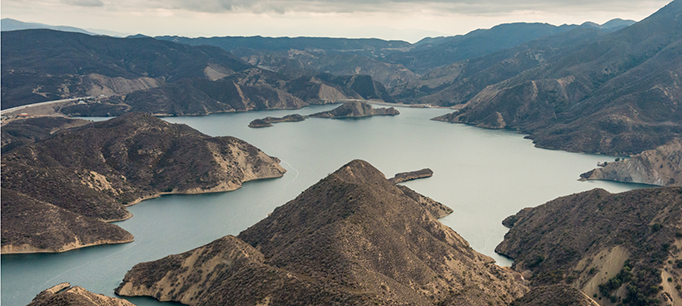
Drought Watch: Priorities for Cities and Farms

This is part of a continuing series on the impact of the drought.

A spate of recent news articles have reinforced what most Californians already know: the state is locked in a grim drought, with unusually warm temperatures and near-record low snowpack. Since this is the fourth consecutive dry year, reserves are low and water scarcity will be acute in some farming regions and watersheds.

In our new report, Policy Priorities for Managing Drought, we highlight four areas that need reform to reduce the economic, social, and environmental harm from drought in California: 1) improving water use information; 2) setting clear goals and priorities for public health and the environment; 3) promoting water conservation and more resilient water supplies; and 4) strengthening environmental management.

The third item on this list – promoting conservation and more resilient supplies – refers to steps needed to improve the ability of both urban and agricultural areas to weather droughts. California’s urban water agencies are already in much better shape than they would have been, thanks to significant investments since the early 1990s in conservation, local storage, alternative supplies like highly treated wastewater, and new connections between neighboring water systems. But cities need to redouble their efforts. In particular, they can do much more to reduce landscape irrigation, which still accounts for half of urban use. Financial incentives like rebates for replacing turf with more drought-tolerant plants can help. Yet to encourage widespread change in habits, cities also need to adopt water rates that send a strong signal to customers who are using too much water outdoors.

For California’s farmers—who require large volumes of water for irrigation during the dry growing season—the options are somewhat different. Investments in more efficient irrigation technology provide numerous benefits: higher quality produce, lower use of pesticides and chemicals, and higher yields. But in most places this technology doesn’t free up new water. That’s because the water not consumed by crops in less efficient irrigation systems either returns to rivers or recharges groundwater basins, where it gets reused. For farmers, one of the best drought adaptation tools is a well-functioning water market, which can help get water from willing sellers to willing buyers.

The market helped many farmers keep their orchards and vineyards alive last year, and it will help this year too. (And as the recent purchase of some water by Southern California’s large urban water wholesaler demonstrates, the market can also help cities bolster critical drought reserves.)

Yesterday the State Water Resources Control Board reauthorized—and amped up—some urban outdoor water use restrictions as a way to push the conservation efforts of local water agencies. In our report, we suggest the board could also take steps to promote the water market. In particular, some local irrigation districts that have abundant supplies still restrict sales outside of their districts, even when farmers in these districts would be willing to sell. Just as excess landscape watering in cities can be considered unreasonable during droughts, prohibiting water trades could also be considered unreasonable. Allowing scarce water to move to where it’s most needed would help all of California get through this drought.

Drought Watch: Treating Stormwater as a Resource

This is part of a continuing series on the impact of the drought.

This weekend, the Southland got some much needed rain. This storm helped fill local reservoirs and moisten parched soils—bolstering the region for a fourth year of drought. Unfortunately, too much of this stormwater simply ran straight into local rivers and the ocean, picking up numerous pollutants along the way. Local and state officials want to change this by developing programs that capture and store more stormwater—simultaneously reducing pollution and improving water supplies.

In California, it’s hard to pay for such programs, given our complicated laws on local water finance. To gather ideas about how the state might help, two Senate committees held a joint informational hearing last week. I provided some context on funding issues and opportunities, drawing on PPIC’s recent work on water system finance.

Stormwater is one of California water’s “fiscal orphans.” It faces a critical funding gap—on the order of $500 to $800 million annually—in large part because of constraints introduced by Proposition 218, a constitutional amendment approved by voters in 1996. Around this time, stormwater management changed. What was once the routine job of getting storm drainage out of streets as fast as possible became the much more difficult job of preventing the contents of this drainage—an often toxic mix of fuels, fertilizers, pesticides, animal waste, and trash—from harming our waterways and beaches. Proposition 218 introduced strict requirements on how to calculate the costs of these programs, and it also required that local voters—rather than their elected representatives—approve any fee increases. Local governments have been in a bind ever since. They are required by law to manage this pollution, but they face voter resistance to paying for cleanups that mainly affect people living in communities downstream.

The new interest in treating stormwater as a resource—not just a nuisance—is part of a welcome shift toward thinking about California’s water in a more holistic way. For too long, we have been managing different aspects of our water in isolation—with separate programs for water delivery, wastewater treatment, and management of floods and stormwater. If it is done right, capturing stormwater in rain gardens and wetlands can filter out the pollution while storing the water for later use. Recent court rulings and Assembly Bill 2403 (enacted in 2014) helped clarify that the costs of capturing stormwater for water supply can be included in the bills for water delivery. This makes better management easier: increases in water rates require customer oversight but not direct voter approval.

However, more action is needed because some of the costs of stormwater programs relate strictly to managing pollution. The legislature should consider other ways to help local agencies raise the needed funds. One promising direction involves expanding the scope of a 2001 law. This law (AB 810) authorized two Southern California water agencies to apply revenues from the extra charges on water bills for overwatering landscapes—a source of polluted runoff during the dry summer months—to stormwater programs. It’s worked well, and it would be easy to extend this authority to agencies around the state.

Another simple fix would be to let local agencies use their state transportation dollars—funded mainly by the tax on fuels—as matching funds for state grants that support stormwater projects. Under current rules, the state considers these transportation funds to be “state” monies, even though they are generated by local drivers and earmarked for local use. If those rules were changed, local governments that are revamping their streets to make them more bike- and pedestrian-friendly could also create rain gardens that capture, treat, and store stormwater—for a small added cost.

Steps like these are examples of low-hanging fruit that can help California get on a more sustainable path of managing its scarce water resources.

Drought Watch: Getting More Pop per Drop

This is part of a continuing series on the impact of the drought.

With the state still facing drought conditions, the Senate Budget and Fiscal Review Committee held a hearing yesterday titled “Water: State and Local Funding Relationships and the 2015-16 Governor’s Budget.”

PPIC senior fellow Ellen Hanak testified to the panel about the recent history of the state’s water finance. (Here is her slide presentation.) She noted that California has been relying increasingly on state bonds to finance water projects, using six bonds to raise almost $20 billion between 2000 and 2006, in addition to the $7.5 billion bond that voters passed last November.

She recommended that the state gather more information on water use so that water can be fairly allocated when supplies are low. She also said the state Fish and Wildlife Department is doing a good job managing ecosystems during the drought but that California could benefit from a more strategic plan to do so, as Australia adopted during its recent drought.

Noting that the state needs to find ways to stretch scarce water supplies, Senator Mark Leno (D-San Francisco) said he was going to adopt a line from Ellen’s testimony as the “mantra” for the committee: “greatest pop per drop.”

Drought Watch: Water Not Wasted to the Sea

This is part of a continuing series on the impact of the drought.

Northern California got a good soaking last weekend, with more than 10 inches of precipitation in many parts. This translated to healthy amounts of water flowing off the hillsides. Much of it is headed into our large reservoirs where—after three years of drought—there will be plenty of capacity to store it for later use for cities, farms, and the environment. But a significant amount made it into rivers in the Sacramento Valley. From there, that water is on its way to the Sacramento-San Joaquin Delta, San Francisco Bay, and ultimately the ocean.

To many, the notion of water to the ocean is akin to water wasted. It is perceived as serving no valuable purpose before mixing with salt water and being rendered useless.

This perception is understandable if we limit our thinking to benefits from direct use of water: manufacturing, industry, drinking, sanitation, or growing gardens and crops. But outside of improving habitat for native species, there are multiple indirect benefits derived from water currently running into the Delta.

The most conspicuous is improved water quality. January’s record low precipitation left the Delta unusually salty. A salty Delta poses problems for the more than 25 million people and more than three million acres of irrigated agriculture that make use of it. Salt is also a problem for farmers in the Delta who rely on local water for irrigation.

To keep the Delta fresh enough for exports and uses in the Delta during dry periods, water has to be released from upstream reservoirs. And a great deal of that released water has to pass through the Delta and into the Bay to keep salt water from encroaching on the Delta. The water used to create this hydraulic barrier cannot be recovered.

A wave of water coming down the Sacramento River freshens the Delta, naturally pushing the salty water out. Depending upon how we operate the export pumps, the effect of this flush can last a long time and allows dam operators to husband their stored water for use later in the year.

Last year, we had three of these flushing events in the late winter and early spring that cleaned up a very salty Delta. These events created benefits—by reducing dam releases necessary to keep things fresh—that lasted into the summer.

Indirect benefits of this water do not end at the Delta. Shorelines and marshes throughout the San Francisco Bay are eroding due to a lack of sediment. This is part of a long-term trend with many causes, but is largely due to the trapping of sediment upstream by dams and levees and a lack of sufficient river flows to move it out of the Delta and into the Bay.

Additionally, as the more than 20 operators of wastewater treatment plants in the Bay Area know, water quality is a major—and potentially very costly—issue of concern, particularly in the South Bay. Freshwater inflows to the Bay help improve water quality and help the Bay meet state and federal standards.

So when you see the brown water from this latest storm moving down the Sacramento River, out through the Delta into the Bay, keep in mind that it is hardly wasted, but rather is creating indirect but vital benefit for a broad range of users.

Commentary: Set Water Priorities to Prepare for Drought

This commentary was published today by the San Francisco Chronicle.

There are still two months left in the rainy season, but all indications are that California’s drought is extending into a fourth year — even with the soaking Northern California is expecting this weekend.

Already, state officials are making tough choices about priorities for water use. Nowhere is this more difficult than managing water for the environment . . .

(Continue reading on sfchronicle.com.)