Video: Survey Looks at Taxes and Pensions

As interest groups work to turn their ideas into initiatives for next year’s statewide ballot, the September PPIC Statewide Survey examined Californians’ views in two areas that may be put before voters in 2016: taxes and public employee pension reform.

Mark Baldassare, PPIC president and CEO, and Dean Bonner, associate survey director, presented the findings at a briefing in Sacramento last week.

Among the survey findings:

  • Half of likely voters favor extending the tax increases in Proposition 30 temporarily, but just a third favor making them permanent.
  • There is bipartisan support for raising taxes on cigarette purchases.
  • A majority of likely voters favor changing Proposition 13 to tax commercial properties according to their current market value.
  • Solid majorities of Californians see public pension spending as a problem, and most think voters should weigh in on changes to the system.
  • Most likely voters favor placing new public employees in a defined contribution system, similar to a 401(k) plan, rather than a defined benefits system.

The survey shows that Californians give their state leaders—the governor, legislature, and their own legislators—high approval ratings at the close of the legislative session. Baldassare offered his explanation at the briefing: there was little drama around the budget, the economy’s going well, and very few respondents in the survey mentioned fiscal issues as the most important ones.

Congress, on the other hand fares far less well in Californians’ eyes. Its 17% rating is not only much lower than the ratings likely voters give their state leaders, it is much lower than those of President Obama, Senators Barbara Boxer and Dianne Feinstein, and Californians’ own representative in the US House.

“Congress is a government institution that needs work, according to most Californians,” Baldassare said.

Video: Rating Realignment

Local law enforcement and corrections officials have risen to the challenge of public safety realignment, a panel of local and state officials concluded last week. They also concurred that big challenges remain.

Four years ago, local officials had to adapt—and adapt quickly—to this historic policy shift in California. Prompted by a federal court order to reduce prison overcrowding, the state shifted responsibility for incarcerating and supervising low-level felons from the state to the counties, based on the idea that the locals could do a better job. The panelists at a PPIC event in Sacramento assessed the hurdles they’ve had to overcome and the challenges that remain.

“We’ve adapted and we are adapting,” said Lee Seale, Sacramento County’s chief probation officer. “We’re better as a result of it,” he said, noting that hundreds of offenders are enrolled in drug treatment or other rehabilitative programming who did not get these services before. Among the issues corrections officials are still coping with, according to Seale and the other panelists, is a jail population with many challenges, including mental health issues.

Linda Penner, chair of the Board of State and Community Corrections, serves as the governor’s liaison on realignment issues with county law enforcement officials statewide. When realignment began, she was the chief probation officer of Fresno County. She likened the magnitude and speed of realignment to “drinking from a fire hose.”

“Counties had to demonstrate their nimbleness and creativity,” she said. Initially, case files were transferred from the state to the county using manila envelopes because computer systems were incompatible. The incompatibility problem was resolved in about a year, she said.

Adam Christianson, now serving his third term as sheriff of Stanislaus County, was a realignment skeptic. The governor, he said, knew him as “the difficult sheriff from Stanislaus County.” His county’s jail was already at maximum capacity before realignment began. The jail, built in 1954, had no space for treatment or the programs that realignment’s proponents envisioned as key in reducing recidivism.

Things have changed, he said, and so has the department’s culture. The county is building new facilities with program and treatment areas, classroom space, and a mental health care unit. Partnerships with community-based organizations—which the sheriff says are essential—are helping the county provide program opportunities for offenders.

As a result, he said, “The difficult sheriff from Stanislaus County isn’t so difficult anymore.”

Before the discussion, PPIC senior fellow Magnus Lofstrom presented the findings of Public Safety Realignment: Impacts So Far, which he authored with PPIC research associate Brandon Martin.

Californians and Congress

The recent announcement of Speaker Boehner’s resignation comes at a time when national approval ratings of the US Congress are in the teens (14% in September Gallup Poll). With the early talk of majority leader Kevin McCarthy stepping into the Speaker position, what are Californians saying about the powerful federal institution that the congressman from Bakersfield is well-positioned to lead?

In the latest PPIC Statewide Survey, we asked Californians to rate eight state and federal elected leaders and legislative bodies—interviewing was completed just before Pope Francis’ speech to Congress and Speaker Boehner’s surprise announcement. California likely voters give their lowest approval by far to the US Congress. Just 17 percent say they approve of the way the US Congress is handling its job.

Surprisingly, there is overwhelming consensus about Congress even in this era of hyper-partisanship. In the recent PPIC Statewide Survey, California likely voters of different political stripes are united in their low approval of Congress. By contrast, other political figures in Washington elicit highly partisan responses—including President Obama, Senator Boxer, and Senator Feinstein. Remarkably, approval among Republican likely voters of President Obama (13%) and Senator Boxer (15%)—both Democrats—is about the same as approval of Congress (17%), while Republican approval of Senator Feinstein (27%) and Governor Brown (29%) is higher than approval of Congress. It’s also noteworthy that Republicans (36%) are less likely than Democrats (62%) and independents (50%) to approve of their own House representatives—this may be related to their low approval of a Congress controlled by their party.

The 53 members of the California House delegation may take some solace in the fact that Californians are much more approving of their own representatives to the US House than of the Congress as a whole. And California’s US senators have approval ratings around 50 percent. Still, the California State Legislature has recovered from several years of low approval ratings while the US Congress has not. Moreover, the members of the California congressional delegation are working in an institution that is mostly seen as not doing its job. This raises doubts about their political futures, especially given the top-two primary—which takes away the certainty that candidates from both major parties will appear on the November ballot—and more competitive elections through independent legislative redistricting.

Low approval ratings of the US Congress have been a consistent feature in PPIC Statewide Surveys throughout this decade. Approval ratings of Congress among California’s likely voters have been in the mid-teens each September since the Republicans (and Speaker Boehner) took control of the House in January 2011. Under Democratic control (and Speaker Nancy Pelosi’s leadership, beginning in January 2007), approval ratings were somewhat higher. This could be partly because the California electorate leans Democratic, but it is worth noting that approval ratings of Congress under Republican leadership 10 years ago were higher than they are today.

Clearly, low approval of Congress is a national phenomenon tied to intense media focus on legislative gridlock and government shutdowns. But Californians do have fundamental policy disagreements with the current Congress that also affect their views of its job performance. Specifically, the recent PPIC Statewide Survey finds that Californians are more likely than people nationwide to express support for immigration reform, abortion rights, and stricter gun laws. The actions of Congress in recent years are at odds with California public opinion in all three of these controversial policy domains.
In the California context, immigration reform stands out as a special case. Sixty-nine percent of California likely voters—compared to 60 percent of adults in a national ABC News/Washington Post Poll in July—say that undocumented immigrants currently living in the United States should be allowed to live and work here legally if they pay a fine and meet other requirements. Moreover, majorities of likely voters across party groups (83% Democrats, 66% independents, 51% Republicans) support a way for undocumented immigrants to stay in the US legally. Importantly, 68 percent of those likely voters disapprove of Congress want there to be a way for undocumented immigrants to stay in the US legally. And among likely voters who support a way for undocumented immigrants to state in the US legally, 77 percent disapprove of Congress.

The next Speaker will face the major challenge—critical to the nation’s future—of restoring public trust and confidence in Congress. Our poll sheds light on the need for Congress to show leadership in addressing the complex problem of immigration, which is surfacing early and often as the defining issue for the Republican presidential candidates. The view from California is that the path to higher approval of Congress runs through immigration reform. It won’t be easy, but there is a way forward for a new leader who seeks to improve perceptions of the way that the Congress handles its job.

Stressful Times for Drought-Stricken Delta

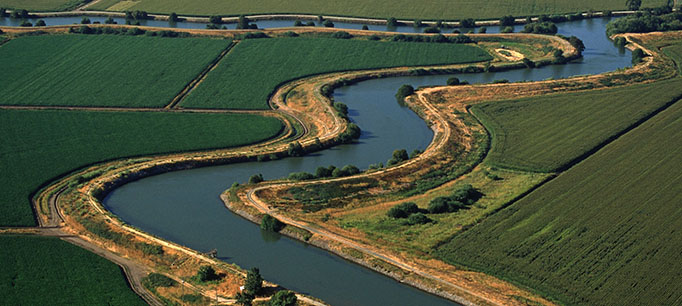
The SacramentoSan Joaquin Delta is one of the West’s most important estuaries, and a critically important water source for millions of Californians. But decades of water exports and human alterations have transformed this aquatic ecosystem, and a few dozen of its native species have dwindled to the point of extinction. We interviewed Phil Isenberg, vice chair of the Delta Stewardship Council and a member of PPIC’s board of directors, about the state of the Delta.

PPIC: How is the Delta faring these days?

Phil Isenberg: From an environmental perspective there’s not a lot of good news. The Delta is a severely damaged environmental site of great importance, and the damage has continued for more than 100 years. Very little restoration activity has taken place compared to the vast development of water supply infrastructure that has gone on in the past century. More housing is being built in flood-threatened areas, and urban growth continues on the boundaries. Some areas like Stockton are rapidly encroaching on agricultural and environmentally sensitive areas in Delta. The state’s Delta tunnel proposal has a greatly reduced environmental restoration plan—only about 30,000 acres of land will be put in protected status or restored for environmental purposes. It’s not insignificant, but certainly not as positive as the 150,000 acres which was part of the Bay Delta Conservation Plan.

PPIC: What is the role of the Delta Stewardship Council in managing this important resource?

PI: Our mandate is to achieve two equally important goals: to provide a more reliable water supply for California, and to protect, restore, and enhance the Delta ecosystem. It’s the latest legislative attempt to create a legally enforceable governance and management plan for the Delta. The Delta Plan was adopted in 2013; within 30 days we were sued by 27 plaintiffs, ranging from agricultural interests, state and federal water contractors, the city of Stockton, and several environmental groups. Interestingly, no state agencies or counties have sued. Their legal argument seems to be either we went too far or didn’t go far enough—which suggests to me that we may have struck the right balance.

PPIC: What does the latest science tell us about the Delta’s condition?

PI: Besides being severely damaged by human actions over centuries, the Delta has also been damaged by the drought and by the diversion of water for human purposes during drought. Scientists are skeptical about the ability of government or society in general to be able to rapidly improve the environmental condition of the Delta. We have altered the ecosystem in too many ways. We’ve channelized its waters, put in more than a thousand miles of levees, allowed people to move into the floodplain, brought in invasive nonnative species, and allowed pollutants to flow in from industry and agriculture. The best science we’ve received over the years is that the Delta’s environmental troubles can be managed better, but we will not likely be able to save all species in face of these threats. The political process demands immediate action, but science tells us that it will take decades to improve a Delta damaged over the past 160 years. A big part of any real solution is to involve independent scientists in decision-making and then follow their advice.

PPIC: What’s the most difficult tradeoff we’re facing in the Delta?

PI: The biggest problem is the conflict between illusion and reality. Basically, the water supply in California has not expanded since we began keeping track in the late 1880s. Worse, the water supply remains highly volatile. As our society has grown, demands for water have increased; our demands now exceed available water in many years. People have unrealistic expectations that ignore the limits of our supply. Although it is state policy to reduce human reliance on the Delta—and to compensate for that with heavy investments in water conservation, recycling, and the like—a lot of folks want more.

PPIC: What’s your biggest hope or aspiration for the Delta’s future?

PI: The Delta is constantly changing; we can’t freeze it in time. The Delta that existed before extensive human changes cannot be recovered. California hasn’t always done the right thing regarding water, but over time we get it right more often than not. So I hold out a reasonable level of hope for an improved Delta in the future. A successful Delta future for me is one that stops urbanization and protects its environment and the agriculture that remains. Will it work? Ask me in 100 years.

Learn more: