
California’s freshwater fish are in trouble. The causes are many and include the way we manage water and land as well as this unusually warm drought. The decline of these fishes can lead to broader consequences, particularly if they are declared threatened or endangered under the federal Endangered Species Act (ESA).
There are pragmatic reasons to avoid this outcome. Listings under the ESA lead to “emergency room” actions to prevent extinctions, often reducing flexibility for water management and bringing significant economic consequences. Of the 30 California freshwater fishes now designated as threatened or endangered, 14 have affected local and regional water supply management. Three—delta smelt, winter-run Chinook, and spring-run Chinook—are a dominant constraint on the Brown administration’s proposal for new water conveyance in the Delta (California WaterFix).
To illustrate the scope of the problem, here are some examples of fish that are in decline but are not yet federally listed. If listed, the measures needed to protect them will have significant effects on the water supply:
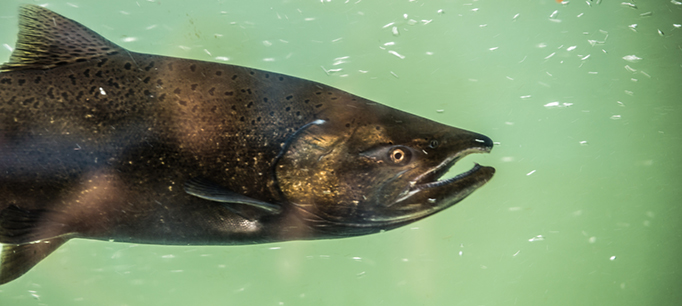
- Central Valley late-fall- and fall-run Chinook salmon. These are the last unlisted salmon runs in the Central Valley. Both—particularly the late fall-run—may be future candidates for listing. Fall-run Chinook are the basis of the state’s salmon fishing industry. Federal listing would add new restrictions, ensuring year-round constraints on water supply operations in the Central Valley and the Delta.
- Upper Klamath–Trinity fall- and spring-run Chinook salmon. Both runs are increasingly at risk within the Klamath Basin, with the potential to complicate efforts to complete the Klamath Basin Restoration Agreement, the California Department of Fish and Wildlife’s effort to improve habitat on Klamath River tributaries such as the Scott and Shasta Rivers, and operations of the Central Valley Project, which diverts water from the Trinity River to the Sacramento River.
- North Coast steelhead. Two populations of steelhead—Northern California and Klamath Mountains Province—have been in decline at least partly from the effects of dams. The expansion of marijuana farms and the drought have increased stress on these populations. Federal listing would complicate recently launched efforts of the California Department of Food and Agriculture and the State Water Board to license medical marijuana farms and better manage water resources in this region.
Improving the way California manages water for environmental purposes is key to preventing new ESA listings. The development of environmental water budgets would create an opportunity to more flexibly and effectively manage the aquatic environment. The details of this proposal are contained in the PPIC Water Policy Center report Allocating California’s Water: Directions for Reform.
Although establishing environmental water budgets would often require setting aside more water than we do now to protect at-risk species, this approach is likely to be more flexible and less disruptive than regulations arising from ESA listings. California needs new tools, such as environmental water budgets and the willingness to take proactive steps to keep species out of the emergency room.

Read the report Fish Species of Special Concern (Moyle et al., July 2015)


 In other words, political insiders are more appealing in California today than they were in the state’s past, while the movement toward political outsiders is more limited here than in the nation as a whole. Still, a sizable number of Californians say they prefer political outsiders. Who are they and why might they have this preference? Our polling offers these insights: those who prefer outsiders are more likely to give their elected leaders low job approval ratings, more likely to have negative views of the two-party system, and more likely to be Republican than Democrat.
  Negative attitudes toward the two-party system are also part of the profile for those who prefer a political outsider over an experienced officeholder. Just 31 percent of California likely voters say that the Republican and Democratic parties do an adequate job of representing the American people, while 58 percent say that they do such a poor job that a third major party is needed. Majorities across partisan groups today say that a third major party is needed (52% Democrats, 57% Republicans, 69% independents). Solid majorities who prefer new ideas for a presidential candidate (64%) and favor experience running a business for gubernatorial and US Senate candidates (65%) also say that a third major party is needed.
 In sum, we do not find fresh evidence of the national movement toward political outsiders among likely voters in California. This is because of the state’s partisan makeup (43% Democrat, 28% Republican) and approval ratings of President Obama (56%) and Governor Brown (54%) that favor the presidential and US Senate candidates with experience in elected office. If these political trends hold steady next year, then Democratic insiders should continue to have the edge over Republican outsiders in statewide elections.
 However, we should not discount the importance of the finding that California’s GOP voters are aligned with most Americans in their strong preference for political outsiders. GOP voters will be swayed by the qualifications of presidential candidates who represent “new ideas and a difference approach” and by US Senate candidates who reflect “experience in running a business.” These preferences could have a profound impact on the election choices of GOP voters in California’s presidential and senate primaries.
 PPIC:
PPIC:

 PPIC:
PPIC:


 California has made major strides in reducing the number of state residents without health insurance coverage. With the state’s Medicaid expansion and the creation of Covered California under the Affordable Care Act (ACA), the percentage of Californians without insurance dropped nearly 5 percentage points in 2014—the first year of ACA implementation.