Guaranteeing Transfer Admission to the University of California

Improving transfer from community colleges to four-year universities is an important step in meeting the state’s future workforce needs. In April 2018, the California Community College Chancellor’s Office and the University of California (UC) entered an agreement to guarantee admission to community college students who meet certain qualifications. If sufficient funding and space exist, the guarantee could take effect in fall of 2019.

There are already several pathways for community college students to enroll in UC. For example, all but three campuses (Berkeley, Los Angeles, and San Diego) have a guaranteed admission program for students from certain community colleges. UC has also established academic road maps in 21 majors to help prepare students who plan to apply to transfer. However, completing an academic road map does not guarantee admission.

The new plan would guarantee admission for eligible community college students to a UC campus, but not necessarily to their preferred campus. Specifically, it creates a referral pool—a way to redirect students away from full campuses toward campuses with space. This transfer referral pool would be similar to UC’s referral pool for freshmen. At this time only one campus, UC Merced, accepts applicants from the freshman referral pool. In 2017, thousands of eligible students were redirected to UC Merced, but few actually enrolled.

How might a referral pool work for transfer students? Currently, three campuses—Santa Cruz, Riverside, and Merced—are having a particularly difficult time enrolling sufficient numbers of transfer students. These campuses would need to absorb redirected transfer students. However, it’s not certain that redirected students would enroll, even if offered admission. Right now, many transfer applicants decline their offer of admission to these campuses.

To improve transfer pathways for community college students, UC and the state should consider both expanding capacity at high-demand campuses and exploring ways to encourage students to attend other campuses.
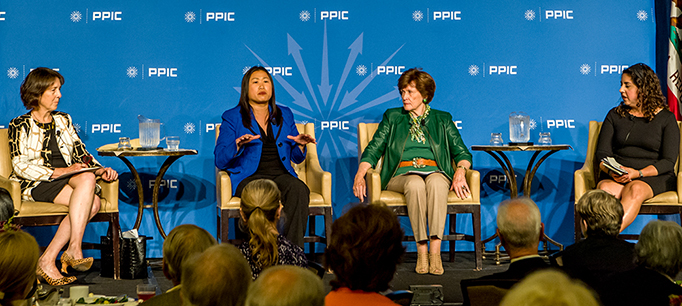
Video: Celebrating 100 Years of Women in the California Legislature

At a recent PPIC event celebrating the centennial year of women in California’s statehouse, female legislators shared stories of how they broke through the political glass ceiling.

The session opened with a conversation between Toni Atkins, the first woman and first openly LGBTQ leader of the state senate, and Mark Baldassare, president and CEO of PPIC. Their talk ranged from the professional to the personal.

Atkins listed her top legislative priorities as emergency services and disaster preparedness. It’s a “new normal” we have to grapple with, she added. Atkins also wants to continue her focus on housing and homelessness, which she called a “humanitarian crisis.”

When Baldassare asked how the #MeToo movement might change the Sacramento culture, Atkins said change “doesn’t happen overnight” but that she wants “more than anything not to lose this moment, because . . . it may not come again for some time.”

Key to Atkins’s leadership style is to listen well and value other points of view. California has a progressive bent, but in today’s political climate, “we’ve left some voices behind,” she said.

This centennial offers a reminder that women remain underrepresented in the legislature. Although they comprise more than half of California’s likely voters (53%), they make up just 23% of its legislators. A panel of lawmakers discussed that imbalance in a conversation moderated by New York Times correspondent Jennifer Medina.

Becky Morgan, a state senator from 1985 to 1993, recalled setting up the first committee on early childhood. She was also the first female legislator to wear pants on the senate floor. It wasn’t an act of protest—it was simply “a cold January morning,” Morgan said, drawing laughter from the audience.

State senator Janet Nguyen recounted her stint as the first woman to chair the Orange County Board of Supervisors and the first to lead its meetings while pregnant—which “shocked” a few supervisors, she said. Despite the daily challenge of balancing work and family, Nguyen said, “I’m not going to give up family or career. I want both!”

All the panelists agreed that gender diversity was essential to effective state leadership. State senator Nancy Skinner agreed that we need more family-friendly policies in the state, but she emphasized that women should also champion issues related to their areas of expertise—in her case, criminal justice reform and climate change. Her view on women serving in the legislature? “It’s just right,” she argued—which led to sustained applause.

The Yuba Accord: A Model for Water Management

Last week a diverse group of stakeholders celebrated the tenth anniversary of the Lower Yuba River Accord—a historic agreement to improve conditions for the river’s endangered fishes, maintain water supplies for cities and farms, and reduce conflict over competing uses for water. Here at the PPIC Water Policy Center we frequently refer to the Yuba Accord as a model for modern water management in California. Here are three reasons why.

  1. Cooperation: The Yuba Accord happened because parties came together to develop an alternative plan in response to a state order calling for more water to support endangered salmon. By leveraging local management tools—including increased use of groundwater on farms during droughts—the accord has kept even more water in the river for fish than the state called for. This is a great example of how negotiated agreements can get broad buy-in and tap on-the-ground knowledge.
  2. Integration: Integrated water management gets better results by examining all the pieces of the water puzzle together to see how solutions to one problem might affect other areas. The Yuba Accord is a very effective example of this. The accord hinges on the flexibility achieved by managing surface water and groundwater as an integrated system to benefit salmon. But the augmented river flows provide additional benefits in Yuba County and beyond. The accord authorizes flows downstream of the Yuba to be traded to agricultural and urban communities farther south who face shortages during dry years. Moreover, the revenue generated by water trades has helped fund flood protection upgrades in Yuba County—an area facing high flood risk.
  3. Planning ahead: The accord demonstrates the advantages of planning for different hydrologic conditions. Careful work went into deciding how surface water and groundwater would be managed in wet and dry years. This meant that during the 2012–16 drought the Yuba was one of few watersheds in the state that was prepared to weather the extended dry conditions. California needs more such watershed-level plans for managing water for ecosystems before, during, and after droughts.

To be sure, Yuba County stakeholders started out with some advantages: in addition to relatively abundant water supplies, the county has a governance structure that makes integrated water management easier to implement. The Yuba County Water Agency (YCWA) is a county-wide special district whose board consists of county supervisors—local leaders for all county matters, not just for water. YCWA is responsible for both surface water delivery and flood management, and its boundaries overlap with the local groundwater basin. YCWA also had some very committed leaders who wanted to find a creative alternative to a protracted legal battle over flow regulations.

Even so, other California watersheds could adopt the accord’s focus on integrated, cooperative planning. One near-term opportunity lies in the implementation of the Sustainable Groundwater Management Act (SGMA), a state law that requires local water districts to bring their basins into balance but leaves it to the locals to decide how to achieve that goal. Another opportunity lies in improving conditions for fish and wildlife in Central Valley rivers as part of the update to the Water Quality Control Plan for the Bay–Delta. The State Water Board is proposing regulations to increase river flows, but is also inviting parties to propose alternatives that take a more holistic approach. This offers locals a chance to leverage the new groundwater management authorities under SGMA to integrate the management of groundwater and surface water. These kinds of pragmatic, consensus-based approaches can generate long-term solutions to some of the toughest challenges in California water.

Watch a short video about the accord.

Do Californians Support State Action on Immigration?

California became the nation’s first sanctuary state in January, when Governor Jerry Brown signed legislation (SB 54) that limits cooperation by local law enforcement with federal immigration authorities. In March, the US Justice Department announced that it was suing California over three immigration-related laws—including SB 54. Since then, six counties—including San Diego and Orange—and at least 13 cities have voiced opposition to the sanctuary laws, either by passing resolutions or by joining the Justice Department’s lawsuit against California.

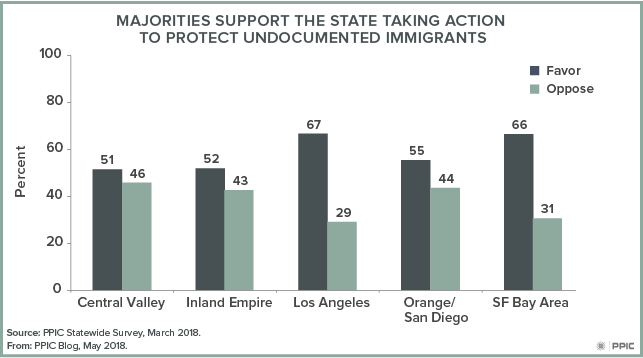
A solid majority of Californians (61%) support the state taking action to protect undocumented immigrants. But there is a stark partisan divide: the March PPIC Statewide Survey found eight in ten Democrats in favor of and eight in ten Republicans opposed to the state taking action. It is notable that there is majority support across the state’s regions. This includes 55% support among residents in Orange and San Diego Counties, home to a majority of the cities opposing the sanctuary laws. About half of residents in the Central Valley and the Inland Empire favor the state taking action. And support is even higher in Los Angeles and the San Francisco Bay Area, where it hovers around two-thirds. There are some differences between coastal (64%) and inland (52%) residents.

Across demographic groups, there is considerable support for state action on this issue—in fact majority support drops below 50% only among whites (47%). Support is highest among Latinos (76%), immigrant residents (73%), those with a high school degree or less (71%), Californians age 18 to 34 (67%), and those living in households making less than $40,000 (67%).

While the courts will ultimately decide the fate of the federal lawsuit, two things are clear: 1) California will continue to chart its own course on issues its leaders care about, and 2) immigration continues to be a topic that divides partisans but unites many other Californians across the state. Stay tuned to PPIC as the Statewide Survey will continue to monitor the opinions of Californians on this important policy issue.

The 100th Anniversary of Women in the California Legislature

The Public Policy Institute of California is hosting a public event in Sacramento to commemorate the election of the first women to the California Legislature in 1918. Today, with Toni Atkins as the first woman in the powerful position of senate president—and in the wake of the capitol’s sexual misconduct scandals—we want to offer some reflections on the status of women in California’s statehouse.

First, it’s important to point out that the legislature has far fewer women than men at a time when women have an edge over men in voting. Women now make up slightly more than half of California’s likely voters (53%). This edge persists across racial/ethnic groups: women make up more than half of African American (57%), Latino (57%), white (52%), and Asian American (51%) likely voters. Across parties, women make up 62% of Democratic likely voters, 49% of Republican likely voters, and 44% of independent likely voters.

But the predominance of women voters is not reflected in the composition of the California Legislature. After the path-breaking elections of 100 years ago, the following decades saw relatively few women serving in the assembly. And it wasn’t until 1966 that women of color won assembly seats. A decade later, the first woman was finally elected to the state senate. The top two leadership roles in the assembly and senate were filled even more slowly. No woman held the assembly Speaker position until 1995—and that was for only three months. The next woman Speaker wasn’t elected until 2008.

Legislative term limits—passed by voters in 1990—were partially conceived as a path toward increasing diversity in the statehouse. But in the nearly 30 years since—an era that has been defined by California’s increasing ethnic and racial diversity, and Democratic leanings—there has been little change. The proportion of women in the legislature has ranged from a low of 18% in the 1991–92 session to a high of 31% in the 2005–06 session; overall, the average has hovered around 25%. A slew of recent reforms such as independent legislative redistricting, the top-two primary, and additional legislative term limit reforms—as well as efforts to encourage voter registration and voting—have had little impact.

Today, the proportion of women in the California Legislature stands at 23% and is similar in both houses. However, Republicans trail Democrats in the proportion of women legislators, with 6 women among the 38 Republican members and 22 women among the 79 Democratic members.

Surprisingly, California is a laggard in this area. Although a 2018 Rutgers University report finds that 25.4% of state legislators across the US are women, California ranks just 32nd out of the 50 states, close to the next-largest state, Texas (#35, 20.4%). Compared to our western neighbors, California is well behind Arizona (#1, 40%), Nevada (#3, 38.1%), Oregon (#8, 33.3%), and Washington (#5, 37.4%).

The lack of gender diversity in the California Legislature raises serious questions about the effects of political representation. What is the impact of the gender gap on equitable and effective policymaking? What are the greatest barriers for women in political careers? Will electing more women to legislative office provide inspiration and pathways for others—and help to build a more inclusive culture? One thing is certain: California’s current gender gap has consequences for the ability to recruit and retain top talent in the legislature today.


New Federal Policies Will Help Manage Wildfire Risk

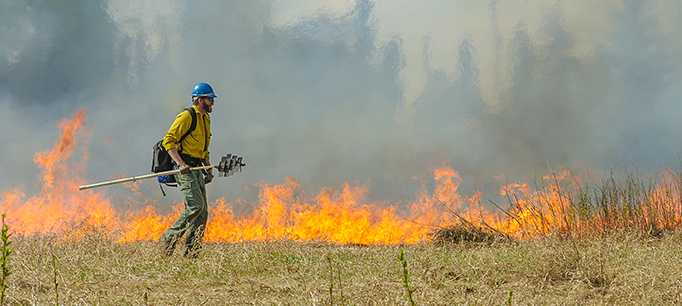
California’s headwater forests have experienced a long-term decline in health and have suffered unprecedented tree death and severe wildfires as a result. About half the Sierra Nevada and southern Cascade forests are owned and managed by the US Forest Service (USFS). HR 1625, the federal budget bill enacted in March of this year, contains four new reforms that will make it easier for the USFS to ramp up management efforts and reduce wildfire risk in this region:

  1. Protecting funds dedicated to forest management and restoration. The Forest Service’s fire suppression activities have traditionally been funded from the same pot of money that pays for management to reduce hazardous fuels, like prescribed burning and mechanical thinning. The rising costs of wildfire suppression thus draws resources away from management actions. This fiscal practice, sometimes known as “fire borrowing,” creates a vicious cycle. With low levels of management, fuels continue to build up, increasing the likelihood and intensity of future fires—and the cost of suppressing them. The reform freezes USFS expenditures on wildfire suppression at 2015 levels and creates a new source of wildfire suppression funds that is independent from funds for forest management and restoration. This change becomes effective in fiscal year 2020.
  2. Expediting small-scale forest management projects. Currently, the USFS can streamline environmental review for certain types of small-scale projects that don’t pose a significant environmental threat, such as restoring burned areas, stopping insect infestation, and performing some commercial harvesting. This reform expands USFS authority to streamline approval for small, proactive fuel-management projects that improve forests’ resilience to drought, pest, and wildfires. USFS Region 5 (serving California, Hawaii, and the Pacific Islands) is evaluating opportunities to use this new streamlining tool in 2019.
  3. Improving tools for collaboration between the Forest Service and local parties. USFS’s stewardship projects allow businesses, local governments, and nonprofits to play a larger role in carrying out forest management projects on USFS lands. This harnesses additional resources to promote forest health on these lands. The new policy doubles the maximum duration of stewardship projects to 20 years, which could encourage larger projects and more substantial investments in supportive infrastructure, such as roads, sawmills, and biomass energy generators.
  4. Improving tools for collaboration between the Forest Service and states. This reform expands the management work that states may perform on USFS lands under the Good Neighbor Authority (GNA). The GNA can be helpful when private or local government landowners share a boundary with federal forests. The new policy expands the use of GNA programs to include road rehabilitation and repair projects that can improve access to forests in need of management. The USFS expects this will encourage partnerships with state agencies such as Caltrans and California State Parks, which regularly repair roads in the vicinity of national forests.

This new suite of policies signals a growing prioritization of forest management and provides concrete steps to increase the pace and scale of active management. The changes will allow USFS to develop stronger partnerships with other forest landowners and stakeholders, and could help lead to healthier headwater forests in California.

Out-of-State Students and Tuition at UC

After the Great Recession, growing demand among out-of-state students, including international students, helped the University of California (UC) offset funding cuts. But as nonresident tuition goes up, and as UC places caps on enrollment that trend may be changing—raising questions about the stability of what’s now an important source of university revenue.

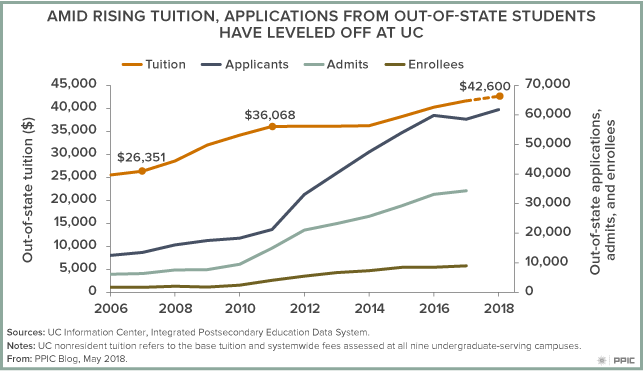
The recession brought heavy cuts to state education budgets, and public universities in California and nationwide increased tuition substantially to compensate. UC implemented cost-saving strategies and looked for other sources of revenue. Campuses began enrolling more out-of-state students, who pay an extra $20,000 or more in supplemental tuition every year. As a result, nonresident applications, admits, and enrollees all more than doubled from 2010 to 2016, and out-of-state students became a reliable—and growing—source of revenue. UC states that this additional revenue helps provide funding to enroll California residents.

From 2011 to 2014, tuition was frozen for all students as the state recovered from the recession, but nonresident tuition started to grow again in 2014. By 2017, nonresident tuition surpassed $41,000, leaving it comparable to the most expensive public universities in the nation (Michigan: $47,476; Virginia: $46,643) and to the most expensive private schools in the state (Stanford: $48,987; University of Southern California: $53,448). UC tentatively approved another increase in March that would put nonresident tuition at about $42,600, but may scale that back if the state kicks in more funds.

However, growth in out-of-state demand may be starting to slow at UC. The number of applications from out-of-state students, which had grown steadily since 2010, dropped in 2017, though it then rebounded to previous levels in 2018.

Nonresident Tuition Figure

There are many possible reasons for the potential slowing growth in demand among out-of-state students. UC has put a yearly cap on nonresident enrollment and stopped giving out-of-state students financial aid, which means they pay the full price of tuition plus living expenses, about $61,000 total. In contrast, private institutions do give financial aid, so even with higher tuition, they may be cheaper for some students overall. For example, the average estimated net cost for students who receive financial aid at the University of Southern California is $32,932, and at Stanford the net cost is $16,695.

Given the cap on out-of-state students—as well as the potential slowdown in the growth of demand—the University of California may have to look to other sources to increase revenue for its campuses.

Federal Spending Bill Boosts Education Funds in California

Congress recently agreed on a $1.3 trillion spending bill to keep the federal government operating through September 2018. Nearly six months behind schedule, the omnibus spending bill includes a $3.9 billion increase for the US Department of Education (DOE), even though the president had proposed a $9 billion (13%) budget cut that involved scaling back or eliminating more than 30 DOE programs. Since funding for most of these programs is based on student headcounts, California is expected to receive more federal money this year.

One contentious issue in the president’s budget was a $1.4 billion increase for public and private school alternatives. Congress rejected increases for the new Furthering Options for Children to Unlock Success grants—the president’s signature proposal—and the Education Innovation and Research program. Instead, it increased funding for the charter schools grant program by $58 million, a much smaller amount than the president—and Secretary DeVos—had proposed.

The spending bill also excluded a proposed 15% funding cut for Perkins grants and the elimination of the Preschool Development grants. In the previous school year, California received $113 million for Perkins grants, which support career technical education programs in high schools and community colleges. California is also expected to receive more money from the Department of Health and Human Services for programs such as the Child Care Development Block Grant and Head Start.

Congress voted to maintain funding for Supporting Effective Instruction State Grants, which the president also wanted to eliminate. Commonly referred to as Title II, this program supports the recruitment and development of high-quality teachers and principals, with a particular focus on serving students from low-income families. Title II is the third-largest DOE program, and California schools received more than $200 million Title II funds in the most recent school year.

At the postsecondary level, Congress increased funding for the Federal Supplemental Educational Opportunity Grant by $107 million. The president proposed eliminating this $732 million program, which provides need-based grants to help low-income undergraduate students with college costs. The spending bill also increased funding for the federal work-study program by 14%, reversing the president’s proposal to cut it by almost half.

Historically, federal funds have been a small fraction of school district revenues, but they have become an increasingly important funding source, particularly for high-need schools. All in all, the new spending bill will support California’s ongoing efforts to improve educational outcomes for all of its students.

How “Weather Whiplash” Could Change California

First came the drought, then the floods: California has long bounced between the two weather extremes―most recently when the latest drought segued into 2017’s record-breaking rain and snow. Such “weather whiplash” could become much more common as the climate changes, according to a new study. We talked to Daniel Swain, a climate scientist at UCLA—and the study’s lead author—about what to expect.

PPIC: California already has a highly variable climate. How will this be different?

Daniel Swain: There will be much bigger swings between wet and dry years. We project a 25–100% increase in extreme swings in this century. On top of that we’ll probably see some changes in seasonality. While it will still be dry in summer and wet in winter, spring is likely to become considerably drier in most of the state, especially in the south. This will have big consequences for things like the snowpack and wildfire risk.

California’s human and natural systems can usually withstand the kind of variations we’ve seen in the past. But as the frequency and intensity of these swings increases, it could push some species to the edge. For example, the warming climate is already stressing our forests faster than they can adapt—we’re seeing a dramatic example of this right now with widespread Sierra Nevada tree mortality. And warming temperatures are making it difficult to manage for salmon and other fishes that rely on cold water.

It could be equally hard for the state’s water system to adapt to the bigger floods. Our big dams were designed to capture smaller floods than what we expect in the future. We can make some changes on the margins, but these structures were built for a climate that we no longer have.

PPIC: What is the most surprising thing about your findings?  

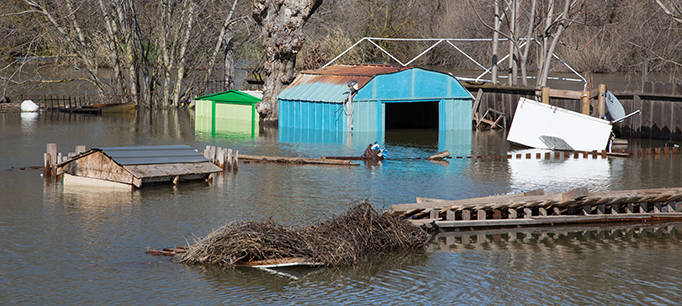
DS: We were surprised by how much the risk for really severe flood events increases. We project a 300–400% increase in the likelihood of events similar to California’s 1862 Great Flood, which brought weeks of unrelenting rain and inundated much of the Central Valley. We found that it’s more likely than not that an event comparable to the 1862 flood will occur in the next 40–50 years. Keep in mind that there’s no modern precedent for this—it would exceed all previous tests of our flood management infrastructure.

It’s important to remember that we based our study on fairly pessimistic assumptions. If the world greatly reduces greenhouse gas emissions, California could see a smaller increase in extreme flood risk. But social and political factors will ultimately determine how much we reduce emissions in coming decades, so uncertainty remains.

PPIC: What is the key takeaway for water managers?

DS: We need to think about managing droughts and floods simultaneously, because some adaptations to help manage drought could make it harder to manage floods and vice versa. For example, increasing water stored behind California’s big dams gives us a nice buffer against a couple years of drought. But this saved water can become a liability because it reduces the reservoir space available to capture flood water. A higher risk of big floods necessitates bigger safety margins, which means storing less water behind dams for dry times.

One way to help manage this trade-off is to increase the use of natural floodplains to take up some of the water from big storm events. For example, Sacramento’s Yolo Bypass is intentionally inundated to protect the city from big floods. Another approach is to capture the water released from dams to make space for floods and store it underground. And when floods inevitably come, use flood waters to recharge groundwater.

Video: Preparing California for the 2020 Census

The 2020 census will be a defining moment for California. Much is at stake—including billions in federal funds and the state’s political representation in the US Congress. The lasting impact of an undercount can’t be overstated. Governments, K–12 and higher education institutions, businesses, and nonprofits depend on the census to understand the needs of their communities, target services, and plan for the future.

A panel of experts discussed the critical role of the decennial census at a PPIC event in Sacramento on April 24. They examined the challenges of reaching “hard-to-count” communities, the state’s part in ensuring an accurate tally, the impact of the recently-added citizenship question, and more.

The event opened with a wide-ranging conversation between Marc Berman, state assembly member, and Mark Baldassare, PPIC president. One of Berman’s biggest concerns is that California could lose its political clout in DC. The state has “40 million unique stories,” he said, and the census is about “making sure that every voice” gets counted. But the new citizenship question is counterproductive, in his view. We know that adding it “will discourage a lot of people from participating,” he said. “People are so fearful” that it could make a successful census count that much more difficult, he added.

For the first time, the US Census Bureau will try to collect most responses (55%) online, with the rest obtained by mail or in person. John Thompson, former director of the bureau, identified the government’s main rationale for the change—namely, cost. He also detailed best practices for adding a new census question: In the past, he said, the bureau would spend years testing it, partly to craft appropriate messaging and to ensure that residents were comfortable answering it. The new citizenship question did not have that review, a concern Thompson raised with Commerce Secretary Wilbur Ross to no avail.

John Dobard, associate director of political voice with Advancement Project California, discussed ways to involve the state’s hard-to-reach communities. One way to overcome residents’ fear of participation, he said, is to involve trusted leaders in outreach. Otherwise, entire multi-generational immigrant families could be left out.

An undercount could mean a direct hit to essential state services—such as the Children’s Health Insurance Program. In that scenario, young children in poverty would be hurt most of all, said Sarah Bohn, a panelist and PPIC research fellow.

Ditas Katague, the state’s 2020 census director, said her office is steeped in planning for the statewide rollout. Importantly, she said, California needs an “agile, flexible ground team,” and called on citizen volunteers to join state and local agencies, nonprofits, and philanthropic groups to help make that happen.