Local Measures Address Water, Fire in the Midterm Elections

The biggest water news from the recent election was the failure of the $8.9 billion statewide water bond, Proposition 3. This was the first time voters have rejected a statewide water bond since 1990. But this wasn’t the only story for water-related measures on Californians’ ballots. The midterms saw 33 local measures go to the voters that addressed issues ranging from flood protection to fire resilience. Here we summarize a few key votes.

In Los Angeles County, Measure W passed. This measure allows the county to collect a parcel tax of 2.5 cents per square foot of impermeable surfaces (such as concrete sidewalks and pavement) to fund rain and stormwater capture and clean-up projects, in addition to projects addressing water quality and groundwater recharge. The measure exempts permeable surfaces from the tax, which could incentivize developers to incorporate more green solutions into development and renovation projects.

In the Bay Area, San Francisco and San Jose both passed local bonds to modernize infrastructure. San Francisco easily passed Measure A, which will issue $425 million in bonds to strengthen the Embarcadero seawall to better withstand earthquakes and rising sea levels. San Jose’s Measure T will allocate $650 million in bonds to repair the city’s aging infrastructure. Although almost half of this bond is dedicated to repaving streets, the measure also includes $85 million for flood protection—a response to the 2017 Coyote Creek flood that caused $100 million in property damage. The bond will fund “green infrastructure” projects in the local floodplain to reduce the risks of future floods and groundwater contamination.

Across the state, the rise in devastating wildfires resulted in nine measures addressing fire protection and intervention services in communities, to be paid for through utility taxes, sales taxes, and parcel taxes. Four of these measures passed, while five failed.

Sonoma County’s newly adopted park and ecosystem restoration bill―Measure M, a one-eighth cent sales tax increase―will collectively fund wildfire prevention, ecosystem restoration, and projects to safeguard water supplies, including rivers and streams. Measure FF passed in Alameda and Contra Costa Counties; it extended an existing parcel tax to fund wildfire prevention and water quality activities on East Bay Regional Park District lands, as well as park maintenance. But voters didn’t approve Measure P in Laguna Beach (Orange County), which proposed a sales tax to pay for wildfire safety measures. It would have funded projects such as undergrounding overhead power lines.

Although the failure of Proposition 3 caught some by surprise, it’s important to remember that state bonds play a relatively minor role in funding California’s water needs. Local revenues—from water and sewer bills to taxes—provide 85% of water funding. The newly passed ballot measures carry on that tradition, with Californians across the state voting to address their communities’ needs and priorities for water, fire safety, and the environment.

New Laws on Drought, Forests, and Safe Drinking Water

The legislative session that just wrapped up addressed a number of water and forest management issues. Progress was made in three major areas—urban drought management, forest health, and safe drinking water.

Urban water use efficiency and drought management: Assembly Bill (AB) 1668 requires the State Water Board and the Department of Water Resources to adopt long-term efficiency standards for residential water use and efficiency metrics for commercial, industrial, and institutional water use by June 2022. The law complements Senate Bill (SB) 606, which requires urban water suppliers to develop local water use budgets by November 2023. Progress toward those objectives will be overseen by state agencies. SB 606 also strengthens local drought planning requirements and increases transparency of information about drought risks and responses. The law requires suppliers to regularly analyze the risk of a five-year severe drought and report short-term water shortage risks and responses to the state each spring. Suppliers must also revamp their drought response plans to include new elements such as descriptions of supply forecasting procedures, new ways of reporting water shortage levels, and protocols for communicating with customers during droughts. AB 1668 also includes provisions to increase drought preparedness for small rural water systems and large agricultural water suppliers.

Wildfires and forest management: SB 901 takes substantive steps toward reducing wildfire risks by increasing the pace and scale of forest health improvements. Cal Fire will have access to new, stable funding from cap-and-trade revenues—$200 million per year for five years—to pay for forest management. The law also helps lower management cost barriers for family forest owners, which occupy about one-quarter of the state’s headwater forests. It relaxes some timber harvest regulations to make it easier for these owners to reduce wildfire risk. A provision that increases the size of trees owners can harvest should expand their ability to raise funds from selling timber. The law also allows multiple landowners to work under the same timber harvest permit. Finally, SB 901 includes provisions that apply to forests managed by the US Forest Service, which make up more than half of our headwater forests. In particular, it streamlines California’s environmental permitting process for collaborative fire risk reduction projects on federal lands that are approved under the federal National Environmental Policy Act.

Safe drinking water for vulnerable communities: Drinking water received significant attention this year, as lawmakers attempted to fill the funding gap for small disadvantaged communities facing water quality and quantity problems. Proposals to tap urban water customers and agricultural fertilizer users for safe drinking water funds ultimately failed in the legislature. However, new laws signed by the governor will strengthen tools for addressing drinking water quality issues. AB 2501 increases the State Water Board’s ability to require the consolidation of vulnerable water systems with larger, more reliable systems. The new law expands the board’s authority to require the consolidation of communities served by domestic wells. AB 2501 also extends the board’s authority over support services to help communities provide safe drinking water where consolidation is not an option. Another new law, AB 2541, gives severely disadvantaged communities expanded access to the Drinking Water State Revolving Fund for water infrastructure projects. The law makes it easier for the board to provide full grant funding in addition to low-interest loans.

The governor also signed more than a dozen other bills related to water, in areas such as sewer system consolidation, on-site treatment regulations and rules for the reuse of non-potable water, and the establishment of an office within the State Water Board to help address water-rights matters.

We will keep track of updates and new proposals in 2019.

Could Wildfires Affect the 2020 Census?

The decennial census plays an essential role in American democracy. The stakes are huge for California, and 2020 is fast approaching. This series of blog posts takes a detailed look at California communities that may be at risk of being undercounted.

Wildfires in California have burned millions of acres and destroyed or threatened thousands of homes, displacing families around the state. Among their many devastating long-term effects, disasters may elevate the risk of undercounting some communities in the upcoming census.

The Census Bureau’s goal is to “count everyone, only once, and in the right place.” In practice, this means that people are counted where they reside as of “Census Day” (April 1, 2020), even if this is not their permanent residence. Given that Californians who lose their homes in disasters must then find housing in a notoriously difficult market, housing conditions alone could pose a hurdle to accurately counting communities that have been displaced by wildfires.

Hurricane Katrina presented similar issues for the 2010 Census. While some people displaced from the Gulf Coast moved away permanently, many others were counted in counties or states they intended to leave once their homes were again habitable. Still others stayed in accommodations closer to home, which—depending on resources—were sometimes shared, non-standard, or even not yet considered habitable. These families proved difficult to reach by mail, with just 45% of New Orleans households returning forms at first (compared with 61% in 2000). On-the-ground staff were ultimately responsible for hand-delivering questionnaires to the majority of New Orleans homes. Even though the Census Bureau can request a funding contingency for such costly efforts, it will have many competing demands for resources in 2020.

In the aftermath of California’s recent fires, local areas face unique challenges to getting an accurate census count—particularly in terms of housing. Here we look at three of those areas across the state. Current estimates show that 20,000 residents were affected by the Carr fire (Redding, 2018) and that the Thomas fire (Ventura County, 2017) and the Tubbs fire (Santa Rosa, 2017) each affected about 40,000 residents. Before the fires, none of these areas stood out in terms of having large populations of hard-to-count residents, but the loss of housing could create new obstacles.

Even in normal times, housing plays a key role in getting an accurate census count. Rental units and mobile homes are less likely to appear on official census address lists. Moreover, their residents tend to move more often, making them hard to reach. Wildfire displacement heightens these challenges, especially in places where housing was already hard to count. For example, mobile homes made up 6% of housing in the Thomas fire area—double the statewide average. In the Carr fire area, they constituted 10%.

Before the fires, the share of renters in all three fire areas was lower than the statewide share, but the loss of homes likely changed this picture. CalFire reports that the Thomas fire destroyed 775 homes—and subsequent mudslides in the area demolished at least another 100. The Carr fire destroyed 1,079 homes, and the Tubbs fire razed 3,000. Displaced residents are more likely to rent, reside in non-standard arrangements, and/or struggle with poverty, creating new challenges for the census count.

Blog figure: Housing conditions in fire zones varied widely

In 2020, given the likelihood that families will continue to be displaced by wildfires or other natural disasters, it will be important for state and local leaders to coordinate with the Census Bureau to ensure that all Californians are counted accurately—regardless of their housing situation. For more on areas with hard-to-count housing and other challenges, visit PPIC’s interactive census maps.

Video: Managing Drought in a Changing Climate

As San Francisco began welcoming visitors arriving for this week’s Global Action Climate Summit, the PPIC Water Policy Center hosted an event on the impact of climate change on California’s water system.

The Monday event brought together a panel of experts to discuss reforms that could improve resilience and galvanize action to prepare for future droughts. The panelists were Maria Herrera, who works on water issues for Self-Help Enterprises and is a member of the California Water Commission; Felicia Marcus, chair of the State Water Board; Cannon Michael, president of Bowles Farming Company; and Tim Ramirez, a member of the Central Valley Flood Protection Board. The panel was moderated by Greg Dalton, founder and host of Climate One.

Ellen Hanak, director of the center, kicked off the evening with a summary of new research by PPIC on managing drought in a changing climate. After noting that California is already seeing changes from a warming climate, she said that “a lot of things we’re recommending are going to be very important and very useful as soon as we can do them.” She reviewed the report’s four main suggested areas of reform: plan ahead, modernize the water grid, update water allocation rules, and find the money to pay for these reforms. “It’s a plan that would be great for the next governor,” she said.

Dalton launched the panel discussion with a question about the need to modernize the state’s water grid—the network of above- and below-ground storage and conveyance systems that connects most water uses in the state. Ramirez said that the conveyance system needs updating because it is “totally insufficient for the precipitation we have now.” For example, the San Joaquin River system “was plumbed for snowmelt―very predictable, slow runoff―but that’s not what happens anymore.” He discussed the need for expanded floodplain capacity to help absorb floods.

Marcus said, “The answer is to maximize every drop—figuring out how every molecule of water … can be used over and over again and used for multiple things.” She said improved information and modernizing our thinking about infrastructure are steps toward achieving this goal.

Herrera noted that disadvantaged rural communities, which are most likely to face drought-related water shortages, find it difficult to engage in discussions about the water system. She called for ensuring that local communities are included in decision making about water grid upgrades, and added that they should have a say in “where to place storage, how water that is stored gets used and allocated, and for what benefits.”

Other topics of discussion included addressing growing wildfire risk; ensuring safe, reliable drinking water for the most vulnerable communities; advice for the next governor on managing climate volatility (Marcus: “the key is to pick up the baton and run with it.… [Water] is an issue on which leadership can make a difference on so many things”), and ways to reduce conflict over water.

Cannon Michael seconded the need for leadership to tackle climate change—and urged all Californians to heed that call. “We need to think about the California we have, what an amazing state this is, and lead from that. We’ve got to push past the voices that are trying to drag us apart, and work on solutions from the middle. We can solve any problem that we all put our minds together on.”

Managing Forests to Reduce Wildfire Risks

California’s record-breaking fires have prompted a serious public discussion on how to reduce the risk of extreme wildfires. At the core of the debate is the role of vegetation management to reduce fuels. Some argue that California is not doing enough to manage its forests and that more trees must be removed. Others are concerned that this approach could result in a weakening of important environmental protections.

Both perspectives are grounded in real concerns. That said, Californians need to find common ground, because the state is in the grip of a crisis fueled by a warming climate, drought, and decades of management practices that have resulted in extensive areas of unhealthy, overly dense forests. Identifying overlapping objectives can help move stakeholders beyond conflict toward ecologically sound forest management. Here are a few observations that might help advance the conversation.

  • There are no one-size-fits-all solutions. Devastating wildfires have occurred recently in oak woodlands, scrub and chaparral, and mixed-conifer forest. Fuel reduction tools like prescribed burning and mechanical thinning may reduce wildfire threats in some ecosystems but not others, depending in part on land use practices and the frequency of fire before and after people began changing the landscape. Improving public understanding about the applicability of each approach can help move the debate forward.
  • Where fuel reduction is a viable tool, we aren’t doing enough. It has been estimated that fuel reduction on US Forest Service (USFS) lands in the Sierra Nevada would need to increase two- to six-fold to meaningfully improve forest resilience. Cal Fire (the state’s fire protection and forest management department) and USFS have both pledged to dramatically increase the amount of fuel reduction over the next few years. First priority should be given to locations where all parties can agree on management actions.
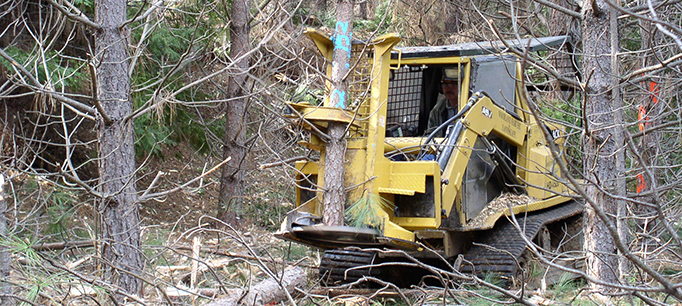
  • Mechanical thinning and logging serve different purposes. Both approaches can reduce fire risk in the Sierra’s mixed-conifer forests, and both usually require heavy equipment, access roads, and expertise in forest dynamics. But they are different in intent and design. Mechanical thinning is a forest management tool for selectively reducing forest vegetation—including small trees, shrubs, and groundcover―that can fuel dangerous fires. It is designed to retain large fire-resistant trees and to create a mosaic of trees and openings as was once common. By contrast, most commercial logging operations are more like crop farming: they aim to harvest enough trees to maximize net returns while stewarding the land for future harvests. These approaches leave very different looking forests. The costs and benefits of each approach should be at the center of discussions about which to use where.
  • Expanding forest management doesn’t require dropping environmental protections. State and federal laws require evaluations of the impact of proposed forest management projects on air, water, and sensitive species. These projects can be accomplished under current rules, but it costs time and money. Dedicating additional federal resources to environmental compliance will enable an increase in the pace of management in national forests. Small private forest owners need help negotiating the permitting process.

California’s pioneering efforts to address climate change won’t solve the wildfire problems we face today. Forest management can have an immediate impact, and it can be implemented under existing environmental laws. Defining a common set of long-term objectives and working together to increase trust and transparency can help stakeholders and forest managers move past conflict to reconciliation on this critical issue.

How Wildfires Affect California’s Water Supply

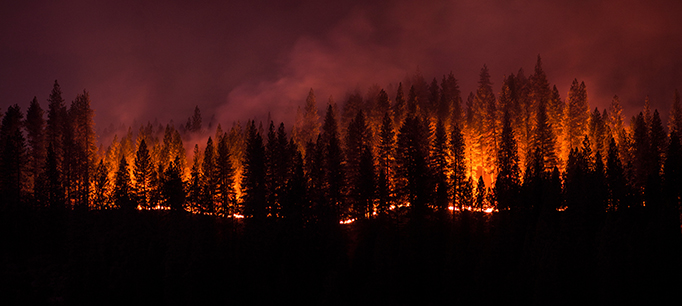
Summer marks the traditional beginning of California’s fire season, although the warming climate has stretched the season considerably. Until the winter rains arrive, wildfires will burn forests and grasslands throughout the state. Since January 1, about 3,700 fires have consumed more than 111,000 acres of land—outpacing 2017, the most destructive and deadly fire season in state history.

While public safety and economic costs deserve and receive a great deal of attention, wildfires also have consequences for the management of water—including the amount and quality of supply, and the potential for flooding.

Fire can bring short-term water supply benefits by increasing runoff for downstream use. Most precipitation that falls on hillsides is captured by plants and soils and sent back into the atmosphere. By removing vegetation and reducing the ability of soils to hold water, most burns lead to an increase in runoff. The amount of increase depends on the type of vegetation that is burned. In Sierra conifer forests, reducing tree cover by about 40% may result in a 9% increase in water yield. Conversely, burning grasslands leads to negligible increases in water supply.

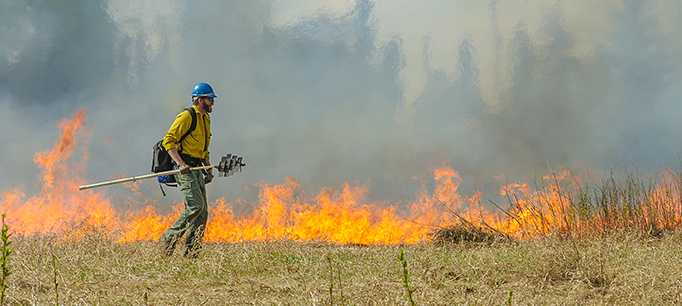
Managing forests with mechanical thinning and prescribed burning simulates the effects of low- and moderate-severity wildfire—creating opportunities to improve forest health while increasing water supply. But before concluding that forest fires and active management can reliably increase water supply, it’s worth noting that increases in water can be short-lived as vegetation rapidly grows back. And in drier forests like those of the southern Sierra Nevada, most downstream users are unlikely to see increased yields.

Wildfire can also bring some serious water management challenges.

Intense fires remove vegetation that prevents excessive erosion. Soils burned at high severity can also lose the ability to absorb water for a few years after a burn. When rain falls on these fire-ravaged slopes, the fast-moving runoff can erode soils and ash, transporting them into rivers. These flows threaten drinking-water quality and fill water supply and hydropower reservoirs with sediment. Following a series of severe wildfires in the American River headwaters, Placer County Water Agency experienced significant damage to its water supply and hydropower infrastructure, including costly impacts from increasing sediment and debris. The agency is now working with multiple partners to reduce wildfire risk above two reservoirs using prescribed burning and mechanical thinning.

The damaged soils and loss of vegetation following a severe burn can also increase the threat of downstream flooding and landslides. In some cases, these slides can become “debris flows”—fast-moving rivers of mud, rock, and other materials that can take out everything in their path. These are one of the most dangerous types of flash floods in California. The most recent and deadly example of this was in Montecito following the December 2017 Thomas Fire (the largest fire by area in state history). In early January 2018, record-high rainfall fell on the fire-scarred slopes above Montecito. The resulting debris flows killed 23 people and damaged or destroyed 400 homes.

Experts are predicting another year of intense wildfire activity. Water managers in affected regions will need to address the impacts of fire on local water supply and flood hazards, and must also account for such impacts in future planning.

New Federal Policies Will Help Manage Wildfire Risk

California’s headwater forests have experienced a long-term decline in health and have suffered unprecedented tree death and severe wildfires as a result. About half the Sierra Nevada and southern Cascade forests are owned and managed by the US Forest Service (USFS). HR 1625, the federal budget bill enacted in March of this year, contains four new reforms that will make it easier for the USFS to ramp up management efforts and reduce wildfire risk in this region:

  1. Protecting funds dedicated to forest management and restoration. The Forest Service’s fire suppression activities have traditionally been funded from the same pot of money that pays for management to reduce hazardous fuels, like prescribed burning and mechanical thinning. The rising costs of wildfire suppression thus draws resources away from management actions. This fiscal practice, sometimes known as “fire borrowing,” creates a vicious cycle. With low levels of management, fuels continue to build up, increasing the likelihood and intensity of future fires—and the cost of suppressing them. The reform freezes USFS expenditures on wildfire suppression at 2015 levels and creates a new source of wildfire suppression funds that is independent from funds for forest management and restoration. This change becomes effective in fiscal year 2020.
  2. Expediting small-scale forest management projects. Currently, the USFS can streamline environmental review for certain types of small-scale projects that don’t pose a significant environmental threat, such as restoring burned areas, stopping insect infestation, and performing some commercial harvesting. This reform expands USFS authority to streamline approval for small, proactive fuel-management projects that improve forests’ resilience to drought, pest, and wildfires. USFS Region 5 (serving California, Hawaii, and the Pacific Islands) is evaluating opportunities to use this new streamlining tool in 2019.
  3. Improving tools for collaboration between the Forest Service and local parties. USFS’s stewardship projects allow businesses, local governments, and nonprofits to play a larger role in carrying out forest management projects on USFS lands. This harnesses additional resources to promote forest health on these lands. The new policy doubles the maximum duration of stewardship projects to 20 years, which could encourage larger projects and more substantial investments in supportive infrastructure, such as roads, sawmills, and biomass energy generators.
  4. Improving tools for collaboration between the Forest Service and states. This reform expands the management work that states may perform on USFS lands under the Good Neighbor Authority (GNA). The GNA can be helpful when private or local government landowners share a boundary with federal forests. The new policy expands the use of GNA programs to include road rehabilitation and repair projects that can improve access to forests in need of management. The USFS expects this will encourage partnerships with state agencies such as Caltrans and California State Parks, which regularly repair roads in the vicinity of national forests.

This new suite of policies signals a growing prioritization of forest management and provides concrete steps to increase the pace and scale of active management. The changes will allow USFS to develop stronger partnerships with other forest landowners and stakeholders, and could help lead to healthier headwater forests in California.

Building Community to Support Healthy Forests

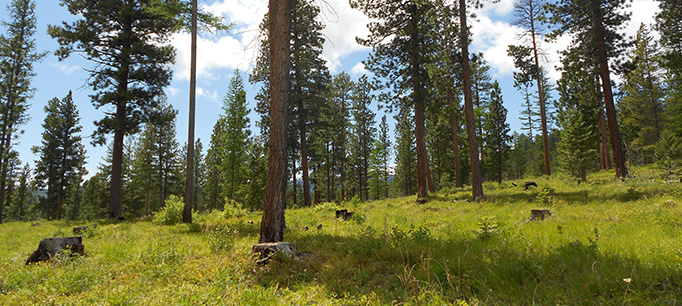
California’s mountainous headwater forests are in crisis, and an all-hands-on-deck approach is needed to improve their health. A combination of factors—dense forests with too many small trees, abundant ground fuels, and large patches of dead trees―leaves them increasingly vulnerable to severe wildfire. The best way to address the impacts of tree mortality and improve forest health is with strategic use of fire and mechanical thinning.

A big challenge to increasing the pace and scale of forest management is the patchwork nature of California’s headwaters. Implementing forest management is particularly challenging for many people who own family forests (parcels less than 5,000 acres in size), which make up about a quarter of the Sierra Nevada headwater forests. The high cost of forestry work on these small land holdings is a major barrier for many owners.

Resource conservation districts (RCDs) are one of several locally governed entities that can play an important role in helping landowners improve forest health. RCDs are authorized by the state to perform a variety of resource and land management functions, including forest stewardship, fuels management, and watershed planning and management. There are about 20 RCDs covering most of the Sierra Nevada headwater region. RCDs are well versed in local resource management issues and often are more trusted by local landowners than state or federal agencies.

RCDs can organize forest management projects across multiple private properties. For example, in 2017 the Placer County RCD used grant funding to pay for dead tree removal on family-owned forest properties in the rural community of Foresthill—an area that was hit hard by tree loss caused by drought and pests. RCDs could also assist groups of forest owners in identifying common management needs and pooling private resources to pay for on-going management.

RCDs are well placed to facilitate relationships between forest owners and other potential partners in management projects. For example, the Sierra RCD in Fresno County is implementing a district-wide carbon management program that makes use of dead trees from the massive tree die-off. With the help of the California Association of Resource Conservation Districts and the Governor’s Office of Planning and Research, the Sierra RCD is working with CAL FIRE and the US Forest Service to process these dead trees into a charcoal-like product called “biochar,” which can be used to increase soil health on nearby agricultural lands in the Central Valley.

Steve Haze, the district manager of the Sierra RCD, says these kinds of strategic partnerships can help “carve out a niche and add value to the effort” of removing large numbers of dead trees. Many RCDs are in a unique position to find overlapping interests and turn them into projects with multiple benefits in their districts.

While many RCDs may be keen to take on new roles and responsibilities to meet their local forest management needs, establishing long-term funding to support these efforts is a major challenge.  Less than 15 of the state’s 99 RCDs have adequate funding through local property taxes; the rest are supported by less-stable sources such as grants or appropriations from county governments. Finding durable funding sources for headwater RCDs could help spur long-term forest management work that would bring benefits to entire watersheds.

Learn more
Read Improving the Health of California’s Headwater Forests (PPIC, 2017)
Read California’s Water: Protecting Headwaters (from the California’s Water briefing kit)
Visit the PPIC Water Policy Center’s drought resource page


Commentary: California’s Forests are Dying—They Need Better Care

This commentary was published in the San Francisco Chronicle on October 14, 2017

California’s forests are on fire, with tragic consequences for communities around the state. While the firestorm in the Wine Country has made international headlines, many small mountain communities also were aflame or on high alert.

The focus now is on saving lives and protecting property, but when the fires are out, the state will have to face up to a major problem: Our forests are too dense and dry, and, in some areas, dying. We need a new way to manage this vital natural resource.

Read the full commentary on sfchronicle.com.

Video: Improving the Health of California’s Headwater Forests

Forests in the Sierra Nevada benefit all Californians―they provide timber, wildlife habitat, recreational landscapes, two-thirds of the state’s surface water, and other benefits. But their health is in decline from drought, insect infestation, changes in management practices, and overcrowding. These changes have raised the risk of catastrophic wildfire and tree die-off. Improving forest health will require thinning trees, which will make forests more resilient.

These were some of the observations from experts gathered in Sacramento to discuss a new PPIC report on improving forest management.

Van Butsic―an assistant cooperative extension specialist from the University of California, Berkeley, and a coauthor of the  report—gave an overview of the crisis in forest health and solutions to it. A panel discussion followed, moderated by the PPIC Water Policy Center’s Jeffrey Mount. The panelists were David Edelson, Sierra Nevada project director at the Nature Conservancy; Barnie Gyant, deputy regional forester for resources for the Pacific Southwest Region of the US Forest Service; and Susie Kocher, natural resources advisor for the Central Sierra Region at the University of California Cooperative Extension.

“We looked at prescribed fire, managed wildfire, and mechanical thinning, and we realized these three treatments were actually effective,” said Butsic. “But they’re hard to use in California because of a complex management environment.”

Some essential takeaways from the event included:

  • About two-thirds of the land in California’s headwaters is federally owned, making the federal government a key player in solving this crisis.
  • Policy and budgets prioritize fire suppression over forest management. More than half of the US Forest Service budget is for fire suppression.
  • Revenue-generating logging on forest management projects can make these projects financially viable.
  • Treatments to thin forests can negatively affect species and habitat—but catastrophic wildfire is even more harmful.
  • Climate change makes solving the crisis in our forests challenging but not impossible.

Jeff Mount wrapped up the event by noting that the forest health crisis presents an “exceptional opportunity” to stakeholders and decision makers. “We’re seeing an awakening and awareness at a level we’ve never experienced,” he said. “It’s an extraordinary moment that is not to be wasted.”

Learn more
Read Improving the Health of California’s Headwater Forests (PPIC, September 2017)
Read California’s Water: Protecting Headwaters (from the California’s Water briefing kit, October 2016)
Visit the PPIC Water Policy Center’s drought resource page