The Mood of California Voters and the 2020 Election Cycle

This post is excerpted from my speech at the Sacramento Seminar on October 4, 2019 in San Francisco.

Pollsters often say that a public opinion survey is a snapshot in time. The latest PPIC Statewide Survey was conducted in the days after the California Legislature finished its work in 2019 and while startling news was breaking that the president called a foreign leader for a political favor—which has resulted in the launch of an impeachment inquiry. The mood of California voters in this timely survey—especially their level of unhappiness and anxiety—is noteworthy because of its far-reaching implications for the March primary and the November election.

Let’s start with President Trump’s approval rating, which now stands at 35% among California likely voters. This is unchanged from the last reading in our July survey and has been remarkably stable over time. Today, 83% of Republicans approve of his job performance, compared to just 38% of independents and only 7% of Democrats. Given its partisan makeup, California is a reliably blue state on the Electoral College map. Still, low approval ratings for the president will increase turnout, influence the Democratic presidential primary choice, and affect all of the legislative races next year.

Meanwhile, approval ratings for Congress remain low even in the wake of Democratic control of the US House of Representatives. Today, just 24% of California likely voters approve of the way that Congress is doing its job. This is unchanged from the start of the year—as well as from a year ago when Republicans controlled the House. In California, likely voters across party lines give low approval ratings to Congress. If this trend continues, incumbents will have to work harder to keep their seats in 2020.

Closer to home, Governor Newsom and the legislature are getting mixed reviews in their first year of making policy together. Among likely voters, 43% approve and 44% disapprove of the governor, while 38% approve and 51% disapprove of the legislature. Since the beginning of the year, disapproval has increased significantly for the governor (+15 points) and the legislature (+8 points). Today, more than six in ten Democrats approve of the job that the governor and legislature are doing, compared to fewer than four in ten independents, and less than two in ten Republicans. If their ratings remain in the doldrums, the governor and legislators will have little sway over Californians’ ballot choices next year.

figure - Approval Ratings of State Elected Officials

Equally important, California’s likely voters are in a negative frame of mind about the state of their state—even in the midst of low unemployment and budget surpluses. Fifty-four percent say that things in California are going in the wrong direction (41% say right direction). When asked about economic conditions in California for the next 12 months, a similar 54% expect bad times (37% say good times). Pluralities across party lines are now expecting bad economic times in the next 12 months—a timeframe that includes most of the 2020 election campaign season.

figure - Likely Voters Expect Bad Economic Times in the Next 12 Months

State bonds and tax measures will face headwinds if this level of economic unease continues. This is already evident in the modest support for the $15 billion school bond (54%) and the split-roll property tax initiative (47%) in our recent survey.

figure - Modest Support for Likely 2020 State Ballot Measures

Digging deeper into the survey, more than six in 10 likely voters worry about being able to afford the cost of their health care, six in ten are concerned about the threat of a mass shooting where they live, half are worried about experiencing natural disasters such as wildfires, and four in ten worry about someone they know being deported. Candidates’ promises and plans to address these fears will likely impact the standing of current frontrunners Joe Biden, Bernie Sanders, and Elizabeth Warren—and their challengers—in a Democratic presidential primary which is very much up for grabs, as our recent survey shows.

How will voters’ views change over the next 12 months? Clearly, the political wildcard is the impeachment inquiry and how it will impact perceptions of the president, Congress, and the major parties. Uncertainty about the economy is another unknown factor. In the short run, the impeachment inquiry is likely to increase polarization, lead to more political gridlock in Washington, and heighten expectations for the governor and legislature to do more to solve the problems facing California.

PPIC Statewide Surveys will continue to monitor the broader political and economic attitudes, as well as voters’ preferences for presidential candidates and ballot measures, throughout what will be a consequential 2020 election.

Video: Californians and the Environment

In the wake of the devastating wildfires over the past few years, a record-high share of Californians are very concerned about wildfires becoming more severe as a result of global warming, and majorities support the newly established wildfire insurance fund. At a lunchtime briefing in Sacramento last Thursday, PPIC researcher Alyssa Dykman outlined these and other key findings from the latest statewide survey.

Eight in ten likely voters see environmental issues as very important in the 2020 presidential election. With the California presidential primary seven months away, Kamala Harris (19%), Elizabeth Warren (15%), Bernie Sanders (12%), and Joe Biden (11%) have the highest levels of support among Democratic and Democratic-leaning likely voters; a quarter of these voters are unsure about how they will vote.

More than half of Californians see the state’s leadership on climate change as very important, and majorities support state and federal efforts to address climate change—from renewable energy to land-use and transportation planning that reduces greenhouse gas emissions.

Other survey highlights:

  • Two in three Californians oppose allowing more oil drilling off the coast; seven in ten support offshore wind power and wave energy projects.
  • Majorities view pollution of drinking water as a more serious problem in low-income communities and support the state’s creation of a clean drinking water fund.
  • Many Californians value ocean and beach conditions and say plastics and marine debris are a big problem.
  • There are wide partisan differences on climate change and what the state should do about it.


Record-High Share of Californians Worried about Climate-Fueled Wildfires

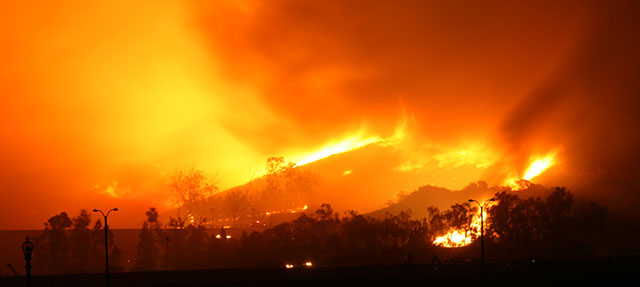
Two devastating wildfire seasons have put Californians on edge about future fire risk. Their concern is reflected in PPIC’s latest Californians and the Environment survey.

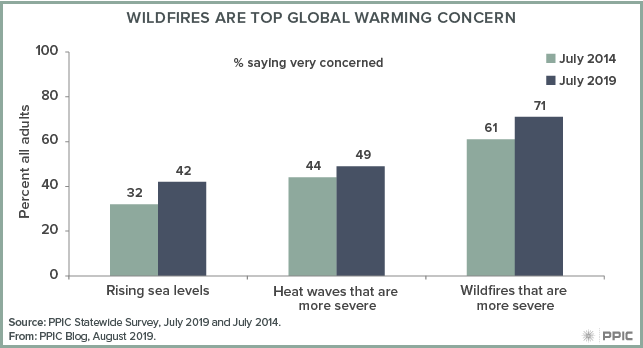
A record-high share of Californians (71%) report that they are concerned about wildfires becoming more severe as a result of global warming. This is an increase of 15 points since 2011 and 9 points since 2018. Concern over climate-fueled wildfires is significantly higher than concern about other potential global-warming impacts—this year it’s 29 points higher than concern over rising seas, and 22 points more than concern over worsening heat waves.

figure - Wildfires Are Top Global Warming Concern

About six in ten Californians (63%) say that global warming has contributed to recent wildfires, a share that has remained steady in recent years. Today, residents of Los Angeles (71%) and the San Francisco Bay Area (69%) are the most likely to hold this view.

Overwhelming majorities of Democrats (85%) and independents (70%), and about half of Republicans (45%), say they are very concerned about more-severe wildfires. Women (77%) are more likely than men (65%)—and young Californians (78% age 18 to 34) are more likely than older residents (66% age 55 and older)—to hold this view.

Back-to-back years of destructive wildfires brought attention to a lack of funding for post-fire recovery, especially following the Camp Fire, when PG&E faced record-high wildfire liabilities and filed for bankruptcy protection. Governor Newsom recently signed into law a $21 billion wildfire fund that will reimburse investor-owned utilities for payments they make to victims of wildfires caused by their equipment. The fund will be paid for evenly by utility investors and ratepayers.

PPIC’s survey found that the governor’s wildfire fund is favored by a majority of Californians (57%). Support is much higher in the San Francisco Bay Area (67%) than elsewhere. The plan is also popular among minority groups, with 73% of African Americans and 68% of Latinos in favor, compared to Asian Americans (55%) and whites (49%).

Post-fire recovery funding does not address the need to reduce wildfire risk factors, however. Our report Improving the Health of California’s Headwater Forests outlines reforms to ensure long-term forest health is a top priority for guiding agency rules, policies, and management practices in one of the more fire-prone areas of the state. It also describes ways to make the most of available funds for forest treatment needs.

The state has been taking steps in recent years to manage wildfire risks. In 2018 the legislature appropriated $1 billion for fire prevention and fuel reduction activities over five years. In April, the governor declared a state of emergency throughout the end of this fire season to spur proactive forest management, especially near high-risk communities.

This year’s state budget allocated significant financial resources to mitigate the funding gap in forest management as well. And the state just added 393 more firefighters to its ranks. Changes at the federal level in 2018 are also helping to reduce wildfire risk on federal lands. These changes give California a chance to increase the pace and scale of ongoing wildfire risk-reduction efforts and to prepare for a new wildfire reality.


The State of Wildfire Risk Reduction in California

After a few horrific years of extreme wildfires, California has been taking steps to reduce future risks with new programs, increased funding, and new policy efforts. We talked to Van Butsic—a land use scientist at UC Berkeley and an adjunct fellow at the PPIC Water Policy Center—about these efforts.

PPIC: Is California doing enough to manage its forests and reduce wildfire risk?

Van Butsic: Probably not, but it’s definitely doing a lot more than it was five years ago. The state has made a substantial effort to deal with the issues around wildfires—just not yet at the scale needed to get big results.

The state has been pretty active in the past year on addressing some of the shortcomings of federal forest management—the federal government is the biggest landowner of California’s headwater forests. One interesting thing the state is doing is using some funding—about $200 million a year—from the Greenhouse Gas Reduction Fund on fuel reduction projects. These projects are managed by multiple stakeholders, and many are on federal lands.

PPIC: The Newsom administration has taken additional steps to address wildfire risk. Where do you think they’re on the right track? What elements are still needed?

VB: They’re doing a better job in realizing we need to have more hands-on management. Governor Newsom issued an emergency order that reduced environmental review for a handful of fuel reduction projects, which means they can take place a little quicker and address fire risk this season. And they’re investing a bit more money in fire suppression.

I’d like to see more work in building community wildfire resilience across the state. We need stronger policies that start at the house and work outward—to ensure that homes are hardened against wildfires (for example, with more fire-resistant roofing materials) and have defensible space around them. Most importantly, we need a systematic plan to prevent further expansion of communities into areas where catastrophic wildfires are a risk.

PPIC: Talk about new funding tools that can help improve forest health.

VB: One approach being considered depends on the state’s willingness to pay for measures to reduce the risk of big wildfires as part of its effort to reduce carbon emissions. The idea would be to use the carbon market to fund forest management practices.

A second area where we’re seeing bit of action is on water issues. Forest thinning can in some cases lead to more water in streams. We’ve seen a few projects that fund forest management activities in hopes of getting more water as a benefit. The big question is, how much more water will you get by thinning forests? It’s a pretty complex question that has to do with existing vegetation and the elevation of the land. It’s a bit of a challenge to find the sweet spot—the science isn’t settled yet on where forest management can increase water yield.

PPIC: What about fire risk outside the headwaters?

California has many forest types and landscapes that are prone to wildfire. Many of our larger wildfires have been in the Sierra headwater forests, which are currently too dense—they’re primed for large, high severity wildfires, and we need to address this problem.

But many of the homes impacted by wildfires in the past decade are not in traditional headwater forest areas. Managing these risks is really different from managing forests—it requires different policies and funding. Building codes are one way, but they’re mostly devised at the local level and aren’t uniform—some municipalities have better fire-resistance standards. The state does fire-severity-zone mapping, but not a lot of local governments are paying attention to that. I’m not sure what the state’s role should be in that regard. I’ve done some work in France, where the federal government says where you can and can’t develop in areas prone to wildfire, and as a result they have far fewer homes in at-risk areas. I’m not sure if that’s a tradeoff Californians would be willing to make.

Video: Californians and Their Government

Californians are increasingly concerned about the cost of housing—a record-high share see affordability as a big problem in their region, and a majority support Governor Newsom’s proposal to put $1.8 billion toward increasing housing production. Dean Bonner outlined these and other key findings of the latest PPIC Statewide Survey at a Sacramento briefing last week.

This month’s survey gauges views on statewide challenges and the governor’s proposals for addressing them. For example, in the wake of last year’s historically destructive wildfires, an overwhelming majority of Californians support the governor’s plan to spend $415 million on wildfire preparedness and forest management. About two-thirds say the gap between rich and poor is widening in their part of the state, and a solid majority favor the governor’s proposal to allocate a billion to expand eligibility for the earned income tax credit.

Other survey highlights:

  • Slim majorities support the governor’s plan to scale back two major infrastructure projects: high-speed rail and the Sacramento–San Joaquin tunnels.
  • When asked whether the penalty for first-degree murder should be death or imprisonment for life with no chance of parole, a record-high 62% of Californians choose life imprisonment.
  • An overwhelming majority oppose President Trump’s declaration of a national emergency over the border wall—but support for the declaration is much higher among Republicans.
  • A majority of residents have a favorable view of the Affordable Care Act and most say that Covered California, the state’s health insurance exchange, has been working well.

Video: A Conversation with Chief of Staff Ann O’Leary

As the Newsom administration lays out its initial plans, PPIC invited chief of staff Ann O’Leary to discuss some of the governor’s top priorities. In a wide-ranging discussion with PPIC president Mark Baldassare last week, O’Leary identified the “cost crisis” in California as one of the main challenges that Governor Newsom plans to address.

“By ‘cost crisis,’ I mean how do we make sure that people in California can have affordability and the opportunity to really take advantage of the California dream?” O’Leary said. “I think too many people in California are really seeing that slip away. They’re not able to afford homes, they’re not able to afford child care, and they’re not able to pay for college for their children as they grow older.”

O’Leary pointed out that confronting this cost crisis would take many forms, such as taking on health care affordability, investing in “cradle to career” education, and addressing housing production and rising rents.

She underscored that the governor’s first proposed budget reflects his vision for promoting affordability and opportunity while ensuring the state’s long-term financial stability. Newsom’s plan includes a mix of one-time and ongoing funding as well as a robust rainy day fund, but “we also go further than that. We have a reserve fund for the safety net, and we also look at how we could use some of the surplus to pay down pension liabilities.”

The governor has also focused on other key challenges—for example, responding to wildfires and tackling the unmet need for safe drinking water in many parts of the state.

On wildfires, O’Leary noted that the governor wants to “make sure that we’re continuing with those recovery efforts to help communities that have been harmed, but also to prepare for future wildfires.” On drinking water, O’Leary said that the governor has already worked with the legislature to provide $20 million in emergency funding to address this issue.

Navigating the PG&E bankruptcy filing is another immediate priority. O’Leary said that over the next 60 days the governor’s team would be creating a roadmap for the state to “protect wildfire victims, protect employees who are out there every day trying to make sure we’re safe, and make sure fundamentally that we have safe and affordable power and that we’re meeting our clean-energy goals.”

O’Leary also discussed the federal-state relationship and how the governor plans to manage it. While pointing out that the state and federal governments need to work together as much as possible, O’Leary also underscored that California must stand up for its values when fundamental disagreements exist, especially on issues such as immigration and family planning. “These are differences of opinion. And it’s a needle we have to thread, but we’re going to do our best.”

How Climate Change Drives Disaster Cascades

California has had a devastating series of natural disasters recent years, prompting questions about the role of climate change in worsening fires, droughts, and floods. We talked to Amir AghaKouchak—an associate professor of civil and environmental engineering at UC Irvine―about how a warming climate is affecting natural hazards.

PPIC: Can you talk about how climate change is causing chains of extreme events?

Amir AghaKouchak: Climate warming can compound hazardous events. For example, this sequence of events led to devastating compound impacts in California: (1) severe drought in 2012‒16 weakened or killed many trees and vegetation; (2) record winter precipitation in 2017 caused epic growth of fine fuels like grass; (3) a warm, dry spring and summer dried out vegetation, leading to record-low moisture levels in this vegetation, (4) Diablo winds in Northern California and Santa Ana winds in Southern California set records for low humidity and sustained wind velocities; (5) record-setting fires occurred (e.g., the Thomas Fire in December 2017); and  (6) intense rainfall near Santa Barbara in January 2018 created the most deadly debris flows in history.

Cascading events are a special form of compound events. Sometimes the drivers involved in a cascading event are physically independent (e.g., a wildfire in summer and a rainfall event that winter), but they are linked through their impacts. The Thomas fire in Southern California didn’t cause the related mudslide. But the order of these events—they were about a month apart—had an extreme impact. Models show that a warming climate will bring more wildfires to California, which means a higher chance of future mudslides and debris flows.

We know, for example, that drought and heat waves are connected. It’s widely acknowledged that California’s climate is warming. But what’s striking is that our droughts appear to be warming much faster than the overall average. Heat waves often have atmospheric origins, but they can also be worsened by dry conditions. The way soil cools down is similar to what our bodies do—we sweat and are cooled by its evaporation. The land’s surface cools the same way. But when there’s little or no moisture for evaporation, the sun’s radiation warms the surface and intensifies heat waves. A hotter future will bring drier soil, which can lead to more intense heat waves.

PPIC: What can be done to better manage future extreme events?

AA: Historically, we have usually ignored the relationships among the variables used to assess risk. For example, US Geological Survey guidelines for flood risks in coastal areas do not consider the dynamics of the oceans. Sea level rise brings a greater chance of flooding in coastal areas due to higher tide and surge baselines. We need to develop methods that allow us to do more comprehensive risk analysis for floods, wildfires, mudslides, etc. On the science side, we need better methods to analyze the risks of related events. More public education and outreach about these types of events are also very important. Moderate rainfall may not worry you, but if it’s after a wildfire it could lead to extreme risks. We need to make sure people understand that moderate events can potentially lead to an extreme disaster cascade.

PPIC: What are some changes we should start making now to boost resilience for these “disaster cascades”?

AA: Policy change isn’t easy. But California is very progressive and has even formed a committee, which I’m a member of, to assess how climate change information can be used for improving engineering design and management of infrastructure. Our report identifies gaps and challenges, and offers nine major recommendations for making the state’s infrastructure “climate safe.” For example, we call for updating design and maintenance codes to enhance resilience. We also recommend funding collaborative efforts between state infrastructure agencies and climate scientists to develop tools for improving resilience.

Addressing these gaps won’t be easy. The good news is that the working group has had representation from all the major state agencies―including the Department of Water Resources, Caltrans, and the California Energy Commission. The agencies are interested in working together to improve resilience down the road. This is a very promising sign for the future.

Governor’s Budget Targets Safe Drinking Water, Wildfires, Healthy Soils

Governor Newsom’s first proposed state budget, released earlier this month, addresses several critical water and natural resource management challenges. Here are highlights from his plans to mitigate problems with safe drinking water, improve forest health and reduce the risk of wildfires, and encourage healthy soils to reduce greenhouse gas emissions and increase drought resilience.

Safe and affordable drinking water: The governor’s budget proposal revives last year’s failed legislative proposal to tap urban water customers, agricultural fertilizer users, and dairies to pay for safe drinking water projects in small, disadvantaged communities with water quality challenges.

The proposed budget also includes a one-time capital investment of $168.5 million (compared to $93 million enacted in the previous budget) to fund safe drinking water and wastewater infrastructure projects in disadvantaged communities. The funds will come from Proposition 68—a $4 billion bond approved by voters in June 2018 for investments in water, parks, the environment, and flood protection. The proposed spending represents the remaining two-thirds of the $250 million in Proposition 68 funds for safe drinking water projects.

In addition, the governor proposes allocating $10 million from the General Fund for a State Water Board program that provides technical, operational, and managerial assistance to water systems serving disadvantaged communities. This funding will be used to implement the Board’s relatively new authority to hire third-party administrators to help water systems comply with safe drinking water standards—including tasks such as project planning and grant procurement. This authority was granted by SB 552 in 2016.

The budget also allocates $10 million from the General Fund for water supply emergencies in disadvantaged communities. During the latest drought, more than 2,500 domestic wells ran dry and nearly 150 small water systems requested emergency support. Many rural, disadvantaged communities still do not have reliable supplies, and these funds could provide emergency drinking water, extend water service lines, and repair groundwater wells.

Forests and wildfires: The budget calls for $415 million for programs to improve the health of forests and fight wildfires. Of this sum, $200 million will be sourced from the Greenhouse Gas Reduction Fund (GGRF). This is consistent with a legislative requirement from last year to spend $1 billion from the GGRF over five years for forest health, fire prevention, and fuel reduction activities. These funds will largely be allocated to Cal Fire’s grant programs for forest management projects on private and federal forest lands. The remaining half of the $415 million in proposed spending will go toward upgrading firefighting equipment and increasing firefighting capacity.

Healthy soils: The budget allocates $18 million to the California Department of Food and Agriculture to expand the Healthy Soils Initiative—a $3 million increase from its 2018 budget. Funded by the state’s cap-and-trade revenues, the program incentivizes farmers to adopt sustainable practices and increase their soils’ capacity to sequester more carbon. Activities might include installing riparian forest buffer, composting, and planting cover crops and wind barriers. Such practices can also improve crop yields, drought and flood tolerance, and air and water quality. The funding is projected to enable the sequestration of 5.3 million tons of CO2 on 500,000 acres by 2030, which is equivalent to nearly 2% of California’s annual emissions in 2016.

The proposed budget will be revised by May—and ultimately finalized and passed by the legislature in June.

A Momentous Water Year

California was bookended by extreme events last year―from the Southern California mudslides in January to the disastrous wildfires north and south in November, and in between, a bout of record-breaking heat in Los Angeles. These events are all connected to policy challenges that California water managers and decision makers are grappling with—issues that are front and center in our work at the PPIC Water Policy Center.

  • Climate change is bringing multiple climate pressures that affect the state’s water supplies and complicate water management. We assembled a team of 30 experts in climate science, hydrology, ecology, engineering, economics, and law to review the weak points in the state’s water system and recommend actions to build its climate resilience. Our new report―published as Governor Brown’s Global Action Climate Summit kicked off in September―provided an accessible analysis of how climate change will affect droughts and summarized reforms needed to better manage future droughts and adapt the state water system to a more volatile climate. Next up is a research project on how to manage wastewater as the climate changes.
  • Two years of tragic, extreme fires stirred debate on how best to address this growing risk, and productive change is already underway. Our ongoing work has guided the development of significant reforms to improve forest health and reduce wildfire risk. Governor Brown directed state agencies to increase forest management in accordance with some of our recommendations. And a new law reflects a number of our suggested reforms to help headwater landowners better manage their forests. New federal and local policy changes will also help. We’ve begun a deeper dive into the benefits—and beneficiaries—of improved forest management as a next step to identifying durable funding solutions.
  • The San Joaquin Valley―California’s largest agricultural region—faces major challenges in managing its groundwater, a critical drought reserve. Our research on recharging groundwater basins laid out key problems that must be addressed to capture more water for underground storage and described what can be done to advance recharge efforts. Next month we’ll release a comprehensive review of solutions to the San Joaquin Valley’s many water and land management challenges that will help the valley continue on a prosperous path for the next century.
  • We hosted a large public event in November to identify water priorities for the new governor. A group of 16 experts discussed how the Newsom administration can promote water policies and practices that benefit the state’s people, economy, and environment. We also updated and expanded our policy briefing kit, California’s Water, to inform newly elected leaders on key water issues—including a new brief on providing safe drinking water. We look forward to working with the new administration to develop meaningful, lasting, forward-looking water policies.

As we move into our fifth year, the PPIC Water Policy Center looks forward to being part of the effort to find creative and collaborative solutions to California’s most difficult and pressing water challenges. And as always, we thank our supporters who enable this important work.

With best wishes for 2019,

Ellen Hanak

P.S. You can sign up for our weekly blog post. And you can learn more about how to support the center’s work.

2020 Census: Counting California’s Northern and Sierra Regions

The decennial census plays an essential role in American democracy. Our series of blog posts examines what’s at stake for California and the challenges facing the 2020 Census, including communities that are at risk of being undercounted.  

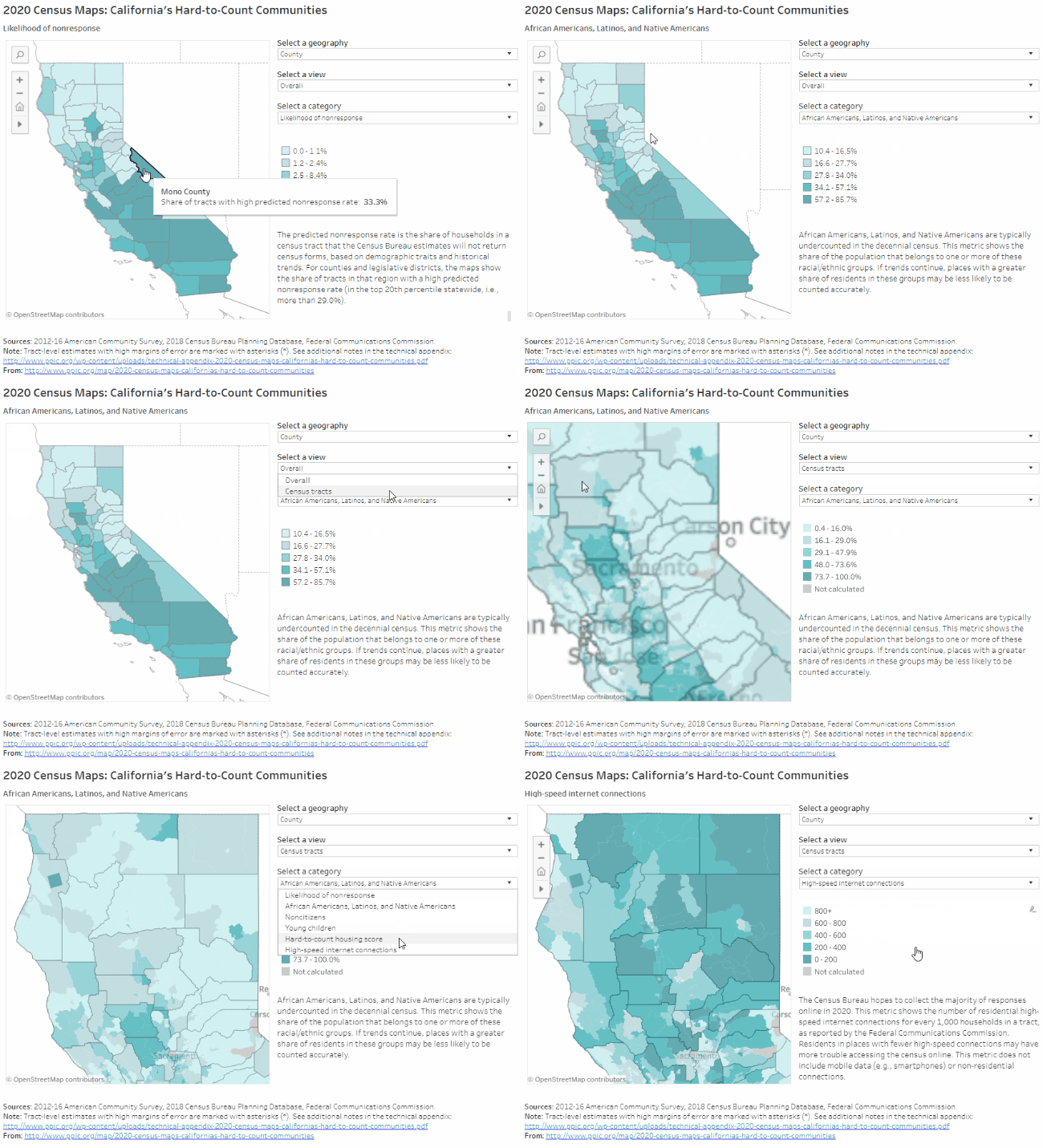
PPIC’s interactive census maps are an important tool for Californians working to ensure an accurate census count. Using estimates from the Census Bureau and the Federal Communications Commission, they highlight hard-to-count communities across the state and pinpoint reasons why certain areas may be hard to reach.

Home to 1.4 million people, California’s northern and Sierra regions cover around 40% of the state, spanning 23 counties: Alpine, Amador, Butte, Calaveras, Colusa, Del Norte, Glenn, Humboldt, Inyo, Kings, Lake, Lassen, Mariposa, Mendocino, Modoc, Mono, Plumas, Shasta, Sierra, Siskiyou, Tehama, Trinity, and Tuolumne. The hardest-to-count areas in these regions are found in Arcata, Chico, and Mammoth Lakes in Humboldt, Butte, and Mono Counties, respectively. Households in these very hard-to-count areas are the least likely to respond initially to census forms, according to Census Bureau estimates that draw on local demographic characteristics (e.g., race/ethnicity, age, citizenship, and housing conditions) and historical trends.

Some highlights:

  • Follow-up from census workers will likely be needed across the north and Sierras. In most census tracts in California’s northernmost and rural Sierra counties, estimates suggest 19% to 29% of households would need in-person follow-up from census workers to be counted. Further, these estimates from the Census Bureau predate the Camp, Carr, and Mendocino Complex fires, which have likely made it more difficult to count residents.
  • Housing conditions could be an obstacle to counting residents in coastal areas as well as around the northern Sacramento Valley. In these areas, large shares of housing units are rentals, overcrowded rentals, and/or mobile homes—all of which can make residents harder to count accurately. For example, more than 20% of households live in mobile homes in much of Trinity and Tehama Counties, and one out of five rentals in northeastern Siskiyou County is overcrowd Recent wildfires have likely increased the share of households in hard-to-count housing, as displaced families seek shelter elsewhere.
  • Low internet access may pose a challenge throughout the regions. The Census Bureau plans to collect the majority of responses online in 2020—a change from previous practice. Northeastern and central Sierra counties have some of the lowest rates of internet access in the state: in Plumas County, for instance, fewer than 200 out of every 1,000 households have high-speed internet access, on average. In places with limited residential internet access, participation may rely more heavily on paper forms, in-person census takers, or internet provided by local institutions.
  • Undercounting Native Americans would disproportionately affect northern and Sierra counties. African Americans, Latinos, and Native Americans have historically been undercounted in the census. There are tribal lands throughout these regions, which have a higher share of Native American residents than other parts of the state. Working with tribal governments to reach Native Americans will be an important part of accurately counting residents in the northern and Sierra regions.
  • Local knowledge is necessary for effective outreach. Colusa County has the regions’ highest share of residents from historically undercounted racial/ethnic groups (60%) and the highest share of noncitizens (15%). Noncitizens may be less likely to respond to the 2020 Census due to the planned addition of a citizenship question and concerns about deportation and privacy. Ensuring that these communities are counted in 2020 will require an understanding of the local landscape. For example, one area east of Susanville in Lassen County that includes two correctional facilities has a high share of people of color. However, incarcerated people, who are counted where they are held, are unlikely to be undercounted in the census.
  • Some northern counties have high shares of young children. Young children are historically underrepresented in the census. Along the I-5 corridor in the Sacramento Valley, and in parts of Lake, Mendocino, Humboldt, Del Norte, Siskiyou, and Lassen Counties, more than 8.5% of residents are children under five years old, compared to 6.5% statewide.

We hope these maps serve as a starting point to help local, regional, and state leaders think about which activities, resources, and partnerships—including language assistance, awareness raising, and community outreach—might be most effective for accurately counting different parts of California. Stay tuned for future posts that examine hard-to-count communities in other regions of the state.