Reducing the Costs of Drought: Lessons from Australia

What do droughts in California and Australia have in common, and what lessons from Down Under are best-suited to managing mega-droughts here? At a recent conference of agricultural economists, Americans and Australians shared their experiences and research on the topic.
The meeting covered what worked well—and what did not—in managing Australia’s Millennium Drought, which lasted from 1997-2009. The “worked well” list included: water conservation in urban areas, water pricing, and cooperative governance among water managers. The Australians also depended heavily on water markets to reduce the costs of their mega-drought. The flexibility and autonomy offered by water trading helped communities allocate water quickly and efficiently to competing uses, and also provided an effective way to recover it for the environment.
Several researchers noted that water trading is an important drought response that deserves much wider use in California. Speakers noted that although trading has helped some here, California’s water market still lacks transparency—with only limited information available about trading rules, volumes, and prices.
Australians also benefited from a strong water policy foundation going into their mega-drought, including a national water initiative. This national agreement (which state and territorial governments agreed to abide by) focused on ensuring reliable water use information that is publicly shared, and also mandated the separation of land ownership and water access. These two factors have helped facilitate water management, sharing, and marketing. While separating land and water ownership may not be in the cards for California, there are other ways to improve water marketing here by strengthening water-use information. As elaborated in a 2015 PPIC report on managing our drought, several other policy priorities that were at play in Australia are also within our reach: setting clearer priorities for public health and the environment, managing demand and supply more stringently, and implementing progressive environmental drought management practices.
Australians were able to create a more resilient water system, but some researchers at the conference noted that their drought management was not without fault. One cautionary tale was that much of the costly new infrastructure put into place in response to the drought—mainly desalination and inter-basin pipelines—brought increased water supply benefits only after the drought ended, due to the time it took to plan and build desalination plants, in particular. While desalination is currently providing drinking water in Western Australia, where dry conditions have continued, plants built to serve communities in other regions have not been used because cheaper alternatives are once again available.
A key recommendation made by a number of panelists was to ensure that all other options are exhausted before moving forward with costly infrastructure projects like desalination. In addition, it’s important to take other steps to develop sound policy in areas like water information before the next drought. Because droughts are unpredictable but cyclical, long-term vision and preparedness are critical.
The takeaway from the meeting was that while the challenges and debates in California are similar to those during Australia’s Millennium Drought, the comparison is not perfect. As we continue to adapt and develop our own drought policies, it will be important to take lessons from both the successes and ongoing challenges experienced during Australia’s “big dry.”
Adam Soliman is a graduate student in agricultural, food, and resource economics at Michigan State University. He served as an intern at the PPIC Water Policy Center this summer.

Extinction Risk for Native Fish if Drought Persists

If the California drought continues, many of California’s native freshwater fishes are at imminent risk of extinction. This is a key finding of our recent report What If California’s Drought Continues?, which projects the potential consequences of ongoing drought on key sectors, including the environment.

Managing scarce water resources to improve the drought resiliency of the state’s rivers, wetlands and forest ecosystems, and the native biodiversity they support, has proven to be the most vexing challenge of this extended drought.

Our research finds that 18 native fishes could go extinct if the drought continues for several more years; this map shows their distribution in the state’s watersheds. We estimated each species’ extinction risk by evaluating the response of these fishes to factors such as reduced flows, increased water temperatures, stress from habitat changes or competition caused by invasive species, and the impacts of hatchery-bred fishes on wild fish populations. (Learn more about our methods in the report’s technical appendix.)

The results are disconcerting. The state’s “anadromous” fishes—those that spawn in fresh water but rear in the ocean—are being hit particularly hard. Coming into this drought, historic water- and land-use practices had diminished their populations. Low flows and high temperatures have made matters worse. Most of the state’s salmon runs are at risk, along with many runs of steelhead trout. Other species—some well-known (delta smelt) and some obscure (unarmored threespine stickleback)—are also in trouble.

The state needs to prepare now for addressing this problem, because if there is another dry year or two, many fishes are likely to go extinct. Recommended actions include acquiring or allocating water (particularly cold water) to improve habitat in strategic locations, relocating some fish, restoring spawning habitat, and improving access of fish to spawning and rearing areas. As a matter of urgency, these species should be brought into conservation hatcheries so that they can be reintroduced to the wild when conditions improve.

Along with the conservation-oriented goal of protecting the state’s native biodiversity, there are also very practical reasons for taking urgent action to protect these fishes. Half of the 18 species at risk are not currently protected under the Endangered Species Act (ESA). Listing species for ESA protection brings legal obligations to stop population declines; experience shows this can be disruptive to water supply operations and incur considerable long-term costs. An ounce of prevention, in this case, would be worth many pounds of cure.

Students Struggle on Test of New Standards

California gave its first statewide tests aligned with the Common Core standards last spring. The scores have just come out, with 40% of fourth-graders scoring proficient or better on the English Language Arts (ELA) test and 35% doing so in math. Scores for 8th and 11th grade are somewhat higher in ELA and lower in math. This new test is called the Smarter Balanced Assessment.

The share scoring proficient or higher on the new test is lower than on the old test, the California Standards Test (CST). In the final year that students were tested using CST—and on the old state standards—67% of fourth-graders scored proficient or higher. Most public school parents (71%) expected students to score at least as well on the new tests as on the old ones, according to a recent PPIC Statewide Survey. But most educators did not. Here’s why: the Common Core standards are more demanding than California’s old ones, students and teachers are in the early years of transitioning to these standards, and what it means to be proficient on the new test is different than on the old one. California is not the only state finding that the first year of Common Core testing reset perceptions of student performance.

To the right we present results for the CST and the Smarter Balanced tests, alongside California students’ scores on the National Assessment of Educational Progress (NAEP), a national ongoing assessment of what children know in a variety of subject areas. While these three test results are not directly comparable because each measures competence relative to different standards and each has its own definition of what it takes for a student to score “proficient,” it is important to have a clear sense of how our students are faring on each. The Smarter Balanced test results for each student group are higher than the NAEP, but low relative to the most recent CST.

We find gaps in proficiency for economically disadvantaged students and English Learners (ELs). Each group is specifically targeted for higher funding levels by the Local Control Funding Formula (LCFF). The CST gaps between EL and white students (61%) and between economically disadvantaged and white students (31%) are both smaller than those for the Smarter Balanced test (79% and 54%, respectively). Gaps for the NAEP are somewhat larger than in the Smarter Balanced tests. Educators will not be surprised by these findings.

California’s public school system has seen dramatic changes in recent years, and the 2014–15 Smarter Balanced test results are an important baseline to measure how these changes are affecting students. In the past, California students’ test results improved almost every year that the CST was administered. Today, both the Common Core State Standards and the LCFF aim to improve outcomes for all students and close achievement gaps. Multiple years of Smarter Balanced test results will be needed to monitor progress. These new higher standards are meant to improve outcomes well beyond secondary schooling, and the least advantaged students have the farthest to go. The new curriculum and new funding should help get them there.

Note (TOP CHART): NAEP is given to a representative sample of California students. FRPL refers to students who qualify for free or reduced price meals. Source: 2012-2013 California Standards Test, 2012-13 National Assessment of Educational Progress, and 2014-15 Smarter Balanced Assessments.
  
Note (BOTTOM CHART): We calculate the percentage gap by subtracting EL and economically disadvantaged students scores from white student scores and dividing by white students’ scores. Source: Authors’ calculations from the SBAC, NAEP, and CST.

Proposition 47 Brought Decreases to Both Prison and Jail Populations

Two major criminal justice reforms—realignment and Proposition 47—have brought California’s incarcerated population down to levels not seen since the mid-1990s. This drawdown in both the state prison and the county jail populations addresses some of the serious capacity challenges the systems have faced.

As of August 2015, the total prison population had dropped by almost 45,000 inmates from its 2006 peak. The majority (about 55%) of the decline was a result of realignment, which was implemented in October 2011 in response to a court order to improve prison conditions by reducing overcrowding. However, it took the passage of Proposition 47 last November—which reclassified a number of felony drug and property offenses as misdemeanors—and building and renting additional prison beds to reach the court-ordered population target of 137.5 percent of design capacity. The prison population has declined by almost 7,700 since November and has remained below the mandated target since January 2015. This is a key requirement for the state to regain control over prison health care—currently, a court-appointed receiver oversees health care in the system.

Proposition 47 appears to have relieved some of the pressure on county jail systems created by the shift of responsibility for lower-level offenders from the state to the counties during the first few years of realignment. The average daily jail population dropped by almost 10,000 inmates after the passage of Proposition 47 last November. As of December 2014, there were about 72,500 inmates in county jails, down from about 82,000 in October. This brought the jail population back under the statewide rated capacity of nearly 80,000 beds. Another sign that Proposition 47 has relieved some pressure is that the number of inmates released early due to housing constraints decreased noticeably (by almost 20% as of December 2014 compared to December 2013), to levels well below those observed in the months before realignment was implemented.

Although we can see that prison population numbers have dropped in each of the nine months since Proposition 47 passed, we need to be more cautious about the measure’s impact on jail population numbers because we only have jail data for the first two months. Also, counties have been working to implement and refine new jail policies and procedures, and these may be having an impact on jail populations. For instance, data through March 2015 for Los Angeles County show that the jail population dipped below 16,000 inmates in December (down from more than 18,000 in October), but rose above 17,000 in January and stayed above 17,000 through March. This increase is related to the sheriff requiring that inmates serve a larger percentage of their sentences before release. We may see similar developments in other counties. Nonetheless, even in Los Angeles there was a noticeable drop in the jail population compared to months before passage of Proposition 47.
Clearly, California is moving away from incarceration, in line with research that has shown that incarceration is not a cost-effective tool for crime prevention, at least not at the high levels in the state before realignment. The changes implemented so far may help improve prison and jail conditions and may also help the state and counties handle their corrections responsibilities more effectively. However, research also suggests that there may be a greater upward pressure on crime with incarceration reductions at lower levels of incarceration, which heightens the need to identify and implement effective crime preventive strategies. As we continue to monitor crime trends, it will be important to determine whether their long-term decline has been reversed.

Water Management’s High-Tech Future

California’s water management systems face a list of daunting challenges, from the current drought to water pollutants to aging infrastructure. Newsha Ajami is at the cutting edge of encouraging high-tech advances to improve how cities manage water, both in her role as director of urban water policy at Stanford Woods Institute for the Environment and as a member of a new project called ReNUWIt. We asked her about some of the advances she’s seeing around the state, and what a “next-gen water system” might look like.

PPIC: How is technology changing how we manage water?

Newsha Ajami: Technological advances are playing a significant role in many aspects of water management—from how individuals use water (for example, water-efficient appliances), to how we collect data and measure our water supply (such as smart meters). Some of these technological advancements have been directly impacting customer behavior. For example, software like WaterSmart allows customers to better understand their water use habits and potentially revise them. In the past 30 years, water use per capita has been dropping steadily, in part due to tech advances like more efficient toilets, washing machines, dishwashers, shower heads, and the like.

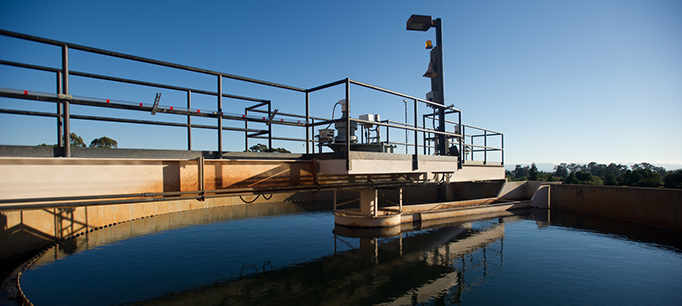
Also, various water purification technologies have enhanced our local and regional water supplies through treatment and reuse of wastewater for different purposes. For example, the West Basin Water District has been purifying some of the wastewater from the Los Angeles area and supplying it to various industrial and commercial customers.

In the near future, technologies that allow us to capture and reuse stormwater, rainwater, and graywater could play a significant role in enhancing regional water supplies and enhance our water supply portfolio.

PPIC: What are some of the more interesting projects that ReNUWit is focusing on to improve urban water management?

NA: There are so many interesting engineering and management projects within the ReNUWIt program. ReNUWIt researchers have developed an innovative wastewater treatment technology that allows us to treat wastewater and generate energy from captured methane, simultaneously. The energy is used to power the water reclamation process, making it a net zero-energy wastewater treatment system.

We’re also working on a smart water-trading platform, which is a tool to enable virtual trading in regions with shared water. The way it would work is that when users can make do with less of the high-quality water in their shared system—perhaps by building a water recycling plant for use by the industrial sector—their saved water is made available for other users in the system. It’s sort of an Airbnb for water. The system can provide a platform for water suppliers to share in a more flexible and transparent way.

Also, in partnership with the Oro Loma Sanitary District and various industries and NGOs, ReNUWit is designing a “constructed wetlands” at the Oro Loma wastewater treatment plant on San Francisco Bay. This is a multipurpose project to remove nitrogen, provide habitat, and buffer the treatment plant from the effect of sea level rise. We are also testing to see if such wetlands could potentially remove contaminants such as pharmaceuticals, fire retardants, pesticides, and chemicals from home cleaning products. This approach offers a creative way to meet environmental concerns related to wastewater treatment without the need to replace the entire treatment plant.

PPIC: You’re also on the Bay Area Regional Water Quality board. What kinds of improvements are you seeing in this area?

NA: The San Francisco Bay Regional Water Quality Control Board has been undertaking multiple initiatives to further protect our water bodies from pollution. For example, in our efforts to better manage and clean up various pollutants that show up in urban runoff, the updated Municipal Regional Stormwater Permits would require municipalities to develop a plan to implement green infrastructure throughout their jurisdictions. We are also actively working with our permittees on reducing trash, which often finds its way into our waterways. And we are streamlining permitting of recycled water projects, especially those that aim to provide recycled water for residential landscape irrigation use.

PPIC: What good things are coming out of the drought?

NA: California has taken many steps to address water reliability in the past few years, partly due to the severe drought we have been facing—from big-ticket items like our new groundwater law and the $7.5 billion water bond, to smaller fixes like streamlining permitting of recycled water projects. The drought has also raised public awareness regarding water scarcity, which plays a vital role in changing consumer behavior in both the short and long term. It’s led to renewed statewide discussion on how we value our water resources, and how we allocate it among competing demands. I really hope some of these discussions turn into action and change the way we manage and govern this precious resource.

Video: Senator Boxer Comes to PPIC

In more than 20 years in the US Senate, Barbara Boxer said there have been good changes (more women today) and bad (the “chasm” that divides the parties). But sometimes, despite the gridlock and insults, there is common ground, she told an audience at PPIC yesterday. She and Republican Senator Mitch McConnell found it in teaming up on a multi-year highway bill.

“Working with Mitch McConnell was unexpected,” she said. “We actually hadn’t talked too much in 20 years.” Bringing senators from both parties to an agreement—particularly on how to pay for the bill—was tough. But the bill got the votes. It passed the Senate and is now pending in the House.

Boxer told this story and others in a wide-ranging conversation with Mark Baldassare, PPIC’s president and CEO, that touched on climate change, California water policy, the presidential race, and the nuclear deal with Iran.What’s next? For the record, Boxer says she is not retiring. She’s just not running for Senate again.

Video: Meeting Water Challenges on the Central Coast

The Central Coast has long been self-sufficient in water supply, but the drought has tested the region’s independent streak and helped foster growing cooperation among water agencies and interest groups.

“I would hope that we really start thinking regionally,” said US Rep. Sam Farr, who’s represented the Central Coast for more than 20 years. That was the biggest takeaway message from a wide-ranging panel discussion in Monterey this month, co-hosted by the PPIC Water Policy Center and water supplier California American Water.

The event brought together local experts to discuss the challenges of creating a more diverse water supply, resolving water problems, and protecting the environment.

Groundwater concerns have grown as four years of drought have increased the need for pumping, and saltwater intrusion is a persistent problem.

“In the Central Coast hydrologic region 85 percent of freshwater demand is met by groundwater—and that’s the largest fraction in the state,” said panelist Andrew Fisher, a hydrogeologist with the University of California, Santa Cruz. He noted that climate change will bring fewer but more intense storms, which will mean more runoff and less groundwater recharge. He said that we must put greater effort into recharging groundwater and understanding how much we’re using.

Panelist Norm Groot, executive director of the Monterey County Farm Bureau, discussed a local project to “push the saltwater back to sea” in the Salinas Valley aquifer. He noted that local farmers have been working hard to reduce water use and manage local aquifers more sustainably. Drip irrigation is now used on 60 percent of fields in the Salinas Valley, and another 12,000 acres are using recycled water and have been taken off groundwater pumping, he noted.

Moderator Paul Rogers, environment writer with the San Jose Mercury News and managing editor of the KQED Science Unit, noted that local residents already have some of the lowest water use rates in the state—about 70 gallons per person per day, compared to a statewide average of 97—yet still managed to conserve 29 percent after the mandate was put in place by the governor in April.

Monica Hunter, a board member of the Planning and Conservation League Foundation, noted that despite the area’s efforts to conserve, wells are going dry and small rural communities in the region are facing big water challenges. She noted the need for more data: “We really do not know the magnitude of these problems.”

The region is also rightly proud of its efforts to restore the Carmel River by removing the San Clemente Dam. “People from—I would say not just around California but around the nation—are looking to this region as a test case for removing a dam,” said Ellen Hanak, director of the PPIC Water Policy Center.

Carmel mayor Jason Burnett closed the evening with observations about climate change, conservation, and creative solutions. Sometimes we need to rethink what we used to see as a liability, he said. “Something we discarded is now something we can turn into an asset. You heard talk about stormwater, you heard talk of wastewater and turning those into assets that we can use and use time and time again. We’re already doing that here on the Central Coast.”

The Drought and Californians’ Views on Climate Policy

The California Legislature is considering bills that would expand state efforts to cut greenhouse gas emissions. One, SB 32, would require that California reduce emissions to 80 percent below 1990 levels by 2050. Another, SB 350, would require that petroleum use in cars be reduced by 50 percent, half of the state’s electricity come from renewable energy sources, and buildings double their energy efficiency—all by 2030.

Our July statewide survey examined support for the goals of these bills. We found that strong majorities of Californians favored each of these proposals but that support varied among partisans, with Democrats and independents more likely than Republicans to be in favor. However, a closer look reveals that party registration is not the only driver of these views.

Within the parties and among independents, registered voters who think global warming has contributed to the drought are far more likely to support the ideas in these bills than those who don’t. Among Republicans, solid majorities of those who think global warming has contributed to the drought also support SB 32 and SB 350. Meanwhile, among Democrats and independents who do not think global warming has contributed to the drought, support for SB 350 drops to about half or less.
By the same token, Californians who think climate change is having an impact today are more likely to support these policies than those who don’t think it will have an impact until sometime in the future—and much more likely than those who think climate change will never have an impact.

These findings suggest that Californians who make a connection between climate change and their daily lives are much more likely to support policies to address it. They also suggest that attitudes toward ambitious climate and energy goals are not simply partisan, but that they are related to individual beliefs about the impact of climate change.

Video: What If California’s Drought Continues?

Four years into a historic drought, the environment and some rural communities are most at risk if hot, dry conditions persist. At an event in Sacramento last week, Ellen Hanak, director of the PPIC Water Policy Center, gave an overview of findings from the new report What If California’s Drought Continues, touching on the higher risk of large wildfires, increasing land subsidence from groundwater pumping, and the growing crisis affecting freshwater ecosystems and species. A panel of experts then dove deep into the drought’s perils—and success stories—before a capacity crowd.

Jeffrey Mount, senior fellow at PPIC and a co-author of the report, moderated the panel, which included Wade Crowfoot, deputy cabinet secretary and senior advisor to Governor Brown; Laurel Firestone, cofounder and co-executive director of the Community Water Center; and Kevin Hunting, chief deputy director of the California Department of Fish and Wildlife.

Asked to describe the successes and “pleasant surprises” in the state’s efforts to manage the drought, Hunting said his department has had to redefine success. “In the past success for us would be stable populations, recovering populations of endangered species,” he said. “Unfortunately, we’re in a situation now where success means avoiding extinctions … and really, plugging the gaps in the biggest risk areas.”

He said the agency has also brought creative approaches to managing fisheries and wildlife with a dwindling amount of water, including partnering with private water users to deliver water at critical times to support fish and waterbirds.

Firestone said major strides have been made in state-run efforts to get emergency water supply to rural communities facing water shortages. Beyond the state’s programs, she cited the efforts of volunteer and local agencies in these communities—”local people just trying to help their neighbors.”

Crowfoot gave his short list of drought successes, topped by water conservation across the state. “The real heroes of the California drought are actually everyday Californians,” he said, noting the latest water conservation statistics showing a statewide reduction in water use by over a quarter. He also cited the work of local water agencies, legislation—such as groundwater management reform—that crossed political boundaries, and unprecedented cooperation by state and federal agencies.

The panelists noted that much more needs to be done to both build on these successes—and strengthen efforts to address the challenges of continued drought.

Expanding Education, Reducing Recidivism

This month, the Obama administration unveiled a pilot program to allow access to Pell Grants to those incarcerated in state or federal prison. In addition to expanding access to higher education, this program presents a new opportunity to leverage federal dollars to improve public safety and generate savings in the form of reduced correctional costs.

The federal program complements a bill passed last fall by the California Legislature aimed at increasing educational programming to prison inmates. Authored by State Senator Loni Hancock (D-Berkeley), SB 1391 allocates $2 million to create and fund higher education programs for inmates in four pilot sites, under the leadership of the California Community Colleges Chancellor’s Office and the California Department of Corrections and Rehabilitation (CDCR).

These federal and state policy initiatives come in response to mounting evidence that education—particularly at the post-secondary level—reduces recidivism and related correctional costs. Inmates who participated in education programs had 43% lower odds of reoffending after being released into the community, according to a 2013 RAND report funded by the U.S. Department of Justice. This reduction in recidivism translates to $5 in direct correctional cost savings for every $1 spent on educational programming. Efforts to take advantage of these potential returns are in line with other recent initiatives, such as California’s public safety realignment, that emphasize the use of evidence-based practices to address the state’s historically high rates of recidivism.

However, past efforts to provide educational services to inmates in California—and elsewhere—have not always been successful. Numerous studies have documented the growth of private companies that have profited from providing a range of correctional services—including secondary education, GED classes, and vocational training—with little oversight or evaluation to ensure that public money is well spent. As the federal government makes additional funds available for higher education in prison, some of these service providers will likely seek to expand into post-secondary programming. At the same time, new players, both public and private, attracted by a promising new revenue stream may well enter the field. This means it is critical to ensure that the institutions receiving Pell Grants for inmate education have sufficient and appropriate training, staff, and capacity to offer high-quality college classes and student support services. A 2015 report from UC Berkeley’s Warren Institute and Stanford’s Criminal Justice Center outlines key recommendations for improving and ensuring the quality of inmate education programs, including an emphasis on face-to-face instruction inside prison and transitional programs on the outside for students.

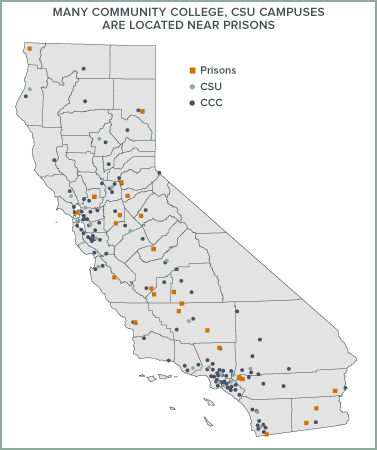
Given their experience in providing a range of educational services, the California Community College (CCC) and California State University (CSU) systems stand out as promising candidates to lead efforts to increase post-secondary education among inmates. The map below shows the close proximity of these educational institutions to prisons across the state.

California currently supports community college education for all low-income students, including inmates, through fee waivers. However, these waivers are not available for students who wish to pursue four-year degrees. These students rely on other forms of aid, including federal Pell Grants. The Pell Grant pilot program presents an opportunity for CSU to begin working with CDCR to leverage federal dollars to expand access to high-quality, onsite higher education for inmates in state prison.

The security and operational constraints of correctional facilities pose unique challenges to service providers. It is likely that even organizations with experience providing quality education programs, such as well-performing state universities and community colleges, may find that they have a steep learning curve when it comes to operating within a prison. Careful planning, detailed oversight, and rigorous evaluation therefore will be critical to ensuring that SB 1391 and the Pell Grant pilot achieve their goals.

Chart Source: California Post-Secondary Education Commission and California Department of Corrections and Rehabilitation.