Video: Californians and K-12 Education

The annual PPIC Statewide Survey: Californians and Education comes at a time when there are major policy changes underway in the state’s K–12 system. They include implementation of the Local Control Funding Formula, Common Core standards, and the Smarter Balanced standardized tests. The survey was released last week and presented at a briefing in Sacramento by research associate Lunna Lopes.

The survey offers a good look at public reaction to the changes and attitudes toward education more broadly. About three-quarters of adults said they knew nothing about the Local Control Funding Formula, which gives districts more flexibility in spending state funds and gives additional money to districts with more English language learners and lower-income students. When survey respondents were read a description of the funding formula, most favored the idea.

About 58% said they had heard about Common Core, the new set of English and math standards. But only 47% favored the idea and 31% opposed it. The poll also found a high level concern more generally about the quality of K–12 education and funding.

Experts Weigh In on Drought Solutions

Along with their morning coffee, readers of Sunday’s Los Angeles Times were treated to an offering of nine bite-sized opinion pieces on solutions to help California better manage droughts. Contributors included representatives of urban and agricultural water agencies, environmental organizations, the private sector, and research institutions. The topics were equally broad. We both participated in this forum, and our two pieces highlight the importance of strategic investments in a couple of key areas: water storage and water accounting systems.

On storage, the message is that we need to think comprehensively about our water system when deciding how to invest the $2.7 billion in state bonds that voters recently authorized for new projects. People often assume that these funds will go to expanding surface reservoirs and tend to forget that storing water underground in the state’s aquifers is often more cost-effective. An especially promising approach to preparing for future droughts and adapting to our warming climate is to manage our storage network as an integrated system. This means putting more water for dry years into groundwater basins, which can free up space in surface reservoirs for summer irrigation needs and the higher flood flows likely to come with a shrinking snowpack.

On accounting, the message is that California has some serious catching up to do to better understand where, when, and how much water is used in different watersheds. This drought has exposed the tremendous challenges in managing scarce supplies because of an antiquated, incomplete, and inconsistent set of water use and water availability measurements. Updating our water accounting systems is a top priority we identified in a recent check-up on how California is faring during this drought. State officials have begun to take up this challenge. But more work is required to make this information sufficiently transparent, consistent, and integrated across the various state agencies and offices that deal with water management to facilitate allocation decisions that benefit the state’s economy, society, and environment during droughts.

Testimony: Improving the Cal Grant Program

PPIC researchers Hans Johnson and Kevin Cook testified before the California Student Aid Commission last week at a hearing to provide information about improving the Cal Grant program. The program provides about $1.5 billion in grants to college students in California each year and is administered by the commission. The program provides grants to state residents attending approved institutions and is the largest source of state aid to California students. Here is a summary of the testimony.


Rapidly increasing costs to students, low completion rates, and lack of access to four-year colleges are key challenges facing the state and the Cal Grant program. Given relatively high rates of poverty among high school graduates, grant and scholarship aid is more important than ever in making college possible for many Californians. Currently, California ranks 47th among all states in the share of high school graduates that go to four-year colleges. Only about half of California State University (CSU) students earn a bachelor’s degree within six years, and less than half of community college students earn an associate degree or vocational certificate or transfer to a four-year college.

To improve outcomes, the California Student Aid Commission should invest in what works, taking into account both efficiency and equity. One possibility would be to provide incentives for completion by providing more funding for students taking a full course load of 15 units. Students who take only 12 units per semester are currently considered full-time students but will not acquire enough units to graduate in four years. Of course, making this change might require increasing the size of grants so that students would be able to cut back on the number of hours they work at jobs.

Student outcomes might also be improved by using Cal Grants to encourage enrollment at four-year colleges. One way to achieve this would be to provide tuition, as well as a living stipend, for students eligible for the University of California and CSU. Currently, some awards for the students with the lowest incomes provide a living stipend for four years but tuition support for only three years.

More and better data is necessary to properly evaluate these and other proposals for improving student outcomes. The best way to identify effective and equitable delivery of Cal Grant aid would be to develop a statewide longitudinal data base that follows students from high school through college and into the workforce. Such a database, already developed in many other states, would allow the commission to answer additional questions that would help them understand what works—and doesn’t—to effectively target grant aid in California.

View the presentation slides


Farms that Help Wildlife

When we hear that agriculture accounts for 80% of human uses of water in California, attention often turns to water intensive crops like rice and alfalfa (almonds—a water intensive but high revenue crop—have been much in the news as well). The suggestion is often made that farmers stop growing low revenue crops in order to conserve water. There are many reasons not to dictate what crops to plant. One not often discussed is that some crops that generate low revenues per unit of water may actually have high environmental value, particularly for birds and fish.

California’s freshwater landscape has been transformed, most notably in the Central Valley where less than 5% of native habitat remains. This transformation has reduced the habitat for waterfowl and shorebirds in the region. Land conversion, in conjunction with water resource development, is also the principal cause of the decline of native fishes such as salmon and steelhead.

Yet the very agricultural fields that contributed to the decline of these species may today provide the opportunity to ensure their future.

It turns out that some agricultural fields offer good habitat for both birds and fish. Farmers who flood their rice fields in the winter to help break down rice straw provide valuable wetland habitat for waterfowl and shorebirds that migrate to the Central Valley during the winter. Decades of research have helped develop practices that benefit both farmers and birds.

Researchers at UC Davis and the nonprofit California Trout have recently shown that these same rice fields can be used to rear juvenile salmon, mimicking the habitat that floodplains provided in the past. Thanks to unlimited food availability, juveniles in rice fields grow at three times the rate of those confined to river channels. They can also find their way back to rivers if given the opportunity. Their larger size increases the likelihood of survival as they pass through the Delta and head to sea.

Even alfalfa—much maligned for its high water use and low revenues—has habitat value. Swainson’s hawks—listed as threatened under the state endangered species act—and long-billed curlews make extensive use of alfalfa fields because these fields house their favorite insect and rodent prey. Alfalfa also provides nesting and foraging habitat for many other birds and has been reported to support some of the highest biodiversity among row crops.

There are many other examples of farmers providing valuable habitat for birds and fish. With modest changes in farming practices they can increase the quality and extent of this habitat. This prospect lies at the root of efforts made by the Natural Resources Conservation Service, Central Valley Joint Venture, and TNC Birdreturns, which help farmers improve the value of habitat on working lands. And projects like the Central Valley Habitat Exchange are providing incentives to farmers to set aside lands for wildlife habitat.

Increasing water scarcity and high commodity prices are creating pressure to shift to crops that generate higher revenue per unit of water used—most notably perennial crops like nuts, fruits, and grapes, which generally don’t provide good habitat. This pressure is likely to have the unwanted consequence of reducing the extent and quality of wildlife and fish habitat. Financial and other incentives may be needed to encourage farmers to plant annual crops that have environmental benefits—even if those crops are low revenue and water intensive.

Video: The Future of Local Taxes

The parcel tax is unique to California, said economist Jon Sonstelie, because it is a revenue alternative that navigates the constraints of Proposition 13. Sonstelie, PPIC Bren Fellow and a professor at UC Santa Barbara, evaluated the tax in his new report Parcel Taxes as a Local Revenue Source in California and presented the results last week in Sacramento. He noted that between 2003 and 2012, cities, school districts, and local districts put 691 parcel tax proposals to fund services on the ballot, and 53 percent received the two-thirds vote required for passage. Most of these taxes were relatively small. The median was $60 for cities, $96 for school districts, and $68 for special districts.

Following the presentation, a panel discussed the future of local taxes in an era of increasing local authority. Patrick Murphy, PPIC research director, moderated the discussion. Participants included Michael Coleman, principal fiscal advisor to the League of California Cities; Robert Gutierrez, director of the California Tax Foundation; and Marianne O’Malley, managing principal analyst on state and local finance at the Legislative Analyst’s Office

Video: Online Testing and Learning in California Schools

California is rolling out a new online testing system in K–12 schools this year in conjunction with the new Common Core curriculum standards. Are schools prepared?

At a recent briefing in Sacramento, PPIC researcher Niu Gao answered the question with findings from her new study. She found that there is a wide variation in readiness across the state. Many district technology officers express confidence in the quantity and quality of their hardware and network capabilities. But they are much less confident of their ability to handle software issues, such as the installation of secure browsers, distribution of IDs, and quick log-ins for students. Most districts also report that they do not have enough staff to provide technical support or do not provide sufficient training for teachers and IT staff.

Gao concludes that in the longer term, virtually all schools will need to upgrade their technology to adopt and fully benefit from digital learning—video conferencing, virtual field trips, and personalized audio-visual instruction.

Gao’s report is titled Are California’s Schools Ready for Online Testing and Learning?

Managing Tough Trade-offs in the Delta

One key source of conflict over the Sacramento–San Joaquin Delta is the competition over who gets to use the water. During droughts, this competition becomes acute, especially when it comes to decisions about how much water flows out to sea versus how much gets exported to cities and farms in the San Joaquin Valley, Southern California, and the Bay Area. New data from the 2014 water year illustrate the tough trade-offs California faces.

Those seeking more exports sometimes perceive the water flowing out of the Delta as “wasted to the sea.” But it is important to remember that these outflows, which are counted as water for the environment, serve two distinct purposes:

1) By pushing back seawater, outflows keep Delta water fresh enough for urban and farm uses.
2) Outflows also support habitat for endangered fish species.

Although the flows in the first category often help fish and wildlife as well, they would be needed to maintain water quality for people even if there were no fish or wildlife to worry about.

We estimate that 11.5 million acre-feet (maf) of surface flows were available within the Delta’s watershed in 2014—it was one of the drier years on record. This total included 9.5 maf from winter and spring rains plus 2 maf that had been stored in reservoirs from previous years. These low flows translated to greatly reduced use of surface water. Cities and farms that divert water upstream of the Delta, along with Delta farmers, used 5.4 maf—well below average. Just 1.9 maf of Delta water was exported, the lowest volume in decades. Water users made up for much of this shortfall by pumping extra groundwater.

Roughly 4.2 maf flowed to the sea last year—a near-record low, but still large relative to Delta exports. The State Water Resources Control Board estimates that the most of this outflow—3 maf, or 71%—was needed to keep Delta water fresh enough for human uses (see figure). In addition, 450,000 acre-feet of water (11%) generated by three storms could have been exported, but Delta export pumps lacked the physical capacity to capture the water.

Meanwhile, the additional 750,000 acre-feet of water that was required for fish habitat—which causes the most heated debate—was just 18 percent of total outflows (and 7% of all surface water in the watershed). Under current regulatory rules, that amount would have been higher, but the water board lowered the requirement by 400,000 acre-feet to ease hardship among people dependent on Delta exports.

Given tight water supplies, there’s little doubt that this additional water flowing from the Delta could have been used for other purposes. But some of the fish species that depend on the Delta are struggling mightily during this drought. Reallocating more water to other uses almost certainly would have caused further environmental harm, and increased the chances of stricter future regulations to protect endangered fish.

The relatively large amount of water flowing out of the Delta to manage its salinity sheds light on new approaches being taken as we enter a fourth dry year. Governor Brown’s latest executive order calls for the erection of “salinity barriers” in the western Delta. These barriers will make it possible to keep the interior Delta water fresh enough to export to farms and cities, with less flowing to the sea. The water savings could also benefit some salmon runs, because more cold water could be saved upstream for release later in the year.

But this approach will also involve new trade-offs, because reductions in Delta outflows are likely to harm delta smelt as well as salmon migrating through the Delta. This is yet another example of the tough decisions water managers are having to make during these exceptionally dry times.

FIGURE SOURCE: State Water Resources Control Board, 2015.

Californians Can Save Water—and Preserve Quality of Life

This commentary was published on Time.com on April 10, 2015.

When California Governor Jerry Brown announced a sweeping set of policies to address a fourth year of severe drought, he stood on a bare mountain meadow that most years would have been covered in five feet of snow. But the dry winter, combined with record heat, means the state has almost no snow in reserve. No snow in April is a big deal for California. Like many western states, California relies on mountain snowpack for a large share of annual water supplies – in California’s case, about a third. The snow melts into rivers and streams just as the long, dry summer rolls in.

State officials are right to be concerned that the current weather pattern is a glimpse of the future – or what some have called the “new normal.” Climate change models predict increasing temperatures (3 F to 8 F by the late 21st century) and declining snowpack in this part of the country, as well as more variability—longer droughts and more frequent floods. Indeed, this year’s record-low snowpack resembles modeling predictions for the late 21st century. This makes it prudent to improve California’s ability not only to get through this drought, but also to better handle the next one.

Many of Brown’s new policies aim to prepare California by making lasting changes in how the state uses and manages water. Most newsworthy is a first-ever statewide mandate requiring Californians to reduce water use in cities and suburbs by 25%. Last January, Brown asked Californians to voluntarily reduce water use by 20%, but they only got about halfway there. The new mandate ups the ante, and makes it likely that some communities – and some residents – will face fines if they don’t comply.

So, does this mean California is ushering in an era with fewer showers, dusty yards, and no room for newcomers, as some pundits have suggested? Not quite. On average, residential water use is still quite high in California – at around 110 gallons per person per day. And the regulations will ask for smaller reductions in places where water use is already low, like the coastal cities of Santa Cruz and San Francisco. As a point of comparison, California households still use more than twice more per person than Australians, who have a similar climate and economy.

How can people save water in ways that preserve quality of life? There’s still room for reducing indoor water use. Over the past two decades, most California communities have made great progress in this area, thanks to the installation of low-flow plumbing devices and appliances, like toilets, showerheads, and washing machines. But for buildings that haven’t yet made the switch, this is a great time to upgrade, because many utilities are offering rebates to help cover the costs.

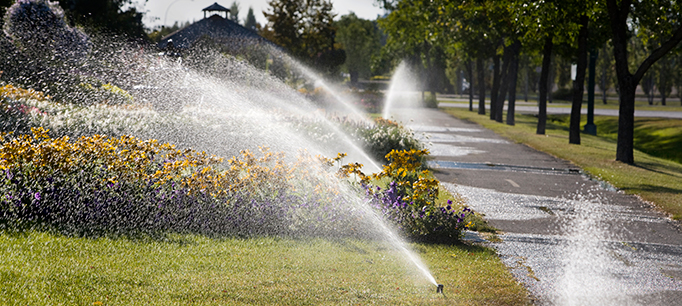
Even bigger savings can come from trimming back on outdoor watering. Most Californians don’t realize that fully half of all water use in the state’s cities and suburbs goes to landscaping, and in many of the hotter, inland communities, such as Bakersfield or Palm Springs, that share is even higher. This has happened because Californians have been accustomed to landscaping with thirsty plants like lawns that are better suited for regions where it rains in the summer. One technological innovation of the 1970s—the automatic sprinkler—compounds the problem by encouraging overwatering. People don’t think to turn it off when the weather is milder and the plants need less water.

Californians are starting to realize that it’s possible to have beautiful communities while using much less water for landscaping. This means switching out lawns and other thirsty plants for more “California friendly” plants that do well with less water, and turning to more modern irrigation systems like drip irrigation and “smart sprinklers” that don’t overwater. This doesn’t mean getting rid of all lawns, but rather keeping lawns where people use them, such as in the back yard, and replacing lawns that are just for show with beautiful, drought-tolerant plants. Here, too, it’s a good time to look for rebates, as many utilities are offering “cash for grass.” The results: a beautiful facelift for landscapes in our communities, significant water savings, and a way to be ready for the new normal.

Locking Students Out of Our Colleges a Losing Strategy

This commentary was published on Sunday, April 12, 2015, in the San Francisco Chronicle.

High school seniors across the state are just now hearing if they will be accepted into the college of their choice. Most of those students have applied to one or more of the state’s public four-year universities and, despite meeting eligibility criteria, many will be disappointed. While this is certainly distressing for individual students and their families, this problem points to larger, troubling issues of access to and student success in California’s higher education system. The state’s public universities are not able to accommodate all of the qualified students who apply.

(Continue reading on sfchronicle.com)