The State of Wildfire Risk Reduction in California

After a few horrific years of extreme wildfires, California has been taking steps to reduce future risks with new programs, increased funding, and new policy efforts. We talked to Van Butsic—a land use scientist at UC Berkeley and an adjunct fellow at the PPIC Water Policy Center—about these efforts.

PPIC: Is California doing enough to manage its forests and reduce wildfire risk?

Van Butsic: Probably not, but it’s definitely doing a lot more than it was five years ago. The state has made a substantial effort to deal with the issues around wildfires—just not yet at the scale needed to get big results.

The state has been pretty active in the past year on addressing some of the shortcomings of federal forest management—the federal government is the biggest landowner of California’s headwater forests. One interesting thing the state is doing is using some funding—about $200 million a year—from the Greenhouse Gas Reduction Fund on fuel reduction projects. These projects are managed by multiple stakeholders, and many are on federal lands.

PPIC: The Newsom administration has taken additional steps to address wildfire risk. Where do you think they’re on the right track? What elements are still needed?

VB: They’re doing a better job in realizing we need to have more hands-on management. Governor Newsom issued an emergency order that reduced environmental review for a handful of fuel reduction projects, which means they can take place a little quicker and address fire risk this season. And they’re investing a bit more money in fire suppression.

I’d like to see more work in building community wildfire resilience across the state. We need stronger policies that start at the house and work outward—to ensure that homes are hardened against wildfires (for example, with more fire-resistant roofing materials) and have defensible space around them. Most importantly, we need a systematic plan to prevent further expansion of communities into areas where catastrophic wildfires are a risk.

PPIC: Talk about new funding tools that can help improve forest health.

VB: One approach being considered depends on the state’s willingness to pay for measures to reduce the risk of big wildfires as part of its effort to reduce carbon emissions. The idea would be to use the carbon market to fund forest management practices.

A second area where we’re seeing bit of action is on water issues. Forest thinning can in some cases lead to more water in streams. We’ve seen a few projects that fund forest management activities in hopes of getting more water as a benefit. The big question is, how much more water will you get by thinning forests? It’s a pretty complex question that has to do with existing vegetation and the elevation of the land. It’s a bit of a challenge to find the sweet spot—the science isn’t settled yet on where forest management can increase water yield.

PPIC: What about fire risk outside the headwaters?

California has many forest types and landscapes that are prone to wildfire. Many of our larger wildfires have been in the Sierra headwater forests, which are currently too dense—they’re primed for large, high severity wildfires, and we need to address this problem.

But many of the homes impacted by wildfires in the past decade are not in traditional headwater forest areas. Managing these risks is really different from managing forests—it requires different policies and funding. Building codes are one way, but they’re mostly devised at the local level and aren’t uniform—some municipalities have better fire-resistance standards. The state does fire-severity-zone mapping, but not a lot of local governments are paying attention to that. I’m not sure what the state’s role should be in that regard. I’ve done some work in France, where the federal government says where you can and can’t develop in areas prone to wildfire, and as a result they have far fewer homes in at-risk areas. I’m not sure if that’s a tradeoff Californians would be willing to make.

Video: Californians and Their Government

Less than a year before California’s presidential primary, likely voters who are Democrats or who lean Democratic are divided on strategy: is it more important for the party to nominate the candidate who seems mostly likely to defeat President Trump or the candidate whose positions align most closely their views? But almost all Californians see voting in the 2020 elections as very important. At a lunchtime briefing in Sacramento last Thursday, PPIC researcher Dean Bonner outlined these and other key findings from the latest statewide survey.

Two in three California likely voters say they will definitely or probably choose a candidate other than Trump. There is a huge partisan divide on this question: 93% of Democrats and 66% of independents would definitely or probably vote for another candidate if the election were held today, while 82% of Republicans would definitely or probably vote for Trump.

Most Californians say that the investigation by special counsel Robert Mueller did not clear the president of wrongdoing, and Californians are more likely that the nation as a whole to say impeachment proceedings should begin. But here, too, there is a partisan divide: 66% of Democrats say Congress should begin the process, compared to only 39% of independents and 9% of Republicans.

Other survey highlights:

  • A majority of Californians say their housing costs cause a financial strain; six in ten favor the governor’s plan to allocate $1 billion to address homelessness, and similar shares favor proposed new rules intended to create more affordable housing.
  • Three-quarters of Californians see participation in the 2020 Census as very important—but most have concerns about confidentiality.
  • An overwhelming majority are concerned about rising electricity bills in the wake of the PG&E bankruptcy.
  • Californians are concerned that the recent outbreak of measles could spread; most believe that vaccines are very safe and an overwhelming majority say vaccination against measles and other diseases should be required.

California’s Growing Demand for Recycled Water Has Ripple Effects

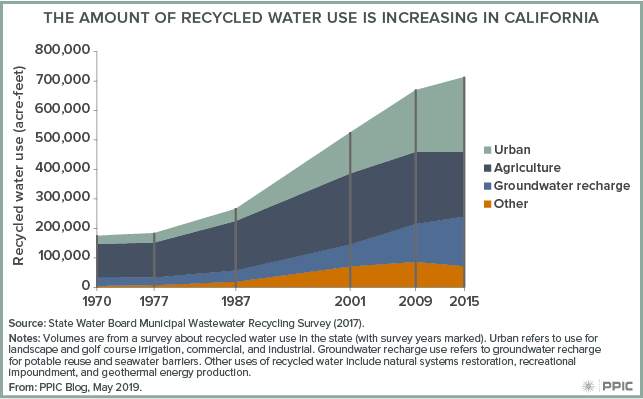
Wastewater agencies produce highly treated water that is increasingly being reused as a water supply. While it’s still only a small portion of overall water use, the use of recycled water has nearly tripled since the 1980s―and is continuing to rise as water agencies seek to meet the demands of a growing population and improve the resilience of their water supplies.

Recycled water production is closely related to water use and wastewater management. It also directly influences flows for ecosystems and downstream water users in some watersheds. As its use expands, weighing the trade-offs involved will help avoid conflict. Meeting current and future demands requires careful consideration of several issues, including the impact of water use on wastewater management, changing types of demand for recycled water, and the needs of ecosystems and downstream users.

Recycled water production is affected by reductions in water use. In other words, recycled water is not completely “drought proof.” The drought of 2012‒16 provides a clear example of this. The rapid reduction of urban indoor water use in this period resulted in a reduced quantity and quality of wastewater for most of the state’s wastewater agencies. In a survey conducted by the PPIC Water Policy Center, just over 40% of wastewater agencies that recycle wastewater reported that their ability to produce recycled water was impaired during the drought. The long-term efficiency of water use and related declines in wastewater quality may also affect recycled water production in the future. For example, as households become more water-efficient, the wastewater they discharge to sewers can have higher concentrations of salts, which are not removed in most treatment processes. Saltier water may not be suitable for outdoor irrigation of golf courses or lawns—common uses of recycled water. If this issue grows in severity, agencies may be forced to incorporate desalination into wastewater treatment, which is likely to add cost and complexity.

Demand for recycled water is growing and changing. Recycled water is increasingly being used in urban areas for public landscape irrigation, golf courses, industrial cooling, and groundwater recharge. Replenishing sources of drinking water is the biggest growth opportunity for water recyclers. New state rules allowing replenishment of groundwater and surface water storage with recycled water—and eventually the direct connection of recycled water to drinking water infrastructure—will create opportunities for recyclers to cost-effectively meet growing demands well into the future. This will require close coordination between water suppliers and wastewater agencies. Some wastewater agencies will also need to increase their treatment capacity to meet the higher water quality standards required for potable reuse.

figure - The Amount of Recycled Water Use Is Increasing in California

Expanding use of recycled water may reduce flows of treated wastewater in rivers, streams, and estuaries. Treated wastewater is an important water source for some ecosystems and downstream water users. Watersheds where wastewater makes up a significant amount of the flow that supports ecosystems and downstream users are especially vulnerable to conflict. For example, a proposal to increase the use of recycled water in Coachella Valley would decrease flows to the already shrinking and vulnerable Salton Sea. Managing recycled water so that it avoids harm to ecosystems and downstream users will require additional collaboration and thoughtful planning.

Closer coordination between wastewater agencies and water suppliers can help minimize impacts from changing patterns of water use on wastewater quantity and quality. Regional planning can also help agencies make smart recycled-water investments that take advantage of opportunities to more directly replenish drinking water supplies. New projects should be based on a careful consideration of local demands and costs, and also how well the investment fits into the overall regional supply of water for both human and environmental uses. Taking such steps now can help water managers in this growing sector make the most of this once-maligned resource.


Commentary: How Better Wastewater Management Can Help California Adapt to Climate Change

This commentary was published on CALmatters on May 9, 2019.

Our public health relies on wastewater management to treat sewage and remove pollutants coming from our homes and businesses.

This system is fundamental to protecting our health. In California, treated wastewater also is a critical source of water for the environment, and, increasingly, a source for recycled water. Climate change is worsening water scarcity and flood risks. Advancements in engineering and technology can help prepare wastewater agencies for a changing climate. But significant shifts in policy and planning are needed to address these challenges.

Wastewater agencies must reliably remove pollutants even as the quantity and quality of the water they treat declines during droughts, and when large storms push their equipment to the breaking point.

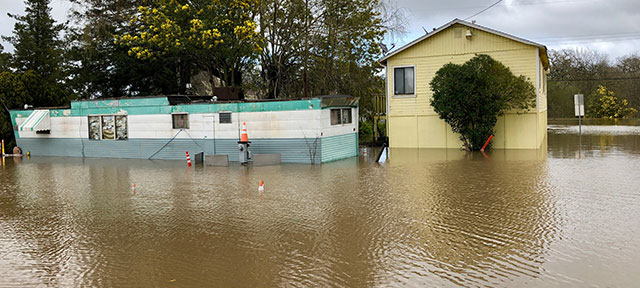
In February, an atmospheric river storm—the type that is expected to become more common as the climate warms―inundated Healdsburg’s wastewater treatment facility and pushed more than five times the normal flow of wastewater and runoff into Santa Rosa’s treatment plant.

In a drought, reduced flows to wastewater plants can hamper agencies’ ability to comply with treatment standards, damage equipment, increase costs, and shrink revenue. Lower inflows also reduce the volumes available for recycled water, often considered a “drought-proof” supply.

The drought of 2012–16 brought all of these problems to the fore. Many wastewater agencies are now changing their operations, infrastructure, or finances in response to the challenges they experienced. Our new study recommends sector-wide changes in three areas to help build the sector’s climate resilience:

  • Maintain water quality in the face of reduced indoor water use. Short-term water conservation during droughts and longer term reductions in water use from indoor efficiency measures challenge wastewater management. All wastewater agencies should assess their vulnerability to major climate pressures, and plan for future droughts. Better coordination and information sharing with suppliers about indoor water conservation and efficiency efforts are also key.
  • Make smart recycled water investments. Coordination among wastewater and water supply agencies is needed to address the demand for recycled water. Regional planning for recycled water projects can result in investments that are more responsive to changing water use and an increasingly volatile climate, bringing financial and environmental benefits.
  • Balance conflicting objectives within watersheds. Many wastewater treatment plants discharge treated water into inland watersheds.

Meeting increased demand for recycled water may fuel conflict over the use of treated discharge to support ecosystems and downstream users. Rivers and streams are expected to experience lower flows and higher temperatures, which will heighten threats to aquatic ecosystems. Resources are needed to identify areas most at risk of conflict over the use of treated wastewater, and to develop tools to evaluate the impacts of water recycling projects on the environment and downstream water users.

The state can help wastewater managers make these adaptations, which are critical to building a more integrated and resilient water system. The State Water Board should align its policies on water use, wastewater, recycled water, and environmental protection to better manage for these multiple objectives.

Forging new partnerships to tackle the full range of climate-related risks will help wastewater agencies determine the best adaptations and improvements needed to prepare wastewater management—and California’s water system as a whole—for a more volatile future.


Video: Managing Wastewater in a Changing Climate

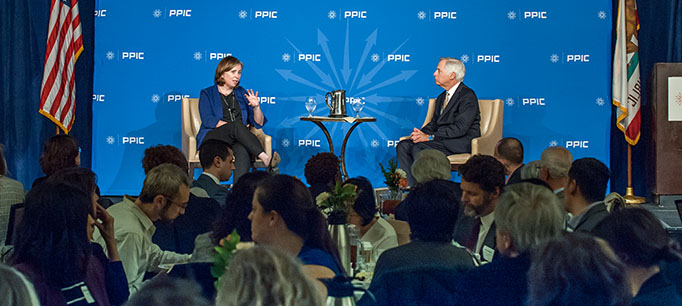
California’s wastewater sector plays a key role in protecting public health and the environment. It is also the source of recycled water—a growing part of the water supply. But as climate change increases the risks of water scarcity and creates other new challenges, the sector is at a turning point. A recent event brought together PPIC researchers and a panel of experts to explore how wastewater management can adapt to a more volatile future.

Caitrin Chappelle, associate director of the PPIC Water Policy Center, outlined findings from a new report on climate risks to the sector and strategies needed to manage them. She noted that drought—as well as ongoing efforts to conserve water—can have unintended consequences for the sector. Less water flowing into treatment plants affects treatment processes and can harm infrastructure. Less treated water flowing out of these plants reduces supplies for downstream users, ecosystems, and recycled water uses.

Chappelle noted that cooperation is a key strategy for building resilience: “Local wastewater agencies will need to work closely with one another, with water supply agencies, and with the state to build a more resilient future.”

Identifying tradeoffs and understanding the unintended consequences of water conservation and the use of treated wastewater are key to developing good policy, noted the panel’s moderator, Kurt Schwabe, a professor at the University of California, Riverside, and an adjunct fellow at the PPIC Water Policy Center.

The three panelists—Jelena Hartman of the California State Water Board, Adam Link of the California Association of Sanitation Agencies, and Nina Hawk of the Santa Clara Valley Water District—discussed the interactions between water use and wastewater, lessons learned from the latest drought, and ways to improve coordination and information sharing with water suppliers going forward.

Hartman noted that with the 2012‒16 drought emergency behind us, “it’s a good opportunity to talk about what worked, what didn’t work” for managing future low-flow situations. “We need to plan, adapt, and be prepared, because the next drought will come,” she added.

Hawk said her agency is fully behind efficient water use but also recognizes that conservation can have impacts on wastewater management and recycled water supplies. “We really have to step back and take a planning look at it,” she said. Collaboration between water suppliers and treatment agencies is key to managing wastewater for multiple uses, she noted.

Link highlighted the difficulty in planning for future capital improvements for both sanitation and recycled water in a changing climate. “If you’re not sure how low your flows will go, how do you plan for a plant that will be useful 30 years from now?” This may require more creative planning for capital investments to ensure that new infrastructure is flexible enough for changing conditions—for example, connecting recycled water plants to groundwater and surface storage to help them weather drought.

We invite you to watch the video from the event.


A New Reality for Federal Flood Insurance

Flood damages have been rising around the country―most recently in the Midwest. The National Flood Insurance Program provides coverage to more than 5 million households and small businesses across the United States, including more than 229,000 in California. The program has been hard hit by payouts from major flood disasters in recent years and is heavily in debt. The Federal Emergency Management Agency (FEMA), which houses the program, has recently announced significant changes. We talked to Carolyn Kousky, a flood insurance expert at the Wharton Risk Center at the University of Pennsylvania and a member of the PPIC Water Policy Center’s research network, about the program.

PPIC: How is the national flood insurance program changing?

CAROLYN KOUSKY: FEMA is modernizing how it prices flood insurance policies, drawing on best practices in risk modeling. The changes are scheduled to roll out in October 2020. One big change is that new rates will be property-specific and based on factors like how close a property is to a river or its elevation. Higher-risk properties will have higher rates. Previously, everyone in a high-risk zone paid the same rates, regardless of the level of actual risk. This change should be easier to understand for residents, which is an important improvement. Economists have been calling for such an approach for a long time.

These changes will also mean that rates vary more smoothly across a community. FEMA flood maps designate so-called “100-year” floodplains. In the old system, if your house was just outside that line your rates dropped dramatically—it was like a cliff between rates. Neighbors might have differences of $1,000 or more, but of course the risk between neighboring houses was almost never that big. This new system should eliminate that cliff.

The new pricing won’t help low-income families afford insurance, so there will still be a need for an affordability program. But the new pricing will eliminate another inequity. The previous rates didn’t always take into account the value of the structure being insured. That meant that higher-value structures were paying less than they should, and lower-value ones were paying too much. So to the extent that the value of a house reflects income, poorer households were being penalized. This problem is now being fixed.

PPIC: The federal government has acknowledged that most of its flood maps don’t reflect rising risk, and now some communities have created stricter standards to help them prepare for floods in a changing climate. Will this new approach help the program prepare for climate change?

CK: In some ways, yes. One important thing the new pricing does is add flood risk from rainfall. Previously the program’s pricing largely only reflected risks from coastal storm surge and rivers overflowing their banks. Rainfall risk is increasing with climate change, so this is a very positive change in the program. We saw the damage that rainfall flooding can produce in an extreme way with Hurricane Harvey.

These annual insurance policies only price for next year’s risk―and this is how it should be. It wouldn’t make sense for property owners to have to pay today for risks 50 years down the road. So the rating changes are not about managing climate changes. But we do need to think about increasing climate risk when planning new development and infrastructure and making other longer-term investments.

PPIC: Do you think these changes will make the program fiscally sustainable for the long term?

CK: As I understand it, these changes are about making sure the prices better reflect current risks. Based on what FEMA has released so far, there’s no way to know how it will affect the program’s revenue.

This new pricing is definitely fairer and more reflective of risk. If Congress coupled that with forgiving the program’s existing debt—which is still in the tens of billions―the program could use this as a re-set on its fiscal sustainability. There is a bill in the House right now that would do this. But thinking about the long-term fiscal soundness of the program in the face of new urban development and a changing climate would likely require more than just rating changes.

That said, there are so many benefits to making these changes in the insurance program. It’s a great first step to modernizing the system.

Testimony: Upgrading California’s Water Grid to Meet 21st Century Needs

Ellen Hanak, director of the PPIC Water Policy Center, testified today (April 2, 2019) before the House Subcommittee on Water, Oceans, and Wildlife, at a hearing on the state of western water infrastructure and innovation. Here are her prepared remarks.

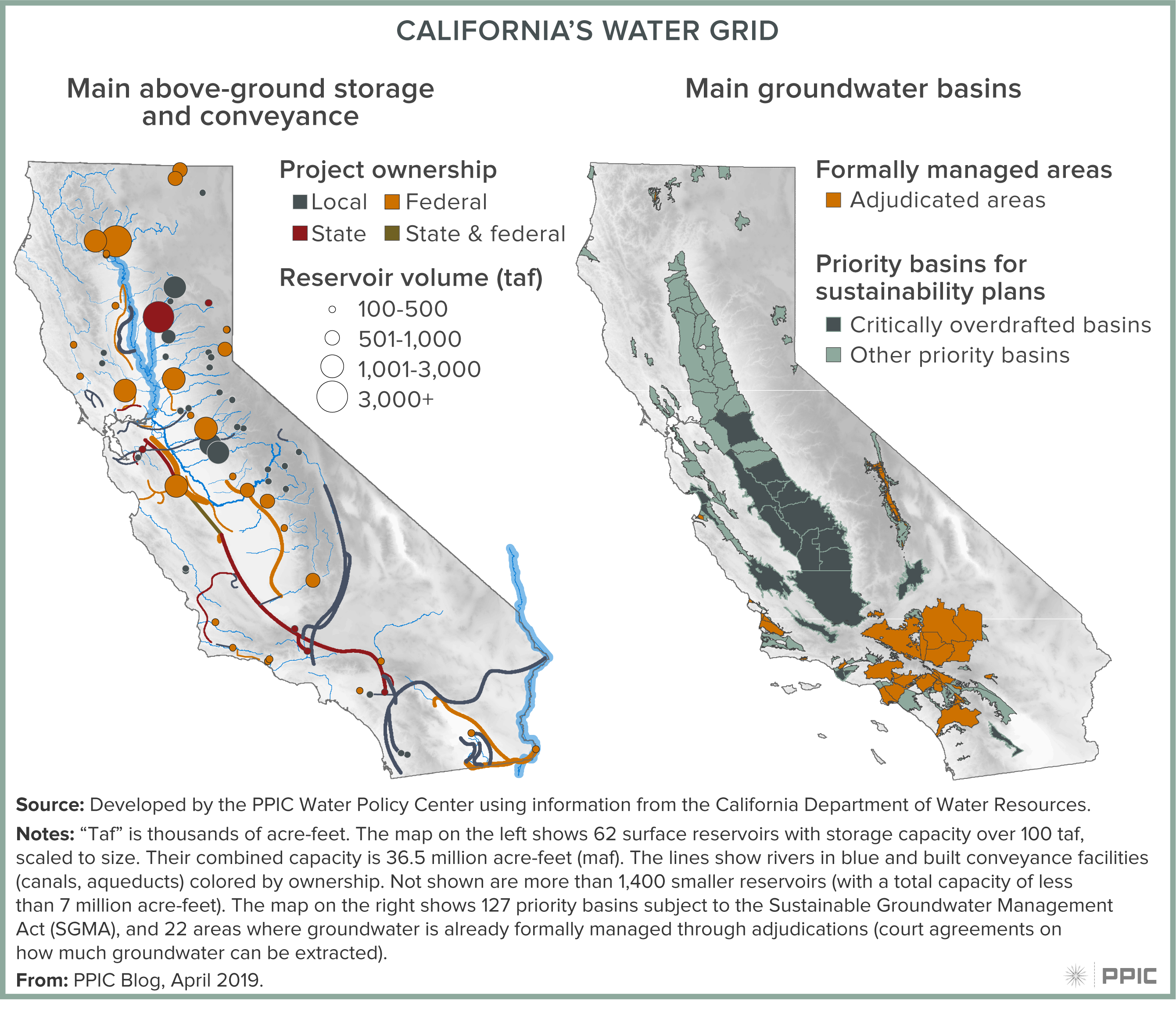
Most western states rely on water “grids”—networks of above- and below-ground water storage and conveyance systems—to manage their water supplies. California’s water grid is unusually extensive and connects most water use in the state. It is also complex, with different elements owned and managed by a wide array of local, state, and federal entities.

California’s water grid provides numerous services: it stores water, reduces flood risk, generates electricity, helps maintain downstream ecosystems, and provides recreation. But various factors are putting stress on this system. As the 2017 Oroville Dam crisis showed, the state’s above-ground infrastructure is aging—much of it is more than 50 years old. And in many areas, groundwater basins are being depleted, making wells go dry, raising pumping costs, harming ecosystems, and causing lands to sink and damage vital infrastructure. The changing climate is compounding these pressures.

figure - California's Water Grid

The PPIC Water Policy Center put together a team of experts in climate science, hydrology, ecology, engineering, economics, and law to review the weak points in California’s water system and recommend actions to build the system’s climate resilience. Our 2018 report Managing Drought in a Changing Climate found that five climate pressures—warming temperatures, shrinking snowpack, shorter and more intense wet seasons, more frequent extreme wet and dry years, and rising seas—will greatly challenge water management in coming decades.

Indeed, many of these effects are already occurring. Warmer, more intense droughts—such as the one California experienced from 2012–16—increase pressures to draw down groundwater reserves. Warmer, more intense storms add stress to surface reservoirs, making it harder to meet sometimes competing objectives of supplying water and protecting people and property from harmful floods.

California’s water grid is not prepared to handle these mounting pressures. Yet it is also the state’s most valuable asset for adapting to the changes in store. What’s needed is a more robust, better-integrated water grid. This will require investments to modernize not only the infrastructure, but also the way the system is managed. Here are some top priorities:

  • Enhancing groundwater storage. Groundwater is a vital drought reserve, and many California basins have considerable potential to affordably store more water. But the lack of active management—including tracking groundwater use—has been an obstacle to these investments. One very positive outcome of the latest drought was the enactment in 2014 of the Sustainable Groundwater Management Act, which requires local water users to develop and implement sustainability plans. The first plans are due in early 2020, and many will focus on new recharge efforts. In addition to expanding dedicated recharge ponds, some farmers and irrigation districts are experimenting with new methods, such as flooding suitable cropland during the winter months.
  • Repairing and upgrading dams, canals, and aqueducts. Addressing infrastructure weaknesses and gaps is essential for both flood protection and water supply. Expanding conveyance capacity will be key for getting water from winter and spring storms to where it’s needed for replenishing groundwater storage. This can also facilitate water trading—an important way to increase the flexibility of water supply and reduce the costs of water scarcity during droughts.
  • Rethinking infrastructure operations. California will be able to store more water if it manages surface and groundwater as a system to increase their combined potential. For instance, moving more water out of surface reservoirs and into aquifers in the fall can free up room in reservoirs to capture winter and spring storms. As another example, promising efforts are underway in some watersheds—including the Russian River, the American River, and the Santa Ana River—to update dam operations using advanced weather forecasting technology. More accurate forecasts can help managers decide whether they need to release water to protect downstream areas from flooding, transfer water to groundwater basins, or keep water in storage for later use.

There are many ways the federal government can help update the grid to meet 21st century needs in California and throughout the West. Here are a few priorities:

  • Assessing and improving system capacity. As owners and operators of major surface water infrastructure, federal agencies—especially the US Bureau of Reclamation and the Army Corps of Engineers—will be essential partners in assessing system capacity issues and the potential for new investments and operational changes to improve the grid’s performance and resilience.
  • Providing essential data. A variety of federal agencies—including the US Geological Survey and the National Oceanic and Atmospheric Administration—are key providers of data needed to better manage the grid under changing conditions. This includes essential metrics such as stream flows, weather forecasts, groundwater models, and space-based imagery to measure water use. These agencies also provide crucial biological data to help manage the grid sustainably. Some of these efforts have faced budget cuts in recent years, dampening their usefulness.
  • Supporting groundwater reform. To date, the federal government has been less engaged on the key issue of groundwater management—an underappreciated part of the grid whose importance will grow as the climate warms and water stored in the mountain snowpack diminishes. California is in the midst of a major, locally driven groundwater reform that will provide valuable lessons for improving the management of this vital resource across the western US and beyond. As owner and operator of the Central Valley Project, the US Bureau of Reclamation can support this effort by making it easier for its local water customers and others to recharge groundwater in suitable areas. As the regulator and manager of flood control systems throughout California, the Army Corps of Engineers can help local flood control agencies capture storm runoff and increase groundwater recharge. And as a major source of funding and technical assistance to farmers, USDA’s Natural Resource Conservation Service could help spur innovation by recognizing groundwater depletion as a resource concern, making it eligible for support.

California, like all western states, is facing major water management challenges as the climate warms and population grows. Weather extremes over the past decade have given us a glimpse of what the future holds. The best way to adapt to these changes is to modernize water grids. The federal government has been an essential partner in developing and operating these grids for more than 100 years. Given the challenges ahead, it is time to modernize this partnership, not just the grid itself.  This includes integrating federal support, operations, and technical expertise into all phases of water management, particularly groundwater.  From our many conversations here at PPIC with state and local water managers, California appears ready for an improved state-federal partnership.  I encourage members of this subcommittee to engage in finding ways to help modernize this relationship.

Rising Seas Bring Rising Water Management Challenges

Sea level rise—driven principally by melting continental ice and expansion of the oceans as they warm—is a significant threat for those living along the coast. Adapting to increases in coastal erosion and flooding—and managing the broad impacts of sea level rise on the state’s water systems—will be expensive and disruptive for millions of Californians.

A recent study by the US Geological Survey took a sobering look at future risks from rising seas. The authors describe how storm surge, very high tides (popularly known as king tides), and large waves during storms can amplify the effects of sea level rise. They simulated coastal erosion and flooding over the next two centuries and found there could be dramatic increases in damages during modest storms, and catastrophic flooding during rare, large storms. These impacts are projected to appear by the middle of the 21st century, at a scale likely to significantly affect the state’s economy.

Beyond costly efforts to protect against coastal erosion and ocean flooding, coastal areas will also need to manage increased inland flooding. Large storms can amplify the effect of rising seas by bringing greater storm surge, particularly if these coincide with king tides. Storm runoff flowing down coastal creeks will meet rising waters caused by storm surge and tides, exacerbating flooding. This issue is particularly acute in parts of the Bay Area (including much of Silicon Valley) and low-lying areas in Southern California. Major new efforts to manage runoff and protect existing homes and businesses will be needed.

Sea level rise will also affect water management in other ways. One area is wastewater treatment. Throughout coastal California and particularly in the San Francisco Bay Area, wastewater and stormwater treatment takes place in facilities that are currently at or near sea level. The Bay Area alone is home to 30 such facilities that are vulnerable to damage by rising seas and storms.

Water supply will also be affected. Many coastal aquifers will see increases in salinity as sea levels rise and storms push saltwater farther inland. But the most significant impact on supply is likely to be associated with changes in the Sacramento‒San Joaquin Delta.

The Delta lies at the head of the San Francisco Bay estuary and the confluence of the Sacramento and San Joaquin Rivers. More than 25 million Californians and 3 million acres of farmland rely on the Delta for a portion of their water supplies. These exports are managed by large state and federal projects that pump water from the southern Delta.

Sea level rise affects the Delta in two ways. First, to keep its waters fresh enough so that cities and farms can use it, a certain amount of fresh water has to flow out of the Delta and into the San Francisco Bay. If the outflow is insufficient—whether due to drought, reduced inflows from upstream water use, or high export pumping—tides push saltwater into the Delta, making its water unusable.

The second way sea level rise will affect the Delta concerns the 1,100 miles of levees that line its channels. Levees hold water back from Delta islands, whose lands are now well below sea level due to sinking soils. Failure of these levees—particularly in the western Delta—can lead to changes in the way tides circulate water in the Delta. These changes amplify the increases in salinity from sea level rise alone; together, they put additional pressure on water supplies.

Addressing the many effects of sea level rise on California water management requires extensive planning and costly investments in infrastructure. The US Geological Survey study shows that these impacts are not in some distant future, but are likely to become significant in just a few decades. The good news is that state and local officials are starting to work on this problem, which will take many years to address.

Widening the Conversation about Safe Drinking Water in the San Joaquin Valley

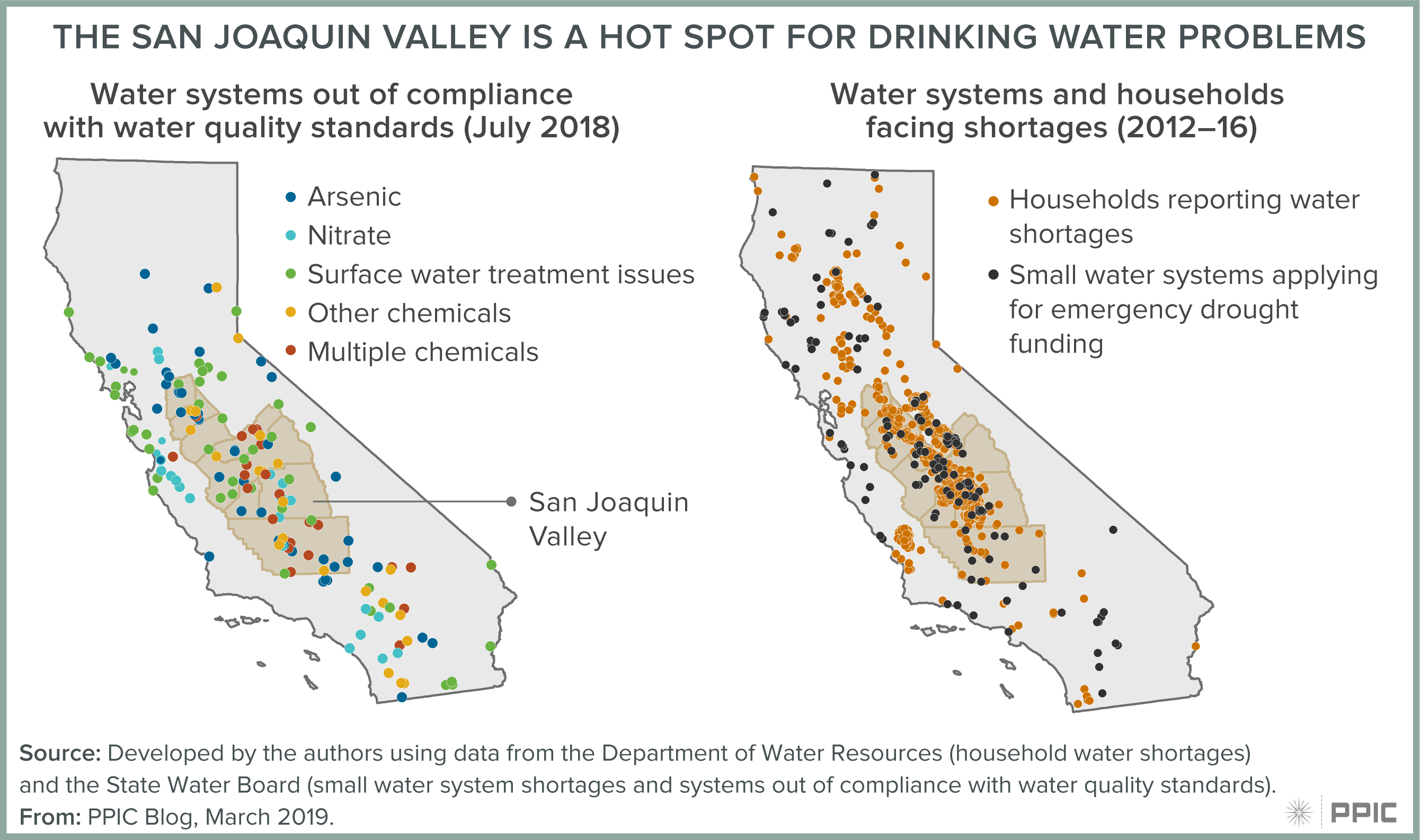
The theme of this Friday’s World Water Day is the lack of safe drinking water that affects many millions of people worldwide. Here in California, the San Joaquin Valley is a hot spot for unsafe drinking water. The region has more than half of all public water systems that are out of water-quality compliance in California, but just 10% of the state’s population. In addition, chronic decline in groundwater levels has caused drinking water wells go dry in a number of the region’s communities. We talked to Veronica Garibay—co-founder and co-director of the Leadership Counsel for Justice and Accountability—about ways to ensure community involvement in water management decision-making processes.

photo - Veronica Garibay

PPIC: What is key to understanding the valley’s safe drinking water crisis?

VERONICA GARIBAY: Water management is a particularly opaque and complex process, and past decision-making processes related to land use and water management failed to meaningfully include disadvantaged community voices and address their needs.

Climate change brings major risks to our water resources. The communities that are already the most vulnerable to the impacts of climate change—including water shortages during droughts, worsening water quality, flooding, and other problems—will see their vulnerability exacerbated. We have to change the way we manage water resources to adapt to these changes.

We have to bring our most vulnerable communities into these conversations, prioritize their needs, and make sure they, too, have decision-making authority over policy, programs, and projects.

Disadvantaged communities have been at the forefront of the progress we’ve already made on providing safe drinking water. They led the charge that gave the State Water Board the authority to consolidate small systems into larger ones, brought emergency funds to communities whose wells went dry during the drought, and led to the board’s establishment of the Office of Sustainable Drinking Water Solutions. Now their leadership is building momentum around the proposed safe and affordable drinking water fund, which would provide much-needed resources to pay for ongoing operations and maintenance costs and capital projects to ensure safe drinking water.

figure - The San Joaquin Valley Is a Hot Spot for Drinking Water Problems

PPIC: The Sustainable Groundwater Management Act requires local agencies to protect water quality while balancing groundwater supplies and demands. Why is it important for disadvantaged communities to participate in this process?

VG: Water is a critical resource to all of us, and the most vulnerable people should have a say in its management. Communities have a lot to contribute and need to be part of the solution. As a region we need to democratize the process and make sure that all interests are considered.

We’re working to ensure that planning for groundwater sustainability is more inclusive by encouraging groundwater sustainability agencies to establish authentic and meaningful space for direct community input and engaging communities most vulnerable to water quantity and quality issues in the region. We want to see sustainability plans that incentivize programs, policies, and projects that support safe drinking water and benefit households in disadvantaged communities.

PPIC: Are there good models for participation in the process?

VG: The North Fork Kings groundwater sustainability agency (GSA) has established a rural community advisory committee. It helps bring disadvantaged rural communities into the process to develop a sustainability plan. That’s a good step in making sure communities are providing direct input.

And the Madera GSA is encouraging all stakeholders to learn from each other and talk to each other. They’re making sure a variety of stakeholders get in the same room to learn how decision making on water affects different groups, and how we can shape solutions together.

We’d like to see more GSAs give some authority to disadvantaged communities and meaningfully build space into their processes for communities to participate.

Equal access to information is also key—what’s being presented at meetings should be accessible and in different languages if needed. And we need to ensure there is space to give feedback and that this feedback is reflected in the final sustainability plans.

These efforts will take work. Organizations like ours, and Self Help Enterprises and the Community Water Center, have all offered to collaborate with GSAs and help them engage community participation. The state has provided some funds for community engagement as part of its support of the SGMA planning process. But GSAs will also need to budget for equity—plan for and allocate resources to make sure they’re intentionally engaging communities.

Watch a video of Veronica Garibay and other panelists discussing water supply and water quality management in the San Joaquin Valley

Video: A Conversation with Chief of Staff Ann O’Leary

As the Newsom administration lays out its initial plans, PPIC invited chief of staff Ann O’Leary to discuss some of the governor’s top priorities. In a wide-ranging discussion with PPIC president Mark Baldassare last week, O’Leary identified the “cost crisis” in California as one of the main challenges that Governor Newsom plans to address.

“By ‘cost crisis,’ I mean how do we make sure that people in California can have affordability and the opportunity to really take advantage of the California dream?” O’Leary said. “I think too many people in California are really seeing that slip away. They’re not able to afford homes, they’re not able to afford child care, and they’re not able to pay for college for their children as they grow older.”

O’Leary pointed out that confronting this cost crisis would take many forms, such as taking on health care affordability, investing in “cradle to career” education, and addressing housing production and rising rents.

She underscored that the governor’s first proposed budget reflects his vision for promoting affordability and opportunity while ensuring the state’s long-term financial stability. Newsom’s plan includes a mix of one-time and ongoing funding as well as a robust rainy day fund, but “we also go further than that. We have a reserve fund for the safety net, and we also look at how we could use some of the surplus to pay down pension liabilities.”

The governor has also focused on other key challenges—for example, responding to wildfires and tackling the unmet need for safe drinking water in many parts of the state.

On wildfires, O’Leary noted that the governor wants to “make sure that we’re continuing with those recovery efforts to help communities that have been harmed, but also to prepare for future wildfires.” On drinking water, O’Leary said that the governor has already worked with the legislature to provide $20 million in emergency funding to address this issue.

Navigating the PG&E bankruptcy filing is another immediate priority. O’Leary said that over the next 60 days the governor’s team would be creating a roadmap for the state to “protect wildfire victims, protect employees who are out there every day trying to make sure we’re safe, and make sure fundamentally that we have safe and affordable power and that we’re meeting our clean-energy goals.”

O’Leary also discussed the federal-state relationship and how the governor plans to manage it. While pointing out that the state and federal governments need to work together as much as possible, O’Leary also underscored that California must stand up for its values when fundamental disagreements exist, especially on issues such as immigration and family planning. “These are differences of opinion. And it’s a needle we have to thread, but we’re going to do our best.”