Unemployment Benefits in the COVID-19 Pandemic

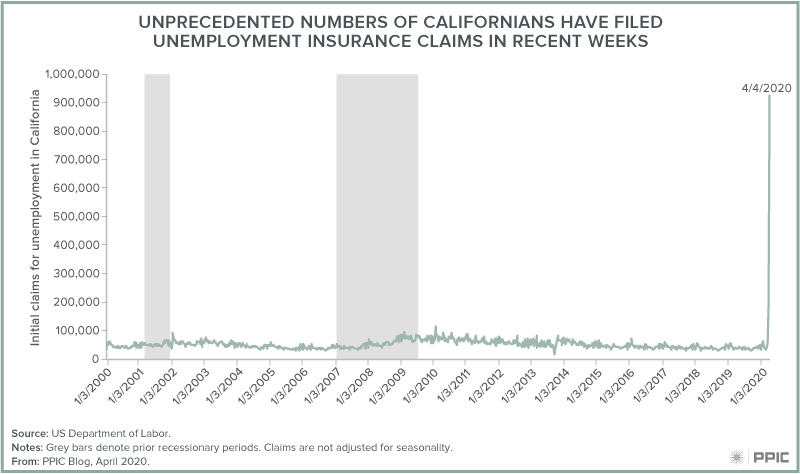
Today, the US Department of Labor revealed that 925,450 Californians filed initial unemployment insurance claims during the week ending April 4. This makes for a record-breaking three-week period during which nearly two million claims were filed in California, representing roughly 10% of the labor force. What kind of benefits can these millions of newly unemployed workers receive?
Typically, Californians who qualify for unemployment receive a maximum of $450 per week as long as they are actively looking for work, and that assistance can last for up to 26 weeks. (Notably, benefits in California are less generous than those in most other states: in 2019, its average weekly benefit of $345 ranked 29th.) However, federal policymakers are responding to unprecedented circumstances; so far, they have expanded both eligibility and benefits.

Federal legislation temporarily expands eligibility. The Coronavirus Aid, Relief, and Economic Security (CARES) Act makes self-employed Californians—including gig workers and other independent contractors—who are unable to work or have had hours reduced by COVID-19 eligible to receive benefits. Also, laid-off workers who expect to return to their current jobs are not required to be searching for work.

The new law also supplements and extends benefits. The CARES Act provides $600 per week on top of typical benefits for up to four months. This represents a dramatic boost for most unemployed Californians. The legislation also covers the cost of a 13-week extension of benefits, so that laid-off workers can now receive unemployment for up to 39 weeks.

Unemployed Californians who earn less than $4,000/month would normally qualify for a benefit that replaces roughly half of their earnings, and the benefit covers a smaller and smaller share of earnings above $3,894/month. The $600 federal supplement is higher than California’s maximum benefit and more than covers prior earnings for many unemployed Californians.
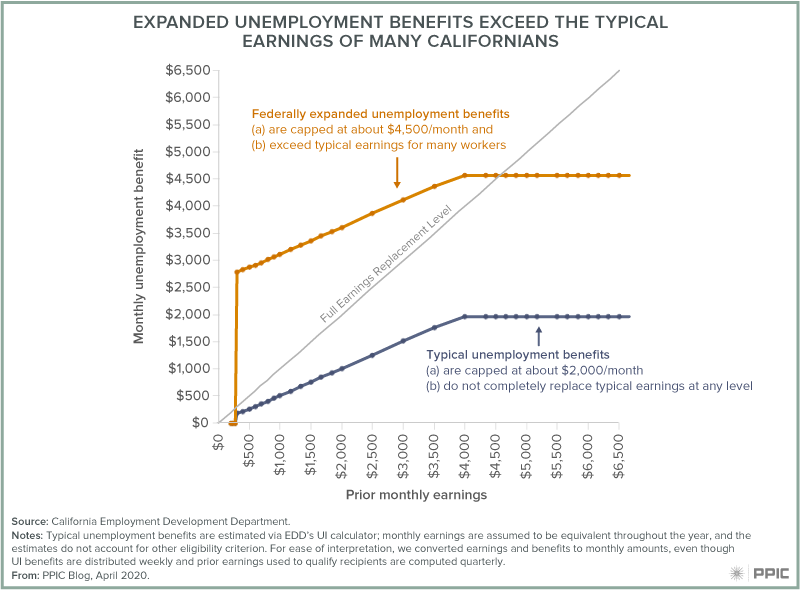
It is likely that workers in the state’s hardest-hit sectors make up a large share of early applicants for unemployment benefits. In the accommodation and food service industry—one of the hardest-hit sectors—the average monthly wage is roughly $2,000; an unemployed worker could receive up to $3,700 per month. The average worker in transportation and warehousing, another impacted industry, earns more than twice as much ($5,000/month), but unemployment benefits for this worker would be only slightly higher: up to $4,550 per month.

These expanded benefits will help millions of newly unemployed Californians, but the state and its workers face important limitations and challenges. Given the massive surge in applications, workers may have to wait several weeks—or months—to receive benefits. Moreover, laid-off immigrants who are unauthorized to work in the US will have to rely on other support.

More generally, California’s unemployment insurance fund reserves are inadequate to weather even a mild recession, although the federal government steps in to loan the funds when needed. In the longer term, policymakers should seriously consider reforms to the unemployment system, so that it can respond quickly and comprehensively in the next economic crisis.

Online Medical Care during COVID-19

California policymakers have recently taken bold steps to ease the strain on the health care infrastructure during the COVID-19 global pandemic. California was the first to enact a statewide shelter-in-place order to reduce community transmission. It has also implemented measures to lower the rate of transmission in health care settings—including policies that encourage the use of telehealth, especially online doctor visits. To make online healthcare truly accessible, however, the state will need to address its digital divide.

The California Department of Managed Health Care has required that all health plans allow people to obtain health care via telehealth and reimburse telehealth consultations at the same rate as in-person visits, without increasing patient costs. This mandate covers Medi-Cal managed-care plans, which serve about 85% of the low-income Californians enrolled in the program. The California Department of Health Care Services had already given providers more flexibility in billing Medi-Cal for telehealth services in 2019; in late March, it further expanded the range of telehealth services that safety net providers can provide.

A recent survey found that a small percentage of Californians use telehealth services, and national estimates (based on Medicare and private health claims data) suggest that telehealth accounts for less than 0.25% of medical services provided. Policy barriers, such as restrictive requirements and privacy concerns, contribute to low usage. Recent state and local efforts to lower these barriers could help boost usage, but not all Californians will be able to access medical care through telehealth due to the state’s digital divide.

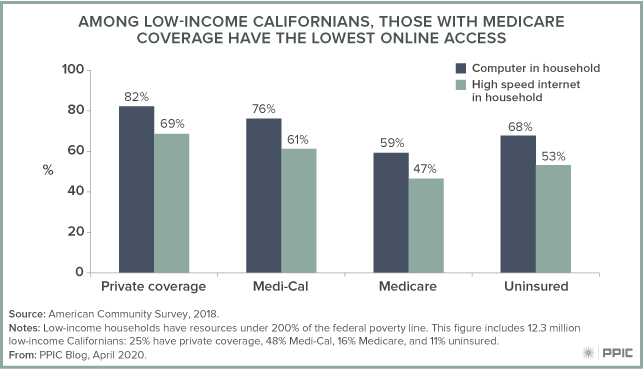
Among low-income Californians, those with private health insurance are most likely to have computers in their household (82%), while those covered by Medicare (mostly seniors over 65) least likely to have computers (59%)—indeed, these low-income Californians are less connected than those who are uninsured. About 75% of Californians covered by Medi-Cal have access to a computer at home and about 60% report that they have high-speed internet connectivity.

figure - Among Low-Income Californians, Those With Medicare Coverage Have the Lowest Online Access

Some of the policy responses to the COVID-19 crisis could narrow the state’s digital divide. For example, the governor recently announced a plan to distribute computers and provide high-speed internet access to support distance learning for California’s K–12 students while schools are closed. This could help many low-income families gain access to telehealth and other online resources. However, one-third of low-income households do not include school-aged children.

As the public health crisis continues to unfold, it will be important to assess trends in telehealth use and to understand and address disparities. Currently, the state has limited resources for this type of analysis, but the comprehensive health payment database that is currently being developed could help policymakers examine these and other issues.

Challenging Times for California

This is a time of global crisis. We are all living through a fast-moving, large-scale disaster that is having extraordinary public health and economic consequences. Here in California, public leaders and private industries took early action to mitigate the effects of COVID-19, putting policies in place to flatten the curve sooner than any other state. And while the full extent of the pandemic has yet to be realized, Californians should feel proud of our state’s ability to assess and respond rapidly to counteract this generational challenge.

The pandemic is touching every aspect of life today. Students, agricultural workers, health care practitioners—all Californians are struggling to adjust to enormous changes in their responsibilities and daily routines. At PPIC, we are thinking about the effects on our state’s most vulnerable populations: seniors living in areas with sparse medical care, children receiving free or reduced price lunches, essential workers struggling to stay above the poverty line.

We are also deeply concerned with what lies ahead. How will our economy—just recently in the longest growth cycle ever recorded—respond in the long term? How can the state improve opportunities for those hardest hit by this crisis? What can we observe, measure, and propose that will help California to rebuild itself efficiently, effectively, and equitably?

PPIC will be delving into these questions as this crisis plays out. For now, in these fluid and rapidly changing times, we are focused on bringing critical facts and information to the table—assessing the state’s economy, people, communities, and environment. Our blog series on COVID-19 provides wide-ranging analyses across key policy areas, from education to health care, from criminal justice to water policy. And the PPIC Statewide Survey will be offering perspectives on the pandemic and the economy from Californians across the state.

For 25 years, PPIC has worked hard to inform and improve public policy in California. 2020 may be one of our most challenging years yet, but we are ready and able to meet that challenge.

For PPIC’s full series on the coronavirus and California, visit our COVID-19 page.

Counting Californians and Holding Elections in a Pandemic

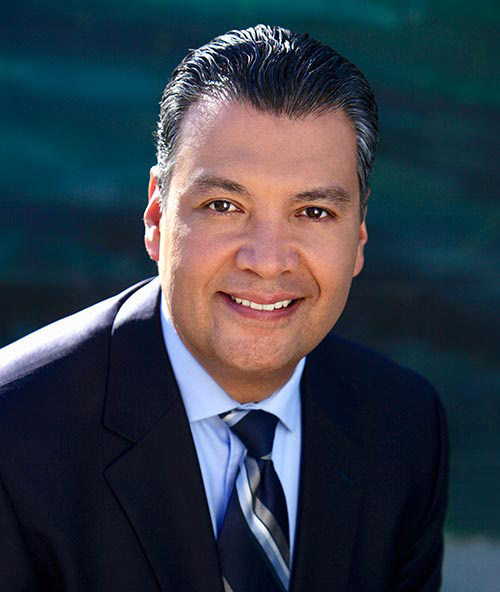
Today is Census Day, the day to count everyone living in the country in 2020. It’s not the deadline for responses—you have until August 14 to complete your census form—just the “anchor day” for counting those living in your household. We talked to California Secretary of State Alex Padilla about the challenges the COVID-19 pandemic brings to counting Californians—and for holding elections in November.

Photo - Alex PadillaPPIC: What challenges does the pandemic bring to conducting the census?
ALEX PADILLA: Ensuring a fair and accurate count is tough under normal circumstances, and it’s made more challenging by this global health pandemic. A lot of the state and local strategies for engaging the public on the census have had to be modified or replaced with ones that are more effective when people are staying at home. The good news is, this is the first time it’s been possible to do the census online, as well as by phone or paper. We’re seeing people get more creative at staying in touch while keeping their distance, whether through video chats with their coworkers or using teleconferencing to stay in touch with family and friends. We can also use these methods to remind everyone to do the census.

It’s really important to remember that participation in the census is how we ensure our communities receive their fair share of federal dollars for critical needs such as public health, education, public safety, housing, and infrastructure. This message is really striking a chord right now.

PPIC: As they shelter in place, what can Californians do to help ensure an accurate census count?

AP: Every Californian should participate in the census, but also remind people they’re in touch with to do so. Assuring a complete and fair count depends on everyone doing the census. It’s not just a count of adults or voters or citizens; it’s for everybody living here.

California has an especially high number of hard-to-count populations—for example, communities of color, young people, and immigrant families and communities. More than 70% of Californians fit into a hard-to-count category. It already takes extra effort to ensure participation by these groups. The pandemic is not making the job any easier—at a time when the job is more important than ever for ensuring the state gets its share of federal funding for critical needs over the next decade.

Based on the prior census 10 years ago, California’s most undercounted population were kids under five years old. My youngest just turned five, and especially now with all the kids at home, it’s hard to imagine forgetting to include him as he’s the loudest member of our household! Today, kids who weren’t counted in 2010 are now teens who’ve been in school for years, but their schools haven’t been getting their full share of federal education dollars. It’s a very tangible way to think about it, and it shows the importance of the census for our quality of life.

There are many options for participating in the census. Go online or call in today. Once you’ve submitted your information, help us by spreading the word with neighbors you’re checking in on and friends and family.

PPIC: Talk about the administration of the upcoming election.

AP: To put it in context, we should recognize that throughout the nation’s history, Americans have gone to the polls—in times of war, during the Great Depression, and even during the deadly 1918 flu pandemic. So it’s not a matter of if or when we’ll hold the election. We have a date: it’s Tuesday, November 3. It’s a matter of how we hold the election in a way that is accessible, secure, and healthy for everyone—voters, elections personnel, poll workers. Many things California has championed to get more people voting really make a lot of sense in an era of public distancing. You can register to vote online. Voting by mail and in-person early voting are good ways to avoid crowds. We’re diligently working on expanding those opportunities.

Essential Workers and COVID-19

California is grappling with the dual threats of a public health crisis caused by the coronavirus and the additional economic fallout of necessary social distancing measures.  In the past week, we have seen unemployment claims skyrocket and policymakers forge supports for workers and businesses.

Meanwhile, there is a workforce that is tackling the public health crisis, keeping the economy going, and supporting Californians who are sheltering in place. While this essential workforce supports the state’s health and basic economic needs, many of these workers are not well equipped to weather the economic challenges of the COVID-19 crisis.

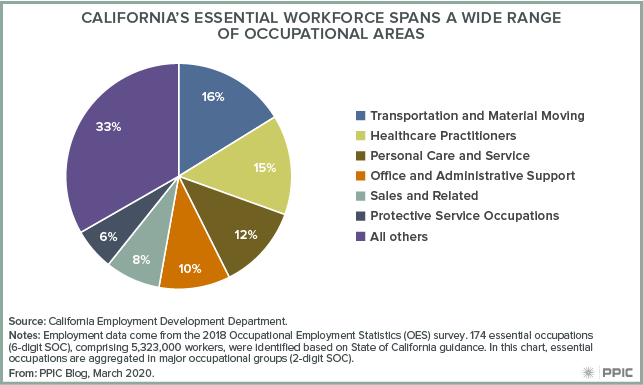
We estimate that in a typical year, roughly one-third to one-half of California’s labor force is employed in essential occupations. Essential workers fulfill a wide variety of roles in our economy, including in health care services, energy provision, food service, agriculture, and transportation. Some workers in these areas may be seeing layoffs and hours reductions depending on their industry, firm, or region.

figure - California’s Essential Workforce Spans a Wide Range of Occupational Areas

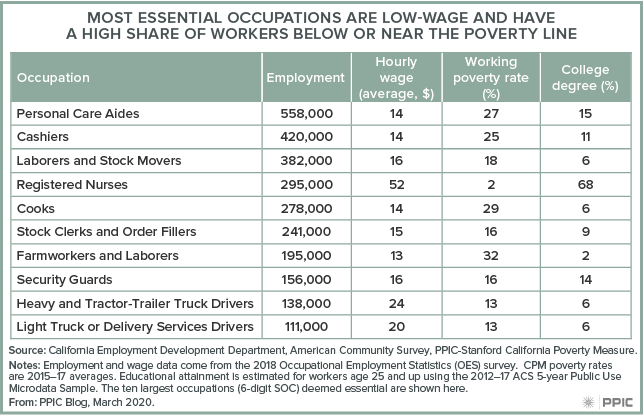
Some essential jobs are obvious, as they are on the front lines of the public health crisis. For example, registered nurses (the largest occupation within the healthcare practitioner category) are essential, have two- or four-year degrees (68% have a college degree, according to our analysis of American Community Survey data), and earn relatively high wages ($52.32 an hour).

However, workers outside of the health care sector are also on the front lines. Personal care aides—those who assist the elderly and others in their homes or personal care facilities—are the single largest essential job category. These workers earn $13.50 an hour on average and 85% do not have a college degree.

Differences in skills and pay translate into notable differences in economic well-being for these workers and their families. A slightly higher share of essential workers than non-essential workers are poor or nearly poor, according to the California Poverty Measure: 14% of essential workers live in poor families compared to 11% of non-essential workers (the comparable estimates for near poverty are 19% and 14%, respectively).

figure - Most Essential Occupations Are Low-Wage and Have a High Share of Workers Below or Near the Poverty Line

Grocery store cashiers, store clerks, farmworkers, and delivery and truck drivers make up sizeable shares of the essential workforce.  Given the low hourly wage rates for these workers, some may face hardships in caring for children or family members with schools and care facilities shuttered.

In addition, many essential workers experience the cost and risk of maintaining their own health while interacting with the public. In low wage essential jobs, access to health benefits and paid sick leave is limited, even in normal times. During the COVID-19 crisis, expanding access to personal protective gear could reduce the health risks among workers whose job requires some level of contact with the public.

Mandated lockdowns are now slated to continue through at least May 1 in some parts of the state and  may last even longer. Ensuring the ability of essential workers to continue their jobs safely and effectively will be crucial over the coming months. As policymakers implement support for unemployed Californians, it is important that they also consider ways to assist and protect the many essential workers on the front lines. Paid sick leave, adequate health coverage, income support, access to child care, and sufficient personal protective gear should all be part of the policy discussion.

Food Security in a Time of COVID-19 Insecurity: How the Virus Affects Farming

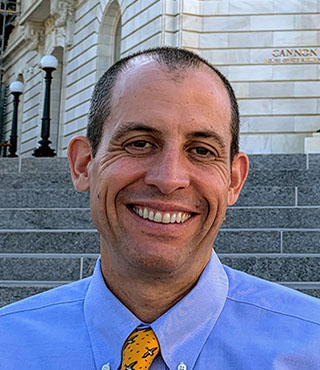
How will the COVID-19 pandemic affect California’s agricultural sector—which is important for food supplies locally, nationally, and in many other countries? We talked to Cannon Michael—a sixth-generation farmer and member of the PPIC Water Policy Center Advisory Council—about the pandemic’s potential to disrupt farming.

photo - Cannon Michael

PPIC: What risks does the virus bring to California’s farm sector?

CANNON MICHAEL: For most farmers, the immediate focus is on our workers—not only keeping them safe from the virus, but also being mindful of the pressures they’re facing at home right now. Most of our workers can’t work from home. Many have kids out of school or partners who’ve lost their jobs.

The big concern going forward is the virus going through our workforce. The disruptions of food supply we’re seeing in stores right now is caused by changes in buying habits and difficulty keeping shelves stocked. But if there’s disruption on farms—if crops don’t get harvested in time or the logistics for getting food to market go down, that would be much scarier. We’re already facing labor uncertainty due to changes to a visa program that allows workers from Mexico and Central America to come here for seasonal farm work. Many of California’s larger farms rely heavily on this temporary labor force. In the early days of the crisis, the H-2A visa program was restricted so that only workers already in the program last year were allowed to come back this year. Rule changes and congestion have made getting across the border harder, too. We’re seeing a slowdown of workers at a time when we may need more. That’s a real concern for the food supply.

There’s a finite pool of people living here to do the hand work required on the state’s farms. There’s a risk that the large companies will do whatever it takes to get those folks if they can’t get seasonal laborers. It could be a threat to smaller farms if larger entities start to pull workers away using incentives that smaller farms can’t match.

The disruption of markets—such as the closure of restaurants and food service operations—is a huge concern for growers. Impacts will vary by region, commodity, and individual company exposure. Western Growers reports that some farmers are heavily embedded in the food service supply chain with crops in the ground now. They have nowhere to put that food, because other growers with retail channels for those commodities are operating at maximum capacity and can’t take any more product into their systems. Other farmers say they may need to scale back acreage. Some crops could be affected by changing international markets or the general financial downturn. There’s the potential for huge swings in marketability and profitability for many farmers.

We’re also not sure if there will be any new requirements for food safety in coming months. There are already good protocols in place for food safety that anyone involved in fresh produce has to comply with, and farmers are accustomed to these high standards. The good news is that food safety experts say there is a low risk of getting the virus from food products or packaging. The advice from the experts is that normal food safety practices will suffice.

PPIC: What steps are being taken to protect farm workers from infection?

CM: We are rapidly approaching the time when most farms will be extremely busy, which means a lot of people on the farm. New state guidance on protecting farmworkers from COVID-19 is being developed. But most farmworkers live in very close conditions and so even with safe practices on the farm, it’s going to be harder to control the risk in their homes and communities under current conditions. If the virus gets into the farmworker population I think we’d see a very fast rise in infection, which would have a dramatic impact on the farm sector and food supply.

On our farm we’re providing regularly updated health information in all the places that people congregate. The California Farm Bureau and industry groups have reacted quickly to make information available in English and Spanish. We’re making sanitation equipment widely available, and presenting guidelines on hand washing and social distancing.

PPIC: What policy changes could help address these risks?

CM: Fixing federal immigration policy is critical. The key point is we need to get food off the farms, and to do that we have to have enough laborers. One hopeful sign is that the federal government recently announced it will relax the new restrictions on the H-2A program. That should help people get here to work.

It’s also critical that rural communities aren’t forgotten in this public health crisis. We need a plan to address the special public health challenges in farm communities.

I don’t want to pound people over the head with this, but the crisis really drives home the importance of agriculture and the value of a stable food supply.

And I’d just like to encourage everyone to reduce the panic buying, which has created big challenges in the supply chain as well as making it harder for more vulnerable people who can’t shop that way. We will produce the food and get it to the markets but we will all be safer if people just buy what they need.


Feeding Children When Schools Are Closed for COVID-19

By state law, all public schools in California must provide at least one nutritionally adequate meal to students—however, many students eat more than one meal a day at school. Nearly four million students received meals from California’s public schools in the 2018–19 school year: close to 300 million breakfasts and well over 500 million lunches. With schools closed to reduce exposure to the new coronavirus, many students now lack ready access to these meals.

By federal law, low-income students (about $48,000 for a family of four in 2020) are eligible for free or low-cost school meals. Higher income students paid on average $0.98 for breakfast and $2.11 for lunch in 2017–18, according to the California Department of Education.

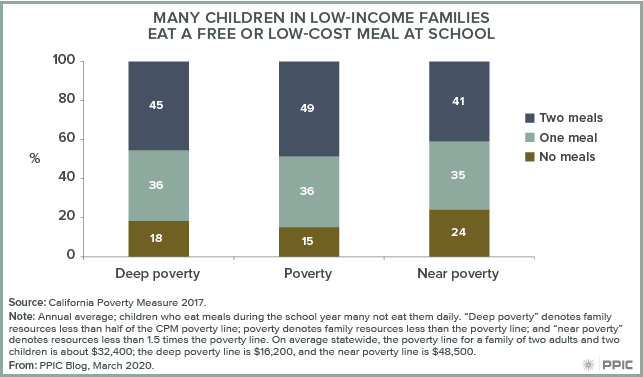
The vast majority of low-income students eat some or all breakfasts, lunches, or both at school. Free and reduced-price meals lower food insecurity, and according to the California Poverty Measure (CPM), meaningfully reduce poverty among families with public school students. Without school meals, the share of students living in deep poverty would be 17% higher; increases for students in less severe poverty would be 2% to 8%.

figure - Many Children in Low-Income Families Eat a Free or Low-Cost Meal at School

With school closures in place for several weeks, school districts have already designated sites where families can pick up meals for children. In higher poverty areas, all children can access meals regardless of enrollment in the local school or eligibility for meal programs because authorities have temporarily relaxed federal regulations.

During closures, Governor Newsom assured that schools will continue to receive state funds to operate and requested efforts focus on certain areas, including providing school meals. However, access remains a concern. For example, Los Angeles Unified School District lists 64 “grab-and-go” sites for its roughly 1,000 schools. San Diego Unified School District has 13 sites for 181 schools, as of March 16. Elk Grove, with 67 schools, has 34 sites for drive-through and grab-and-go meal services along with a mobile service for families with limited transportation.

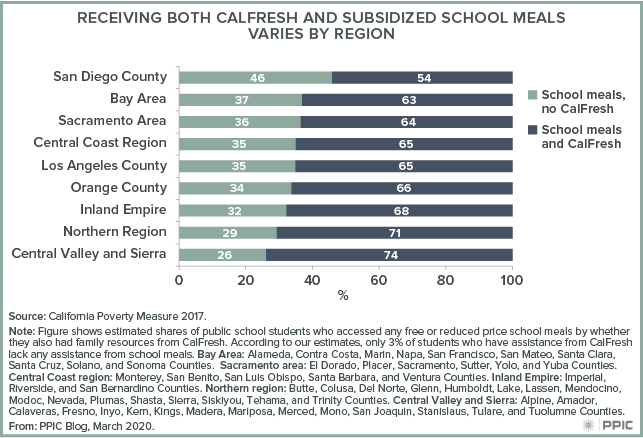
With pandemic EBT (P-EBT), ATM-like cards pre-loaded with funds for groceries, the federal government is also helping low-income students replace missed school meals. The cards will cover the expected number of days that schools will be closed. For students whose families already receive monthly CalFresh benefits on EBT cards, funds can readily be added. For low-income students who do not already receive CalFresh (34% statewide), families must complete some paperwork—mainly electronically—to obtain an EBT card.

Because the reach of CalFresh varies across the state, barriers to getting P-EBT funds to students will also vary. Fortunately, the state already matches student data with their CalFresh, CalWORKs, and Medi-Cal data to automatically determine students eligible for free and reduced-price school meals. If the state can use all existing sources of family income to provide P-EBT to students, they will reach more low-income students.

figure - Receiving Both CalFresh and Subsidized School Meals Varies by Region

Ready access to meals influences student health, learning, and economic wellbeing. Robust access to free and reduced-price meals can decrease the stress low-income families are facing as efforts to limit the spread of COVID-19 dampen economic activity.

COVID-19 and California’s Vulnerable Populations

To take a closer look at access to care, PPIC has created an interactive, California Critical Care during COVID-19.

To reduce community spread of COVID-19, California has instituted statewide guidance to shelter in place until further notice, and to practice social distancing when leaving home for approved activities such as grocery shopping or exercise. Because COVID-19 is novel, no vaccine is available and no one has preexisting immunity. However, individuals are not equally at risk, and there are several known sources of vulnerability.

There are Californians at elevated risk of exposure to the coronavirus. For some, this risk is due to the nature of their work, as is the case for physicians, nurses, and other front-line medical staff. For others, such as California’s approximately 115,000 prisoners and 150,000 homeless individuals, living conditions pose serious challenges to social distancing. And being over 60 or having an underlying health condition makes over one-third of California’s adults especially vulnerable to serious or fatal complications—this estimate does not include undiagnosed medical conditions, which puts the actual figure higher.

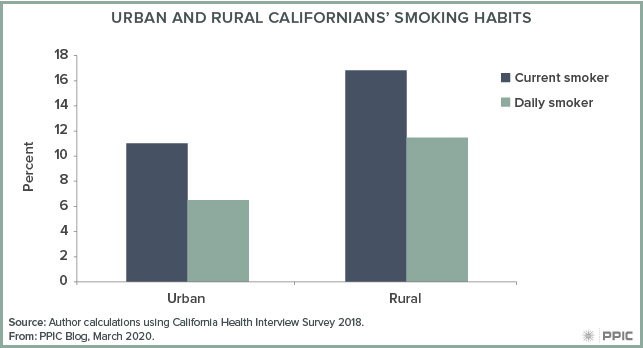
Californians in the state’s 21 rural counties may have lower exposure to the coronavirus because of the relative ease of social distancing. These individuals, who make up over 837,000 residents, may face significant challenges if they do contract the coronavirus. California’s rural adults are more likely to smoke than urban ones (16.8% versus 11.0%) (California Health Interview Survey 2018), and smoking is suspected to put coronavirus patients at higher risk of complications because it is known to damage lung health.

figure - Urban and Rural Californians’ Smoking Habits

Rural residents often have to travel farther to access critical care resources. This is especially concerning for the large numbers of elderly Californians who are low income, geographically isolated, or living alone in the state’s rural areas (California Department of Aging 2019).

How Will the Coronavirus Affect California’s Economy?

As Californians limit their daily activities to slow the spread of the coronavirus, the state economy is poised to take a major hit. The pandemic is increasing the need for some goods and services (such as health care) and reducing demand for others (such as travel- and entertainment-related services), so the near-term economic consequences are more serious in some sectors than in others. Moreover, these consequences could exacerbate the unevenness of economic conditions and opportunities across regions.

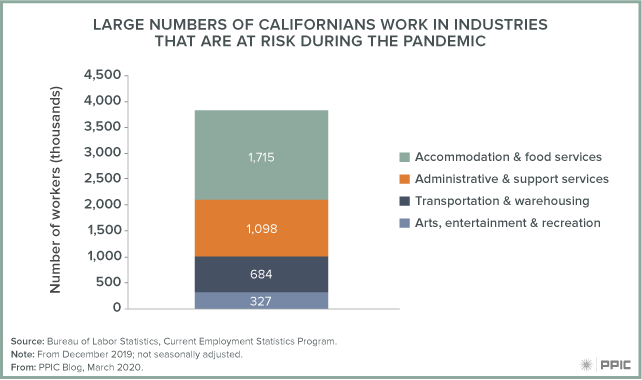
Initially, the largest downturns are likely to occur in sectors that rely on the movement of people and nonessential goods. Recent forecasts have identified several “at risk” sectors: accommodations and food service; arts, entertainment, and recreation; administrative and support services, especially employment services; mining and oil/gas extraction; transportation and warehousing; and agriculture (UCLA Anderson and Moody’s Analytics). Shocks in these industries will be driven by reduced local demand, as well as slowing of trade in and out of California’s ports (especially relevant for the transportation and warehousing and agriculture sectors).

These sectors—excluding agriculture—comprise 10% of the state GDP and employ 3.9 million workers. Unemployment insurance claims data is starting to show the impact on workers, but it will be a while before we get detailed data for all California workers (including those who do not apply for unemployment insurance).

We can, however, learn a lot about the pandemic’s impact on workers, sectors, and regions from recent employment statistics. Employment in these sectors makes up more than a fifth of overall non-farm employment in both California (22%) and the nation as a whole (21%).

figure - Large Numbers of Californians Work in Industries that Are at Risk during the Pandemic

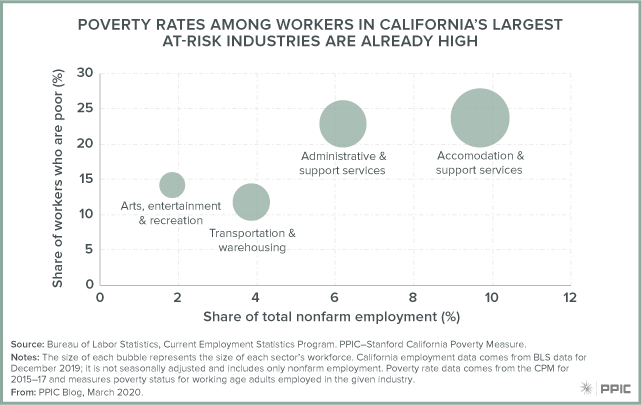
The workforce in these industries is not just large; it also comprises a wide range of occupations (for example, pilots as well as baggage handlers in the transportation industry; hotel managers as well as cleaning staff in the accommodation industry). At this point, we cannot predict exactly how the COVID-19 crisis will affect these workers. But reduced hours and layoffs are highly likely, and the workers least able to weather the storm are those who already struggle with poverty.

Overall, we estimate that 19% of Californians employed in these industries are working poor and another 22% are just above the poverty line (“near poor”). The poverty rate among workers in the accommodation and food service sector is 24%. This sector, which is being hit hard by reduced tourism and dining out, is the largest of those expected to experience the most immediate economic consequences.

figure - Poverty Rates among Workers in California’s Largest At-Risk Industries Are Already High

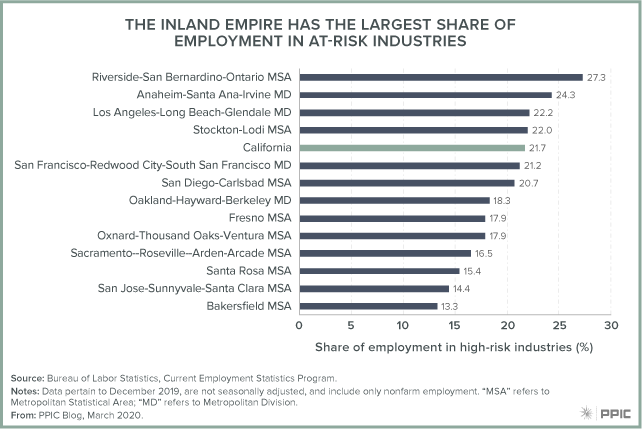
Because California’s industries are not evenly distributed, the initial impact on economic activity and on workers will likely vary across the state. Among major metro areas, Los Angeles, Anaheim–Santa Ana–Irvine, Stockton, and Riverside–San Bernardino have larger shares of jobs (ranging from 22% to 28%) in at-risk sectors than the state as a whole.

As one might imagine, these areas differ from one another in many ways. While Stockton has a relatively large share of employment in transportation and warehousing, Anaheim–Santa Ana–Irvine has a large share in accommodation and food services. Not surprisingly, given its population, the Los Angeles metro area has by far the largest number of workers in at-risk sectors: 1,043,000. Riverside and Anaheim follow with 433,000 and 417,000, respectively.

figure - The Inland Empire Has the Largest Share of Employment in At-Risk Industries

The longer-term economic impact of the coronavirus on these and other sectors will depend on how long the crisis lasts. Policy responses can play a critical role in mitigating the economic damage. State and federal leaders face the challenge of helping businesses weather the crisis and rebound quickly, while also addressing the tangible needs of workers who may be losing income, especially those who are already in or near poverty.

A host of economic interventions—many of which aim to help dislocated workers—have already been announced, and more will be implemented as the economic consequences of this pandemic become clearer. As they develop these interventions, policymakers will want to take into account industries and workers across all of California’s regions.

The COVID-19 Crisis Is Affecting Low-Income Workers

As California responds to COVID-19, its low-income workers face particularly urgent difficulties. These Californians are not necessarily at high risk of health complications from COVID-19, but they will be deeply affected by the economic consequences of the steps being taken by cities, counties, and regions to contain the outbreak and protect public health.

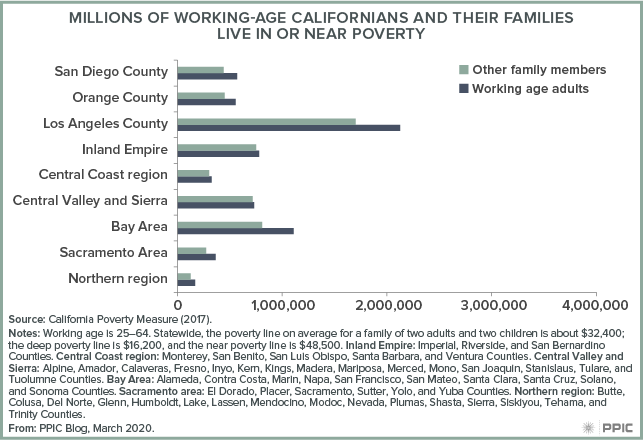
About 12.3 million Californians in families headed by working age adults live in or near poverty; a majority (58%) are Latino, while 21% are white, 12% are Asian, 6% are African American. About 1.5 million live in deep poverty (with resources less than half of the poverty line), while 4.3 million are just below the poverty line and 6.5 million are just above it (within one and one and a half times the poverty line).

The largest number of poor and near-poor Californians live in Los Angeles County (about 4 million), followed by the Bay Area (about 2 million).

figure - Millions of Working-age Californians and Their Families Live in or Near Poverty

The federal and state governments have been developing a range of short-term measures that promise to bolster the resources of Californians who are economically affected by this public health emergency. These measures include the expansion of food assistance benefits, paid sick leave, and unemployment benefits.

Steps like these are important because 12.2% of California’s working adults live in poverty, and after-tax income from work makes up 72% of poor and near-poor family resources, on average. A loss of $500 in annual income would push an additional 215,000 Californians into poverty, while a loss of $1,000 would put an additional 425,000 Californians below the poverty line. In short, even a relatively small financial loss can make a big difference.