Electability Matters in the Democratic Primary

Californians will head to the polls next Tuesday for the Democratic primary—and over 2 million have already returned their mail-in ballots. As Democratic and independent (also known as no party preference) voters prepare to choose their presidential nominee, the question arises: do they care more about electability or a candidate’s position on the issues?

Electability seems to edge out issue position for likely voters. According to our February 2020 survey, choosing the candidate most likely to defeat Donald Trump is more important to nearly six in ten Democratic primary likely voters (57%), while one in three (33%) say nominating a candidate whose positions on the issues come closest to theirs is more important. Findings were similar in our November 2019 survey (55% electability, 36% issue positions).

This view is widely held among Democratic primary likely voters, with at least half across nearly all demographic groups saying electability is more important. Among the lone outlier group—likely voters age 18 to 44—half think the candidates’ positions on the issues is more important.

figure - What’s More Important to Likely Voters in a Democratic Nominee?

There is a connection between a likely voter’s priorities and support for specific candidates. Among those who rank candidate positions on issues as more important, 43% support Bernie Sanders; fewer support Pete Buttigieg (13%), Elizabeth Warren (11%), Joe Biden (9%), or Michael Bloomberg (7%). For those who rank electability as more important, Sanders is also the top choice with 24% support, but he is followed closely by Biden (16%), Bloomberg (16%), Warren (15%), and Buttigieg (12%).

As Californians prepare to cast their votes at the polls—and continue to send in mail ballots—electability will be on the minds of many, and it could play a role in deciding who the Democratic Party nominates to run in the fall.

Californians Are Grappling with Homelessness

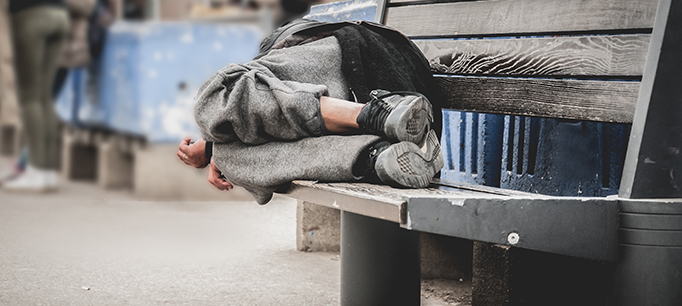
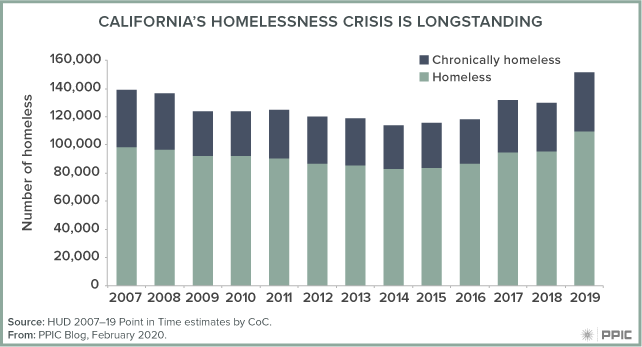
In his State of the State address last week, Gavin Newsom focused almost exclusively on homelessness—a significant long-term problem and major concern for state residents. In 2019, 150,000 Californians—more than a quarter of the US homeless population—were counted as homeless. California’s rate of homelessness rose to 38 per 10,000 residents, the third highest in the nation.

What is more, 72% of California’s homeless residents are unsheltered, living on the street or in parks and other makeshift spaces. And nearly three in ten self-report as chronically homeless—having been on the streets for more than a year.

Figure: California's Homelessness Crisis is Longstanding
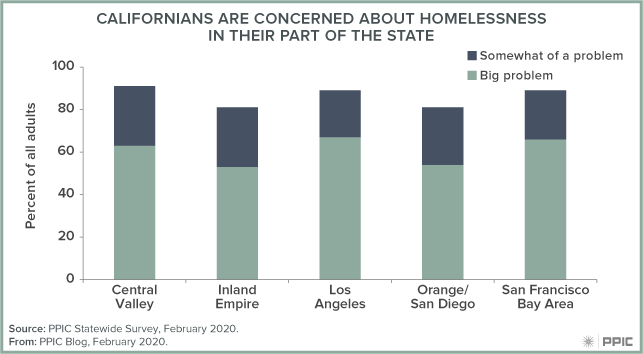
Californians across the state are feeling the gravity of this issue. The latest PPIC Statewide Survey finds that more than 8 in 10 Californians see homelessness as a problem in their part of the state (86% adults, 89% likely voters).

figure -

Considering these numbers, it does not come as surprise that Governor Newsom has made homelessness a major focus. Citing the connection between chronic homelessness, mental health, and behavioral health, Newsom has underlined the importance of policies and investments that allow for “whole person” care. By linking current funding sources and asking lawmakers to expand the use of funds for services provided to the homeless population—especially those involved with the criminal justice system and at-risk foster youth—the governor hopes to improve and integrate these services.

The PPIC Statewide Survey finds that a full 70% of Californians—and 64% of likely voters—favor the governor’s proposed $1 billion budget expenditure to address homelessness. State leadership and investment are key, but there is only so much that can be done at the statewide level. Finding solutions to homelessness requires coordination between the federal, state, and local levels, as well as collaboration across sectors—including housing, health, and social services.

Video: Countdown to Census 2020

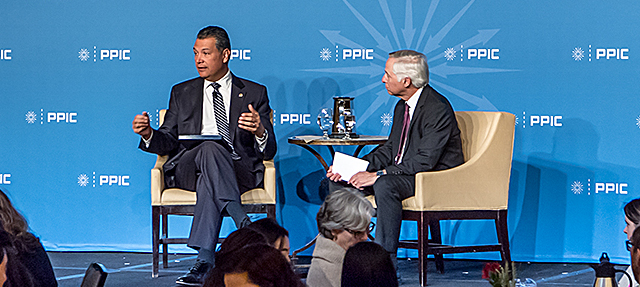
Census Day 2020 is fast approaching, and results from the population count will determine political representation and federal funding for California for the next 10 years. Speaking at a PPIC event in Sacramento last week, Alex Padilla, California secretary of state, joined Mark Baldassare, president and CEO of PPIC, to reflect on the importance of counting the country’s most populous state.

Padilla stressed that along with billions in funding for education, health care, and other critical areas, the count affects the state’s representation in Congress as well as lines drawn at all district levels. “It affects you regardless of the issues you care about, regardless of where you live,” Padilla said. He further emphasized that the census is a population count, not a citizen or adult count. In 2010, California undercounted children under five, which led to underfunded schools over the next 10 years. “Here is a way to make sure schools get the funding they deserve without raising taxes.”

Following the conversation with the secretary of state, Sarah Bohn, PPIC vice president of research and senior fellow, convened an expert panel that expanded on strategies at the frontlines for reaching hard-to-count communities.

Assemblymember Marc Berman discussed the investment by California— which has directed $187 million toward census infrastructure at state, regional, and local levels—that sets the groundwork for outreach and coordination. Partner organizations are now pushing a public awareness and information campaign. “Nobody has ever tried anything like this in a state of 40 million people at the level of specificity and detail that we really need to be successful,” Berman said.

Success depends on participation, however, and trust in government can influence participation in the census—especially among hard-to-count groups who may feel suspicion of the federal government. Apathy is another obstacle. Carolyn Coleman, executive director for the League of California Cities, described how the census returns funds to communities: “We send a lot of dollars to Washington, DC, every year via the tax code, and this is one of the most important ways we get those dollars reinvested back into our communities.”

It takes coordination by trusted messengers to reach hard-to-count groups and communicate this idea. Ditas Katague, director of California Complete Count, said, “We have amazing partners on all levels—whether we’ve contracted them, whether they are foundations, whether they’re state agencies.” Katague outlined efforts by a Sacramento organization mapping territory from the Oregon border to Yolo County, and San Diego ambassadors doing outreach in Arabic, Kurdish, Farsi, Vietnamese, and Somali. Regions are playing to their strengths: Silicon Valley is emphasizing tech; the San Joaquin Valley is partnering with faith-based organizations.

Californians can participate in the census starting in March, and assistance centers around the state will offer help through April. Katague emphasized the importance of motivating others to complete it, saying, “There are 9 questions on the census. It takes 10 minutes to secure the future for the next 10 years.”

Video: A Conversation with Governor Gavin Newsom

Governor Gavin Newsom’s conversation with PPIC president Mark Baldassare last week focused on energy policy and climate change. After noting that it had been one year since PG&E declared bankruptcy, Baldassare asked the governor about his vision for the future of California utilities. Newsom responded by broadening the question. “We have to start thinking about our energy future and our transportation future and our low-carbon, green growth future in a collaborative mindset.”

In this context, he continued, “PG&E’s bankruptcy has turned out to be an extraordinary opportunity for this state. . . . It’s allowed us to ask questions . . . that otherwise weren’t front and center.” PG&E, he said, has to come out of bankruptcy with a vision for the future that prioritizes long-term thinking and public safety rather than shareholder return. The bottom line? California needs a “transformatively different” utility. And, he added, “if PG&E can’t do it, we’ll do it for them.”

Key to planning for the state’s energy future is making sure it works for all Californians. Going green, Newsom said, “can’t mean more income inequality.” It has to benefit both the “haves” and the “have nots”—creating jobs and ensuring affordable energy, and mitigating the dislocation that comes with change.

Another key area is wildfire mitigation and prevention. Newsom noted that the 2019 fire season was less damaging than other recent seasons, in part because “we’ve never been more prepared.” The state has been investing in new technology that monitors and predicts wildfires, as well as equipment for suppressing fires and responding to crises.

Wildfire prevention is complex, in part because, as Newsom pointed out, the federal government owns the majority of forest land in California. “We are doing the job the federal government is no longer doing,” Newsom said, adding that “the Trump administration’s budgets have been proposing cuts to forest management.” Land-use patterns are another complicating factor. New building codes have helped recently built housing survive fires, but there are a large number of older buildings in fire-prone areas.

As Newsom sees it, the challenge of implementing the state’s ambitious climate mandates is to bring politics and policy into alignment. “Politically, I recognize that what’s necessary may be impossible. But also I recognize from a policy perspective that what is impossible has to become necessary.” The ultimate goal, of course, is to move California forward: “The world is changing. We have to change with it.”

Video: A Conversation with Leon Panetta

Leon Panetta, former secretary of defense and CIA director, joined PPIC president Mark Baldassare in Sacramento last week for a wide-ranging conversation about leadership. Baldassare began by asking Panetta to “put on your CIA hat” and compare the targeting of Osama bin Laden during the Obama administration with the recent killing of Iranian general Qasem Soleimani. The main difference, Panetta said, is that bin Laden had directly attacked the United States, and that he and other Al-Qaeda leaders were almost certainly planning more attacks.

Panetta explained that the Obama administration “never seriously considered an attack on Soleimani,” because “the result would be that we would increase the chances of war with Iran.” The issue was not whether Soleimani was a “bad actor,” but whether the US wanted to escalate the conflict: “When you make those kinds of decisions, you ought to damn well consider the risks of war.”

For Panetta, the tense situation with Iran underlines the importance of leadership. “In a democracy we govern either by leadership or by crisis.” Leadership, he continued, involves actively addressing major challenges—and this, in turn, entails uncertainty and risk. “If you’re not willing to take the risks associated with leadership . . . , crisis will drive policy in this country.”

Panetta sees impeachment as “a reflection of our times”—we have “a president who doesn’t abide by moral boundaries” and a Congress that “can’t work together.” But he is hopeful that the Senate will deal with the trial “in a fair and impartial way.” Otherwise, he continued, “there is a danger that impeachment is going to become just another political tool.”

Asked to assess how things are going in California, Panetta identified three interrelated leadership challenges: political imbalance, economic inequality, and education. To have a chance of restoring political balance in Sacramento, he said, Republicans are “going to have to look at immigration . . . inequality . . . climate change.” At the same time, the state’s Democratic leadership will have to collaborate with a broad range of stakeholders to tackle economic inequality—and its efforts will need to include a focus on education, which “is absolutely critical to the future of California.”

While Panetta is clearly worried about the level of dysfunction in Washington, he is not entirely pessimistic. “I’ve seen Washington at its best and Washington at its worst. The good news is that I’ve seen Washington work!” More seriously, he stressed the need for people to engage in the political process: “They’ve gotta be willing to fight for what they believe is right.” He conceded that politics “has gotten tougher.” But, he added, the great satisfaction of being involved in our democracy is that “you can do things to make people’s lives better.”


California’s Independent Voters and the Presidential Primary

Independents may play a central role in the March primary, as they now comprise the second-largest voting bloc in California. The share of Californians registered as independents, also known as “decline to state” or “no party preference” (NPP), was 26.7% of registered voters as of October—up from 24% at the same point before the last presidential primary. With independents a growing faction, it is critical to understand these voters and their motivations.

In PPIC’s November Statewide Survey, 28% of registered voters were independents. About six in ten say they have always been an independent voter, while four in ten say they previously registered with a major party—with 56% naming the Democratic Party and 40% the Republican Party. Today, about half of independent voters (48%) consider their views closer to the Democratic Party, while fewer say the Republican Party (24%) or neither party (22%).

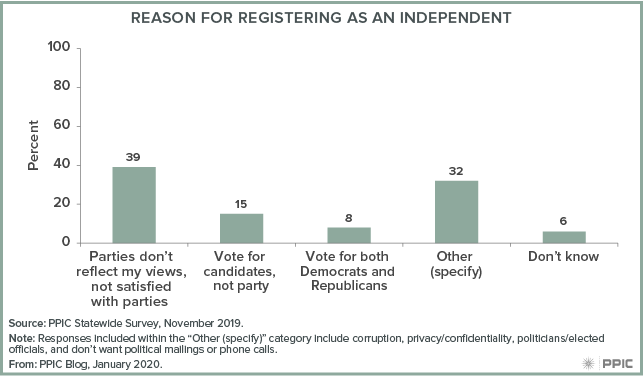
When asked the main reason they are registered as an independent and not as a member of a political party, a plurality (39%) say they are not satisfied with the parties and they do not reflect their views. Another 15% say they vote for candidates, not parties, and 8% vote for both Democrats and Republicans.

figure - Reason for Registering as an Independent

In California, political parties decide whether independents can vote in their presidential primary, and three political parties allow it: the American Independents, Democrats, and Libertarians. One in four independent voters in our November survey plan to vote in the Democratic primary, while about half say they will vote on the nonpartisan ballot.

Independents seeking to vote in the Republican presidential primary must re-register to vote with that party. Without registering as a Republican, independents will be unable to cast a vote for President Trump or potential challengers in the Republican presidential primary. (Members of the Green or Peace and Freedom parties must also re-register with and request a ballot from the major party of their choice.)

Independents who want to vote for US president in the primary must request a ballot with presidential candidates on it; otherwise, they receive a nonpartisan ballot. Although the deadline to request a ballot has passed, independents can still exchange their ballot at a local elections office or re-register with another party.

PPIC will continue to track voter and party profiles in 2020, with a focus on the state’s evolving independent voting bloc.

Unfavorable Ratings for Political Parties Persist among Californians

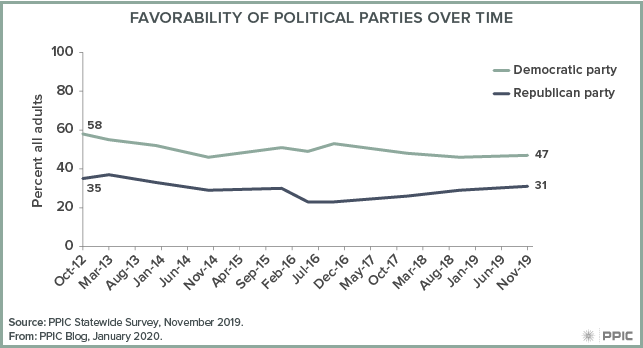
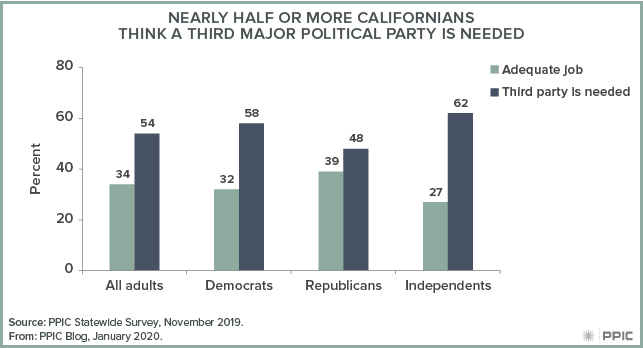
How do Californians view the two major political parties in this era of hyper-partisanship? In our recent survey, 47% of adults and 46% of likely voters report a favorable impression of the Democratic Party and 31% of adults and 34% of likely voters report a favorable impression of the Republican Party. In expressing their relative discontent with how these two parties represent the American people, a majority of adults (54%) and likely voters (57%) say a third major party is needed.

Since we first asked about party favorability in March 2010, positive views of the parties have rarely exceeded 50% and impressions have remained steady among adults and likely voters. Although favorability toward the Democratic Party sits below 50% overall, it rose among certain groups, including African Americans (52% 2010, 71% today), those with annual household incomes of $40,000 to $80,000 (39% in 2010, 49% today), and college graduates (39% in 2010, 48% today). Party favorability remained stable across all other regions and demographic groups.

For the Republican Party, favorability has increased somewhat among Central Valley residents (30% 2010, 38% today) but declined somewhat among 18 to 34 year olds (32% in 2010, 24% today). However, favorability is steady among all other regions and demographic groups.

figure - Favorability of Political Parties over Time

While less than half of adults and likely voters hold positive views about either major party, majorities of partisans continue to regard their party well. Favorability has climbed among party members since 2010 (Democratic 68% 2010, 76% today; Republican 54% 2010, 77% today). Among independents, impressions of both parties remain similar to 2010, but about six in ten independents, who comprise more than a quarter of the California electorate, report a poor impression of both parties (60% Democratic, 63% Republican). Notably, today, 21% of adults and 14% of likely voters have an unfavorable view of both parties.

With both parties facing mediocre ratings, about half or more of California’s residents have consistently called for a third major political party since October 2006. Today, just one in three adults (34%) and likely voters (32%) think that the two major parties do an adequate job representing the American people. About half or more across parties and regions—and a plurality among demographic groups—feel a third major party is needed, with independents (62%) and those earning over $40,000 annually (62%) most likely to hold this view.

figure - Nearly Half or More Californians Think a Third Major Political Party Is Needed

As the electorate changes, and as the 2020 election landscape develops, PPIC will continue to monitor Californians’ views on the major political parties.

Video: A Conversation with Chief Justice of California Tani G. Cantil-Sakauye

Last Thursday, at a lunchtime event in Sacramento, PPIC president Mark Baldassare talked with Tani Cantil-Sakauye, California’s chief justice and the leader of the state’s judicial branch. Their conversation covered a wide range of challenges and opportunities facing the courts today. In particular, Cantil-Sakauye spoke about civic education, the collaborative courts, and the critical importance of self-evaluation in the judicial branch.

Cantil-Sakauye is known for her efforts to make the courts accessible and understandable to all Californians. She became convinced of the need to educate the public about the judicial branch after the state judiciary was hit hard by budget cuts during the Great Recession. Cantil-Sakauye recalled that state legislators responded to her pleas for adequate funding with “quizzical looks” and questions: “‘What agency are you from? . . .Which chief are you?’ . . . And I thought a civics education initiative might be in order!“

She launched an initiative called the Power of Democracy in 2012: “Judges and lawyers, the president of the California Chamber of Commerce, labor unions, and scholars come together to teach civics to K–12 and also adult students.” In her view, helping Californians understand that “the courts exist for you to press your rights” empowers them to advocate for themselves and their communities.

Asked to name her greatest accomplishments, Cantil-Sakauye pointed to collaboration, civility, and problem solving. “The California judiciary is a collaborative, problem-solving entity,” she said. Indeed, California has led the nation in collaborative courts—community-based courts that specialize in issues such as homelessness, landlord-tenant disputes, domestic violence, veterans, or behavioral health. These courts address underlying problems by connecting people to services and programs that can help get their lives on track. As Cantil-Sakauye put it, “The whole point of a collaborative court is to end recidivism.”

The chief justice is especially proud of the judiciary’s willingness to evaluate itself: “We ask ourselves how we’re doing and we’re honest when we’re not doing well.” A case in point is bail reform. Questions about the efficacy and fairness of bail prompted the chief justice to form a committee to study the issue. After looking at the evidence and hearing from a wide range of stakeholders, the committee unanimously recommended the elimination of cash bail “because it does not serve the purpose of protecting the community or ensuring a person’s return to court.”

The bail reform law signed by Jerry Brown last year is being contested—voters will decide its fate in November. But efforts to improve bail and other aspects of the judicial system will continue. As Cantil-Sakauye put it, “More and more, California courts are becoming social justice centers.”

The Democratic Presidential Primary: What Do Californians Care About?

Mark Baldassare, PPIC president and CEO, and director of the PPIC Statewide Survey, participated in a panel on election issues at the Pacific Chapter of the American Association of Public Opinion Research meeting on December 6, 2019 in San Francisco. This post is excerpted from his prepared remarks.

Californians are turning their attention to the March 3 Super Tuesday primary as they play a new role in deciding the next Democratic presidential nominee. This is unfamiliar territory for California’s Democratic primary voters, who have become accustomed to casting ballots in June after other states have already determined the winner of their party’s presidential sweepstakes.

The 2019 PPIC surveys have consistently identified three frontrunners—Joe Biden, Bernie Sanders, and Elizabeth Warren—with no clear favorite. At the same time, likely voters have signaled an openness to considering alternatives. In this context, the debates loom large, and eight in ten likely voters in the September PPIC survey say they are important (41% very, 43% somewhat) in deciding their vote.

What do California’s Democratic primary likely voters most want to hear from the candidates as the stage is being set for a December 19 Democratic debate in Los Angeles? In an open-ended question in the November PPIC survey, the top four issues mentioned are health care (21%), the environment (14%), jobs and the economy (13%), and immigration (12%). Several other issues—such as education, homelessness, housing affordability, gun control, crime, and taxes—are each mentioned by less than one in ten likely voters.
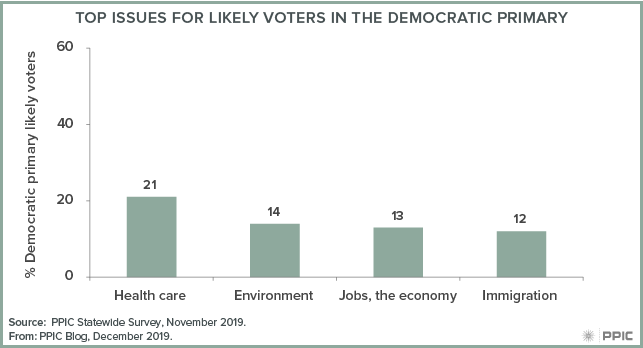
figure - Top Issues for Likely Voters in the Democratic Primary

Across demographic groups, likely voters differ on the issues that matter the most. For instance, voters age 45 and older want to hear about health care more often than younger voters do (26% to 13%), while Latinos want to hear about immigration more often than whites do (24% to 5%), and whites want to hear about the environment more often than Latinos do (23% to 4%). Jobs and the economy is the only top issue generating a similar amount of interest across age, education, gender, income, race/ethnic, and regional groups.

The issues of greatest concern also vary according to candidate preference. Biden’s supporters name health care more often (25%), Warren’s supporters mention the environment more often (26%), and Sander’s supporters name immigration more often (22%). By contrast, supporters of the three leading candidates are similarly likely to mention jobs and the economy (13% Sanders, 11% Biden, 7% Warren).

One area of strong consensus? Views of President Trump. In the November PPIC survey, 91% of California Democratic primary likely voters say they disapprove of President Trump and 84% support his impeachment and removal from office.

When asked what’s more important, nominating a candidate who seems most likely to defeat Trump or one whose positions on issues are closest to theirs, 55% want to defeat Trump, while 36% want alignment on positions. Since the May PPIC survey, support for impeachment (65% to 84%) and the importance of nominating an electable candidate (48% to 55%) has risen.
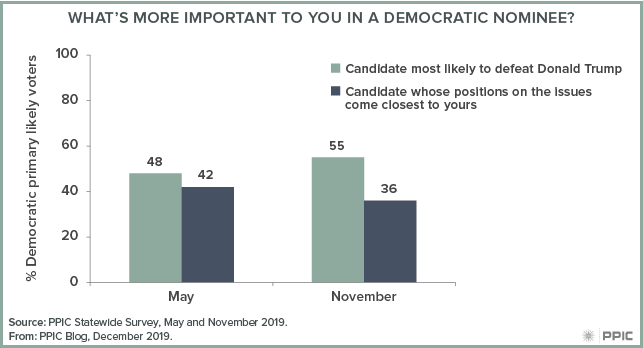
figure - What’s More Important to You in a Democratic Nominee?

Those who say that electability is most important, compared with those who say policy positions are most important, are more likely to mention health care (25% to 15%) and less likely to name immigration (7% to 18%) as the issue that they most want to hear about in the presidential debates. We find no differences between these two voter groups in the mention of the environment or jobs and the economy. Interestingly, education (11% to 2%) is noted more often among those who say that alignment on the issues is more important to them.

The Los Angeles debate is the next big opportunity for the presidential candidates to connect with California voters whose preferences are still being formed. Many Democratic primary likely voters already report that they are closely following the election news, but the debate could still result in an expanded electorate—and a scrambling of the race—if candidates connect with voters on issues that matter the most to them.

Throughout 2020, PPIC surveys will be monitoring what is likely to be an historic year for voter participation, as Californians engage in a consequential primary and a highly anticipated general election.

Video: Californians and Their Government

Joe Biden, Elizabeth Warren, and Bernie Sanders continue to lead the field in California’s primary race. Most Californians say President Trump should be impeached and removed from office, though views are mixed on how Democrats in Congress are handling the impeachment inquiry. In Sacramento last Wednesday, PPIC researcher Alyssa Dykman outlined these are other key findings from PPIC’s latest statewide survey, which was conducted before the November 20 debate.

Among Democrats and Democratic-leaning likely voters, support for Joe Biden (24%), Elizabeth Warren (23%), and Bernie Sanders (17%) is much higher than for Kamala Harris (8%), Pete Buttigieg (7%), and Andrew Yang (5%). No other candidate is preferred by more than 1%, while 9% say they don’t know which candidate they would choose.

Views on impeachment are divided along party lines: 83% of Democrats, 51% of independents, and 11% of Republicans think the president should be impeached and removed from office. Democrats are also much more likely than independents or Republicans to approve of the way the inquiry is being handled in Congress.

In other news, most Californians are concerned about wildfires (34% very, 29% somewhat) and power shutoffs (32% very, 27% somewhat). Governor Newsom gets mixed reviews for his handling of these issues: 46% of adults and 42% of likely voters approve, while 39% of adults and 46% of likely voters disapprove. Only about a third of Californians have either a great deal or quite a lot of confidence in their utility providers.

Other survey highlights:

  • Six in ten Californians (61% adults, 63% likely voters) say things in the US are generally going in the wrong direction, but about half think the nation will have good times financially over the next 12 months.
  • Nearly two-thirds of adults (63%) say California is divided into the “haves” and the “have nots”; 41 percent say they are haves, while 44 percent see themselves as have nots.
  • Most Californians are very concerned about homelessness in their communities; majorities across regions say the number of homeless people in their local community has increased over the past 12 months.
  • A potential citizens’ initiative that would raise state income taxes on the wealthiest Californians to fund K–12 public schools has majority support. Fewer than half of likely voters favor two other measures—a school construction bond and a “split roll” property tax—that would benefit the K–12 system.