Reforming Remedial Education in Community College

Reforming developmental, or remedial, education is essential to improving student outcomes in community colleges. Why? Developmental education is supposed to help underprepared students, but currently it may be one of the largest impediments to success. As PPIC research has shown, 80 percent of incoming California community college students—and a disproportionate share of students of color—enroll in at least one developmental course, but relatively few successfully move on to complete a college-level course. The good news is that over the last few years, there has been a tremendous amount of support for reform.

Reforming Assessment and Placement
Assessment and placement reforms generally involve moving away from the traditional reliance on standardized tests and toward a more holistic measure of prior achievement such as high school course grades. Research finds that test-based assessment and placement policies assign many students into remediation unnecessarily. Indeed, students’ high school performance as measured by GPA and course grades—even when self-reported by students—is a much more accurate indication of student readiness. A recent report by the California Acceleration Project shows that the use of high school measures has dramatically broadened access to and completion of college-level math and English courses, significantly reduced equity gaps, and has had little impact on course success rates.

But implementation is key. Several decisions will determine the impact of new policies in increasing access to college-level courses and reducing unnecessary remediation: What GPA or course grades will qualify a student for access to college-level courses? If a college uses multiple measures, how will they be combined into a single placement decision? Will colleges accept students’ self-reports of their GPA and grades? Furthermore, as campuses expand access to college-level courses, it is critical that they provide supports to students who need to brush up on their math or English skills. Guidance provided by the Multiple Measures Assessment Project, the California Acceleration Project, and others will be central to helping colleges make these important decisions.

Reforming Developmental Courses
Changes to developmental coursework can also help more students progress to college-level courses.  Some colleges are transforming traditional developmental education into accelerated pathways that are relevant to students’ programs of study using the design principles of guided pathways introduced by Bailey, Jaggars, and Jenkins, which allow colleges to cluster hundreds of programs of study into a handful of broad areas (e.g., liberal arts, STEM, business, and health). For example, in math, there are statistics, quantitative reasoning, and STEM/precalculus pathways. In English, reforms often entail integrating reading and writing courses and contextualizing classes within broad fields of study. Additionally, colleges have shortened developmental pathways or offered concurrent support courses instead of requiring students to take prerequisites. This reduces the number of students who drop out because they fail to reenroll in long developmental course sequences, while providing just-in-time support to help students succeed in college-level work.

Across the state, PPIC has found that a growing number of developmental education reforms are underway—led by the California Acceleration Project and the Carnegie Foundation, among others. These initiatives are well positioned to implement reforms using the guided pathways framework. Emerging research suggests that providing accelerated math pathways that are more aligned with students’ programs of study helps improve early academic outcomes, including completion of college-level math. Less is known about the impact of developmental English reforms on student outcomes, but recent evidence on compressed and co-requisite English courses is encouraging.

Research and Policy Opportunities
Support for developmental education reform and guided pathways at community colleges has been spearheaded by the multimillion-dollar investments made through the Community College Chancellor’s Office, the governor’s annual budget, and legislative proposals, including AB 705 and SB 539. As colleges continue to adopt and scale placement and course reforms, it will be imperative to assess students’ perspectives and outcomes to determine if new policies improve student success and reduce equity gaps.

CSU Ends Remedial Courses

Last fall, more than one in three students starting as freshmen at the California State University (CSU) system had to take a remedial course in either English or math before they could take college-level courses in those subjects. These remedial courses generally cover material from high school and don’t count toward a degree—even though they cost the same amount and require as much class time as a college course. But this situation is about to change. Starting in 2018, all CSU freshmen will be placed in college-level courses. Those who are underprepared will receive some kind of extra support.

This is the most recent in a series of CSU reforms intended to place freshmen students into college-level courses. In 2004, the Early Assessment Program (EAP) began giving 11th graders an indication of their readiness for CSU and identified the courses they would need to complete their senior year to avoid remediation. More recently, incoming students who were required to take remediation were enrolled in Early Start, which used summer courses to prepare students for college coursework in the fall. The elimination of all remedial courses is a big change: while previous programs aimed to prepare students for college-level work before their freshmen year, CSU will now focus on helping students complete college-level work regardless of their preparation.

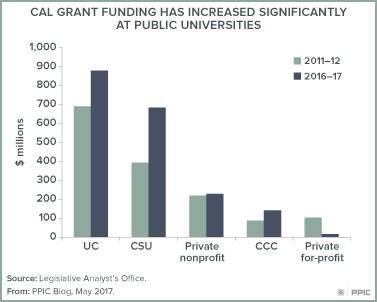
This policy change comes as CSU embarks on its new graduation initiative, whose goal is to raise graduation rates and close achievement gaps by 2025. What kind of impact might the elimination of remedial courses have on college completion? Students who require remediation in one or more subjects are about half as likely to graduate within four years as their peers who are ready for college-level work. The share of CSU students identified as needing remediation has been dropping for some time, and as remediation rates have fallen, six-year and four-year graduation rates have increased.

The general decline in remediation indicates that students have become better prepared over time, either in K–12 or through programs like Early Start. Though eliminating remediation will not affect how prepared students are when they start college, there is still reason to believe CSU could see an increase in graduation rates. As PPIC’s study of community college remediation showed, long remedial course sequences leave students many points of exit and can be barriers to success. Indeed, about 13% of CSU students who entered remediation in 2015 failed to complete remediation and were not at the university by their second year. With the end of remediation at CSU, students will have fewer potential exit points, they will be able to earn more college credits in their first year, and many may experience more success in college-level courses due to additional support. These potential benefits could help more students graduate and shorten their time to degree.

In addition to eliminating remediation, CSU is making changes to the Early Start program and course placement policies to further prepare students and help them find the right classes. These changes could help narrow the graduation gap between races. In 2016, only about 18% of white CSU students required some form of remediation, while about half of Latino and about 60% of African American students needed remediation in at least one subject. If these new policies do increase graduation rates, many traditionally underserved students may benefit.

Learn more

Visit the PPIC Higher Education Center
Read the PPIC report Preparing Students for Success in California’s Community Colleges

Regional Action to Boost College Success

California needs 1.1 million more workers with bachelor’s degrees by 2030 to keep up with economic demand, PPIC research has found. Three regions will play an especially critical role in addressing this challenge: Los Angeles County, the Inland Empire, and the San Joaquin Valley.

Improving college enrollment and graduation rates in these regions could help close more than half of this projected statewide skills gap, according to a new PPIC report, Meeting California’s Need for College Graduates: A Regional Perspective. It analyzes the challenges ahead and recommends ways to meet them. At a Sacramento event, report coauthor Kevin Cook summarized the findings and a panel of experts described promising initiatives already underway in these regions. Report coauthor Hans Johnson, director of the PPIC Higher Education Center, moderated the panel discussion.

Panelist Benjamin Duran, executive director of the Central Valley Higher Education Consortium, said his group has created a partnership of public and private colleges and universities, as well as community college districts, from Kern through San Joaquin Counties. One of the consortium’s projects involves improving remedial education, which has traditionally consisted of non-transferable classes that delay—and all too often end—students’ college careers. Under the newer approach championed by the consortium, students deemed underprepared for college work are able to enroll in college-level courses right away but also get supplementary support.

The Central Valley consortium is also working to encourage more students—particularly those in the community colleges—to take 15 units per semester or 30 per year so that more of them graduate on time. “When you’re able to go to school full time, the research is showing that you’re far less likely to drop out—you’re going to finish quicker,” Duran said.

Alma Salazar, senior vice president of the Center for Education Excellence and Talent Development at the Los Angeles Area Chamber of Commerce, said, “We do what all great organizations do—we take someone else’s idea and try to make it better.” The result, she said, is the L.A. Compact, modeled after an effort in Boston. It is a collaboration among area organizations, educational institutions, unions, and local government leaders. The focus is on three goals:

  • All students graduate from high school;
  • All students have access to and are prepared for success in college; and
  • All students have access to pathways to sustainable jobs and careers.

Ken O’Donnell, associate vice president of the Student Success Program Integration and Assessment at California State University, Dominguez Hills, talked about his campus’s success in improving its six-year graduation rate from about 30% to 42% in a few years. O’Donnell echoed the PPIC report, which finds that improving success rates for those already in college will have the greatest impact on the statewide skills gap. “You’ve already improved capacity without adding a single additional seat,” he said.


Learn more

Read the report Meeting California’s Need for College Graduates: A Regional Perspective
Visit the PPIC Higher Education Center
Year-Round Pell Grant Revived

As California State University and the University of California work to increase the number of students who graduate within four years, the federal government has reinstituted the year-round Pell Grant—a financial aid program that can help accomplish this goal. Increasing on-time graduation rates has benefits for both students and the state—opening up more spots in the state’s higher education institutions, reducing the total amount of tuition and fees that students pay, and allowing students to enter the workforce sooner.

The year-round Pell Grant is designed to address a specific problem: while students need to take 15 units in the fall and in the spring semester to graduate on time, many take only 12 units, which adds an extra year to their time to degree. Acknowledging this issue, some campuses are adopting the “Finish in Four” model, which encourages students to complete 30 units per year while giving them flexibility in how they meet that goal. For example, a student could take 12 units in the fall, 12 in the spring, and 6 in the summer. The year-round grant program complements this model by allowing recipient students flexibility to use Pell funding for summer coursework.

Many California students already receive Pell Grants―around 46% of students at CSU and UC, and 29% at the community colleges. The new year-round grant allows recipients to receive one-and-a-half Pell awards in one academic year. While this may not cover the full cost—six units during the summer term costs about $120 more than six units in the fall and spring terms—it makes attending more affordable.

However, it is unclear if the program will incentivize students to enroll in the summer term to stay on track for timely graduation. The program was previously only in effect for two years (2009–2011), and the limited research studying its impact suggests mixed results. Preliminary findings from a study presented at the Association for Public Policy Analysis and Management conference found a small increase of 3.5 percentage points in Pell students’ summer enrollment. Initial findings from another study presented at the Association for Education Finance and Policy conference found that summer enrollment increased by 28 percentage points. Given the short lifespan of the first year-round Pell, its impact may have been limited by students’ lack of awareness of the program and campuses’ lack of infrastructure to offer the right courses.

To ensure the program’s effectiveness, colleges need to help students use the summer semester to reach a full 30 units per year. The year-round Pell is not the only effort to help students use their summers to finish on time. For example, Sacramento State University is offering $1,000 grants for students who enroll in the summer term. Given the uncertainty of long-term federal funding for a year-round Pell, campuses may need to develop other similar programs to incentivize summer enrollment and encourage on-time graduation.

Learn more

Visit the PPIC Higher Education Center

The Growth of Cal Grants

The Cal Grant program is the primary program for providing tuition assistance and financial aid to California’s college students. It has allowed California to maintain access to college for low-income students during a time of rapid tuition increases. The program has grown significantly since its inception in 1955 and now serves more than 300,000 students at an annual cost of around $2 billion.

State law protects Cal Grant recipients from tuition increases at UC or CSU: when tuition rises, so do these students’ Cal Grants. Consequently, as tuition has increased and enrollment of low-income students has expanded, the program has grown rapidly. Next fall, tuition is scheduled to increase by $280 per year at UC and by $270 per year at CSU. In addition, UC, which has enrolled 7,400 new undergraduates in each of the last two years, plans to enroll an additional 2,500 in the fall of 2017‒18, the largest three-year increase in seventy years. CSU has added around 50,000 additional students over the past five years. The expansion of Cal Grants has drawn the attention of the governor. He noted in his May budget revision that “rising Cal Grant costs from tuition hikes will also limit the state’s ability to increase General Fund support in the future.”

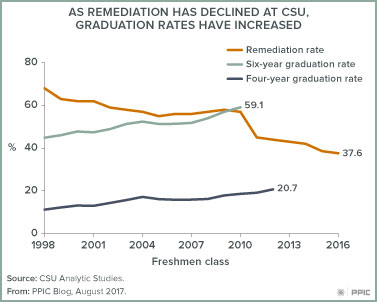
Figure: Cal grant funding has increased significantly at public univerisities

Nearly all of the Cal Grant funding increases have gone to students attending public institutions. CSU has seen a 75% increase in Cal Grant funds since 2011‒12, while the community colleges and UC have received a 61% and 27% increase respectively. Private nonprofit colleges, on the other hand, have seen their Cal Grant funding stagnate. The governor’s budget revision acknowledges this by reallocating $8 million that had been targeted to UC and CSU in his January budget proposal to non-profit private Cal Grant funding. These funds will prevent a planned cut to the maximum award for students attending a nonprofit private college.

By contrast, for-profit colleges have seen their Cal Grant funding decrease substantially over the past five years. The 2012‒13 budget introduced restrictions on access to state Cal Grants which affected many for-profit colleges. To some degree, for-profit colleges satisfy an unmet need for access to higher education for non-traditional students. But investigators have found that many of these colleges engage in predatory marketing and lending practices—targeting vulnerable students, making false statements regarding job placement, and overestimating the value of the degrees they provide. To address these issues the state established new institutional eligibility standards for Cal Grants. To be eligible, a higher education institution must now have a minimum graduation rate of 30% and a loan default rate of less than 15.5%. The 2012‒13 budget also cut the maximum award for a student attending a for-profit college from $9,708 to $4,000. These regulations have saved the state nearly $100 million since 2011‒12, reduced by more than half the number of for-profit colleges eligible for Cal Grants, and ensured that low-income and first generation students were not taken advantage of by higher education institutions that did not serve their economic interest.

Cal Grants are an essential tool for improving the economic mobility of the state’s neediest residents. They also allow the state to reduce the burden of federal loans on young Californians. Maintaining Cal Grants for high performing colleges— public and private—will improve access to college for all Californians.

Learn morEVisit the PPIC Higher Education Center

Guided Pathways in Community College

In California and across the country, community colleges are working hard on reforms aimed at increasing college completion, particularly among students historically underrepresented in higher education. Yet many promising innovations have not moved the needle. One reason is that many of these reforms, while innovative, focus on only a small proportion of the student body, or improve only one part of the students’ college experience. As a result, colleges have begun to adopt a more comprehensive institutional reform known as “guided pathways.”

Guided pathways are based on a set of scalable design principles, outlined in the 2015 book Redesigning America’s Community Colleges: A Clearer Path to Student Success. These principles include

  • Helping students choose and enter a program pathway
  • Mapping pathways to students’ end goals
  • Keeping students on path
  • Ensuring that students are learning

Implementation may occur in a variety of ways, but colleges have found it essential to focus on the following areas:

  • Guided exploration for undecided students. This includes clustering hundreds of programs into a handful of broad focus areas. In addition, some colleges offer foundational courses to help students select a major. In some cases, all students enroll in a foundational course within their broad field of interest. Mentored by faculty, students may research different careers, interview or shadow individuals in a particular field, and get a taste of the different competencies within each major while honing their research skills.
  • Clearly delineated program requirements. Cross disciplinary teams of instructional and counseling faculty, staff, and administrators create “program maps” to show the path necessary for labor market success and further education. Students may take elective courses that are not on the program map, but they will also know which courses each program requires.
  • Proactive and integrated academic and non-academic support. When support services are optional, students may fail to identify the services they need or lack the confidence to ask for help. Services can take many forms, from embedding academic support in the classroom to providing specialized counselors. At Guttman Community College in New York City, an entering group of students is split into “houses,” and a team of instructional faculty, counseling faculty, and peer mentors is responsible for each house. Faculty and peer mentors meet regularly to discuss individual student progress, coordinating their actions and communications with each other and the students.
  • Developmental education transformation. Developmental education—also known as remedial education or basic skills—has traditionally focused on courses such as college algebra and English composition. Reforms would create accelerated pathways aligned with a small set of broad programs (e.g., liberal arts, STEM, business, and health). Our recent research has found that the reform efforts happening across the state—for example, as part of the California Acceleration Project—are well positioned to create developmental education pathways that are better aligned to programs of study. PPIC’s ongoing research aims to shed light on the most promising developmental education reforms.

Opportunities for California Community Colleges
The last six months have seen tremendous momentum and support for guided pathways in California. This support has emerged at all levels, including the governor, legislature, the Chancellor’s Office, national foundations, and college faculty and administrators. Last month, with the support of the College Futures Foundation, the Bill and Melinda Gates Foundation, the James Irvine Foundation, and the Teagle Foundation, the Chancellor’s Office awarded grants to twenty colleges as part of The California Guided Pathways Project. Last year, three community colleges in California were awarded the American Association of Community Colleges Pathways grant to assist them with planning and implementing a pathways framework. In addition, the Governor’s Budget proposal for 2017‒18 includes $150 million one-time Proposition 98 funds to support new guided pathways programs in community colleges. Finally, Senate Bill 539, introduced during the 2017 legislative cycle, proposes to use an incentive grant to help establish guided pathways that would boost completion and transfer. Given this wide-ranging support, much can be learned from the experiences in other states and systems. It will also be critical for colleges to conduct deep examinations of how existing college initiatives, such as those involved with the Basic Skills Student Outcomes and Transformation program, can be integrated into guided pathways. In an upcoming blog post, we will explore how developmental education reform intersects with the guided pathways framework..

Testimony: Accurately Assessing College Readiness

Olga Rodriguez, research fellow at the PPIC Higher Education Center, testified before the Senate Education Committee in Sacramento today (April 19, 2017). Here are her prepared remarks.


Thank you for the opportunity to testify this morning. My name is Olga Rodriguez and I am a research fellow at the Public Policy Institute of California. PPIC is a nonpartisan policy research organization and does not take positions on legislation. My comments are based on research we have conducted at PPIC on California’s community colleges.

As you heard during last month’s remediation hearing, every year, California’s community colleges identify hundreds of thousands of students as not ready for transfer-level courses in math and English. Since these courses are required to transfer to a four-year college, students deemed underprepared are placed in developmental (also known as remedial or basic-skills) courses to prepare for college work. These placement decisions have profound effects: a sizeable portion of students in remedial classes never earn a degree or certificate, or transfer to a four-year college. Our study finds that 80% of entering students take at least one developmental course in math, English, or both, and most of those students never complete a college-level math or English course.

Despite the critical role of assessment and placement, there is little clarity about how colleges across the state assess and place students into math, English, and English as a Second Language (ESL) sequences. Prior studies conducted in California relied on a small sample of community colleges and examined policies in place before 2010. To help fill this information gap, in spring 2016 we surveyed all 113 community colleges in the state; 82 of the colleges participated in the survey. They reported on the assessment and placement policies used to place students into transfer-level math and English as well as the highest level of ESL during the 2014–15 academic year. The broad goal of the survey is to provide policymakers and practitioners with a descriptive landscape that will improve understanding of the policies used across the state to assess and place students into math, English, and ESL courses, prior to the implementation of reforms associated with the Common Assessment Initiative. I describe our findings below.

  • First, colleges vary in how they identify college-ready students. We find that the use of assessment tests is widespread; 100% of colleges reported using assessment tests for math, English, and ESL placement. However, there is variation in the types of tests used and how they are used. Over half of colleges used the Accuplacer for placement into math and English courses; the Compass, which was taken off of the market last November due to poor predictive validity, was the most commonly used assessment test for ESL (33%), and was used by over 20% of colleges for math and English. It is very important to note that even when colleges use the same test, they apply different rules for the minimum scores that qualify as college ready. For example, while more than half of colleges reported using the Accuplacer test to assess college readiness in math, cut scores ranged from 25 to 96 out of 120. A student with a score of 58 (the median score used by colleges) would be deemed college ready at half of these colleges, but not at the other half. The lack of consistency means that access to college courses—credit-bearing courses that students need in order to transfer to four-year colleges—is determined not only by students’ performance on the test, but also by the policies at the college where they enroll. This wide variation may be especially challenging for the 40% of students who eventually enroll in more than one community college campus, as they could be deemed college ready at one college but referred to remediation in another. These policies end up undermining opportunities to transfer between campuses and provide mixed signals about what it means to be ready for college-level courses. Furthermore, assessment and placement practices have implications for equity. Students of color are more likely to attend colleges that set higher math cutoff scores, which means these students have less access to the math classes they need to advance.
  • Second, the use of multiple measures continues to be sparse and unsystematic. In California, the use of other measures in addition to placement exams (known as multiple measures) is mandated by law—in fact, research shows that measures such as high school achievement data do a comparable or better job at predicting college success. But while assessment tests were standard practice, there was substantial variation in the types of other measures used across colleges and across subjects. We find that the majority of colleges used additional criteria to determine placement into math (94%) and English (90%), but just over half did so for ESL (52%). Colleges used, on average, three measures to assess and place students in English and math courses, and two measures to assess and place students into ESL courses. Additional measures included high school GPA, grades in prior English and math coursework, results from the Early Assessment Program (EAP), and counselor or instructor recommendations, among others. Overall, the use of high school records was more common for math and English, but much less so for ESL. In addition, while some colleges used multiple measures in a systematic way for all students, up to 30% of colleges only used multiple measures if students requested it or challenged their placement. Uneven implementation of multiple measures may aggravate inequities if students with cultural and social capital are more likely to take advantage of these policies.
  • Third, assessment and placement in ESL needs more attention. Each year, about 30,000 students (6% of incoming community college students) enroll in ESL, and these students may be especially disadvantaged by current policies. Compared to English and math, in ESL, fewer colleges offered exemption opportunities (28% offered none at all in ESL vs. 4–5% in English and math) and test preparation activities (40% offered practice tests in ESL vs. 70–74% for English and math). Additionally, our findings suggest that a lower proportion of colleges used high school achievement data for ESL placement, indicating that English Learners may not be benefitting from one of the most promising methods of improving placement accuracy.
  • Finally, ongoing reforms aim to promote more consistent and accurate placement policies. With the support of the governor, the legislature, and the system office, a significant amount of resources have been devoted to improving assessment and placement at community colleges. The Common Assessment Initiative, for example, will establish a shared assessment system. Our survey finds that over 80% of colleges reported having discussions about the Common Assessment Initiative for English and math; just under 80% of colleges did so for ESL. Still, colleges will have the autonomy to set their own rules for placement, and that’s a cause for concern if the inconsistencies described above continue. The Multiple Measures Assessment Project (MMAP) is a collaborative effort led by Cal-PASS Plus and the RP Group to support colleges in implementing multiple measures in a more consistent and effective way. About half of colleges reported having discussions about multiple measures, and those that did frequently did so as part of their participation in the MMAP. Collaborative efforts such as this one can help ensure consistent placement policies across the state’s community colleges.

In sum, assessment and placement policies should help students reach their academic goals—not stand in the way of those goals. As colleges work to enhance the efficacy of developmental education, implementing evidence-based practices that accurately assess students’ college readiness will be critical. A more equitable and efficient system for assessment and placement is a vital step in helping all students achieve their academic goals.

The Growth of College Promise Programs

A majority of Californians believe that college affordability is a big problem for the state, according to the PPIC Statewide Survey. Low family incomes and the high cost of living have made it difficult for many students to pay the full price of college. This is true even though California’s public colleges and universities have some of the lowest tuition levels in the country and the majority of community college, UC, and CSU students receive grants to cover the cost of tuition. Policymakers have taken notice of the public’s concerns.

Many local governments, school districts, colleges, and business communities have been addressing the issue of access and affordability through “promise programs.” The “promise” label has been adopted to represent a wide range of programs that share at least two specific characteristics: they are limited to individuals in a particular geographic area, such as a city or school district, and they provide some level of financial support for postsecondary education. Nearly 80 promise programs have been launched nationwide since 2001. In California, according to WestEd, 23 of these programs have been created since 2008—13 of them in the past two years.

The most well-known California-based promise program is the Long Beach Promise, which offers all public school students in the district a tuition-free first semester at Long Beach Community College. It also guarantees admission to Long Beach State University for students who complete required college preparatory courses with the necessary grades.

College promise programs often couple financial incentives with extensive outreach to middle-school students and improved student services like tutoring and counseling. In California, the vast majority of these programs are focused on getting students to enroll in community colleges—most offer one semester of free community college tuition and do not provide enrollment guarantees to a four-year college.

While it’s important to ensure that students who might not otherwise consider college be given incentives to attend, the state’s biggest challenge is ensuring that college students stay in school and earn a degree or certificate. Only about half of California community college students receive an associate degree or certificate, transfer to four-year schools, or complete 60 transferable units within six years of enrolling. There is some anecdotal evidence that promise programs improve college-going rates, but they do not seem to boost college completion. In order to improve completion rates, programs may need to provide support services for participants who have entered college.

More generally, the wide range of program designs makes it difficult to assess their effectiveness—even within California, promise programs have different residency requirements, eligibility criteria, grades of entry (middle school vs. freshman year of high school), financial awards, support services, and levels of financial sustainability. Defining the basic elements of promise programs and developing effective standards for program design and implementation will help ensure their future success.

Learn more

Read the PPIC Statewide Survey: Californians and Higher Education
Visit the PPIC Higher Education Center

More Students Completing College Prep Courses

Over the past few years more school districts have made college preparatory courses mandatory for high school graduation. These districts have aligned their graduation requirements to the CSU and UC a-g sequence in an effort to make more students college ready. Some of these districts include Los Angeles, Oakland, San Francisco, San Jose, Sonoma Valley, and Vallejo City Unified; the East Side Union High School District in San Jose; and the San Diego Unified, Carlsbad Unified, and Sweetwater Union High School District in San Diego County. Most of these requirements are too new to evaluate, but as more districts make this change, it is important to understand the potential impact. A PPIC report on San Diego Unified found that about 10 percent more students would become eligible to apply to UC and CSU because of the requirement.

The a-g sequence is a set of high school courses required for admission to UC and CSU. The content is rigorous and broad, designed to provide students with a solid foundation of general knowledge. It covers seven different subject areas: (a) history/social science, (b) English, (c) mathematics, (d) laboratory science, (e) foreign language, (f) visual and performing arts, and (g) college-preparatory electives; it includes a total of 15 year-long courses or 30 semesters. These courses are viewed as more rigorous than standard high school courses, as they must meet the criteria developed by the UC’s Board of Admissions and Relations with Schools (It is possible that a non-a-g course is equally rigorous but has simply not undergone a-g approval).

The new a-g graduation requirements have raised concern that many students would be unable to meet them—the reform designed to prepare more students for college might result in lower high school graduation rates. Given this concern, most a-g aligned districts require that students earn a D or higher, which is lower than the UC and CSU requirement of a grade of C or higher.

As it turns out, more students are meeting the a-g requirements with a C or higher. Over the last 10 years there has been an increase of 48% in those meeting the requirements—or 60,000 more high school graduates—with 43% of the class of 2015 doing so.

As more students complete the a-g sequence, the UC and CSU systems receive more applications and admit more students. Between 2011 and 2016, 23% (or 54,383) more Californians applied to UC and CSU, and the systems admitted 20% (or 33,557) more California applicants. However, both systems still limit or deny access to some qualified students. In the 2014‒15 school year, UC redirected 10,688 eligible California students to UC Merced―they had been denied admission to other campuses―but only 195 actually enrolled. The following year, the CSU denied over 17,000 eligible California students, which amounts to almost 55% of denied applicants.

Improvements in college preparation among California’s high school graduates is great news. The challenge is to ensure that our colleges and universities are able to accommodate the increase in demand that comes with it.

Learn more

Read the report College Readiness in California: A Look at Rigorous High School Course-Taking
Visit the PPIC Higher Education Center

Video: Top Goals of Higher Education Leaders

California’s higher education system is not keeping up with the economy’s changing needs, PPIC research has shown. Falling behind in creating a skilled workforce could curtail economic growth, limit economic mobility, and increase inequality in the state. The leaders of the California Community Colleges (CCC), California State University (CSU), and University of California (UC) are essential in the effort to increase the number of educated workers, because the vast majority of the state’s college students attend public colleges and universities.

Hans Johnson, director of the PPIC Higher Education Center, summarized this research, and the three leaders of the higher education system sat down last week with Mark Baldassare, PPIC president and CEO, to talk about their goals before a large Sacramento audience.

The first question: What are your top goals in the next decade?

Eloy Ortiz Oakley, CCC chancellor, said it is a critical time for the 113-campus system. “We connect with so many Californians at a time when the economy is changing before our eyes, and the default to get into the workforce is no longer a high school diploma. Some sort of post-secondary credential is essential. That is our focus.”

He said he is working with the other higher education branches and the K–12 system to integrate them into “one public system of education, not four separate systems.”

Timothy White, CSU chancellor, had a similar focus on results. “Our number -one priority in the years ahead is to improve the success rates of our students,” he said, adding that just 20 percent of CSU students earn their degrees in four years. He said he wants to make sure CSU students have access to courses when they need to take them, as well as sufficient faculty and academic support.

Janet Napolitano, UC president, said, “My vision is that the University of California remain the top public university in the world.” Citing the recent growth in enrollment of in-state students, she said that sustaining academic excellence, increasing diversity, and producing students who will be the next generation of California’s leaders are all key parts of this vision.

Learn more

Visit the PPIC Higher Education Center