Making the Groundwater Law Work

California was one of the last western states to regulate the use of groundwater. Now, the state’s landmark law mandating sustainable use of this critical resource is significantly changing how communities manage it. We talked to Thomas Harter—a groundwater expert at UC Davis and a member of the PPIC Water Policy Center’s research network—about implementing the 2014 law, which he calls “the most important water legislation in 50 years.”

PPIC: What are the key components of groundwater sustainability?

Thomas Harter: The state law is based on six “commandments” that interpret what groundwater sustainability means: thou shall not draw down water levels too far, deplete storage in the aquifer, degrade water quality, allow seawater intrusion, cause land to subside, or use groundwater in ways that reduces other people’s surface water or harms ecosystems.

The law mandates that groundwater must be sustainably managed for the long run. It’s not an option. Another critical piece of the law is that it be managed locally. This is an opportunity for local agencies, water districts, and stakeholders to take charge of whatever needs to be done.

Another important aspect is having everyone around the table who’s benefiting from, using, or concerned about groundwater. Stakeholders may have to make decisions on how to augment their groundwater supplies or how to reduce demand to make local use sustainable. People are going to come to the table with different core issues—for example, some will be more concerned about protecting domestic water users, while others will be focused on the economic impacts of using less groundwater.

PPIC: What more do we need to know about our groundwater basins to better manage them?

TH: We have to understand the resource, and how our uses affect it. What are water levels doing? Are we degrading the quality of groundwater? Is it being used or managed in ways that harm surface water uses and users? That kind of basic understanding is really important.

There are some important things we need to know about the state of our groundwater that the state could play a role in, which would help locals bring their basins to sustainability.

First, the state has a responsibility to monitor land subsidence across California, as sinking land is one of the key indicators of unsustainable conditions. We need more consistent measurements to determine how fast land is subsiding. The state would be in the best position to collect this data, and make it useable and accessible to local groundwater sustainability agencies.

The state is also in the best position to collect data on land use and evapotranspiration, which is a measure of how much water plants use. Evapotranspiration is one of the biggest water budget components in the state and the largest single consumptive use. In other words, it is water that is removed from the water system through use or evaporation by plants, consumed by people or animals, or incorporated into products or crops. Having a high-resolution understanding of evapotranspiration and how it changes over time and across years will be critical to ensure we have accurate water budgets.

California also needs to get back to more frequently mapping land use across the state and make that data available. Land use is closely related to evapotranspiration. To devise an accurate water budget, you need to know which field is planted in which crop at which time of year, which areas are being urbanized, and where other changes in land use are occurring.

The state’s system for gauging streamflow also needs work. To make good decisions, locals need a better understanding of the contributions of groundwater to their tributary streams. The US Geological Survey and the Department of Water Resources, which manage these gauges, are struggling to keep up with the network they have, and many gauges have been discontinued due to lack of funding. We need to fund ongoing maintenance of this water-monitoring network so we don’t lose a legacy of valuable information. And we need to expand it in areas where groundwater and surface water are closely connected.

PPIC: What changes do you expect to see as communities move to implement the groundwater law?

TH: I think the biggest thing is that, at the local level, we’ll have a much broader stakeholder group informed about and engaged in their groundwater system. There will be greater understanding about the interconnections between land use, groundwater, surface water, and water supply and quality, and about the kinds of projects we can do to address sustainability issues. I hope that in 10 years we’ll have a better understanding of how we can transition to sustainable resource management with the least amount of economic pain. I think there are opportunities for creative solutions that are win-wins for the environment and people dependent on groundwater resources. I also think that having a better understanding across stakeholder groups will lead to increased cooperation, which will be important for implementing and funding solutions.

Learn more

Watch “Implementing the Sustainable Groundwater Management Act” (PPIC event video, Oct. 18, 2016)
Read “Reforming California’s Groundwater Management” (PPIC fact sheet)
Visit the PPIC Water Policy Center’s water supply resource page


Video: Grading the Higher Education System

Californians give positive grades to the three branches of the state’s public higher education system—the community colleges, California State University, and the University of California. But the PPIC Statewide Survey on higher education shows that they have big concerns about affordability. Most California adults—regardless of political party, income, or age—see it as a big problem. And when Californians are asked to name the most important issue facing the state’s public colleges and universities, affordability leads the list.

“This is really the issue that’s at the forefront of people’s minds when you’re talking about higher education,” said PPIC researcher Lunna Lopes, who presented the findings at a Sacramento briefing last week.

Two out of three Californians say state funding of public colleges and universities is inadequate. While most would support a state construction bond to fund higher education projects, there is much less consensus on other ideas to increase revenue.

Learn more

Read the December PPIC Statewide Survey: Californians and Higher Education
Find out more about the PPIC Statewide Survey

Commentary: Boosting Success in Community College


This commentary was published in EdSource on December 8, 2016

Most students entering California’s community colleges – especially Latino, African American and low-income students – start their college journey in remedial courses in math, English or both. These courses seek to prepare students for college-level work. But remedial education, also known as developmental education, is lengthy, attrition is high and outcomes are poor.

Read the full commentary on edsource.org.

Video: Strengthening Pathways to Health Careers

Health programs at California’s community colleges hold particular promise for helping students enter in-demand careers and addressing the state’s workforce needs, new PPIC research shows. These career technical education (CTE) programs, also known as vocational education, attract a large and diverse set of students. The state’s community colleges offer a broad range of programs—including nursing, respiratory therapy, medical and dental assisting, and health IT—that are linked to growing job opportunities in health services, a generally well-paying industry for Californians without a bachelor’s degree.

PPIC researchers presented two reports on the topic in Sacramento. Among the key findings summarized by report coauthor Shannon McConville: many students who have earned career tech credentials in health care have seen sizeable wage gains, and completion rates in these programs are relatively high. More than 70 percent of students who begin a program either obtain a degree or transfer to a four-year college within six years, while only about half of the overall CTE student population obtains a credential within six years.

But there is room for improvement. Completion rates vary substantially across health programs, ranging from 93% in dental hygienist programs to 44% in emergency medical services. And there are racial and ethnic achievement gaps across programs.

After the research presentation, an expert panel took up the topic. Anette Smith-Dohring, manager for workforce development at Sutter Health, underscored the need to diversify the health care workforce.

“We want our front-line health care providers to reflect the communities we serve because those are our patients,” she said. “We want them to come from [the] communities we serve—we don’t want to import health care providers.”

Linda Collins, executive director of the Career Ladders Project, which has worked with community colleges, said it is important both to expand career awareness of the range of allied health professions and to improve science proficiency in middle and high school. If a student has “a basic grounding in math and science from the high school level, that will allow a student to take almost any allied health occupation program and be successful,” she said.

All of the speakers provided examples of small-scale programs in community colleges that have improved student success rates—and expressed frustration that the funding has not been consistent enough to expand them.

Linda Zorn, statewide director of the California Community Colleges Health Workforce Initiative, summed up: “Programs that provide structure and clarity about what students need to take, and integrate both proactive and embedded student supports in the instructional experience, are critical.”

Learn more

Read Career Technical Education in Health: An Overview of Student Success at California’s Community Colleges
Read Health Training Pathways at California’s Community Colleges
Visit the PPIC Higher Education Center

Medi-Cal and the Fall Election

Lost in the sound and fury of the national election are the results of four statewide ballot initiatives that aimed to bolster financing of the Medi-Cal program. Medi-Cal is California’s version of Medicaid, which pays for the health care of low-income families, many elderly who live in nursing homes, and—with the passage of the Affordable Care Act—single low-income adults. The state spends nearly $19 billion annually from the General Fund (and $87 billion from all sources) to provide medical coverage for 13.5 million Californians through Medi-Cal.

Three of the four initiatives passed on November 8, providing up to $3 billion in additional funds for Medi-Cal each year. But it will take a while for Californians to see the concrete outcomes of their votes. And, as is often the case with initiatives, the impact of these measures will depend on questions that have yet to be answered. The three measures that passed include:

  • Proposition 52: This initiative permanently extends the fees hospitals pay to the state, which the state then uses to get federal matching funds to support Medi-Cal. This translates to about $1 billion in state General Fund savings annually – providing this system continues to be allowed under federal law. There wasn’t much doubt that the state would seek to extend these fees past the sunset date of January 1, 2018, since they reduce pressure on the General Fund. But the initiative makes it more difficult for the legislature to modify the hospital fee program.
  • Proposition 55: Extending the tax on high-income earners will generate between $4 billion and $9 billion each year to pay for K–12 education and community colleges, Medi-Cal, and other budget priorities. For Medi-Cal, this is expected to provide up to $2 billion annually starting in 2018. But the amount may vary significantly from year to year for several reasons. First, K–12 education gets first call on the new revenue. In addition, the amount of new revenue will be affected by the volatility in what high-income taxpayers earn. Thus, the governor and legislature will have to learn to cope with an undependable funding source for Medi-Cal.
  • Proposition 56: Higher tobacco taxes will generate up to $1 billion for Medi-Cal in 2017–18. Revenue from tobacco taxes has generally fallen each year as the number of smokers in California has declined, and the new tax may accelerate that trend. While building these funds into the Medi-Cal budget may strengthen the program now, the state’s General Fund could face increasing pressure in the future if this source of funding declines. The state legislature and governor will determine how to use these funds as part of budget discussions next spring.

The fourth initiative affecting the Medi-Cal program, Proposition 61, failed to garner a majority of votes. Perhaps not surprisingly, more questions were raised about the impact of this initiative than the other three. Proposition 61 prohibited the state from paying more for prescription drugs than the federal US Department of Veterans Affairs, which typically pays the lowest prices of any public or private entity. The measure’s intent was to reduce the cost of prescription drugs in California, but the fiscal analysis by the Legislative Analyst’s Office suggested that the savings were uncertain.

While the new funds for Medi-Cal will be welcome, it remains to be seen whether they will provide reliable support for the program. Plus, there are questions about how the new president and Congress will alter the Affordable Care Act and how that will affect the state’s program. For instance, the law allowed California to extend Medi-Cal coverage to single low-income adults. In the 2016–17 state budget, coverage for this group cost about $15 billion annually, with the federal government picking up 95% of the tab. If the federal government significantly reduces or eliminates this enhanced funding rate, the $3 billion in new revenues generated by the three initiatives will not be enough to operate California’s expanded Medi-Cal program without other fiscal support.

Funding Special Education

California’s special education system serves almost 12% of public school students with yearly allocations of more than $12 billion from local, state, and federal funding sources. Despite changes in the numbers of students served and the nature of their disabilities, its finance system has not been addressed in a comprehensive way for more than two decades.

PPIC recently released Special Education Finance in California, a report examining the system in light of the principles that underlie the Local Control Funding Formula. These principles—which determine how K–12 funds are allocated—are local control and accountability, transparency, and equity. The PPIC report also draws on the 2015 Statewide Special Education Task Force, which envisioned a seamless program of student services that is part of a unified system of general and special education. The PPIC authors recommend changes that can help achieve this vision.

At a well-attended Sacramento event held in conjunction with the release of the PPIC report, coauthor Paul Warren summarized the way the special education finance system works now and outlined PPIC’s recommendations to change it. A panel of education experts then took up the issue. They concurred that it is time for a change.

“The kids can’t wait,” said Kim Conner, whose experience includes being the parent of a child with special needs. “We’ve waited a long time. It’s easy for us to say from a fiscal standpoint, we don’t have money, we don’t know enough . . . But we know so much. We can do this.”

Michael Kirst, president of the California State Board of Education, said the PPIC report is helpful in understanding the current system, which “has some underlying rationales but no overall rationale. It is an accretion of different things.”

“It is very hard to understand, how the money flows, who makes decisions, he said. “It is not adjusted sufficiently for student needs . . . It is inequitable.” Calling the PPIC report “bold and provocative,” he said it “should certainly should kick off a really deep discussion on change.”

Mary Samples, assistant superintendent of the Special Education Local Plan Area in Ventura County, said a key topic in the discussion of change needs whether enough funding is allocated for special education. Samples, who served as chair of the finance subcommittee of the Statewide Special Education Task Force, said, “I don’t think that moving the money from one bucket to another solves the problem. The problem is adequacy of funding.”

Commentary: A Grand Compromise for the Delta


This commentary was published in the Sacramento Bee on December 2, 2016

Conflict over water allocations from the Sacramento-San Joaquin Delta is the most intractable water management problem in California. The sources of contention are many, but three interrelated issues dominate the debate: whether to build two tunnels that divert water from the Sacramento River, how much water to allocate to endangered fish species, and what to do about the 1,100 miles of Delta levees that are essential to the local economy. Here we outline a potential “grand compromise” for the Delta that meets the co-equal goals of water supply reliability and ecosystem health prescribed by the 2009 Delta Reform Act.

Read the full commentary on sacbee.com.

Learn more

Read California’s Water: The Sacramento-San Joaquin Delta (from the California’s Water briefing kit, October 2016)

Visit the PPIC Water Policy Center’s Delta resource page


What’s Next for Legalized Marijuana?

The morning after Election Day, California appeared to be on a very different path than much of the nation. But in voting to legalize recreational marijuana, Californians were very much in step with the rest of the country. In addition to California’s Proposition 64—which passed relatively easily, with 56% of the vote—measures were passed in Nevada and Massachusetts that legalized recreational marijuana. Measures that legalized or expanded medical marijuana passed in Florida, Arkansas, North Dakota, and Montana. So far, Arizona is the only state to have rejected a recreational marijuana measure. Maine also passed a measure legalizing recreational use, though the vote was close and is subject to a recount.

While marijuana remains illegal under federal law and continues to be classified as a Schedule I drug (meaning it has a high risk for abuse and has no accepted medical value), 63% of Americans now reside in states that have medical or full legalized use, including 21% with legalized recreational use.

Now comes the difficult part. Proposition 64 sets in motion a number of steps and procedures designed to create a regulated market for recreational marijuana. Many of these can be modeled on last year’s legislation regulating California’s medical marijuana market. And the states that have legalized marijuana so far have created a competitive but regulated market structure. But regulatory experience—in California and other states—is in short supply. As one state regulator opined at a recent PPIC event, “Right now, science is lagging policy.”

Marijuana regulation cuts across many areas. Earlier this year, we outlined several key regulatory areas, including cultivation, production, and processing; sales, consumption, and possession; taxes and finance; and public health and safety. The challenge facing California and other states is to implement regulations that can achieve multiple, sometimes conflicting policy goals: limiting the impact of the illegal market, preventing youth drug use, reducing harm to public health and safety, preventing diversion of legal marijuana into illegal markets, and raising revenue. This requires a comprehensive regulatory approach that would document and control the cultivation, production, processing, and sale of legal marijuana.

Our report recommended that California err on the side of caution and adopt a relatively restrictive regulatory model for both the recreational and medical markets. We still maintain that a tight, single market will make marijuana laws easier to enforce and reduce diversion to under-age Californians and to other states. To be sure, a highly regulated legal market will be accompanied by a robust illegal market. But it will be easier to loosen a tight market than to tighten a loose one.

Given the apparent national interest in legalizing marijuana—and the lack of knowledge about this new industry—California is positioned to be a leader in answering difficult questions about how best to regulate it. To play a leadership role, California regulators should collect data on marijuana sales, prices, revenue, and use. Basic market information would play a significant role in closing this knowledge gap and inform better future policy for both our state, and the rest of the country.

Finally, we should note that there is some uncertainty about the future of marijuana regulation across the country. As noted above, federal law still classifies marijuana as an illegal substance. The relatively benign approach that the federal government has taken to enforcing federal law regarding marijuana has been based on three memos written by second-tier cabinet members and some language in an annual appropriation bill. Though President-elect Trump has not explicitly stated his policy on marijuana, it would be relatively simple for the new administration to alter the current federal approach.

Learn more

Read the report Regulating Marijuana in California

California’s Changing Headwaters

Much of the state’s water supply originates in forested headwaters high in the mountains. Yufang Jin is a UC Davis professor specializing in ecosystem change and remote sensing (gathering aerial images of the earth). She is also a member of the PPIC Water Policy Center’s research network. She talked to us about how a warming climate and extreme wildfires are changing these crucial ecosystems.

PPIC: How are large wildfires changing our watersheds?

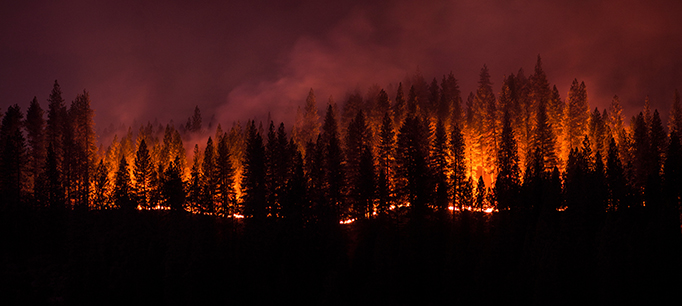
Yufang Jin: We’re seeing intensifying wildfires in California, especially in the headwater regions where our rivers originate. More intense fires have significantly changed the composition and structure of forest ecosystems, affecting both water quality and quantity—though not always for the worse. For example, large fires can significantly reduce the amount of vegetation covering the land, which reduces the amount of water consumed by plants. Burned areas also have much less water circulating in the soil. Both of these post-fire processes have a positive impact on streamflow, as more water works its way into the water table and streams. But the loss of groundcover plants from intense fires also increases surface erosion, which can cause landslides in the rainy season. Ashes and sediments flowing into streams harm water quality.

PPIC: What are catastrophic fires teaching us about managing forests, wildfires, and water in California?

YJ: They’re pushing us to use management strategies that recognize the relationships between forests, fires, and water supply. In the past most forest management focused on wildfire suppression. There’s now recognition that solely focusing on suppression led to unnaturally dense forests, which in turn led to larger and catastrophic fires. So now there’s a growing effort to use forest thinning and prescribed fires to reduce fire hazards. Some pilot projects indicate that allowing natural fire to thin forests can lead to increases in water quantity in the watershed as well. A lot of federal and state agencies are now emphasizing watershed restoration strategies that bring multiple benefits. They are paying more attention to approaches that reduce fire hazards and may also increase water yields.

PPIC: How will climate change affect the severity of wildfires in California?

YJ: All climate models predict that the warming trend will continue in coming decades, and will often be accompanied by drier conditions. There is consensus that with these conditions, we can expect more severe wildfires across California and in the West more generally. One of our recent studies showed that the average area burned in Southern California could increase 70 percent by mid-century. Another effect of climate change is that forests in the western US will become more vulnerable to drought stress, making them more prone to diseases and beetles, leading to greater tree mortality and more fires.

PPIC: What kinds of technological advances can help us improve watershed management in the state?

YJ: There are two technologies that can provide more informed water management. One is obtaining images from satellites with remote sensors to learn about ecological and hydrological conditions on the ground. The other is using big data analytics and cloud computing, which can help us interpret the huge amount of data you get from remote sensors and translate it into information that farmers and water managers can use and act upon.

Basically, remote sensors can be used to monitor factors like water temperatures, the range of particular plant types, or the amount of water being released from plants. You can observe relatively large areas over time in a cost-effective way. For example, remote sensors can help detect algal blooms and invasive aquatic species throughout the watershed. Water managers can use remote sensing to estimate how much water is being used by crops or by natural vegetation, and how that water use changes from season to season or year to year. It can also help figure out how ecosystems will respond to a changing climate or how changing land use can affect water use. For fire management, remote sensing can track when and where fires occur, how effective fuel treatment projects are in reducing fire severity, and how vegetation recovers after fires.

While there are no simple technological solutions for managing the effect of a changing climate, having tools like these will make it much easier to get the quantitative information that we need to develop adaptive forest and watershed management strategies.

Learn more

Read California’s Water: Protecting Headwaters (from California’s Water briefing kit, October 2016)
Read “Managing Wildfires Requires New Strategies” (PPIC Blog, September 23, 2015)
Visit the PPIC Water Policy Center’s drought resource page

Improving Math Placement Decisions

A new state law is intended to help ensure that all students—particularly those underrepresented in higher education—have access to rigorous math courses in high school. This is a key step to improving college readiness and closing achievement gaps. The centerpiece of the California Mathematics Placement Act is the requirement that districts create and implement a fair, objective, and transparent math placement policy. The law leaves many aspects of implementation up to the districts.

PPIC surveyed the state’s school districts during the 2015–16 school year to examine their placement policies and identify district needs right before the law took effect in 2016–17. In a new report, Math Placement in California’s Public Schools, research fellow Niu Gao and research associate Sara Adan found that districts face a number of challenges in implementing the law. Gao presented the report at a recent Sacramento briefing.

One issue is particularly complex: teacher recommendations. The new law calls for limiting their use due to concerns that they may be systematically biased against economically disadvantaged or Latino and African American students.

The PPIC report shows that teacher recommendations are among the most widely used measures in determining placement—and the way they are used now is complicated. Recommendations typically address both academic and “soft” skills, such as student maturity, persistence, and motivation, which are predictors of student success. The PPIC authors found cases in which teacher recommendations are biased against high-achieving minority students, but they also found cases in which teacher recommendations are advancing minority students who do not perform well on standardized tests. In other words, eliminating recommendations altogether may help some students but at the expense of others.

Gao said the critical issue is not whether teacher recommendations should be used but how they can be designed to complement objective measures, such as tests.