Video: Lessons on Marijuana Regulation

California may have much to learn from the first two states to legalize recreational marijuana—Washington and Colorado—if voters statewide approve legalization in November.

Patrick Murphy, coauthor of a PPIC report analyzing the experience of these states, presented its findings yesterday in Sacramento. The main takeaway: California should create a tightly regulated market—for medical and recreational uses—to control legal marijuana from “seed to sale.” The market should be flexible so that regulation can be adjusted as the state learns from experience—as both Washington and Colorado did.

Following Murphy’s presentation, regulators from Washington and Colorado and report coauthor John Carnevale, a drug policy consultant who has worked with four federal “drug czars,” talked about experiences of the two states. The panelists emphasized the need to start planning now to determine the information that would be needed for regulation because little is known about marijuana markets—the illegal one and the legal one for medical marijuana.

Taxation? Carnevale said, “It’s complicated.” Marijuana legalization involves balancing competing state goals—reducing demand among underage users and raising revenue for the state, for example. The price of legalized marijuana can have a range of effects on the illegal market: if the price of legal marijuana is low, the illegal market might disappear; a high price might help boost illegal sales; or the illegal market could continue as it is. Beyond that, taxes can be imposed at different points in production, licensing, and sales process.

“You can make this as complicated as you want in terms of the tax policy,” he said. “But, on the other hand, you have to somehow enforce that tax policy.”

In Colorado, the revenue from recreational marijuana sales is aimed at dealing with the effects of the law—for example, public health and addiction, said Lewis Koski, deputy senior director of the Colorado Department of Revenue.

Koski said that in 2014–15, the first year of legalization, the state collected $88 million in taxes for both medical and recreational marijuana. Halfway through this year, Colorado has collected almost as much.

Revenue generation was a big part of the argument in favor of legalizing marijuana in Washington, said Rick Garza, director of the Washington State Liquor and Cannabis Board. The state has no income tax and relies on “sin taxes”—tobacco, alcohol, and now cannabis—to generate revenue. Before the vote on legalization, the governor’s budget office estimated that the amount of revenue that would be collected over five years was between zero and $2 billion.

“You catch the zero part?” Garza asked. “No one else did. Everyone thought we were going to collect $2 billion.”

Washington state currently expects bring in be $1.25 billion over five years.

Video: PPIC Survey Examines Election Landscape

As California heads into an election year, the PPIC Statewide Survey looks at residents’ views on a broad range of issues that are already flashpoints in the presidential primary races and will likely surface in statewide campaigns next year.

PPIC research associate Lunna Lopes presented the survey’s key findings at a Sacramento briefing last week. She was joined by Mark Baldassare, PPIC president and CEO, for a question and answer session afterward. He noted a link between Californians’ “modestly optimistic view of the economy,” their belief that there is income inequality in the state, and their attitudes about which ballot issues are important. Twice as many residents say that increasing the state minimum wage is very important than say legalizing marijuana is very important.

“In California, the belief that this state is divided into the haves and have-nots—and the feeling among many Californians that they are among the have-nots—are going to be driving forces in the election,” he said. The survey briefing was held just after the mass shooting in San Bernardino, and the briefing touched on Californians’ views about gun laws. PPIC research associate David Kordus provided findings from the September survey on this issue: Compared to adults nationwide, Californians are more likely to favor stricter laws than we have now. Most also say that controlling gun ownership is more important than protecting the right of Americans to own guns.

New Water Laws Address Groundwater, Marijuana

As the California legislative session came to a close, Governor Brown signed more than 20 bills that address different aspects of water policy, ranging from water conservation and measurement to water quality. Two bill packages took important steps toward improving groundwater management and reducing the negative environmental impacts of marijuana farming.

New tools for groundwater management

Our recent report What if California’s Drought Continues? noted that improved management of our groundwater resources is critical to weathering droughts now and in the future. The 2014 Sustainable Groundwater Management Act (SGMA) seeks to ensure long-term viability and reduce over-pumping by setting deadlines for local agencies to develop and implement plans for basin sustainability. Before SGMA, groundwater users in some Southern California basins recognized the need to balance their groundwater use and went through a legal process called adjudication, in which courts determine individual rights to groundwater and appoint an entity to oversee its use. By clarifying pumping rights, adjudication makes it much easier to manage basins. But the time and cost of some adjudications have discouraged the use of this tool in other regions. Two new bills will make adjudication more suitable for managing the state’s groundwater resources:

  • AB 1390 streamlines adjudication by expediting the identification of groundwater use in a basin, giving courts new power to quickly resolve disputes among pumpers, and other procedural improvements. The goal of the bill is to create a more affordable, easier, and faster adjudication process that is applicable to any groundwater basin in the state.
  • SB 226 is designed to ensure that streamlined adjudication doesn’t conflict with SGMA by requiring severely over-drafted basins to comply with its provisions and deadlines regardless of ongoing adjudication actions. The bill also is intended to provide guidance for courts to align adjudications with SGMA requirements such as groundwater sustainability plans and groundwater sustainability agencies.

Marijuana regulation

Another challenge highlighted by the current drought is the impact of marijuana cultivation on our water resources and environment. The State Water Resources Control Board and the Department of Fish and Wildlife (DFW) are running a joint pilot project to address these issues in the North Coast region. The Cannabis Pilot Project evaluates potential policy solutions for reducing the environmental impact of cultivation practices and managing illegal use of stream water for irrigation. The medical marijuana bill package —AB 243, AB 266, and SB 643—creates a foundation for making this pilot permanent and building a statewide program to regulate the impact of marijuana on water and the environment.

For example, AB 243 and SB 643 direct the Water Board and DFW to take statewide regulatory actions that protect instream fish spawning, migration, and rearing from the damaging impacts of marijuana cultivation.

Questions remain about how to fund this new effort, however. The Cannabis Pilot Project is funded for just three years, and covers just a small portion of the state. Additional funding will be required to expand regulations to cover California’s estimated 50,000 marijuana growers. AB 243 proposes a $10 million loan from the state’s general fund to jumpstart the new Bureau of Medical Marijuana Regulation in the Department of Consumer Affairs, but these funds will not support the environmental programs run by the Water Board and DFW. A fee on all marijuana cultivators is the best way to fund these programs over the long term, and the Water Board has authority to establish such fees.

Learn More:

Visit the PPIC Water Policy Center drought resource page

California Streams Going to Pot from Marijuana Boom

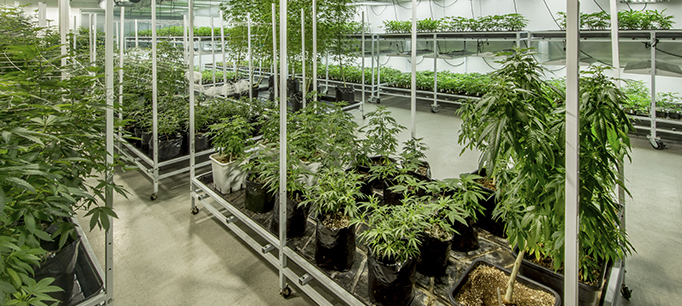
California has seen a recent boom in marijuana farms, mostly on private lands but also illegal grows on public lands such as national forests. Hard data are hard to come by for this crop, which is mostly grown in the shadows. But California Department of Fish and Wildlife officials estimate that production on public lands has increased by 55 to 100 percent in ecologically fragile north coast watersheds over the past five years alone. This surge is having a decidedly unhealthy effect on some of California’s rivers and streams. The situation is heating up as many of the state’s waterways are at all-time lows and some at-risk fisheries nearing collapse.

A study of four northwestern streams by the California Department of Fish and Wildlife (CDFW) found that marijuana plants consumed 20-30% of streamflow during the dry summer low-flow season—a crucial period for salmon and other species – as well as marijuana cultivation. Illegal marijuana growing also can bring a host of other environmental problems, from polluted runoff to habitat damage from improper road construction.

Peter Moyle, a fisheries expert with UC Davis and a member of the PPIC Water Policy Center research network, says, “All of these operations are taking water directly from streams, sucking away water from endangered Coho salmon, steelhead, tailed frogs, and other stream-dwellers, while damaging the banks of the streams. These diversions require permits—both from CDFW for stream alteration and from the State Water Board for diverting water—but few such permits seem to have been issued.”

Last year, Governor Jerry Brown marked $3.3 million in his budget proposal for enforcing pot growing rules in an effort to protect both the water supply and endangered species affected by growers.

Various state and local efforts are underway. The multi-agency Cannabis Pilot Project will enforce environmental protections in cannabis cultivation. The state’s Fish and Wildlife Watershed Enforcement Team inspects farms and seeks to permit them and bring them into compliance, but the understaffed team has been able to visit only a tiny portion of the state’s farms. New permitting processes to address illegal water diversions are in the works at the State Water Resources Control Board, but funding for compliance will be an issue. A recent a senate hearing called for a crackdown on illegal water diversions by marijuana growers.

In addition to highlighting the need for better regulation on the ground, the water impacts of marijuana growing are an example of the need for targeted and reliable sources of funding to address California’s environmental challenges. Currently, none of the tax revenue from California’s nearly $1 billion-a-year medical marijuana market is allocated for environmental protection.

Next year, Californians will likely be asked to vote on a ballot initiative to legalize possession of marijuana for recreational uses, as has been done in four other states and the District of Columbia. The potential ballot initiative provides an important opportunity to address a number of policy trade-offs, including the issue of how to pay for the environmental impacts of marijuana legalization.

Read “Regulating Marijuana” from the PPIC blog and Californians’ Attitudes Toward Marijuana Legalization.

Regulating Marijuana

In all likelihood, California voters will be asked to decide the legal status of marijuana on the 2016 ballot. Advocates of legalization are hoping to build on the momentum in four states (Alaska, Colorado, Oregon, and Washington) and the District of Columbia that made the recreational use of marijuana legal. Two national advocacy organizations—the Drug Policy Alliance and the Marijuana Policy Project—have made California a major focus for the 2016 election year.

Will a legalization initiative pass in California? Our May PPIC survey suggests that support is relatively high among likely voters: 56 percent said that marijuana should be legal. When we first began asking about legalization in May 2010, California voters were sharply divided. While support for marijuana legalization has fluctuated, since March 2014 we have seen an incremental trend toward support for legalization among likely voters. Among likely voters today, majorities of Democrats, independents, younger voters, and parents favor legalization. However, among some key electoral groups—including Latinos, Republicans, and older voters—legalization fails to get majority support. The success of any initiative aimed at legalizing the recreational use of marijuana is likely to depend on whether supporters can make inroads among these groups.

Would marijuana legalization be good public policy? That is an even more difficult question. This week a Blue Ribbon Commission on Marijuana Policy—chaired by Lt. Governor Gavin Newsom—made a series of recommendations to consider in crafting an initiative. The list includes ways to limit children’s access, reduce illegal activity and regulate sales.

Should an initiative pass, a significant degree of implementing legislation and regulation are likely to follow. In short, the devil is in the details.

These details may not only determine whether legalization is good public policy—they may also affect the electoral fortunes of any marijuana legalization initiative on the 2016 ballot. In our March 2015 survey, Republican (51%) and Latino (56%) likely voters were among the most likely to say they would be bothered if a store selling marijuana opened up in their neighborhood. Similarly, in our May 2015 survey, Republican (58%) and Latino (55%) likely voters were among the most likely to say that they are very concerned about more underage people trying marijuana if it were made legal. The details of regulation and implementation are likely to play an important role in addressing some of these voters’ concerns.

In the coming months, PPIC plans to contribute to the discussion surrounding the legal status of marijuana in the state. As always, our aim will be to provide essential information and help frame the debate. By identifying some of the key issues the state will have to address, we hope to help policymakers—and, ultimately, the voters—improve California’s marijuana policies.

Video: Mark Baldassare & John Myers Discuss the PPIC Survey

For the first time since the start of the PPIC Statewide Survey, Californians ranked the drought as the most important issue facing the state. And that was not the only “first” for this survey. PPIC presented it in Sacramento Thursday in a new format. Mark Baldassare—PPIC’s president, CEO, and survey director—was interviewed onstage about the findings by John Myers, senior editor of KQED’s California politics and government desk.

In addition to the drought, Baldassare and Myers covered a long list of topics that were raised in the survey, including taxes, vaccinations, marijuana, University of California tuition, distrust in government, and voter turnout. Myers also raised a theme he explored in his report on the survey for KQED: Despite an improving economy and Californians’ support for the governor’s ideas about the budget, their outlook on the direction of the state remains gloomy.

Video: PPIC Statewide Survey Briefing

As discussions continue in Sacramento about drought relief, funding for higher education and transportation projects, and an extension of Proposition 30 tax increases, PPIC surveyed public opinion on these and many other topics. At a briefing last week in the capital, PPIC researcher Jui Shrestha provided the survey findings. Among the key points:

  • Two-thirds of Californians say the regional water supply is a big problem, and two-thirds say people in their part of the state are not doing enough to respond to the drought.
  • While most adults say that spending money on the maintenance of California roads, highways, and bridges is very important, there is little support for increasing the gasoline tax or vehicle registration fees to do so.
  • Half of Californians favor extending the Proposition 30 tax increases, and about a third favor making them permanent.

Video Highlights New Survey’s Key Findings

The March PPIC Statewide Survey examines several major issues in California, including water, high-speed rail, marijuana legalization, and taxes. The survey also finds that three months before the primary, Governor Jerry Brown remains a strong favorite for re-election this year.

The wide-ranging survey also looks at Californians’ views on national issues—such as immigration and health care reform, and abortion —and provides approval ratings on federal elected officials.

PPIC research associate Jui Shrestha presented the results of the survey at a luncheon briefing in Sacramento.

Should Marijuana Be Legal?

As advocates of marijuana legalization consider another ballot measure in California, how do residents view the issue today?

Currently, our new PPIC Statewide Survey shows that Californians are split: 49 percent favor legalization and 47 percent want to keep it illegal. Last September for the first time a slim majority of residents—52 percent—said they were in favor of making marijuana legal.

Likely voters are more supportive of legalization, as they have been since we first asked about legalization in 2010. Today, 53 percent are in favor and 44 percent are opposed.

There are stark differences across parties and demographic groups on this issue. Majorities of Democrats, independents, whites, blacks, residents with at least some college education, Californians age 18–34, men, and residents in the San Francisco Bay Area and Inland Empire favor legalization. Opponents include majorities of Republicans, Latinos, residents with a high school degree or less, women, and those age 35–54, parents with children age 18 or younger, and Californians living in Los Angeles and Orange/San Diego Counties.

There are divisions, too, among the state’s leaders. Governor Brown and Senator Feinstein have recently expressed reservations about legalization, while fellow Democrat Lt. Governor Gavin Newsom disagrees.

Nearly four years ago Proposition 19—which would have legalized marijuana and allowed it to be regulated and taxed—failed in California by 6 points (47% yes, 53% no). Today, other states are considering following the lead of Colorado and Washington to legalize. It’s clear that the issue is not going away in California—the first state to legalize medicinal marijuana nearly 20 years ago.

Looking at the demographic divisions in California, it will be interesting to see what strategies proponents and opponents use the next time the issue makes the ballot.

Chart sources: PPIC Statewide Surveys: March 2014, September 2013, May 2010.