Six Takeaways from the June Primary

For those of us involved in polling and election analysis at PPIC, the just-released California Secretary of State’s (SOS) Statement of the Vote offers a treasure trove of data about how our democracy is working. The latest SOS report also deserves close scrutiny because the top-two primary, which had its debut in June 2012, operated in statewide contests—such as the governor’s race—for the first time this year. My colleagues Eric McGhee and Daniel Krimm have provided an excellent analysis of the outcomes of legislative district races. Here, I’m going to focus on six election trends—regarding statewide offices, state propositions, and voter participation—that surfaced in my read of the final numbers.

  1. Advantage Incumbents. The big winners in the statewide races were current officeholders: the governor, lieutenant governor, attorney general, insurance commissioner, school superintendent, and controller (now running for treasurer). The number two vote-getters trailed these state officials by wide margins in each race, even while PPIC’s polling indicates that half of likely voters say the state is headed in the wrong direction. These primary results underscore the uphill battle faced by political newcomers in statewide elections. This is best exemplified by first-time GOP candidate Neel Kashkari, who received just 839,767 votes or 19% of the vote—even after spending millions of his own dollars on his gubernatorial campaign. The six Democratic incumbents start out with huge numerical advantages in their statewide races in November.
  2. Major Parties Rule. The top-two primary winners in the eight statewide races are all major party members. The November ballot includes seven statewide races in which Democratic and Republican candidates face off. Only the nonpartisan school superintendent’s race has a Democrat facing a Democrat. The candidates from minor parties—which used to have their own primaries—clearly have a harder time prevailing under top-two primary rules. But the statewide candidates with no party preference—also known as independents—were also shut out, even though they are members of a large voting bloc. The absence of minor party and no party preference candidates could result in a depressed voter turnout in November. In California, 28% of voters belong to a minor party or have declared as no party preference, and PPIC polling indicates that many likely voters have unfavorable views about the Democratic and Republican parties.
  3. Legislature Wins Big. Two measures placed on the ballot by the legislature passed easily: State Proposition 41 (Veterans Housing and Homeless Bond Act), with 65 percent of the vote, and State Proposition 42 (Public Records, Open Meetings, Reimbursements), with 62 percent. These two measures attracted little discussion or media interest. Their success in June is consistent with the high pass rate for legislative ballot measures over time. Still, many likely voters say they disapprove of the legislature, making the easy passage of these measures rather surprising. At the same time, this trend bodes well for the legislature’s propositions on the November ballot, such as a rainy day fund proposal and a possible state water bond.
  4. Knowledge Gaps Loom Large. State Senator Leland Yee, who was embroiled in a political scandal, accused of committing felony crimes, and withdrew his name as a candidate, still placed third in the secretary of state’s race. In fact, he received 380,361 votes or 9% of the vote. His surprising showing raises fundamental questions about the level of voter knowledge and the effectiveness of both the state’s media and the official voter guides in providing election information.
  5. Voters Are Disengaged. The primary turnout this June fell to an all-time low of 25% for registered voters and 18% for eligible adults. Even more troubling: turnout among registered voters in Los Angeles (17%), San Bernardino (19%), Riverside (22%), and Orange (24%) Counties was even lower than the statewide average. Since the top-two candidates are chosen in the primary, low primary turnouts may undermine the legitimacy of November elections over time. Moreover, these numbers raise a larger question: Are low turnouts in four populous Southern California counties symptomatic of a deeper civic malaise?
  6. Results Are Slow. A record 69.4% of primary voters mailed in their ballots this year. While this method is growing in popularity, we are learning that it results in a slow vote count that leaves the outcome of tight races in limbo for weeks. This year, the controller’s race was one of the closest in state history, with a 481-vote margin of victory, and the top-two winners were not known until the last day of June. In the future, we could be waiting for weeks to learn the winner in a tight governor’s race, or California’s outdated voting system could be exposed in a close presidential election. The 58 county registrars will need prodding and assistance by the SOS office to apply modern technology to speed up their vote-by-mail counts. Moreover, given the popularity of voting by mail, we should be looking for ways to make it easier for voters to do so—in part to increase voter participation.

Every election occurs in a unique political context. The 2014 primary results could be an anomaly rather than indicative of some flaws with the top-two primary system. The 2016 presidential year and the 2018 gubernatorial year may feature competitive statewide primary races that lead to different outcomes. Still, the six issues that surfaced in this primary also reflect longer-term trends that are worthy of serious consideration.

PPIC has invited California’s two secretary of state candidates to participate in a conversation with me about the future of California’s elections on September 11 in Sacramento. Stay tuned for more information about how you can attend or watch this PPIC event.
Local Water Funding in the June Primaries

Much of the current water talk in Sacramento surrounds a new state water bond for the November ballot. Yet as we show in our study Paying for Water in California, most water spending—84 percent—is actually raised locally. While passage rates on local water measures have been fairly high since 1995 (72 percent passing), few make it on the ballot (on average only six per year). This is largely because funding for many critical water services—including stormwater management, flood protection, and ecosystem and watershed improvements—often requires two-thirds of voters to approve, and local officials are reluctant to put such measures on the ballot unless they think they can win. In the June 3 primary election, only two local water measures were proposed. The results illustrate the challenges of funding water services that require direct voter approval.

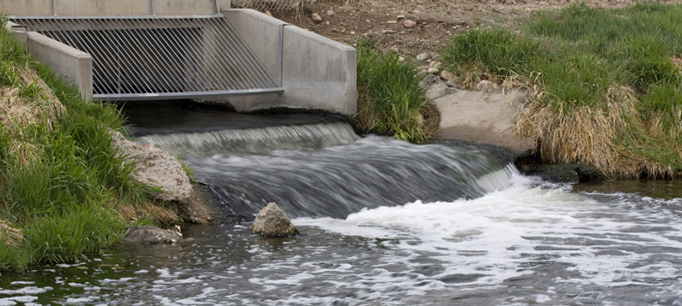
In Contra Costa County, Orinda’s Road and Storm Drain Repair Bond passed with 75 percent approval. It authorizes the city to issue $20 million in general obligation bonds to fund the restoration and repair of roads and storm drains, plus a property tax increase to pay for the bonds. Broader funding measures like this—which include a water service along with something else—have generally been more successful than exclusively water-focused measures. Local governments seem to have recognized this reality and have increased these kinds of measures in recent years. Unfortunately, measures that fund multiple activities may generate less funding than is needed to fill water service gaps.

The second local water measure, the Lake County Healthy Lake Tax, failed with 64 percent approval (repeating an earlier failed attempt in 2012 that had 63 percent approval). It would have increased the local sales tax by one-half cent for 10 years to pay for the eradication of weeds, algae, and invasive mussels from Clear Lake, the restoration of wetlands, and the improvement of water quality.

As the Lake County example suggests, the two-thirds voter threshold for local special taxes and bonds is a significant obstacle. Orinda twice failed to pass measures in the mid-2000s, despite 64 percent approval. Since 1995, 65 percent of the measures requiring two-thirds approval passed, but 84 percent would have passed at the 50 percent threshold that is required for local general taxes and statewide fiscal measures. We can’t know how many more measures would have been put on the ballot had the voter threshold been lower.

Funding these essential water services through local tax and bond measures is a marked contrast to funding for water supply and sewer services, which are paid for with revenues from monthly customer bills. These services are generally in good fiscal shape because when new funds are needed, providers are required only to give customers the opportunity to protest rate increases.

To help address water funding gaps, California should consider treating flood and stormwater services like water and wastewater. It would also be helpful to treat local special taxes like local general taxes and statewide fiscal ballot measures—requiring a simple majority vote. Of course, this would require constitutional reforms. But without these changes, the state will need to provide much more support to local governments to pay for services that are essential to all Californians.

How Can California Increase Voter Turnout?

Days after a California primary that may set a record for low voter turnout, election experts gathered to take stock: What happened last week and how can the state engage more Californians in elections?

PPIC research fellow Eric McGhee first provided a brief overview of how California’s electoral reforms have worked so far. He noted that the top-two primary probably did not worsen voter turnout but did nothing to reverse the decline either. In the absence of an exciting race or issue, it’s unlikely that a primary reform alone will draw more voters to the polls, he said.

The consensus among panelists is that there is no single reform that will reverse declining primary turnout. Improving outreach, educating voters, making registration and voting easier—all are needed to increase engagement.

Jill LaVine, Sacramento County voter registrar, highlighted the importance of voter education. Because there were no high-profile candidates or issues in the June primary, there wasn’t much advertising on television—where many voters get information. She noted the efforts that election officials have made to make voting easier—for example, an app to help voters find polling places, and phone banks to help answer questions. But many Californians are confused by the number of changes in the state’s primary, from the date to the process of voting itself. Along with other panelists, she stressed the importance of fully funding election programs that are mandated by the state. For example, the state no longer provides funding to counties to carry out the permanent vote-by-mail program, which is used by a majority of the state’s voters.

Ethan Jones, chief consultant of the Assembly Elections and Redistricting Committee, said the legislature is addressing structural barriers to voting, such as allowing residents to register and vote on the same day. This reform, which will go into effect in future elections, will allow Californians who become engaged in an issue or candidate at the last minute to participate. There have also been efforts to address attitudinal barriers, to allow 16- and 17-year-olds who are taking civics classes to “pre-register” to vote and be added to the voter rolls when they are 18, for example.

Astrid Garcia, deputy director of the nonpartisan Future of California Elections, noted that in a state as large and diverse as California, it’s crucial to address all the steps that lead up to voting and make the experience positive, so that voters turn out again in the next election. She noted that beginning this year, legal permanent residents can be poll workers, which will educate these Californians about the process and train a cadre of bilingual poll workers for the future. She also noted the importance of “meeting voters where they are,” by allowing residents to register to vote when they seek government services. She also said that it will take time to realize the results of these reforms.

Is the Top-Two Primary to Blame for Low Turnout?

Turnout in California’s recent primary election was abysmal: the secretary of state is reporting that 21.5 percent of registered voters participated. This report doesn’t include many ballots yet to be counted but, according to educated guesses, those ballots won’t push turnout over 23 percent. This would be a record low for California.

Should we blame California’s new “top two” primary for this sad state of affairs? After all, turnout has been pretty low in both of the top-two primary elections California has had so far. Surely it’s part of the story?

This is an explanation in search of a theory. There is no clear reason why California’s new system would discourage people from voting. Many voters probably don’t even remember that we have a top-two system until they look at their ballot. When I examined this issue in a recent PPIC report, I found little evidence that open primaries affect turnout one way or the other. We can’t credit the top-two, but we can’t blame it, either.

The ups and downs of statewide turnout are driven by top-of-the-ticket competition: president, U.S. Senate, governor, and initiatives. An interesting race in one U.S. House, state assembly, or state senate district is going to engage only the voters in that district—often only a fraction of them.

For better or worse, top-of-the-ticket competition has been in short supply of late. In 2012, the presidential primary season was basically over by the time California had its primary, and Dianne Feinstein’s reelection to the U.S. Senate that year was all but a foregone conclusion. This time around, there is no presidential contest and no U.S. Senate race, and the gubernatorial contest has yet to catch fire. On top of all that, statewide citizen initiatives are now banned from the primary ballot. The legislature can place its own measures on the primary ballot (and did so in 2014), but these often lack the hot-button excitement of a citizen initiative campaign.

California does need to think seriously about how to improve primary turnout, which has been declining for decades. But we can’t pin this primary’s low participate rate on the top-two system. It was a predictable result of the statewide campaigns offered to voters. We had one of the highest primary turnouts on record in February 2008, when both the Republicans and Democrats had competitive presidential primaries and California had a say in deciding the outcome. If we get more competition in 2016 or 2018, we’ll probably see a different outcome than we did last week.

Quirks of the Top-Two Primary

This week, California voted for the second time under its new top-two primary system. The boldest innovation of this system is that it allows the top two primary winners to be from any party, even the same one. There will 25 such same-party races this fall, out of 160 total.

In an earlier blog post, I pointed out key differences between the primary and the general electorates: primary voters are typically older and less diverse—and often tilt Republican. These differences can end up producing same-party contests in places where they probably would not have occurred if primary and general election voters weren’t so different.

These same-party contests do not raise questions unless they occur in a district in which either party would typically have a legitimate shot at winning. And so far, the vast majority of same-party contests have been for seats that would have gone to somebody of that party no matter what.

But in 2012, Congressional District 31 in San Bernardino County hosted a same-party Republican runoff—although this district would likely be competitive between the two parties under most circumstances. The complexion of the primary electorate partly explained this outcome, but it also occurred because more Democrats than Republicans competed for the seat. This caused the Democratic candidates to split the loyal Democratic vote too many ways—none of them gained enough support and two Republicans advanced.

The pattern has continued in 2014. Congressional District 31 is again in the mix, avoiding a same-party Republican runoff by just 390 votes (out of more than 42,000). Meanwhile, in Los Angeles and Ventura Counties, Congressional District 25 will host a runoff between two Republicans—although this district slightly preferred Obama in 2012. That doesn’t necessarily mean that CD 25 would have been competitive this year, but all the same, it’s worth thinking about whether a same-party contest is really the match-up voters there would like to see.

The most surprising contest to come close to same-party status this cycle is the statewide race for California controller. The Democrats ran three candidates and the Republicans ran two. At the time of this writing, a same-party Republican race in the fall has been avoided by just 1,924 votes out of almost 3 million cast, a difference of less than one-tenth of one percent. This outcome may well hold, but races this close occasionally flip as more ballots are counted.

These sorts of outcomes are never going to be common under the top two. But in two election cycles they have been common enough that we ought to think about ways to address them. As part of the top-two reform, the legislature banned write-in and independent candidacies in the fall election. I have suggested we revisit that decision, and allow for such candidacies if there is demand. The bar could be set high enough to ensure that the option was rarely used, but low enough to make the option realistic, just in case.

The question is not whether same-party competition is a good idea. In uncompetitive seats, one can make a solid case that it offers choices that voters would not otherwise have—choices about which faction of the party ought to represent the district. But in places where the real conflict is between Democrats and Republicans, a same party contest closes off the very choice the top two is meant to promote.

Are Voters Ready for the Primary?

All signs point to a low turnout in the primary next week. The most important factors that might bring voters to the polls are absent. California recently shifted all citizen initiatives to the fall ballot, depriving this year’s primary ballot of the draw that comes from those campaigns. And the race at the top of the ticket, for the governor’s seat, has not energized voters, as our latest PPIC Statewide Survey shows.

We find that Governor Brown, with the support of 48 percent of primary likely voters, will likely advance to the November general election. In the contest to see who would meet Brown in November, Republicans Tim Donnelly and Neel Kashkari are locked into a close race (Donnelly 15%, Kashkari 10%). However, one in four primary likely voters (27%)—including 34 percent of Republicans and 35 percent of independents—are still unsure of who they will vote for (17% of Democrats are undecided). And there are other signs that point to voter malaise.

We asked primary likely voters how closely they are following news about the gubernatorial candidates, finding that just 46 percent of primary likely voters are following news about candidates very or fairly closely. By comparison, in May 2010, 67 percent of likely voters were closely following news about candidates. And while attention this year has dropped across parties, it is especially low among Republicans. Today, just 39 percent of Republicans report closely following news about gubernatorial candidates; in May 2010, 68 percent said they were doing so (Democrats: 52% today, 66% 2010; independents: 52% today, 66% 2010).

Looking elsewhere in the survey, we find that only half of primary likely voters (53%) say they are satisfied with their candidate choices in the primary election for governor, while one in three are not satisfied (32%). Democrats (65%) are by far the most satisfied with their choices, while fewer than half of Republicans (43%) and independents (48%) express satisfaction. Of particular note, among those who are not satisfied nearly half (46%) say they are undecided on who they would vote for.

So with the election just days away, it appears as though many Californians have yet to tune into the governor’s race. Time will tell whether future gubernatorial contests can capture the attention of California voters and reverse the state’s recent history of low turnout in its primary elections.

May Survey Looks at Views on Budget, Drought

The May edition of the PPIC Statewide Survey, Californians and their Government, explores attitudes toward the governor’s latest proposed budget and gauges preferences in the gubernatorial primary. It also examines opinions on health care reform, the drought, poverty, and climate change.

PPIC research associate Dean Bonner presented the results of this wide-ranging survey at a lunch briefing in Sacramento last week.

Electoral Reforms Face New Test

California’s political reforms—redistricting and the top-two primary—were meant to shake up the status quo through radically redrawn voting districts and a primary system that let voters choose any candidate of any party, and advanced the top two candidates (also regardless of party) to the fall election.

The first time out the gate, in 2012, the reforms didn’t disappoint: numerous incumbents retired, many seats were open, and a lot more candidates threw their hats in the ring. It was the shot across the establishment’s bow that supporters had been looking for.

Things are calmer in this year’s legislative and congressional races. The most obvious sign: an unusually large number of candidates facing no formal opposition. There were eight such races in 2012 and an average of 7 under the previous primary system. Today there are 20.

These candidates may not remain completely uncontested, since there are reasons to think we may see more write-in candidates this time around. The deadline for filing as a write-in—at least one whose votes are actually counted—comes after the normal candidate filing deadline. Under the top two, potential write-ins can wait to see whether a heavyweight ends up uncontested and then jump into the race for less money and effort. As the only other candidate, these write-ins will be guaranteed a spot in the fall campaign. This was not a popular approach in 2012, but candidates are still learning the system, so we may be seeing this strategy coming into its own. We will know more once the official write-in list is announced later this month.

In 2012, there were also a number of incumbents who faced challengers from within their own party. This was a sign, in part, of the better odds facing those challengers under the top two system: so long as they finished at least in second place, they would get another chance to topple the incumbent in the fall campaign. Nonetheless, only a handful of these challenged incumbents lost. Perhaps as a result, fewer incumbents overall face an intra-party challenge this time: 28% this year compared to 42% in 2012. And with only a couple exceptions, even those incumbents facing an intra-party contest are in a dominant financial position.

Finally, there are fewer open seats this year. In 2012, an extraordinarily large number of incumbents chose to retire or run for another office, leaving nine seats open for the U.S. House and 35 open for the state assembly (open seats for the state senate were more in line with past experience). This year, there are six open seats for the U.S. House—still high by historical standards, but less so. And the 23 open seats for the assembly aren’t all that many, at least in the era of term limits.

However, the seats that have come open are hotly contested, as open seats usually are. The great majority of these races feature at least three candidates, and a few have far more than that—with the prize going to Congressional District 33, where no fewer than 18 candidates are vying to replace retiring incumbent Henry Waxman. Moreover, fundraising in these races is much more evenly distributed across a range of candidates.

We are still early in the election cycle, and between the primary and the general there are still plenty of opportunities for surprises. But so far, it looks like the revolution, such as it was, is coming to a close, and a new status quo may be settling into place.

The Power of the Primary Voter

Voters are starting to think seriously about whether or not to vote on June 3—in fact, the first vote-by-mail ballots are already being returned. And because of a recent change to California’s primary system, this decision about voting will be more important than ever.

The voters who turn out in California’s primary elections have typically been different than the ones who vote in the fall. They have been older and less diverse, with a smaller share of Latinos and Asian-Americans. They have also tilted Republican in most cases. In short, the primary electorate is the California we once were, not the California we have become.

These differences mattered in the past, but not as much as they might have. Any party that placed a candidate on the primary ballot would be guaranteed to have a candidate on the ballot in the fall. Indeed, that was the point of the primary: to choose one person to represent each party in the general election. Now California has a radically open “top two” primary. Voters can vote for any candidate they like, and the top two candidates, regardless of party, advance to the fall election. That means a party is no longer guaranteed a spot in the final round.

Before the top two, the differences between the primary and the general electorate could affect the kind of candidate nominated by each party, but not whether the party nominated a candidate at all. Today, the primary electorate has much more say over what the general election will look like.

When the state first used this system in 2012, almost one-fifth of the races ended up with same party contests in the fall. This included Congressional District 31, where two Republicans faced off in a competitive district that otherwise leaned Democratic. If the general electorate had turned out in the primary, it almost certainly would have been enough to change District 31 into a race between a Democrat and a Republican—and the Democrat would have had a decent chance of winning. That’s a problem. Of course, this was just one district. But a bias in the primary electorate could create—or prevent—a same-party contest in a statewide race as well.

What’s the solution? Every primary system runs some risk of strange results, but the top two is especially aggressive at closing off alternatives. It might make sense to offer a sort of “safety valve”—the option of a third candidate in the fall in cases where there was enough demand for one. California used to allow both independent and write-in candidacies in the fall, but the top two banned both. The legislation removing these options was passed with a simple majority in the legislature, so it would be relatively easy to change. The bar for such safety-valve candidacies could be set high enough to ensure they would remain rare. (Of course, there could always be legal challenges, but the merits of that approach are better left to lawyers to determine.)

The top two offers a lot more choices to those who show up to vote in the primary. We should be careful about giving these voters too much power to then dictate the choices for everyone else.

Video Highlights New Survey’s Key Findings

The March PPIC Statewide Survey examines several major issues in California, including water, high-speed rail, marijuana legalization, and taxes. The survey also finds that three months before the primary, Governor Jerry Brown remains a strong favorite for re-election this year.

The wide-ranging survey also looks at Californians’ views on national issues—such as immigration and health care reform, and abortion —and provides approval ratings on federal elected officials.

PPIC research associate Jui Shrestha presented the results of the survey at a luncheon briefing in Sacramento.