Commentary: California’s Top-Two Primary, Explained

This commentary was published in the Washington Post on June 6, 2018.

The California governor’s race and all its key House races will feature a Democrat against a Republican in the fall campaign. What would normally be an unremarkable statement counts as breaking news for California.

Read the full commentary on washingtonpost.com.

Single-Payer Health Care and the Governor’s Race

One issue that may prove decisive for Democrats in the 2018 governor’s race is single-payer health care. With the leading Democratic candidates supporting a single-payer system—and the leading Republican candidates in opposition—the race has shed light on the financial, political, and regulatory challenges associated with expanding health coverage across the state.

Last year, the state senate passed a bill (SB 562) that would establish a single-payer health insurance program to cover all Californians. However, the bill was shelved in the state assembly until further notice. According to estimates by the nonpartisan Legislative Analyst’s Office, the bill’s total annual costs would be about $400 billion. Democratic gubernatorial candidates Gavin Newsom and Delaine Eastin have been the most vocal proponents of single-payer health care and have publicly backed the bill. Democratic candidates Antonio Villaraigosa and John Chiang, while supportive of the idea, have expressed concerns over financing and implementation. Both the leading Republican candidates, John Cox and Travis Allen, strongly oppose single-payer health care and have emphasized the need for more competition in the marketplace.

With candidates’ differing positions, how are Californians feeling about single-payer health care today?

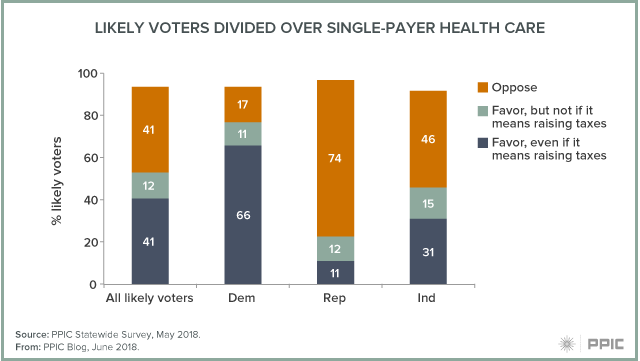
The May PPIC Statewide Survey found a majority of California’s likely voters (53%) favor a single-payer state plan. However, if this plan requires raising taxes, support declines to 41%. Across parties, an overwhelming majority of Democratic likely voters (77%) are in favor, while an overwhelming majority of Republicans (74%) are opposed; independent likely voters are divided (46% favor, 46% oppose). Notably, 66% of Democratic likely voters would favor a single-payer system—even if it means higher taxes.

The issue has become a litmus test for Democrats—pitting progressives against pragmatists—but, overall, Democrats express strong support for a single-payer system. Among likely voters who call themselves strong Democrats, 81% are in favor, compared to 69% who say they are not very strong Democrats. Among likely voters who call themselves strong Republicans, 83% are opposed to a single-payer system (the sample size for those calling themselves not very strong Republicans is too small for analysis).

Given partisan divides, the next governor may face significant political hurdles moving forward with single-payer health care. Coupled with statewide challenges, California would need to collaborate with the federal government to implement such a system. In consideration of these factors, the June primary is an opportunity for Californians to determine their future leadership and the state’s policy directions—including a possible step toward single-payer coverage.

The Governor’s Revised Budget Targets Tuition at UC and CSU

Governor Brown’s May Budget Revision has short- and long-term funding implications for both CSU and UC. The annual May Revision to the governor’s January budget proposal reflects an unanticipated revenue increase of $7.6 billion. The revised budget does add $100 million in one-time funding for deferred maintenance at each system as part of a larger infrastructure spending plan. However, while increases are proposed for other major spending areas, funding for UC and CSU remains unchanged from the January budget: each system is still slated to receive $92.1 million from the General Fund. This is in contrast to revised budgets in previous years that increased funding for both systems by 3% to 4%. Moreover, if UC and/or CSU raise tuition, the Department of Finance would be allowed to reduce each system’s funding by an amount equal to the additional revenues raised.

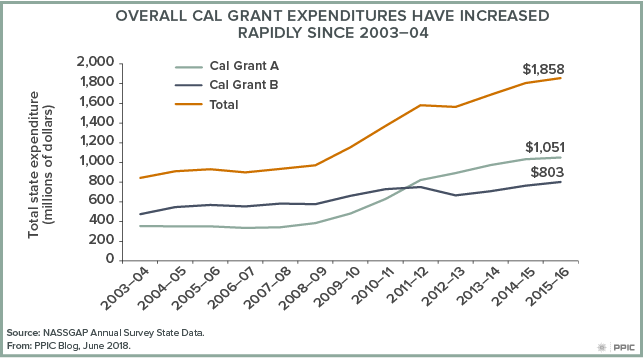
This proposed policy has two goals: it creates a disincentive to raise tuition and is meant to account for additional state costs incurred when tuition increases. California’s primary financial aid programs— the Cal Grant A and B entitlements—cover tuition for more than 300,000 students, most of them enrolled at UC and CSU. For students who meet financial and academic requirements, UC or CSU tuition is fully covered for the equivalent of four years for Cal Grant A and three years for Cal Grant B. Consequently, when UC and/or CSU raise tuition, the state must cover the additional cost. Since the Cal Grant program’s inception in 2000, tuition increases in response to state funding cuts coupled with a rise in the number of eligible students has increased annual program costs from a little more than $800 million to nearly $2 billion.

Although the governor’s proposal, coupled with a healthy state funding reserve, could help keep tuition flat in the near future, it may have unintended consequences for large numbers of students. UC and CSU allocate one third of the revenue from tuition increases to institutional aid that augments Cal Grants and Federal Pell Grants to cover tuition for more than half of their students. Moreover, restricting state allocations to the two systems while also discouraging tuition increases could prompt each institution to turn away eligible students (in fact, CSU turned away 32,000 students last fall) or ratchet up eligibility requirements.

In the longer term, restricting access to UC and CSU could have a negative effect on California’s economy. If the state hopes to meet growing demand for skilled workers, it must produce 1.1 million more bachelor’s degrees by 2030. Achieving this goal will require a long-term funding plan that addresses not only the cost of tuition but also the full cost of attending college as part of a larger effort to increase access and improve outcomes for all students.

How the Census Affects State Finances

The US Constitution requires a decennial census for the purposes of determining how many seats each state will have in the House of Representatives. Just as critical, a number of federal programs rely on census data to calculate the share of federal dollars distributed to each state. In the case of California, the census-connected funds are big money. Undercounting Californians in the upcoming census could have significant fiscal consequences for the state.

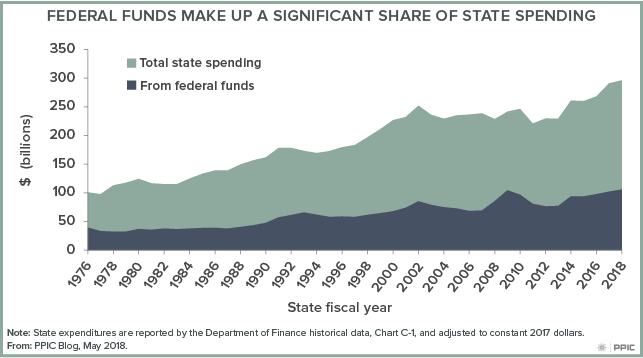
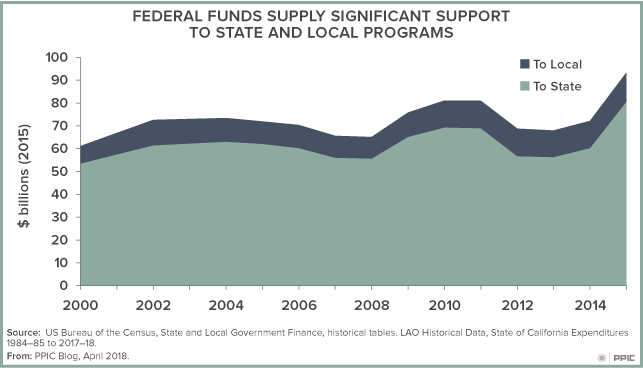
Federal dollars account for more than one-third all state spending (including the general fund, special funds, and bonds). This translates into more than $100 billion in state spending derived from the federal government.

Not all federal programs rely on the census to determine the distribution of dollars, but the vast majority are connected to it in some way. One study estimates that 132 federal programs rely on census data to distribute more than $675 billion. Another estimates the share of census-related funding for the largest programs for each state. For California, that amount was $77 billion, or more than 80 percent of the federal funds the state received in 2015 (the most recent estimate available).

Given the dollars at stake, getting an accurate count of California’s residents is critical—but could be a challenge since large segments of California’s population are historically difficult to count.

But population counts alone do not determine funding, so it is difficult to precisely forecast the impact of an undercount. Compounding the difficulty, the way federal programs use census data to allocate dollars varies, and in some cases, involves other factors such as the relative wealth of the state. For example, a significant share of census-related dollars are determined by a specific federal reimbursement rate. Because California already receives the minimum rate, an undercount would not reduce the amount of federal dollars that the state can count on.

Finally, the use of the census to distribute dollars is, in some cases, a zero-sum-game. For California to avoid “losing” relative to other states, it needs to count as well, or better, than the rest of the country. Other large states—notably Texas and Florida—face similar challenges.

California’s creation of a state committee to ensure an accurate count—along with funding to support such efforts—are crucial to a successful outcome. In fact, a relatively modest investment has the potential to provide enormous returns to the state.

Video: California Primary Preview

In the run-up to California’s June 5 primary, Democrat Gavin Newsom remains the top choice among likely voters in the governor’s race, according to the latest PPIC poll. Republican John Cox is in a close race with Democrat Antonio Villaraigosa to gain the second spot on November’s general election ballot. Senator Dianne Feinstein holds a wide lead over fellow Democrat Kevin de León.

Dean Bonner, PPIC associate survey director, detailed these findings and more at a recent Sacramento briefing.

The survey shows Newsom (25%) leading among likely voters, followed by Cox (19%), Villaraigosa (15%), Republican Travis Allen (11%), and Democrats John Chiang (9%) and Delaine Eastin (6%). Fifteen percent of likely voters are still undecided. Results were similar in an April PPIC poll (26% Newsom, 15% Cox, and 13% Villaraigosa). Cox’s support has more than doubled since the January (7%) PPIC poll.

Other highlights of the survey include:

  • A majority of likely voters (63%) favor Governor Brown’s final budget, and overwhelming majorities like his idea of additional one-time spending on infrastructure, homelessness, and mental health programs.
  • Immigrants are viewed as a benefit to the state by a majority of likely voters (67%) because of their hard work and job skills. The vast majority (80%) favor a way for undocumented immigrants to stay in the US legally—if certain requirements are met.
  • Californians are divided on the motivation of the Russia investigation, but a strong majority of likely voters (74%) think the Russian government tried to influence the outcome of the 2016 presidential election.
  • Californians distrust both the state and federal government—just 18 percent of likely voters say you can trust Washington to do what’s right.

Federal Spending Bill Boosts Education Funds in California

Congress recently agreed on a $1.3 trillion spending bill to keep the federal government operating through September 2018. Nearly six months behind schedule, the omnibus spending bill includes a $3.9 billion increase for the US Department of Education (DOE), even though the president had proposed a $9 billion (13%) budget cut that involved scaling back or eliminating more than 30 DOE programs. Since funding for most of these programs is based on student headcounts, California is expected to receive more federal money this year.

One contentious issue in the president’s budget was a $1.4 billion increase for public and private school alternatives. Congress rejected increases for the new Furthering Options for Children to Unlock Success grants—the president’s signature proposal—and the Education Innovation and Research program. Instead, it increased funding for the charter schools grant program by $58 million, a much smaller amount than the president—and Secretary DeVos—had proposed.

The spending bill also excluded a proposed 15% funding cut for Perkins grants and the elimination of the Preschool Development grants. In the previous school year, California received $113 million for Perkins grants, which support career technical education programs in high schools and community colleges. California is also expected to receive more money from the Department of Health and Human Services for programs such as the Child Care Development Block Grant and Head Start.

Congress voted to maintain funding for Supporting Effective Instruction State Grants, which the president also wanted to eliminate. Commonly referred to as Title II, this program supports the recruitment and development of high-quality teachers and principals, with a particular focus on serving students from low-income families. Title II is the third-largest DOE program, and California schools received more than $200 million Title II funds in the most recent school year.

At the postsecondary level, Congress increased funding for the Federal Supplemental Educational Opportunity Grant by $107 million. The president proposed eliminating this $732 million program, which provides need-based grants to help low-income undergraduate students with college costs. The spending bill also increased funding for the federal work-study program by 14%, reversing the president’s proposal to cut it by almost half.

Historically, federal funds have been a small fraction of school district revenues, but they have become an increasingly important funding source, particularly for high-need schools. All in all, the new spending bill will support California’s ongoing efforts to improve educational outcomes for all of its students.

Video: Preparing California for the 2020 Census

The 2020 census will be a defining moment for California. Much is at stake—including billions in federal funds and the state’s political representation in the US Congress. The lasting impact of an undercount can’t be overstated. Governments, K–12 and higher education institutions, businesses, and nonprofits depend on the census to understand the needs of their communities, target services, and plan for the future.

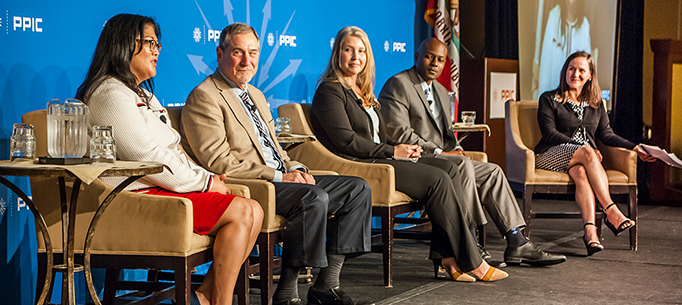
A panel of experts discussed the critical role of the decennial census at a PPIC event in Sacramento on April 24. They examined the challenges of reaching “hard-to-count” communities, the state’s part in ensuring an accurate tally, the impact of the recently-added citizenship question, and more.

The event opened with a wide-ranging conversation between Marc Berman, state assembly member, and Mark Baldassare, PPIC president. One of Berman’s biggest concerns is that California could lose its political clout in DC. The state has “40 million unique stories,” he said, and the census is about “making sure that every voice” gets counted. But the new citizenship question is counterproductive, in his view. We know that adding it “will discourage a lot of people from participating,” he said. “People are so fearful” that it could make a successful census count that much more difficult, he added.

For the first time, the US Census Bureau will try to collect most responses (55%) online, with the rest obtained by mail or in person. John Thompson, former director of the bureau, identified the government’s main rationale for the change—namely, cost. He also detailed best practices for adding a new census question: In the past, he said, the bureau would spend years testing it, partly to craft appropriate messaging and to ensure that residents were comfortable answering it. The new citizenship question did not have that review, a concern Thompson raised with Commerce Secretary Wilbur Ross to no avail.

John Dobard, associate director of political voice with Advancement Project California, discussed ways to involve the state’s hard-to-reach communities. One way to overcome residents’ fear of participation, he said, is to involve trusted leaders in outreach. Otherwise, entire multi-generational immigrant families could be left out.

An undercount could mean a direct hit to essential state services—such as the Children’s Health Insurance Program. In that scenario, young children in poverty would be hurt most of all, said Sarah Bohn, a panelist and PPIC research fellow.

Ditas Katague, the state’s 2020 census director, said her office is steeped in planning for the statewide rollout. Importantly, she said, California needs an “agile, flexible ground team,” and called on citizen volunteers to join state and local agencies, nonprofits, and philanthropic groups to help make that happen.

Tax Day: Californians Feel Overburdened

Tax day is here, and Californians are feeling particularly burdened.

A record-high number of adults (72%) say that California ranks above average or near the top in per capita state and local tax burden compared to other states. This perception is close to the fiscal facts: a Tax Foundation report ranked California’s 2014 state and local tax collections per capita as 13th-highest in the nation.

Taxes are not only perceived to be high, but they are also viewed as disproportionate: a majority of Californians (56%) say they pay more taxes to state and local governments than they feel they should (37% much more, 19% somewhat more). Californians’ views were similar last March (58%), following an extension of income tax increases on high-earning residents. Today, traditionally tax-opposed Republicans (78%) are much more likely than independents (63%) and far more likely than Democrats (47%) to say that they pay much or somewhat more than they should. This perception is also more common across higher-income groups (65% $80,000 or more, 58% $40,000 to under $80,000). Lower-income groups are more divided: among residents with household incomes under $40,000, 47% say they pay more or somewhat more than they should, while 40% say they pay the right amount.

How do these views align with approval ratings of state elected officials? Among those who say they pay much more than they should, 50 percent disapprove of the way Jerry Brown is handling his job, 60 percent disapprove of the California Legislature, and 57 percent disapprove of the way that the state legislators representing their assembly and senate districts are doing at this time.

Nonetheless, legislators are moving forward with more tax proposals. According to a recent California Tax Foundation Report, the state legislature introduced 33 bills and constitutional amendments since the start of the 2017–18 legislative session that could increase taxes and fees by over $269 billion annually, though few are likely to become law. The most expensive proposals include a government-run healthcare tax, a sales tax on services, and a new tax on California businesses. These proposals come in the midst of an election year and expected state budget reserve of nearly $16 billion.

Californians will soon have the opportunity to make significant decisions at the ballot box—choosing new leaders and helping to shape the state’s future. Stay tuned to the PPIC Statewide Survey for timely coverage of this year’s election and Californians’ leadership preferences.

The PPIC Statewide Survey: Reflections at the 20th Anniversary

Mark Baldassare, president and CEO and survey director, and Abby Cook, vice president of communications, at the Public Policy Institute of California have worked on every PPIC Statewide Survey.

This year, the 20th anniversary of the PPIC Statewide Survey, is an important one in California. The state is at the forefront of many major national issues, and our voters will be electing new leaders across the board. Over the past two decades, PPIC has conducted nearly 175 public opinion surveys, interviewing more than 350,000 Californians—allowing us to see how the attitudes of state residents have evolved and providing valuable context for today’s policy landscape.

Our surveys show that Californians have long had a progressive streak when it comes to such topics as environmental protection, gun restrictions, and a woman’s access to abortion. However, views on other key issues have undergone significant change. Among them:

  • The perception that immigrants are a net benefit to California has been steadily climbing. In 1998—the first year of the PPIC survey—46% of Californians said that immigrants are a benefit to California because of their hard work and job skills; 42% said immigrants are a burden because they use public services. Last year, 76% said immigrants are a benefit, while 20% said they are a burden.
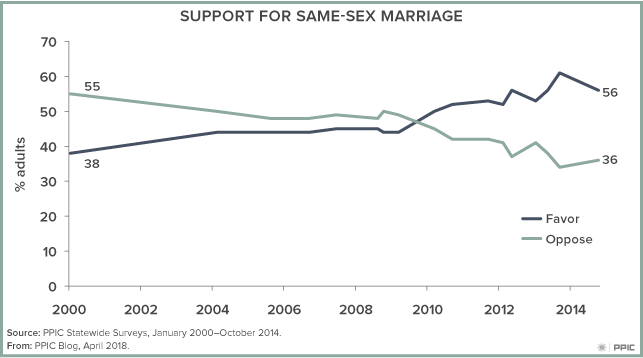
  • Majority support for legalizing same-sex marriage is now the norm. In 2000, we asked whether Californians favored or opposed allowing gay and lesbian couples to be legally married. Just 38% were in favor and most (55%) were opposed. By 2014, opinions reversed. A majority—56%—were in favor and 36% were opposed.
  • State action to combat climate change has evolved from a bipartisan issue to a partisan one. The Global Warming Solutions Act of 2006, landmark legislation that required the state to reduce greenhouse gas emissions to 1990 levels by 2020, enjoyed the support of a strong majority of Californians (65%)—including more than six in ten adults across parties—the year it passed. By 2016, support was similar (69%), but there was a wide partisan divide: majorities of Democrats (80%) and independents (56%) expressed support, while fewer than half of Republicans (44%) did so.

At the same time, the survey shows Californians holding steadfast on other issues:

  • The citizens’ initiative process in lawmaking is highly valued. In 2000, 68% of Californians were somewhat or very satisfied with the initiative process. By 2016, that figure had changed little (64%).
  • Californians express unwavering praise for Proposition 13. In 2003, the 25th anniversary of the landmark ballot measure, 57% of Californians said it had been mostly a good thing. This year, the 40th anniversary, that number remains the same.
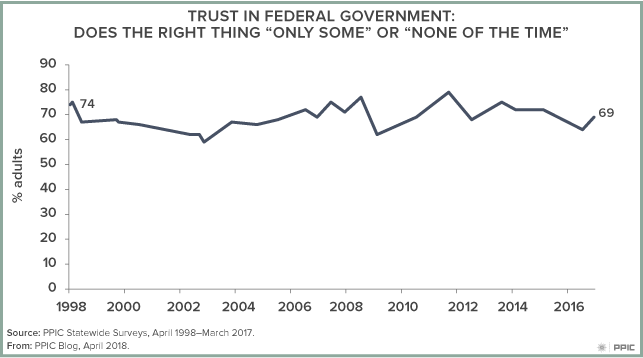
  • Distrust of government is a constant undercurrent in voter sentiments. In April 1998, 74% of Californians said they trusted the federal government to do what is right only some or none of the time. In 2017, a similar percentage—69%—expressed that view.
Above all, the survey has revealed that the most persistent element in California policymaking is what we call the state’s “exclusive electorate.” California voters tend to be older, white, affluent, homeowners, and college educated. Nonvoters tend to be younger, Latino, less affluent, renters, and less likely to be college educated than likely voters. Voters make significant policy decisions at the ballot box—but nonvoters provide a unique perspective on the role of government. At a time when economic inequality has become one of most important policy issues in the state, this divide is a key reason we conduct the PPIC Statewide Survey as we do. Our survey gives all Californians—nonvoters and registered voters alike—a real-time voice on current topics, political leaders, and public institutions.

PPIC is unique in California in its ability to combine state-of-the-art polling with an institutional commitment to tackling major issues affecting Californians. We are often asked about how we conduct the survey and the philosophy behind it. Here is a brief look behind the scenes.

First, our surveys adhere to the high-quality standards set by the most respected nonpartisan polling organizations that conduct national surveys—such as the Pew Research Center, the Washington Post, ABC, CBS, CNN, and Gallup. Like these organizations, we use a random digit dialing (RDD) methodology. Despite changes in the polling landscape, this method remains the most effective way to reach all adults. It allows for random sampling of households within California, meaning that each person in the population has an equal probability of being selected. Our surveys include live telephone interviews with adults (age 18+) in English and Spanish. After each survey is completed, we compare the survey sample to census statistics and make any necessary statistically weighted adjustments to achieve a representative sample.

Second, while our methods remain the same, our approach has changed in response to the challenges of reaching people by phone. Since 2003, we have worked exclusively with interviewing firms that conduct surveys for our national peers. Starting in 2008, we have conducted both landline and cell phone interviews. After the 2016 election, based on extensive analyses of the performance of online surveys and live telephone surveys, we decided to maintain our RDD methodology and increase our cell phone interviewing (65% in 2017, 70% in 2018).

Third, every survey is designed with the intent of delivering accurate, independent, nonpartisan information on the perceptions, attitudes, policy preferences, and ballot choices of California residents. Our core audiences are policymakers, the media, and other engaged Californians—all of whom have come to depend upon the PPIC Statewide Survey as a critical barometer of public opinion in the state. And amid the partisan rancor of political debate, PPIC’s surveys also point out areas of consensus among the state’s diverse residents, providing valuable information to policymakers.

Fourth, PPIC produces a range of products in conjunction with each survey—including blog posts, fact sheets, and a survey report with crosstabs. Large sample sizes (currently 1,700 adults) allow us to accurately report the findings of key subgroups, such as likely voters, partisan groups, major regions, and age, income, and racial and ethnic groups.

Finally, our surveys are free of charge and available to all. We disseminate the findings through outreach activities that include public briefings in Sacramento—videotaped and posted on our YouTube channel—and broad use of social media, where our followers include state legislators, nonprofit and business leaders, and reporters from major media outlets. We also convene forums around the state for constructive discussion of the issues raised in our surveys. As a result, the PPIC Statewide Survey has had a significant impact on informing policymaking, as measured by activities such as bill citations in the state legislature.

We are grateful to many PPIC colleagues who have worked diligently over the years to produce surveys that are timely, relevant, and accessible. For every survey, the staff makes the call on survey methods and questions, and the content of reports and press releases. We benefit greatly from the leadership of the PPIC board of directors, which is dedicated to maintaining the institute’s mission and values, and a survey advisory committee that provides substantive input and expertise. Lastly, we would not have arrived at the 20-year mark without grant support from foundation partners—the James Irvine Foundation for the “Californians and Their Government” survey series and the consortium who fund the annual education and environment surveys. These ingredients make it possible for PPIC to conduct independent, nonpartisan, high-quality polling that provides a voice for the public and likely voters.

The 20th year of the PPIC Statewide Survey is shaping up to be the most important to date. We are monitoring the attitudes of California adults on a host of critical issues while tracking the ballot choices of California likely voters in the 2018 election. We look forward to keeping you well informed during a consequential election year—and into the future.

Federal Funds and California’s Budget

California receives a lot of direct funding—more than $100 billion—from the federal government. Should federal officials make changes to the programs that provide these funds, the state would feel the impact quickly, with the most vulnerable Californians bearing the brunt. As lawmakers begin to work on the state budget in earnest, there is less certainty surrounding the contribution of federal funds than in prior years.

Governor Brown’s current budget proposal estimates that federal support will contribute about $106 billion dollars to state and local programs (a large share of the funds “pass through” state departments and are distributed to counties, school districts, and other entities). That would represent a record amount.

In the past, federal revenue to California hovered between $70 and $80 billion. After implementation of the Affordable Care Act (also known as Obamacare), the total level of federal assistance to the state rose beyond the $100 billion mark—mainly because of the expansion of Medi-Cal.

Though it is the largest, Medi-Cal isn’t the only state program that relies on the federal government for a significant share of total revenue. From CalTrans to the California Department of Education, billions of federal dollars provide support for state and local efforts.

Today, relying on that federal revenue could be hazardous. The Trump administration and congressional Republicans have expressed an interest in making significant changes to key programs. For instance, food stamps—known by its federal moniker as Supplemental Nutrition Assistance Program (SNAP) and as CalFresh here in California—may look very different over time. Trump’s proposal limits the ability of recipients to choose which foods they can purchase, claiming that these limitations will save money. These purported savings underpin a proposed 30% overall cut to the program over the next decade.

Should funding for these programs be cut, California—as the nation’s largest state—would bear the greatest dollar reduction. And the state’s poorest would feel the greatest impact. PPIC research has found that the state’s social safety net programs often spell the difference between being in or out of poverty for hundreds of thousands of residents. For example, CalFresh moves 800,000 people out of poverty.  The impact of CalWORKs—the state’s welfare program—is smaller, but significant (400,000 moved from poverty). The effect of funding reductions today could be amplified in the next recession, when unemployment rises, incomes fall, and more people seek these benefits.

In the past, California, like other states, could look to the federal government as a reliable source of revenue for many of its programs, especially those making up the social safety net. In fact, the federal government has even served as a partial fiscal buffer during economic downturns, increasing spending when state generated revenues fell. The state, however, cannot take the level of federal support as a given and, for now, will have to navigate in an environment of fiscal uncertainty, particularly with regard to programs that serve the poor. In this budget building season, state leaders will need to consider how best to cope with the possibility of reduced federal assistance in the immediate future.