California’s Immigrants and the 2018 Election Context

This piece is excerpted from a presentation at the USC Annenberg School for Communication and Journalism given on March 30, 2018, in Los Angeles.

Many eyes will be on California in this midterm election year, especially since control of Congress may hinge on the outcome of 10 competitive House races in the Golden State. Currently, more than a quarter of the state’s residents are born outside the US—and one in five immigrants make up what we consider likely voters in California elections. With federal immigration policy playing a lead role in today’s polarized political discussions, will California’s immigrants have an impact—and to who’s advantage—in the 2018 election?

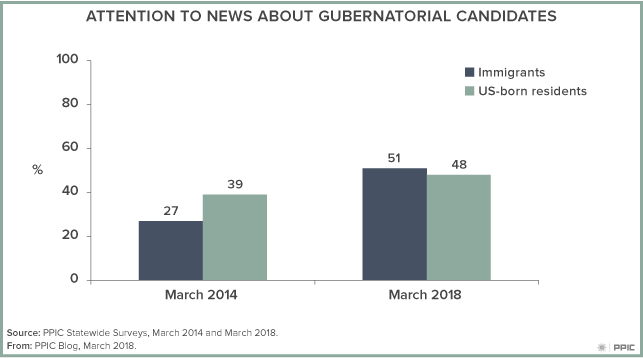
Typically, California’s immigrants are less interested in politics than their US born counterparts. But not when it comes to the 2018 election cycle. Among likely voters in our current survey, immigrants and nonimmigrants are similarly likely to be following the news about gubernatorial candidates “very” or “fairly” closely (51% immigrants, 48% US born). Both groups say that voting this year is more important than in past midterm elections (47% immigrants, 51% US born). Perhaps most telling for this year, both likely voter groups mention immigration and illegal immigration when asked about the issue that they would most like to hear the gubernatorial candidates talk about before the June primary (23% immigrants, 23% US born).
When it comes to current candidate choices, we do see some divergence between immigrant and US-born likely voters:

  • Democrat Gavin Newsom slightly trails Democrat Antonio Villaraigosa among immigrants (17% to 23%), while he is favored by three to one over Villaraigosa among nonimmigrants (30% to 9%).
  • Republican John Cox does equally well with both groups (15% immigrants, 14% US born).
  • Democrat Dianne Feinstein is favored by large margins over Democrat Kevin de León both among immigrants (50% to 18%) and nonimmigrants (40% to 16%). She has a higher approval rating among immigrants than nonimmigrants (68% to 51%).
  • Immigrants are more likely than nonimmigrants to favor the Democratic candidates in their local House races (63% to 51%) and less likely to favor the Republican candidates (30% to 41%). Immigrants also give higher approval ratings than nonimmigrants to their current local House member (59% to 51%).

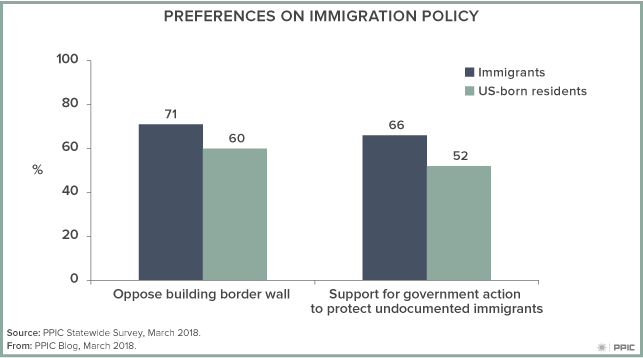
Despite these differences, immigrant and nonimmigrant Californians are aligned in their views of the current policy landscape. Majorities in both likely voter groups disapprove of President Donald Trump (63% immigrants, 60% US born), oppose the new federal tax law (65% immigrants, 56% US born), want gun laws to be stricter (82% immigrants, 67% US born), and oppose building a wall along the entire border with Mexico (71% immigrants, 60% US born). When it comes to state and local governments making their own policies and taking action separate from the federal government, majorities in both likely voter groups say they are in favor of protecting the legal rights of undocumented immigrants (66% immigrants, 52% US born).
One of the political wildcards in this California mid-term election is whether the strong opposition to federal immigration policy will motivate more naturalized citizens to vote and more noncitizens to become citizens and register to vote. As noted earlier, immigrants make up a larger share of the state’s population than is reflected in the likely voter group—leaving much room for growth that could transform the state’s electorate. The PPIC Statewide Survey will be closely monitoring the trends in political engagement and ballot choices in this consequential election for California and the nation.

The 2020 Census Is Critical for California

The decennial census plays an essential role in American democracy. Most fundamentally, it ensures that communities get the right number of representatives in government. Less well known is the role it plays in determining how hundreds of billions of federal dollars are allocated to states and localities for a wide range of public services, including health care and child nutrition programs.

Although census information is essential, the Census Bureau is currently budget constrained, behind schedule, and scaling back the number of full-scale test runs it was planning. This is of particular concern since several key changes to the census process are in the works: the majority of census information will be collected online, resources for door-to-door outreach may be reduced, and a question about immigration status will be added to the official questionnaire. These and other factors increase the potential for an undercount, especially among vulnerable populations. Just today, California Attorney General Xavier Becerra has filed a lawsuit over this issue.

Why are the stakes so high? A significant undercount could cost California political representation in Congress at a time of record polarization and a deep partisan divide over the direction of the state and the nation. Critical decisions that affect California’s future will be determined to a large extent by federal rules on such issues as climate change, health care, and immigration.

An undercount also means that an important amount of federal funding could dry up. Federal, state, and local government programs that target disadvantaged neighborhoods or populations rely critically on census surveys to identify those in need and distribute funds accordingly. For example, two programs crucial to the health and well-being of children in California—the Children’s Health Insurance Program and the Women, Infants, and Children program—rely on population estimates that use the decennial census count as a baseline for population estimates with which they aim to accurately allocate funds across states.

The impact on California could be huge—and 2020 is fast approaching. At a time when objective facts and information are in short supply, PPIC will be working to raise awareness about the importance of the 2020 Census for California and motivate elected leaders and organizations across the state to work together to ensure an accurate count. Stay tuned for more facts and analysis of the 2020 Census from PPIC.

Video: Assessing California’s Redistricting Commission

The creation of the Citizen Redistricting Commission (CRC) in 2008 marked a radical departure for California. This shift of responsibility for drawing state assembly, state senate, and US congressional districts from the state legislature to an independent commission also put California ahead of the national curve. Very few states have adopted a similar model, though many may be considering it—particularly in light of two US Supreme Court cases that could establish a legal standard for partisan gerrymandering. For California and for other states, partisan fairness and competitiveness should be important aims of redistricting reform.

A new PPIC report examines whether the commission’s first plan achieved these aims by analyzing recent election outcomes and putting them in national context. Researcher Eric McGhee described his analysis in Sacramento last week and outlined some key findings.

  • The CRC largely satisfied expectations that it would draw state legislative and congressional districts that are fair to the major parties and increase electoral competitiveness.
  • While Democrats have a greater advantage under the CRC plan than they did under the 2001 plan drawn by the legislature, this advantage is very small.
  • The CRC districts are somewhat more competitive than the districts drawn by the legislature. Competitiveness in state legislative districts remains low compared to other states, but the CRC congressional plan is among the most competitive in the country.

The report also notes that the CRC has moved California in the opposite direction from the rest of the country: other state plans are on average more favorable to Republicans and less competitive than plans from the last round of redistricting.

McGhee recommends that future commissions use more data to help them produce competitive and fair maps. He also recommends using sophisticated methods for automatically drawing redistricting plans.

California Makes Progress on Water Accounting

California’s water accounting system—the balance sheet of where and when water is available and how it is being used—lacks common standards, suffers from major data gaps, and is in need of modernization. A 2016 law, the Open and Transparent Water Data Act (AB 1755), directed several state agencies to improve this system. The Department of Water Resources (DWR)―in concert with other state agencies, non-governmental organizations, and universities―is taking the charge seriously and has set ambitious objectives to be completed within a tight timeframe.

The law requires California to create a statewide system for organizing and sharing water data by September 2019. Currently, water-related datasets are stored in many ways, including on public websites, on non-public servers, and even in paper filing systems. The proposed system will make it easier to find and use the data needed for water management, consolidating datasets into several agency-level collections and allowing users to search from a centralized search engine―similar to how an inter-library loan system works.

DWR collaborated with several research institutions to develop guidance for implementing AB 1755. The researchers examined how local, state, and federal water managers, businesses, community groups, and environmental organizations currently use water data to make decisions. Their findings highlighted situations where better data organization could lead to more efficient and effective decision making.

“We recommend that the new system be designed to reflect real-world water management decisions, to ensure that the final product is relevant and useful to water managers and other stakeholders,” said Alida Cantor of Portland State University, who led the research on behalf of UC Berkeley’s Center for Law, Energy & the Environment.

Beyond problems of data organization, California also has some major data gaps, including accounting for groundwater use and recharge, managing water for ecosystems, and assessing rural communities’ access to safe drinking water.

While AB 1755 doesn’t require the state to fill these data gaps, the new guidance by research institutions has improved understanding and flagged some specific gaps that hinder management decisions.

For example, information on surface water rights and the location of many groundwater wells is not in easily accessible formats. And streamflow monitoring is unavailable for many important aquatic ecosystems. These three data gaps make it difficult for regulatory agencies to permit water trading between water users and the environment—a way to dedicate water to improve the in-stream environment. A current legislative proposal would have the state take a closer look at where more stream gages are needed.

AB 1755 is a “foundational first step” in the path toward better accounting for California’s water, according to Mike Kiparsky, director of UC Berkeley’s Wheeler Water Institute, who helped develop the new guidance. DWR and its partners will prepare a final strategic plan for the new statewide data system in spring 2018. This may also be an opportune moment to take a closer look at high-priority data gaps and develop concrete plans to address them.

Learn more


Californians and the Gas Tax Repeal

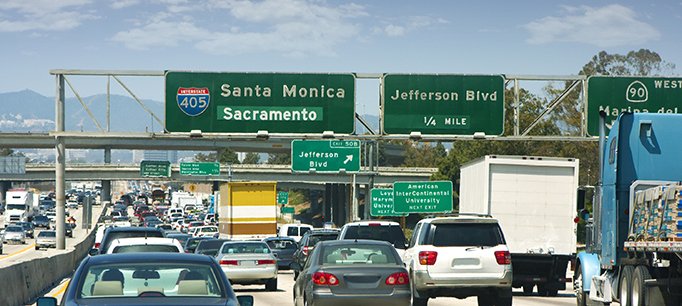
Governor Brown’s 2018–19 budget proposal includes a large boost to transportation funding because of recently passed legislation. In 2017, California raised the gas tax for the first time in 23 years, increasing gasoline and diesel fuel by 12 and 20 cents per gallon, respectively. The state also created a new annual fee based on vehicle value. The taxes and fees are estimated to raise over $4.6 billion in the next year to repair state and local roads, highways, and bridges, and to strengthen mass transit. However, a Republican-led initiative to repeal the bill continues to collect signatures to qualify for the November ballot.

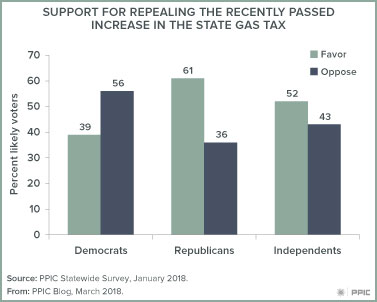
In January, the PPIC Statewide Survey asked whether Californians favor a repeal of the recently passed increase in the gas tax. We found California’s likely voters are divided, with 47% favoring repeal and 48% opposed. But there are partisan differences: 61% of Republican and 52% of independent likely voters favor a repeal, compared to 39% of Democrats. Regionally, Republican (68%) and independent (60%) likely voters on the southern coast are the most likely to favor a repeal, while inland Democrats (62%) are the most likely to oppose it. We also saw strong partisan disparities on the importance of repeal in our December survey: among likely voters, Republicans (85%) were far more likely than independents (46%) and Democrats (36%) to say repeal of the recently passed gas tax was very important to them.

Opponents of the repeal argue that the gas tax increase was necessary to fund much-need repairs to the state’s infrastructure. Conversely, proponents—in addition to generally opposing tax increases—reason the state is well situated to fund transportation projects through other funding sources. For example, Republicans in the state assembly have introduced a measure that would dedicate at least 2% of General Fund revenues to infrastructure projects.

Changes to federal policy could also affect the state’s transportation funding. Last month, the White House released a plan that aims to generate an unprecedented $1.5 trillion—including an allocation of $200 billion in federal spending over the next decade—to repair and upgrade the nation’s infrastructure. To be eligible for matching federal funds, California would need its own state and local revenue streams, whether through the new gas tax or other sources. The White House also expressed interest in raising fuel taxes by 25 cents per gallon to help pay for the plan. This would represent the first increase at the federal level since 1993 and could create an additional burden for Californians, who already face one of the highest gas prices in the nation.

As California engages in its ongoing debate over how best to fund transportation projects, upcoming federal and state policy decisions may have major consequences for residents.

Californians and Sacramento’s Handling of Misconduct

During fall 2017, the #MeToo movement took the entertainment, sports, and business worlds by storm. Statehouses across the nation were also affected. Here in California, allegations of sexual harassment came to light and have led to resignations, including the recent resignation of State Senator Tony Mendoza, who was on the precipice of a formal expulsion vote. No member of the California Legislature has been expelled since 1905.

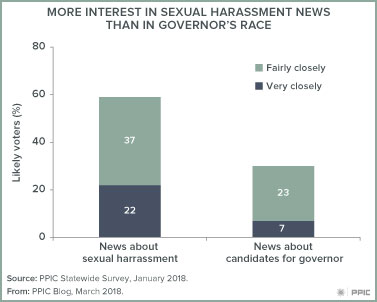
In our January survey, prior to this latest development, we found that nearly half of Californians are following news about sexual harassment and misconduct in the state legislature very (18%) or fairly (28%) closely. Women (49%) and men (43%) are similar in how closely they were following the news.

Interest in this topic is bipartisan: most Democrats (56%) and Republicans (56%) are closely following this story. However, Democrats are about twice as likely to be following it very closely.

Interest is also widespread: more likely voters (59%) are closely following news about sexual harassment than about candidates for governor (30%).

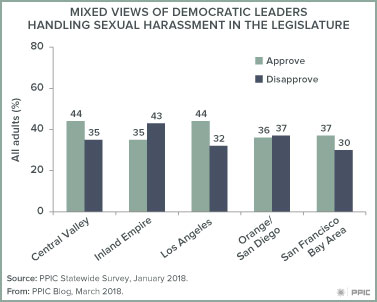
How are Democratic leaders handling the issue of sexual harassment in the statehouse? Californians’ opinions are divided (39% approve, 36% disapprove), with 25 percent unsure. Notably, women (40% approve) and men (38% approve) hold similar views. Similarly, fewer than half of Californians across regions and age, education, income, and racial/ethnic groups approve of the way Democratic leaders are handling the issue. Not too surprisingly, Democrats (52%) are nearly twice as likely as independents (28%) and three times as likely as Republicans (18%) to approve.
So far, the issue of sexual harassment in Sacramento hasn’t played a large role in the primary races. Stay tuned to see if that changes as the June election draws closer.


Californians and DACA

In September, the Trump administration announced an end to the DACA (Deferred Action for Childhood Arrivals) program, which includes protections for some undocumented immigrants who were brought to the United States as children. Under DACA, those who qualify and pass a background check can receive protection from deportation and a work permit. California is home to about 223,000 DACA recipients—more than one-fourth of the national total.

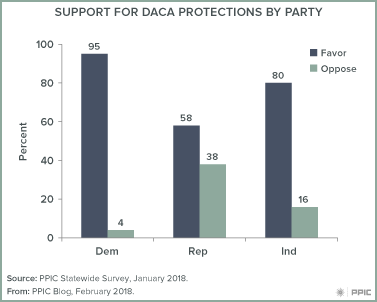
The administration and Congress have been negotiating a potential compromise that would preserve DACA protections for qualifying individuals. In January, the PPIC Statewide Survey found that 85% of adults and 81% of likely voters in California favor the protections offered by DACA. Recent surveys by ABC/Washington Post and CNN have found similarly high levels of support for DACA among adults nationwide. In California, support has increased slightly since September, when three-quarters of adults and likely voters were in favor of DACA protections.

In today’s politically polarized environment, it is notable that majorities of California Democrats, Republicans, and independents support the DACA program. In PPIC’s January survey, we find that while Republicans are less likely than Democrats and independents to support DACA protections, a solid majority (58%) are in favor. Indeed, DACA has a high level of support across the state’s regions and demographic groups, with at least three in four adults in favor. Results were similar in September, when strong majorities across parties and at least seven in ten across demographic and regional groups expressed support.
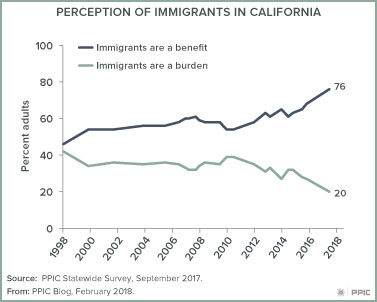
The high levels of support for DACA are perhaps unsurprising given Californians’ shifting attitudes toward immigrants. In PPIC’s September survey, three in four Californians (76%) said that immigrants are a benefit to the state because of their hard work and job skills—a high mark in PPIC surveys. Only 20% said immigrants are a burden because they use public services. Indeed, Californians are now far more likely to see immigrants as a benefit than they were in April 1998 when we first asked this question (46% benefit, 42% burden).
Interestingly, this shift in attitudes is not unique to California. In a June 2017 survey of adults nationwide, the Pew Research Center found that 65% of adults thought immigrants strengthened the country, while 26% felt immigrants burdened the country. This is a stark contrast to 1994, when only 31% of adults nationwide felt immigrants strengthened the country and 63% said they were a burden. As the debate on DACA and immigration policy continues, looking at changes in public attitudes on this issue can highlight areas of potential compromise for policymakers.


Examining the Federal EITC’s Impact on Poverty

The federal Earned Income Tax Credit (EITC) plays an important role in keeping Californians out of poverty. The credit supplements earnings for low-income workers at tax time, providing $2,400 on average to qualified tax filers.

Without the EITC, we estimate an additional 814,000 Californians would live in poverty, according to the latest data from the California Poverty Measure (CPM), an ongoing collaboration between PPIC and the Stanford Center on Poverty and Inequality. This reduction in poverty makes the EITC nearly comparable to CalFresh (formerly known as food stamps), the safety net program that keeps the most Californians out of poverty. Our estimates reflect data from 2013 to 2015 and do not include the state EITC, which was introduced in 2015 and expanded in 2017. The state EITC lowers poverty by very little because the largest credits go to workers with very low earnings, whose families mostly live well below the poverty line.

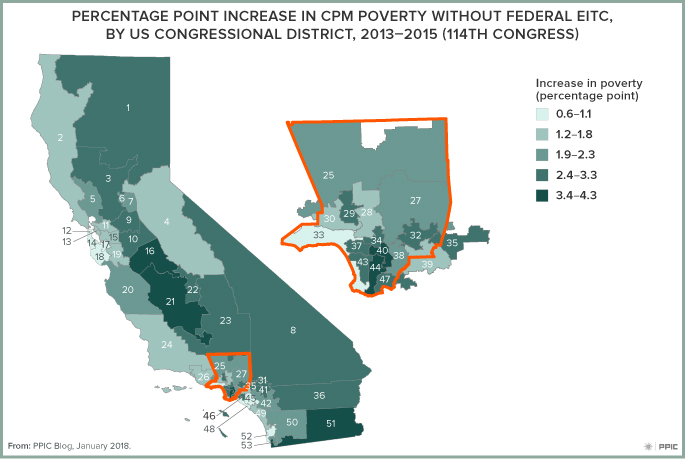
The role that the EITC plays varies widely across regions. Statewide, the poverty rate would be 2.2 percentage points higher without the EITC (22.6% instead of 20.4%). But in Lake and Mendocino Counties (combined), the poverty rate without the EITC would be 4.1 percentage points higher than it is currently, reaching 26.8%. Poverty in Marin County, on the other hand, would increase only 0.2 points, to 16.5%. Such differences could be due to several factors—for example, the share of eligible families who take advantage of the credit and the local availability of jobs.

PPIC recently released data showing poverty rates, poverty thresholds, and the effects of safety net programs not only by county, but also by state assembly and senate district and by US congressional district. These data provide an opportunity to dig more deeply into the varying roles of safety net programs across the state.

The EITC, for example, has the largest effect in some of the highest-poverty congressional districts, including District 40 (Rep. Roybal-Allard) and District 44 (Rep. Barragán). But in some relatively high-poverty districts it plays a smaller role (District 46, Rep. Correa). The data we provide can be a starting point for investigating—and potentially remedying—incomplete access to the EITC.


Commentary: Will California’s Pot Law Limit Illegal Marijuana Sales?

This commentary was published in Newsweek on January 2, 2018.

The new year brings with it a new age of legal marijuana: As of Monday, the growing, sale and use of recreational cannabis in California is now legal for individuals over the age of 21. But will it change much in the state?

Read the full commentary on newsweek.com.

Video: John Cox’s Priorities

Businessman John Cox, candidate for governor in 2018, was asked in a San Francisco forum last week to name the top three issues that will have major consequences in California’s future. Mark Baldassare, PPIC president and CEO, posed the question, which has been answered by all gubernatorial candidates appearing before PPIC audiences.

Cox said his top priorities are:

  • Removing the “corruptive” influence of special interest money. “The idea that special interests fund the campaigns of people they are looking to to get things done—it’s an indefensible system,” he said. “I don’t necessarily think that we send a whole bunch of corrupt people to Sacramento,” he said. “The trouble is, it’s a corrupt structure.” Legislators, he said, “are almost required to be professional fundraisers.”
  • Making the state more affordable and improving the business climate. The cost of housing, electricity, gasoline—the essentials to quality of life—are pushing the middle class into “almost-poverty situations,” Cox said, adding that improving the business climate is also essential so that the state can grow.
  • Addressing state employee pension debt. Cox said an overly generous legislature as well as governors and special interests have created a “debt bomb.” Our unfounded pension debt is a “sword of Damocles hanging over our economy,” he said.

How would Cox diminish the influence of special interests? He is sponsoring the Neighborhood Legislature Reform Act, which he hopes to qualify for the statewide ballot. The initiative calls for carving up each assembly and state senate district into 100 neighborhoods, each with its own representative. The 100 representatives in each neighborhood district would meet to choose one to go to Sacramento. In other words, there would still be just 120 legislators meeting in the Capitol. With districts that number just a few thousand households, candidates could run campaigns with a few hundred dollars, Cox said. The idea, he said, is that “you don’t need money to run a race.”

The conversation with Cox is part of the PPIC Speaker Series on California’s Future. PPIC is inviting all major candidates for governor to participate if they reach a certain threshold in the polls. The goal is to give Californians a better understanding of how the candidates intend to address the challenges facing our state.

Watch all candidate videos.