The State of Wildfire Risk Reduction in California

After a few horrific years of extreme wildfires, California has been taking steps to reduce future risks with new programs, increased funding, and new policy efforts. We talked to Van Butsic—a land use scientist at UC Berkeley and an adjunct fellow at the PPIC Water Policy Center—about these efforts.

PPIC: Is California doing enough to manage its forests and reduce wildfire risk?

Van Butsic: Probably not, but it’s definitely doing a lot more than it was five years ago. The state has made a substantial effort to deal with the issues around wildfires—just not yet at the scale needed to get big results.

The state has been pretty active in the past year on addressing some of the shortcomings of federal forest management—the federal government is the biggest landowner of California’s headwater forests. One interesting thing the state is doing is using some funding—about $200 million a year—from the Greenhouse Gas Reduction Fund on fuel reduction projects. These projects are managed by multiple stakeholders, and many are on federal lands.

PPIC: The Newsom administration has taken additional steps to address wildfire risk. Where do you think they’re on the right track? What elements are still needed?

VB: They’re doing a better job in realizing we need to have more hands-on management. Governor Newsom issued an emergency order that reduced environmental review for a handful of fuel reduction projects, which means they can take place a little quicker and address fire risk this season. And they’re investing a bit more money in fire suppression.

I’d like to see more work in building community wildfire resilience across the state. We need stronger policies that start at the house and work outward—to ensure that homes are hardened against wildfires (for example, with more fire-resistant roofing materials) and have defensible space around them. Most importantly, we need a systematic plan to prevent further expansion of communities into areas where catastrophic wildfires are a risk.

PPIC: Talk about new funding tools that can help improve forest health.

VB: One approach being considered depends on the state’s willingness to pay for measures to reduce the risk of big wildfires as part of its effort to reduce carbon emissions. The idea would be to use the carbon market to fund forest management practices.

A second area where we’re seeing bit of action is on water issues. Forest thinning can in some cases lead to more water in streams. We’ve seen a few projects that fund forest management activities in hopes of getting more water as a benefit. The big question is, how much more water will you get by thinning forests? It’s a pretty complex question that has to do with existing vegetation and the elevation of the land. It’s a bit of a challenge to find the sweet spot—the science isn’t settled yet on where forest management can increase water yield.

PPIC: What about fire risk outside the headwaters?

California has many forest types and landscapes that are prone to wildfire. Many of our larger wildfires have been in the Sierra headwater forests, which are currently too dense—they’re primed for large, high severity wildfires, and we need to address this problem.

But many of the homes impacted by wildfires in the past decade are not in traditional headwater forest areas. Managing these risks is really different from managing forests—it requires different policies and funding. Building codes are one way, but they’re mostly devised at the local level and aren’t uniform—some municipalities have better fire-resistance standards. The state does fire-severity-zone mapping, but not a lot of local governments are paying attention to that. I’m not sure what the state’s role should be in that regard. I’ve done some work in France, where the federal government says where you can and can’t develop in areas prone to wildfire, and as a result they have far fewer homes in at-risk areas. I’m not sure if that’s a tradeoff Californians would be willing to make.

Training California’s Students for Well-Paying Jobs

California’s community college system is the largest provider of career education—also known as career technical education or vocational education—in the state. Career education programs play a critical role in training students, especially underserved and nontraditional students, for jobs that provide solid wages but don’t require a four-year college degree.

How can colleges identify these jobs? In a recent PPIC report, we compare occupational earnings to regional poverty thresholds to assess how future workforce needs connect to well-paying jobs that don’t require a four-year degree. Other work by the Brookings Institute focuses on “opportunity industries,” in which good jobs—those that provide stable employment, middle-class wages, and benefits—represent an above-average share of the industry’s total jobs and are filled by workers with only some college training.

Opportunity industries are largely concentrated in fields that align with many of the community colleges’ career education disciplines, including business, engineering, health, information technology (IT), and public and protective services. A critical question is whether students are successfully completing programs that will prepare them for careers in these fields.

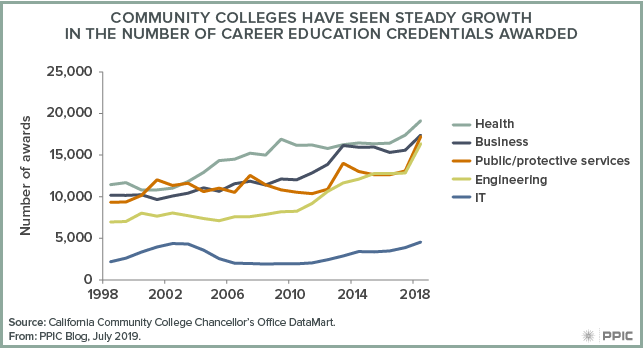
The good news is that over the past 20 years, there has been a consistent upward trend in the completion of career education credentials in California’s community colleges, with major gains observed in the last decade. This increase spans industries. Notably, more degrees and certificates are being earned in health than in any other discipline—this is important since health credentials are especially valuable in increasing students’ subsequent earnings.

Figure - Community Colleges Have Seen Steady Growth in the Number of Career Education Credentials Awarded

But not all credentials are associated with large economic gains. For example, in our analysis of wage returns, we find that career education credentials in business and IT do not provide much of a wage boost.

Furthermore, there seems to be a mismatch between the awards with the most value and the awards students are earning. While awards from longer programs generally tend to confer more value than those from shorter ones, completion of short-term awards has increased in several career education disciplines.

Community colleges and industry partners need to work together to ensure students have a path to well-paying jobs and the tools needed to succeed. As shown in our research, some of that work begins with colleges structuring effective pathways to these industries and clearly communicating the economic returns and opportunities available to students.

Moreover, strong partnerships between community colleges and nearby industries will be essential in creating a bridge between students and their industry of choice. Ultimately, these efforts can help improve the economic well-being of individual students and the state as a whole.

An Opportunity to Restore Fish Abundance on the Eel River

This is part of a series on issues facing California’s rivers.

The Eel River—once home to the state’s third-largest salmon and steelhead runs, all of which are now listed as threatened―may see the return of healthy fisheries in coming years. A unique opportunity to remove a dam that blocks fish from reaching spawning habitat has arisen. We talked to Curtis Knight, executive director of CalTrout, about the situation.

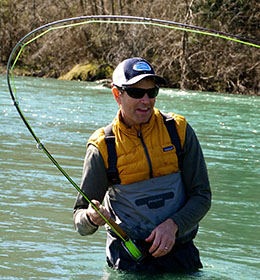
photo - Curtis Knight

PPIC:  Why is the Eel River important for California fisheries?

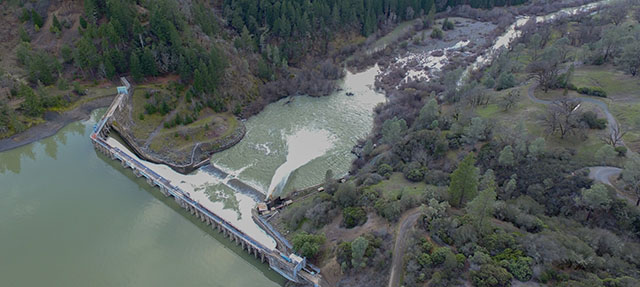
Curtis Knight: This a complex system that involves two of the biggest coastal watersheds in the state—the Russian River and the Eel River. The Eel presents the best opportunity to restore historic fish abundance in California. The river is blocked by two aging dams—Cape Horn Dam, which diverts water from the Eel to the Russian River for hydropower and other uses and has limited fish passage, and Scott Dam, which has no fish passage and blocks important upper watershed fish habitat. Scott Dam is owned by PG&E, which is attempting to divest itself of the project. This presents an opportunity to reestablish fish into the upper Eel basin.

On the Russian River side, irrigators and others benefit from the water diversions. This water is used to grow crops like wine grapes and keep the river flowing for endangered species and recreation.

On the Eel River side, it’s all about wild fish. Getting fish into the upper watershed above the dam is a top priority for local tribes, NGOs, and others. We did an assessment with Humboldt State University that found more than 150 miles of quality habitat for salmon and steelhead above Scott Dam. This stretch includes high elevation habitat that is rare in the coastal range. Getting salmon and steelhead into this cold-water region will be increasingly important for these fish in a warming climate.

Congressman Jared Huffman has formed a committee to develop recommendations as part of the Federal Energy Regulatory Commission’s (FERC) dam relicensing process for this project. The committee’s goals are to improve fish passage and habitat on the Eel to support naturally reproducing and harvestable native fish populations and to minimize impacts to water supply reliability, fisheries, water quality, and recreation in both basins.

The committee is looking at various fish passage alternatives, but Scott Dam is tall, which makes fish ladders—step-like pools to enable fish to cross the dam—really expensive and not very effective. Trucking fish around the dam, as is done in some watersheds, is also being explored, but in my opinion is not sustainable and won’t lead to fish abundance. Removing Scott Dam would clearly be the best way to restore fish abundance in the Eel River.

PPIC: Is there concern about losing both the water and the energy?

CK: The project doesn’t produce much power. The real value is the water. PG&E is walking away from the project in part because they lose roughly $5 million per year operating it.

On July 1, Humboldt County, Sonoma Water, the Mendocino Inland Water and Power Commission, and California Trout applied to take over the dam relicensing process from PG&E. The purpose is to work toward the two-basin solution and ensure the future of the project is determined locally.

Congressman Huffman’s committee will play a central role in determining what the project will ultimately look like. But one idea is to remove Scott Dam while still diverting water to the Russian River during the winter via Cape Horn Dam. Fish passage would have to be improved at Cape Horn and there are Russian River interests that would need to be met. The loss of water storage from Scott Dam can potentially be offset by storing Eel River water in Lake Mendocino. This would certainly be a good scenario for Eel River fish, but there are still some challenges to overcome.

So while there is still a long way to go, we are confident we will come up with a locally derived solution that meets the needs of fish and people in both the Russian and Eel Rivers.

Photo credit: Mike Wier, California Trout

K–12 Education and the New State Budget

The recently enacted 2019–20 budget allocates 28% of the total state budget for all K–12 education programs: $103.4 billion ($58.8 billion from the General Fund). Proposition 98, passed by the voters in 1988, establishes a minimum annual funding level for K–12 schools and community colleges. This year, the Proposition 98 funding level is $81.1 billion, bringing K–12 per-pupil expenditures to nearly $12,000. According to the Department of Finance, total per-pupil funding, including all federal, state, and local sources amounts to $17,423.

In addition, the rainy day fund requires the state to set aside savings for future education spending based on specific criteria, including General Fund tax revenue and Proposition 98 funding levels. This year, for the first time ever, the budget triggers a deposit into Public School System Stabilization Account at $376.5 million.

figure - K-12 Funding Is at a New High

The Local Control Funding Formula (LCFF) is the primary manner in which funds are distributed to support students. This year’s budget brings the total LCFF funding to nearly $63 billion, a $1.9 billion increase from last year, accounting for a statutory cost-of-living adjustment.

This year’s enacted budget also includes funding to address a wide range of concerns, including pensions, special education, and full-day kindergarten. For teacher pensions (CalSTRS), the budget pays down the state’s ($2.9 billion) and the districts’ share ($1.6 billion) of the unfunded liability. Another $500 million for fiscal year 2019–20 reduces by 1.03% school districts’ contribution rate to CalSTRS and CalPERS (pensions for public employees). The budget adds $350 million to reduce that contribution rate by an additional 0.7% in 2020–21.

The budget aims to mitigate rising special education costs to districts by adding more than $600 million to support students with disabilities.

A $300 million one-time payment goes to the Full-Day Kindergarten Facilities Grant program, which allows districts to construct new facilities or retrofit preexisting ones for the purposes of ensuring access to full-day kindergarten.

Despite the record funding level this year, two longer-term finance issues loom. The CalSTRS funding plan, as governed by AB 1469, has set school districts’ share of teacher pension costs to increase to 18.1% in 2019–20 and to 19.1% by 2020–21. While the budget’s funding toward the districts’ contribution rate will provide much-needed relief, growing pension costs will remain challenging.

Finally, in a time of growing costs, declining student enrollment is hampering districts across the state. Over the past five years, nearly half of all districts experienced enrollment losses—and this trend may continue over the next decade. Given that the state’s funding model is based on average daily attendance, declining enrollment is likely to persist as an important fiscal issue over the long run.

California’s Brain Gain Continues

[vc_row][vc_column][vc_column_text]California’s heyday of rapid population growth—the post-World War II era—was fueled by millions of migrants coming to the state from the rest of the country. Those days are long gone. California’s population continues to grow (through births and international migration), but every year it loses tens of thousands of people to other states. And yet there is one group that California continues to attract: college graduates.

This interstate migration pattern—gaining large numbers of college graduates while losing large numbers of less educated adults—doesn’t happen anywhere else in the country. Over the past five years, California has attracted 162,000 more college graduates (adults with at least a bachelor’s degree) from other states than it has lost. Over the same period, the University of California (UC) awarded about 300,000 bachelor’s degrees at its nine undergraduate campuses. In other words, interstate migration provides California with half as many college graduates as the entire UC system.

figure - California Gains College Graduates While Losing Less Educated Adults

College  graduates  come  to  California  from  all  over,  but  eight  states send California substantially more college graduates than they get in return. Between 2012 and 2017, net gains of college graduates from New York (51,000), Illinois (31,000), Pennsylvania (24,000), New Jersey (20,000), Massachusetts (20,000), Florida (16,000), Michigan (13,000), and Ohio (11,000) totaled more than 186,000. California experienced smaller but still sizable net losses (totaling 80,000) to five states: Texas (29,000), Oregon (16,000), Nevada (13,000), Arizona (12,000), and Washington (10,000).

The new migrants to California tend to be quite young. Indeed, college graduates age 20–29 account for almost all of the net gains. (In contrast, California experiences small net losses of older college graduates.) From a labor market perspective, attracting young college graduates is especially advantageous. Young adults with college degrees are at the start of their careers and provide the state with much-needed highly educated workers.

figure - College Graduates Moving To California Tend To Be Young

In fact, college graduates moving to California are more likely to be employed than those leaving the state. The largest gains are primarily in majors that are in relatively high demand in the labor market, including engineering (33,000), communications (18,000), business (18,000), and computer science (17,000).

The migration of young college graduates to California is a consequence of the state’s growing demand for highly skilled and highly educated workers. But the numbers are not high enough to fully meet the state’s changing needs. Although many college graduates move to California from other states, the most important source of highly educated workers in California are the state’s own colleges and universities. Policies and practices to improve college access and completion in the state will ensure that more Californians are able to help create and benefit from a strong economy.[/vc_column_text][/vc_column][/vc_row]

Got Surface Water? Groundwater-Only Lands in the San Joaquin Valley

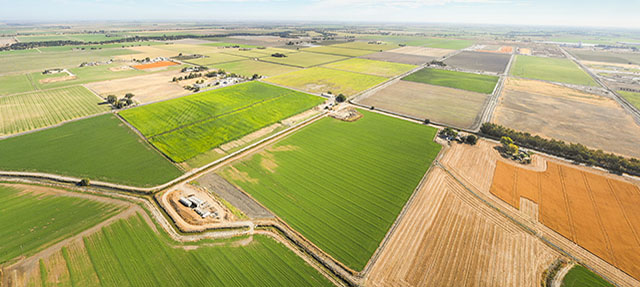
The San Joaquin Valley—California’s largest agricultural region—has the largest groundwater deficit in the state. However, water scarcity is not experienced equally across the valley. Some areas receive abundant surface water to support cropland irrigation and drinking water supplies. Most others supplement their use with groundwater. Still others have no surface water access and depend entirely on groundwater. Water users in these groundwater-only areas are particularly vulnerable to pumping restrictions under the Sustainable Groundwater Management Act (SGMA)—the state-mandated effort to balance groundwater basins.

The map below gives a broad view of where the groundwater-only agricultural lands are located in the San Joaquin Valley. These areas are present in each basin; they include irrigated cropland (shown in red on the map) as well as rangeland and other open space (shown in gold).

figure - Nearly 20% of Irrigated Cropland in the San Joaquin Valley Relies Entirely on Groundwater

We estimate that nearly 20%—or 840,000 acres—of irrigated cropland in the valley has no access to surface water. Crops are similar in groundwater-only lands and lands that have at least some access to surface water: more than half are planted with permanent fruit and nut crops. These crops provide higher revenues and employment than most annual crops. With groundwater cuts looming and no other water supply to fall back on, groundwater-only areas are on the front line of the effort to bring basins into balance. Inflexible approaches to managing this transition could result in unnecessarily large, undesirable reductions in high-value crop acreage, regional employment, and GDP.

Cooperative approaches to water management can give flexibility to groundwater-only areas and lessen the regional economic burden of reducing groundwater use. Facilitating local surface and groundwater trading would allow farmers who need more water for their orchards and other high-revenue crops to compensate other farmers for reducing their water use. Expanding surface water trading more broadly across the valley could bring down costs further and offer even more flexibility. And smart regional investments in new water supplies—particularly to capture more runoff from big storms and increase groundwater recharge—could offset some of the water use cutbacks expected in groundwater-only areas.

Cooperation will also be important to ensure adequate water supplies are available for the valley’s growing cities and small towns—most of which also rely heavily, if not entirely, on groundwater. Recharge partnerships that benefit communities are one promising way to do this.

Water conditions in San Joaquin Valley basins vary, from the size of a basin’s groundwater overdraft to the availability of surface water in the local supply mix. These variable conditions call for cooperation between those with access to surface water and those without. This will make it possible to lessen the costs of implementing sustainable groundwater management, a transition that will benefit the valley over the long run.

Video: Career Pathways and Economic Mobility at California’s Community Colleges

About a third of future jobs in California will require more than a high school diploma but less than a bachelor’s degree. By training workers for these jobs, career education—also known as career technical education or vocational training—plays an integral role in meeting California’s workforce needs and improving students’ economic well-being.

At an event in Sacramento last week, PPIC researcher Shannon McConville outlined the findings of a new report on career education and economic mobility, and a panel of experts discussed the implications for students, colleges, and the state as a whole.

McConville noted that completing a career education credential at a California community college confers a 20% wage gain, on average. But economic benefits vary greatly across program areas. For instance, returns to health credentials tend to be substantial, while business and IT credentials yield lower returns.

The panelists began by highlighting current efforts to improve students’ labor market outcomes. Marty Alvarado, executive vice chancellor for educational services at California’s community colleges, explained the system’s “two-pronged approach” to making sure programs connect to in-demand, high-return careers. One area of focus is regional infrastructure, which includes regional labor market centers that provide colleges with data on local industries. The second area includes tools to help students better navigate their program choices, “while also trying to make transparent the earnings projections for students as they move into these career options.”

Supporting students—especially low-income students from underrepresented demographic groups—in completing high-return credentials was another topic of conversation. Alvarado discussed efforts at the community colleges to streamline processes that may be creating “unnecessary barriers for students,” while Assemblymember Autumn Burke emphasized the importance of access to social safety net services so students can focus on their career.

Alma Salazar, senior vice president of the Center for Education Excellence and Talent Development at the Los Angeles Area Chamber of Commerce, noted that all stakeholders need to be involved. “How do we get the system as a whole to take ownership in helping us collectively solve for these problems? . . . It has to go beyond Sacramento. It has to go beyond the system’s leadership. It has to get to the institutional level and the people who work [there], who have to be equally committed.”

While many see the evolving nature of work and increasing automation as challenges, Assemblymember Burke was optimistic about providing a “just transition” for workers who may lose jobs in fast-changing industries. “We can train people for this new economy [and] prepare them now. . . . It’s a shortcoming to worry about losing minimum-wage jobs, because there’s so much opportunity on the other side.”

Interview: Citizenship and the 2020 Census

This post is part of a series examining challenges involved in the 2020 Census and what’s at stake for California. 

photo - Eric McGheeAfter a heated legal battle, the Supreme Court has ruled that the Trump administration cannot for now include a question on the 2020 Census asking if residents are US citizens. We spoke with PPIC senior fellow Eric McGhee about what this decision means for California.

PPIC: Why is the citizenship question controversial?

Eric McGhee: First, the question could significantly discourage responses among immigrants, who might fear the data would be used to target them. It didn’t go through the normal testing process for new questions, and many Census Bureau employees recommended against adding it because of concerns about data quality.

Second, the Trump administration says the question is necessary to properly enforce the Voting Rights Act. But advocates for immigrant communities dispute this justification and argue that current citizenship data is sufficient to protect against voting discrimination.

Third, it could have a huge impact on political representation and how congressional and state legislative districts are drawn. Districts are currently drawn based on total population. But this question could make it possible for states to use citizens or voting-eligible residents instead, which would tilt representation in favor of those groups.

PPIC: What does all this mean for California?

EM: Response rates will likely be better if the question is not added. But there’s also concern that the damage has already been done—immigrants still might not be inclined to respond. Immigrants make up about a quarter of California’s population, so we’re particularly vulnerable.

A large undercount could result in less federal funding for California. We’re also the only state at risk of losing a congressional seat from an undercount—other states with high immigrant populations like Arizona and Texas might not gain as many seats, but they probably won’t lose a seat they already have, even if there’s a bad count.

Households with undocumented members are the most likely to be undercounted. PPIC research looked at the possibility of a 10% undercount of these households, a reasonable assumption based on existing research. It would mean missing about half a million Californians.

The reality is that census data is thoroughly protected, even from law enforcement agencies like the FBI and ICE. But our May PPIC survey—conducted before the Supreme Court decision—found 63% of Californians were concerned the Census Bureau will not keep responses confidential. Latinos (74%), immigrants (71%), and African Americans (70%) were especially likely to be concerned.

There are other uncertainties too. The 2020 Census will use a new internet-based approach, which hasn’t been comprehensively tested. And people in general are becoming more reluctant to respond to the census. This means the bureau has to do more follow-up, which is expensive and increases the likelihood of problems arising.

PPIC: What can California do to ensure a complete and accurate count?

EM: California is way ahead of other states in terms of funds it has dedicated to census outreach. The state has already appropriated about $100 million to support a better count, and Governor Newsom has proposed another $50 million or so. Philanthropic organizations have chipped in about $30 million. There’s been a great deal of planning at the state and local levels to get the best count possible.

Addressing concerns about confidentiality could go a long way toward encouraging people to respond. Research also suggests that raising awareness about the census’s role in funding public services like health care, roads, highways, and fire and police departments is another promising approach.

Video: Recidivism of Felony Offenders in California

Over the past decade, California has implemented several corrections reforms—including public safety realignment in 2011 and Proposition 47 in 2014. The aim was to reduce incarceration levels and improve offender outcomes without reducing public safety. The rate of rearrest and reconviction, or recidivism—which has long been quite high in California—is an important indicator of the impact of the reforms. At a briefing in Sacramento last Thursday, PPIC researcher Mia Bird outlined the findings of a new report on recidivism among all types of felony offenders—including those sentenced to prison, jail only, jail followed by probation, or probation only.

Recidivism is often used to capture changes in reoffending in response to a policy change. However, it is important to note that these rates may also reflect changes in the practices of criminal justice agencies. The PPIC analysis, which draws on data collected from 12 representative counties, finds that overall recidivism rates for felony offenders declined between 2011 and 2015. Bird outlined several other key findings:

  • Rearrest and reconviction rates fell sharply for felony drug offenses; rearrest rates went up slightly among individuals convicted of offenses against a person (including violent offenses), but the reconviction rate did not change.
  • Recidivism rates declined for all four sentencing groups. Initially, there were increases in recidivism among individuals who were sentenced to probation, with or without jail time, but these rates decreased in later years and under Proposition 47.
  • Individuals released from prison had the highest reconviction rates; this finding is consistent with previous research that has found little evidence of a link between more-severe sanctions and lower recidivism.
  • Rearrest rates for felony offenses increased in the last several months covered by the analysis.

Bird noted that there are several possible interpretations of these findings. There are grounds for optimism: “We do see that we’ve achieved a really large reduction in incarceration and we haven’t seen big increases in recidivism. In many ways that suggests that we’ve managed this transition quite well.”

However, she underlined the need to recognize that recidivism rates are linked to multiple factors: “They may partially represent individual behavior and they may partially represent criminal justice practice.”

Asked what the PPIC analysis indicates about future steps the state should take, Bird said, “Policy that supports data collection, data integration, and monitoring and evaluation . . . is essential. We know we can do better if we know more.”

The LA River and the Trade-Offs of Water Recycling

This is part of a series on issues facing California’s rivers.

After a very wet winter, California has been declared drought free. But planning for future water shortages has continued. In Los Angeles, Mayor Eric Garcetti recently announced a goal of 100% wastewater recycling by 2035 to help make city supplies drought proof.

While recycling wastewater helps cities adapt to a changing climate and prepare for droughts, it can have unintended consequences for local watersheds. In some cases, the growing use of recycled water could minimize or even eliminate flows from wastewater treatment plants into local rivers and streams and reduce ecological and recreational benefits. The Los Angeles River exemplifies this kind of trade-off: expanded water recycling will reduce the amount of treated wastewater flowing into this increasingly revitalized urban waterway.

The lower stretch of the river, which was converted into a concrete flood channel in the mid-1900s, is changing. Concrete has been removed from large stretches of the river and public parks and bike paths have been built along its banks, encouraging recreational use and increasing public interest in the river’s restoration. The river was declared a navigable water in 2010 and opened to kayaking the following year. It provides a vital refuge to a variety of riparian species that lost most of their habitat to channelization and urban development.

Last year, researchers from the Southern California Coastal Water Research Project (SCCWRP) launched a study to document the effects of reductions of treated wastewater on vulnerable species and habitats along the highly urbanized, 45-mile stretch of the lower river, as well as on recreational uses of the river. One of the project’s goals is to determine how these impacts could be offset by investments in river restoration and upstream mitigation projects.

The SCCWRP researchers plan to develop recommended seasonal flow targets for each section of the LA River. They will consider the balance between protecting the river’s ecological and recreational uses and local agencies’ desire to capture, divert, and recycle more water in the watershed. The study will also help inform a number of planning efforts, including One Water LA and the LA River Revitalization Master Plan.

Eric Stein, principal scientist with SCCWRP, emphasized that the project’s success is dependent on its collaborative nature. “We are bringing together agencies, municipalities, nonprofit organizations, and community groups to help explore alternative future scenarios and find innovative ways to balance potentially competing demands for water in the LA River,” he said.

The LA River watershed is only one example where a conflict between recycled water investments and downstream users is emerging. As the demand for recycled water grows and local agencies consider new projects, other watersheds could benefit from similar efforts to better understand the impacts of water recycling on the local ecology and downstream users.