Video: Californians’ Views of K–12 Education

Despite increases in state spending on K–12 education, most Californians say state funding for their local public schools is inadequate. And most support an extension of the Proposition 30 tax increase on higher incomes, as well as state and local school bonds. These are among the key findings in PPIC’s 12th annual survey on Californians and education that were presented in Sacramento last week by Lunna Lopes, survey research associate.

Lopes said that concerns about the quality of education are at a record-low 40 percent, and less than a third of Californians say that teacher quality is a big problem. Concern about a teacher shortage is higher, with a majority calling it a big problem.

Among the other findings discussed:

  • There are partisan divisions on Common Core, but public school parents are confident that it will help students be college ready and develop critical thinking skills.
  • Few Californians have heard about Local Control Funding Formula, but when presented with a short description of the policy, most are supportive.
  • Californians see preschool as important for K–12 success and most prefer to spend some of the state budget surplus on early childhood education programs.

California’s New Tax Credit

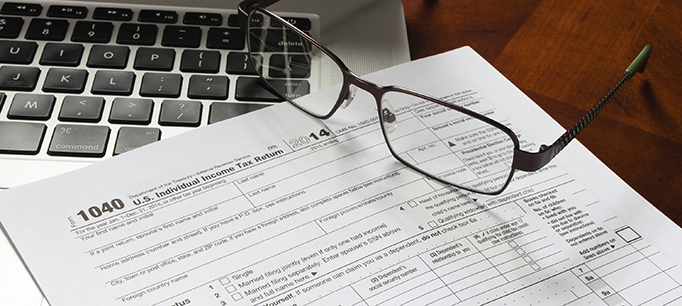
Starting this year, California tax filers with very low incomes from wages are now able to claim a tax credit that builds on the federal Earned Income Tax Credit (EITC). Californians without dependent children can claim the credit if their wages are less than about $7,000, and those with children can claim it if their wages are less than about $14,000.

California joins 25 other states that have their own EITCs. Since California’s credit is brand new, we do not yet know who will claim it. However, our research enables us to characterize the population of those likely eligible for the credit. These estimates are based on family characteristics and incomes reported for 2013.

About 3 million tax filers in California are eligible to claim the federal credit on behalf of themselves and their families. We project that roughly 600,000 filers will be eligible for the California EITC—or about a fifth of those eligible for the federal EITC. If we broaden the scope to include both filers and their family members who will also benefit from the credit, the number of Californians affected by the federal EITC increases to nearly 10 million and by the state credit to 2 million.

Single filers with dependents can generally claim the largest credit. Among those in this group who are eligible for the state EITC, we calculate that the state EITC amount is $932 on average and the federal EITC amount is $2,579, for a combined total of $3,511. This amounts to a 58% boost in earnings on average—20% from the state credit and 38% due to the federal credit. While these filers are working a substantial number of hours (29 hours per week on average), only 37% report working year round (48 weeks or more).

In contrast, single filers with dependents who are eligible only for the federal EITC because their earnings are too high to claim the state EITC see about a 16% increase in income. Compared to those who can claim the state EITC, those eligible only for the federal EITC typically work full time (40 hours a week on average) and year round (83% worked 48 weeks or more).

We know from the research literature that the federal EITC boosts family incomes both directly and indirectly by encouraging work. While it is still too early to assess the full impact of the new California EITC, this early glimpse suggests that the direct effects of the state EITC will be large, at least among a key group of filers eligible to claim the credit.

Californians’ Views on Taxes

As Tax Day approaches, how are Californians feeling about their state and local tax system? In our March PPIC Statewide Survey, most Californians see the system as fair. But when asked about their personal state and local tax burden, a majority of residents (56%) said they pay more than they should. A little over one-third of Californians (37%) said they pay the right amount in state and local taxes, while only 4% said they pay less than they should.

Opinions about taxes differ across political and demographic groups. Republicans are more likely than independents, and far more likely than Democrats, to feel they pay more than they should in taxes. Across racial/ethnic groups, blacks are the most likely to feel they pay more than they should in state and local taxes.

This year’s filing deadline reminds residents of their tax burden in the midst of an election year which will likely see Californians vote on state and local tax measures. In our survey, we found that Californians who feel they pay more than they should in taxes have different preferences for the size of government and the extension of Proposition 30 income tax on earnings over $250,000. Indeed, an overwhelming majority of Californians who feel they pay the right amount in taxes say they favor extending the Proposition 30 income tax increase to fund health care and education (80%). But less than half of those who feel they pay more than they should in taxes say the same (49%).

Perceived personal tax burden also appears to affect support for smaller government. Half of Californians who feel they pay more than they should say they prefer a smaller government with fewer services, compared to only a quarter of those who feel they pay the right amount in taxes (51% vs. 25%). Finally, when we asked if most Americans demand more from the government than they are willing to pay for, most Californians—whether they feel they pay too much in taxes or the right amount—said yes.

Though Tax Day reminds us of our personal tax burden every year, this annual reminder may take on added significance when Californians head to the polls this year to have their say on specific tax and spending measures.

Video: Lessons on Marijuana Regulation

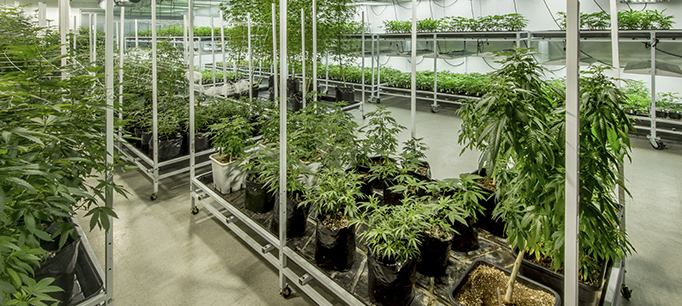
California may have much to learn from the first two states to legalize recreational marijuana—Washington and Colorado—if voters statewide approve legalization in November.

Patrick Murphy, coauthor of a PPIC report analyzing the experience of these states, presented its findings yesterday in Sacramento. The main takeaway: California should create a tightly regulated market—for medical and recreational uses—to control legal marijuana from “seed to sale.” The market should be flexible so that regulation can be adjusted as the state learns from experience—as both Washington and Colorado did.

Following Murphy’s presentation, regulators from Washington and Colorado and report coauthor John Carnevale, a drug policy consultant who has worked with four federal “drug czars,” talked about experiences of the two states. The panelists emphasized the need to start planning now to determine the information that would be needed for regulation because little is known about marijuana markets—the illegal one and the legal one for medical marijuana.

Taxation? Carnevale said, “It’s complicated.” Marijuana legalization involves balancing competing state goals—reducing demand among underage users and raising revenue for the state, for example. The price of legalized marijuana can have a range of effects on the illegal market: if the price of legal marijuana is low, the illegal market might disappear; a high price might help boost illegal sales; or the illegal market could continue as it is. Beyond that, taxes can be imposed at different points in production, licensing, and sales process.

“You can make this as complicated as you want in terms of the tax policy,” he said. “But, on the other hand, you have to somehow enforce that tax policy.”

In Colorado, the revenue from recreational marijuana sales is aimed at dealing with the effects of the law—for example, public health and addiction, said Lewis Koski, deputy senior director of the Colorado Department of Revenue.

Koski said that in 2014–15, the first year of legalization, the state collected $88 million in taxes for both medical and recreational marijuana. Halfway through this year, Colorado has collected almost as much.

Revenue generation was a big part of the argument in favor of legalizing marijuana in Washington, said Rick Garza, director of the Washington State Liquor and Cannabis Board. The state has no income tax and relies on “sin taxes”—tobacco, alcohol, and now cannabis—to generate revenue. Before the vote on legalization, the governor’s budget office estimated that the amount of revenue that would be collected over five years was between zero and $2 billion.

“You catch the zero part?” Garza asked. “No one else did. Everyone thought we were going to collect $2 billion.”

Washington state currently expects bring in be $1.25 billion over five years.

Video: Survey Looks at Taxes and Pensions

As interest groups work to turn their ideas into initiatives for next year’s statewide ballot, the September PPIC Statewide Survey examined Californians’ views in two areas that may be put before voters in 2016: taxes and public employee pension reform.

Mark Baldassare, PPIC president and CEO, and Dean Bonner, associate survey director, presented the findings at a briefing in Sacramento last week.

Among the survey findings:

  • Half of likely voters favor extending the tax increases in Proposition 30 temporarily, but just a third favor making them permanent.
  • There is bipartisan support for raising taxes on cigarette purchases.
  • A majority of likely voters favor changing Proposition 13 to tax commercial properties according to their current market value.
  • Solid majorities of Californians see public pension spending as a problem, and most think voters should weigh in on changes to the system.
  • Most likely voters favor placing new public employees in a defined contribution system, similar to a 401(k) plan, rather than a defined benefits system.

The survey shows that Californians give their state leaders—the governor, legislature, and their own legislators—high approval ratings at the close of the legislative session. Baldassare offered his explanation at the briefing: there was little drama around the budget, the economy’s going well, and very few respondents in the survey mentioned fiscal issues as the most important ones.

Congress, on the other hand fares far less well in Californians’ eyes. Its 17% rating is not only much lower than the ratings likely voters give their state leaders, it is much lower than those of President Obama, Senators Barbara Boxer and Dianne Feinstein, and Californians’ own representative in the US House.

“Congress is a government institution that needs work, according to most Californians,” Baldassare said.

Tax Increases and Voter Distrust

The California budget passed on time and without much drama this June, as tax revenues once again exceeded expectations because of the improving economy. The new budget will increase education spending, restore some human services funding cuts, pay down the government’s debt, increase the rainy day fund for future recessions, and support drought emergency funding—all without any new taxes. Still, many lawmakers and advocacy groups argue that the state’s tax system must change in order to generate adequate revenues for current spending while making future investments. In this context, the governor has called for special legislative sessions to find new funding for rising health care costs and transportation projects. At the same time, several interests groups are preparing tax initiatives for the November 2016 ballot.

Many political experts believe that the upcoming general election will be the most opportune time in the next four years to ask California voters to raise their taxes. The presidential race is likely to produce a high voter turnout and, specifically, a more youthful and liberal electorate with pro-tax leanings. Voters are currently in a relatively good mood about state leaders and their own finances.

In our May poll, we tested support for five tax proposals that are being considered by the legislature and tax proponents. Support among likely voters for four of the five proposals was underwhelming (41% sales tax extension, 46% Proposition 30 tax extension, 47% oil and natural gas severance tax, 50% commercial property tax increase, 67% cigarette tax increase). What explains voters’ reluctance to increase state taxes?

For one thing, despite improved fiscal conditions the widely-held perception that “the people in state government waste a lot of the money we pay in taxes” has hardly budged in four years (58% May 2011, 57% May 2015). Today, across all political and demographic groups, large proportions of likely voters say that there is a lot of wasted tax money.

Meanwhile, the perception that the state’s budget situation is a “big problem” is down sharply from four years ago (82% May 2011, 52% May 2015). Still, a majority holds this negative fiscal view even during these exceptionally good times. And there is an important connection between these two fiscal perceptions: among the likely voters who say the state’s budget situation is a big problem, 78% say that the people in state government waste a lot of tax money.

Notably, support for all five of the tax proposals is significantly lower among those who say that the state government wastes a lot of money. Even for the cigarette tax increase, two-thirds favor falls to 58% in this group, indicating that support for this popular tax proposal could erode in an election campaign. In sum, voter distrust will be a big hurdle for gaining majority support for new taxes in 2016.

Tax proponents may take solace in the fact that a majority of likely voters say that the state and local tax system is in need of major changes. However, support for making major tax changes has declined as the state’s budget situation has improved (65% January 2011, 54% May 2015). And the desire for major tax changes is tied to distrust: 70% with this view say that the state government wastes a lot of money.

Majority support for the Proposition 30 tax increase in November 2012 offers a textbook example of how the stars can align in a presidential election. But the PPIC poll tells us that voter distrust is a major obstacle even in good budget times. Voters will want assurances that current funds are well managed but inadequate—and that new taxes are needed for essential purposes. The special sessions could be a unique opportunity to begin a public dialogue about the fiscal ingredients necessary for creating a better future for all Californians.

Video: Mark Baldassare & John Myers Discuss the PPIC Survey

For the first time since the start of the PPIC Statewide Survey, Californians ranked the drought as the most important issue facing the state. And that was not the only “first” for this survey. PPIC presented it in Sacramento Thursday in a new format. Mark Baldassare—PPIC’s president, CEO, and survey director—was interviewed onstage about the findings by John Myers, senior editor of KQED’s California politics and government desk.

In addition to the drought, Baldassare and Myers covered a long list of topics that were raised in the survey, including taxes, vaccinations, marijuana, University of California tuition, distrust in government, and voter turnout. Myers also raised a theme he explored in his report on the survey for KQED: Despite an improving economy and Californians’ support for the governor’s ideas about the budget, their outlook on the direction of the state remains gloomy.

Video: The Future of Local Taxes

The parcel tax is unique to California, said economist Jon Sonstelie, because it is a revenue alternative that navigates the constraints of Proposition 13. Sonstelie, PPIC Bren Fellow and a professor at UC Santa Barbara, evaluated the tax in his new report Parcel Taxes as a Local Revenue Source in California and presented the results last week in Sacramento. He noted that between 2003 and 2012, cities, school districts, and local districts put 691 parcel tax proposals to fund services on the ballot, and 53 percent received the two-thirds vote required for passage. Most of these taxes were relatively small. The median was $60 for cities, $96 for school districts, and $68 for special districts.

Following the presentation, a panel discussed the future of local taxes in an era of increasing local authority. Patrick Murphy, PPIC research director, moderated the discussion. Participants included Michael Coleman, principal fiscal advisor to the League of California Cities; Robert Gutierrez, director of the California Tax Foundation; and Marianne O’Malley, managing principal analyst on state and local finance at the Legislative Analyst’s Office

The Importance of California’s Tax Ranking

California voters are often asked to make important tax and spending decisions at the ballot box, yet their mastery of basic fiscal facts is poor. PPIC’s surveys have consistently found a “knowledge gap” between what voters know and budget realities. In our January PPIC survey, just 8 percent of likely voters correctly named both K-12 public education and the personal income tax as the top state spending and top state revenue areas. The voters failed to grasp the state’s budget details even when the fiscal crisis took center stage and California grappled with massive deficits, spending cuts, and tax increases.

But survey respondents just passed another fiscal pop quiz with high marks. With the April 15 tax deadline approaching, seven in 10 likely voters in the March PPIC survey say that California currently ranks “near the top” (45%) or “above average” (26%) in state and local tax burden per capita compared to other states. Large majorities gave this response in earlier PPIC polls. In this area, the public’s perceptions are in line with fiscal reality.

California’s tax ranking varies depending on data and methods, but we are always on the high side in national studies of the 50 states. Recently, California ranked #4 in the Tax Foundation report and #15 in the Tax Policy Center report on state and local tax burdens. The reasons include our high cost of living and the public investments that we are making in our education system, environmental quality, and infrastructure.

What is most striking is the growing share of likely voters who say that California’s state and local tax burden is “near the top.” In the March PPIC poll nearly half (45%) express this view. The increasing number of voters who perceive the tax burden this way runs counter to other trends: the governor’s and legislature’s approval ratings are rising, more Californians say that the state is headed in the right direction, more say the economy is experiencing good times, and fewer say the state government is in a budget crisis.

Interestingly, the growing perception that California’s state and local tax burden is “near the top” is taking place in the years since the voters passed the Proposition 30 tax increases in November 2012.

Two groups known for their anti-tax sentiment—Republicans (50%) and conservatives (52%)—are predictably among the most likely to say that our state’s tax burden is near the top. Surprisingly, though, this view is widely held in more politically diverse circles—those annually earning $80,000 or more (58%), independent voters (52%), those living in households with children (51%), college graduates (49%), Latinos (48%), and homeowners (47%). About four in 10 Democrats (38%) and liberals (44%) also say that their state’s tax burden is near the top.

Importantly, the view that California is a national leader in high taxes has implications for fiscal preferences. Likely voters are closely divided on a Proposition 30 tax extension (48% favor, 45% oppose). But the majority (55%) of those who oppose a Proposition 30 tax extension say the state’s tax burden is near the top. Most likely voters say they want major (53%) or minor (31%) changes in the state and local tax system. The majority (52%) who want major changes also say that the state’s tax burden is near the top.

There are many reasons why tax proposals are a tough sell even in Blue California. They include high government distrust and little fiscal knowledge. We have identified a major force to be reckoned with as tax initiatives take shape for the 2016 ballot: a widely held perception that Californians are among the most burdened with state and local taxes in the nation. Tax proponents will have to convince voters that their plans will improve California’s ranking—as the state with the most promising future.

Video: PPIC Statewide Survey Briefing

As discussions continue in Sacramento about drought relief, funding for higher education and transportation projects, and an extension of Proposition 30 tax increases, PPIC surveyed public opinion on these and many other topics. At a briefing last week in the capital, PPIC researcher Jui Shrestha provided the survey findings. Among the key points:

  • Two-thirds of Californians say the regional water supply is a big problem, and two-thirds say people in their part of the state are not doing enough to respond to the drought.
  • While most adults say that spending money on the maintenance of California roads, highways, and bridges is very important, there is little support for increasing the gasoline tax or vehicle registration fees to do so.
  • Half of Californians favor extending the Proposition 30 tax increases, and about a third favor making them permanent.