The Debate Over Extending Proposition 30

One of the most controversial issues that the governor and legislature face in 2015 is what to do about the Proposition 30 tax increase. This citizens’ initiative passed with a 55% yes vote in November 2012. The governor says this tax increase is meant to be temporary. But others say that the state budget situation has improved because of Proposition 30, and it could deteriorate if we allow the sales and income tax increases to fully expire in 2018. In the most recent PPIC Statewide Survey, 52% of likely voters would favor a Proposition 30 tax extension. We found identical results in our December 2014 poll. A slim majority of support suggests that a tax extension is in the realm of the possible but far from a sure thing.

Why the sense of urgency? Tax proponents say that the November 2016 presidential election offers the last chance for a high turnout among voters who are likely to support a Proposition 30 tax extension before its sunset in 2018. Our most recent poll confirms this view. Support for the tax extension falls short among the likely voter groups with the highest propensity to vote: Republicans (30%), whites (49%), homeowners (48%), age 55 and older (50%), and those with annual incomes of $80,000 or more (45%). Support is highest among these lower-propensity likely voter groups: Democrats (69%), Latinos (68%), those under age 35 (61%), renters (61%), and those with annual incomes under $40,000 (59%). As these numbers suggest, it would be a riskier proposition to wait until the 2018 gubernatorial election for a tax extension vote.

Many observers think that the voters will take their cues from Governor Brown if they are asked to weigh in on this issue. After all, it was the governor who brought this tax measure to the voters when the legislature failed to act. In our latest poll, most likely voters—58%— approve of the governor’s job performance, and most who approve of Brown also favor a tax extension (69%). Also, those who prefer Governor Brown’s approach to the state budget over their Democratic and Republican legislators overwhelmingly favor a tax extension (75%). In sum, Brown’s position on the tax extension will matter. But no one is certain whether he will actively support or openly oppose a tax extension in 2016.

Some are looking to tweak the current Proposition 30 tax increase to gain more favor with the voters. There are calls, for example, for the creation of another temporary tax increase instead of making the Proposition 30 increases permanent. That may help gain voter support, but we have no PPIC polling data suggesting that voters supported Proposition 30 because it was temporary. Others argue that the tax on earnings over $250,000 should continue while the one quarter cent sales tax is allowed to expire. This might well improve the chances of passage and is consistent with our past polls, which show majority support for raising taxes on wealthy Californians and majority opposition to a state sales tax increase.

What is missing from this political calculus? A selling point of the Proposition 30 tax increase was its beneficiary: K-12 education. In our past polling, Californians have ranked K-12 education as their highest spending priority. However, relatively few (correctly) perceive that K-12 education is now the largest area of state spending.

Our recent poll shows that the knowledge gap is wide when it comes to the state budget: 57% of likely voters say that K-12 education is their highest priority for state spending, but just 19% are able to cite K-12 education as the largest area for state spending today. Among the likely voters whose top spending priority is K-12 education, 54% are in favor of a tax extension. Among those who think the state’s top spending category is something other than K-12 education, 56% are in favor of a tax extension. But among those who accurately say that K-12 education is the state’s top spending area, just 35% favor extending Proposition 30.

Our survey also asked what is the one issue facing California today that is most important for the governor and legislature to work on this year. Among the likely voters who named K-12 education, 65% are in favor of a Proposition 30 tax extension. In sum, the fate of a Proposition 30 tax extension in 2016, as was the case for Proposition 30 in 2012, will likely depend on how the voters perceive its effects on K-12 education.

The November 2016 presidential election offers the best chance to include the most voters in this contentious issue. And, as our recent poll shows, Californians want a role in fiscal decisionmaking. An overwhelming 76% of likely voters say they prefer that voters make some of the decisions about spending and taxes at the ballot box, while just 21% say that they want the governor and legislature to make all of these decisions. Why not give the voters a chance to hear the pros and cons in a debate that can also help increase knowledge about the budget and give them the role they want to determine California’s future?

California–State of Change

As leaders from government, business, and philanthropy gathered last week to discuss California’s future, we were reminded once again that these are exciting times in our state. The discussions were part of PPIC’s full-day conference, California—State of Change, and they highlighted both the advantages our state enjoys and the major challenges ahead.

Speakers noted that the recovering state economy, newly elected state leaders, a richly diverse population, and a history of innovation provide much to build on—as well as a lot of building to do. For example, California has recently enacted sweeping changes in corrections and education finance. But, as the governor’s chief aide, Nancy McFadden, emphasized in her keynote address, most of the hard work of implementing these policies lies ahead.

Among other challenges noted in the subsequent panel discussions: a state tax structure that leads to extreme revenue volatility, a need for public employee pension reform, an uneven economic recovery that has left many Californians behind, government institutions that do not provide the tools for managing in the 21st century, and an electorate that is disengaged from the political process.

But, as other speakers reminded us, Californians are living in a time of reform. A change in term limits may lead to more stability in the legislature and result in more long-term policymaking. Recent initiatives to shift many school decisions from the state to the district level and to move state corrections responsibilities to the counties could make local governments labs for innovation—but only if we have the will and the data to evaluate the results.

Our final panel demonstrated that California still knows how to dream big. The discussion focused on three projects: a historic effort to combat climate change, the construction of high-speed rail, and the advancement of stem cell research. All have been controversial, but they show that California voters and elected officials embrace innovation, as they have throughout the state’s history. 

We invite you to watch the videos of each session. We hope you find the conversations as thought-provoking as we did.

California Politics and the Future

Jim Brulte, chair of the California Republican Party, says Governor Brown is “clearly the master of Sacramento.”

Jennifer Medina, national correspondent for the New York Times, says the governor hasn’t talked much about poverty or income inequality— an issue his Republican opponent used in the election this year.

And Garry South, longtime Democratic strategist, says the governor needs to take on the tough issue of fiscal reform because this can only be done by a Democrat.

These are a sample of comments from a panel of experts speaking at a briefing hosted by PPIC in Sacramento this week. The discussion focused on the challenges and opportunities ahead for the governor and legislature. The event began with a presentation of the results of the new PPIC Statewide Survey by Dean Bonner, associate survey director. The survey included a wide range of topics, including tax reform, health care, climate change, and the approval ratings of state leaders.


California’s New Leaders Focus on Poverty

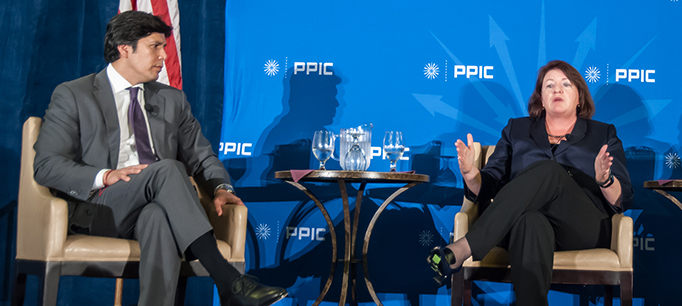
Assembly Speaker Toni Atkins and Senator Kevin de León, who will take over as senate president pro tem later this month, each told a Sacramento audience about growing up in poverty and the role it has played in their shared view of the state’s responsibility to those in need.

“We share similar values and similar stories that have made us care about the values and the issues that we’re talking about today,” said Atkins, who was raised in a poor, rural Virginia family and now represents the San Diego area. De León, who was born in San Diego and represents Los Angeles, said he is the youngest child of a single immigrant mother and the only family member to graduate from high school. Atkins and de León, both Democrats, were elected by their respective legislative chambers earlier this year to serve as leaders.

Both lawmakers cited a recent PPIC report — Child Poverty and the Social Safety Net in California by Caroline Danielson and Sarah Bohn — that said about 50% of California children live in poverty or near-poverty. The remarks, part of the PPIC 2014 Speaker Series, were made to a capacity audience of about 400 in the ballroom of the Sheraton Grand Hotel. The discussion was moderated by PPIC President Mark Baldassare and streamed live to hundreds more.

The wide-ranging conversation touched on a number of major issues—including health care, the drought, immigration, and taxes. Both leaders said that they believe the state should talk about changes to the state tax structure and consider whether to extend the temporary taxes that voters passed in Proposition 30. Atkins cautioned that it will be difficult to gain support from voters for an extension of the taxes.

De León expressed strong support for affirmative action, which he credited for his ability to attend college and become a legislator. He also said California should continue to lead on immigration issues because the federal government has been unable to pass a reform plan. And he noted that polls suggest Californians support health coverage for undocumented residents.

Atkins, meanwhile, encouraged more cities to follow San Francisco and San Jose, which recently increased the minimum wage. Both leaders also said they have worked together in the past and believe they will have a good working relationship going forward.

Drought Watch: Support for the Water Bond

This is part of a continuing series on the impact of the drought.

With the effects of the drought intensifying, the water bond is at the top of the legislature’s to-do list. Unless an agreement is reached on a new version, the $11.1 billion bond built in 2009 will go before voters this November. This year we have seen a range of proposals for a smaller water bond—including one by Governor Brown and one by Senate Republicans that designates more funding for storage than the governor’s. The debate continues.

Getting approval by two-thirds of both houses of the legislature is just the first step. The next hurdle is voter approval. According to the July PPIC statewide survey, 51 percent of likely voters said they would vote yes on the current $11.1 billion bond, with support increasing to 59 percent if the bond amount were smaller. This is higher than in March 2013, when only 42 percent of likely voters said they would vote yes on the $11.1 billion bond, and 55 percent supporting a smaller bond.
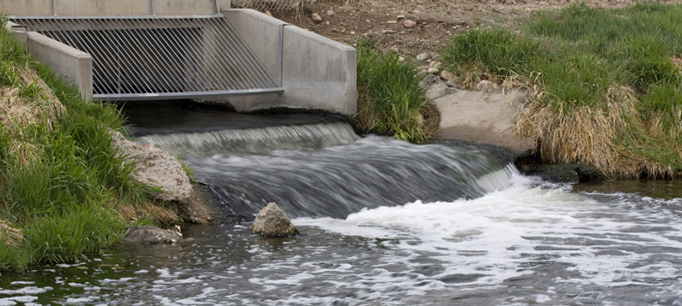
While the size of this bond may be important for voter approval, the central policy debate is about how the money should be allocated. Most funding for California’s water system comes from local water bills and taxes, but a new state water bond could help close critical funding gaps facing some parts of the water sector. The PPIC report Paying for Water in California highlighted the lack of sustainable and reliable funding for drinking water quality in small systems, flood protection, stormwater management, aquatic ecosystem management, and integrated water management.

Even if the legislature and the voting public do come together to approve a new bond, there is still work to be done to ensure sustainable funding for our water system. A bond can be expected to provide about $1 billion per year in new funds, leaving a $1 to $2 billion annual funding gap for critical water services. To close this gap, Californians will need to go beyond bonds and approve a broader mix of revenues, such as water use surcharges or state sales tax increases.

Local Water Funding in the June Primaries

Much of the current water talk in Sacramento surrounds a new state water bond for the November ballot. Yet as we show in our study Paying for Water in California, most water spending—84 percent—is actually raised locally. While passage rates on local water measures have been fairly high since 1995 (72 percent passing), few make it on the ballot (on average only six per year). This is largely because funding for many critical water services—including stormwater management, flood protection, and ecosystem and watershed improvements—often requires two-thirds of voters to approve, and local officials are reluctant to put such measures on the ballot unless they think they can win. In the June 3 primary election, only two local water measures were proposed. The results illustrate the challenges of funding water services that require direct voter approval.

In Contra Costa County, Orinda’s Road and Storm Drain Repair Bond passed with 75 percent approval. It authorizes the city to issue $20 million in general obligation bonds to fund the restoration and repair of roads and storm drains, plus a property tax increase to pay for the bonds. Broader funding measures like this—which include a water service along with something else—have generally been more successful than exclusively water-focused measures. Local governments seem to have recognized this reality and have increased these kinds of measures in recent years. Unfortunately, measures that fund multiple activities may generate less funding than is needed to fill water service gaps.

The second local water measure, the Lake County Healthy Lake Tax, failed with 64 percent approval (repeating an earlier failed attempt in 2012 that had 63 percent approval). It would have increased the local sales tax by one-half cent for 10 years to pay for the eradication of weeds, algae, and invasive mussels from Clear Lake, the restoration of wetlands, and the improvement of water quality.

As the Lake County example suggests, the two-thirds voter threshold for local special taxes and bonds is a significant obstacle. Orinda twice failed to pass measures in the mid-2000s, despite 64 percent approval. Since 1995, 65 percent of the measures requiring two-thirds approval passed, but 84 percent would have passed at the 50 percent threshold that is required for local general taxes and statewide fiscal measures. We can’t know how many more measures would have been put on the ballot had the voter threshold been lower.

Funding these essential water services through local tax and bond measures is a marked contrast to funding for water supply and sewer services, which are paid for with revenues from monthly customer bills. These services are generally in good fiscal shape because when new funds are needed, providers are required only to give customers the opportunity to protest rate increases.

To help address water funding gaps, California should consider treating flood and stormwater services like water and wastewater. It would also be helpful to treat local special taxes like local general taxes and statewide fiscal ballot measures—requiring a simple majority vote. Of course, this would require constitutional reforms. But without these changes, the state will need to provide much more support to local governments to pay for services that are essential to all Californians.

Drought Watch: Lessons from Kansas

This is part of a continuing series on the impact of the drought.

As summer approaches, signs of the drought are intensifying, with early season wildfires, new reductions in supplies from California’s depleted rivers, and many farmers scrambling for appointments with well drillers to access more groundwater. In Sacramento, there is also a heightened sense of urgency regarding money for the water system, as the June 26th deadline looms for legislative action on a new bond for the November 2014 ballot. The drought has drawn policymaker attention to water system investments, and it has raised hopes that the public will be willing to support new borrowing. While this is good news for California’s water system, the focus on bonds is a missed opportunity to go bigger.

As we showed in our March 2014 study, Paying for Water in California, a new bond can at best provide about $1 billion per year in new funds for water. So even if a bond passes in November, California will still be facing an annual funding gap of $1– $2 billion to meet critical needs. Bonds alone can’t do the job, and now’s the time—during, not after the drought—to consider a broader package of solutions.

One important place to look for additional funds is new state fees and taxes dedicated to underfunded areas like safe drinking water, flood protection, and healthy watersheds. And here’s where Kansas comes in: Since 1989, Kansas has had a small surcharge on urban water use (6 cents/1,000 gallons) to help fund projects of statewide importance. A small surcharge on agricultural chemicals also goes into this fund, as do fines charged to water polluters. And Kansas is not alone. Missouri and New Jersey both have surcharges on urban water use (1 cent/1,000 gallons) to support safe drinking water programs. Maryland, whose environmental problems in the Chesapeake Bay rival those of California’s Delta, has small parcel taxes to fund stormwater control. Minnesota uses a small increment on the state sales tax (0.12 cents/dollar) to support healthy watersheds.

For perspective, the typical price of tap water in California is $2.67/1,000 gallons, so a 6 cent surcharge (as in Kansas) would raise this to $2.73/1,000 gallons, an increase of just 2.2 percent. And the typical California sales tax is 8.5 cents/dollar, so a 0.12 cents/dollar surcharge (as in Minnesota) would raise this to 8.62 cents/dollar, an increase of just 1.4 percent. And these small surcharges would bring in some badly needed cash: About $175 million/year for a Kansas-style urban water fee, and about $575 million/year for a Minnesota-style sales tax increment.

These surcharges could be passed by California’s legislature (by a simple majority or two-thirds vote of both houses, depending on whether they qualify as regulatory fees or taxes) and then signed into law by the governor. Or they could be put before voters alongside a new bond. Of course, the politics of new fees and taxes are trickier than those of new state bonds, for which the bill comes later, when most current officeholders will be termed out. But for the sake of a healthy and secure economy, society, and environment, the time for bold action is now. California will have plenty of company.

Who Likes Proposition 13?

One of the most remarkably stable trends in California public opinion is the strong majority support for Proposition 13, even as the state’s demographics and politics have changed dramatically. This historic citizens’ initiative had the immediate fiscal impact of lowering property tax rates, restricting annual property tax increases, and raising the bar for local special taxes to a two-thirds majority vote. It also fundamentally changed the state-local relationship in California and ushered in the national tax revolt. Its supporters are shaping our fiscal choices today—even though many were not old enough to vote when the measure passed 36 years ago.

Proposition 13 passed in June 1978—toward the end of Jerry Brown’s first term as governor—with a 65 percent yes vote. Our most recent poll finds that 63 percent of likely voters today say that Proposition 13 has been mostly a good thing—as majorities have said since we began asking this question in 2003.
Among Proposition 13’s supporters today, about half were not old enough to vote, and 14 percent were not even born in 1978. As a group, they are mostly whites and homeowners, with annual household incomes of $60,000 or more. But they are also politically diverse. Supporters are evenly divided along party lines, with four in 10 Democrats, four in 10 Republicans, and two in 10 independents or other party members in this camp. More than half describe themselves politically as middle-of-the-road or liberals, while 45 percent say they are conservatives. About half live in the San Francisco Bay Area or Los Angeles.

What unites Proposition 13 supporters? One of their signature features is their higher level of distrust in state government. Large majorities say that the state government wastes a lot of the taxpayer’s money, believe that the state government is run by a few big interests looking out for themselves, and say that they trust the state government to do what is right only some time or none of the time. Six in 10 say that the state is headed in the wrong direction, disapprove of the way that the state legislature is handling its job, and rate the state budget situation in California as a big problem. Most say they would prefer to use the budget surplus to pay down the debt rather than restore social services. They are evenly divided when asked if they approve or disapprove of Governor Jerry Brown’s job performance—however, seven in 10 are in favor of his budget plans and approve of a rainy day fund plan that is going to the voters in November.

Proposition 13 supporters register the most consensus when asked about who should make choices for the state budget today: 83 percent want the California voters to make some of the decisions about spending and taxes at the ballot box, while only 13 percent want the governor and legislature to make all of the decisions.

Perhaps the most enduring contribution of Proposition 13 is that it has given the voters a significant and growing role in fiscal policymaking. Voters will decide the fate of the rainy day fund proposal, as well as a multibillion-dollar state water bond also scheduled for the November ballot.

When voters cast their ballots this year, it is important to be aware of the mindset of the sizable and politically diverse coalition of Proposition 13 supporters: a suspicious view of state government and a cautious approach to spending—even in the context of a strengthening fiscal and economic recovery in California.

California’s Taxing Dilemma

As the April 15 deadline for filing taxes looms, we asked Californians in the latest PPIC Statewide Survey how they view their state and local tax burden. Their responses point to a disconnect between public opinion and the views of many fiscal reformers.

A record-high 60 percent say that they pay more than they feel they should in state and local taxes. Just two years ago, 46 percent held this view. Today, six in 10 Californians also have the perception that California currently ranks above average or near the top in state and local tax burden per capita. And they are correct: A Tax Policy Center report recently ranked California’s 2011 state and local tax burden as the 11th highest in the nation.

Further, a record-low 50 percent of Californians say that the present state and local tax system is very or moderately fair. In contrast, 57 percent said it was at least moderately fair two years ago. Across income categories today, perceptions of the fairness hover around 50 percent.

What changed in the last two years? For one thing, voters passed Proposition 30, temporarily raising the state sales tax, as well as state income taxes on wealthy residents.

Today, eight in 10 Californians say that major or minor changes are needed in our state and local tax system. But their views of change don’t necessarily match those of fiscal reformers, who have argued for years that our state budget is too dependent on wealthy individuals with volatile income tax payments. Some reformers have argued that broadening the sales tax base to include services would be an effective way to avoid the extreme ups and downs in state revenues that play havoc with state and local government budgets.

But Californians appear to have little interest in changing the tax system in ways that may impact their pocketbooks. Among four types of state taxes that we asked about in our March 2014 survey, six in 10 oppose extending the sales tax to services that are not currently taxed, and fewer than half favor extending the sales tax to services even if it means lowering the overall state sales tax rate. However, six in 10 would support raising income taxes on the wealthy, while about half favor raising state taxes paid by California corporations.

Voter opposition to extending the sales taxes to services is higher among those who feel that they are already paying more than they should in taxes. Even the more popular proposals—raising corporate taxes and income taxes on the wealthy—are favored by fewer than half of the voters who feel they are paying more taxes than they should.

Meanwhile, voters are saying that they want more state funding for education and health and human services. Some state and local elected officials would also like to raise more state revenues to restore funding for services that were cut during the Great Recession, or pay for new state and local programs. Others are thinking about how to maintain revenues after the sunset of Proposition 30’s temporary taxes.

If tax reform proponents ask voters to raise taxes or to make changes to the state and local tax system any time soon, they will need to be mindful of voters’ current views on these issues.

Video Highlights New Survey’s Key Findings

The March PPIC Statewide Survey examines several major issues in California, including water, high-speed rail, marijuana legalization, and taxes. The survey also finds that three months before the primary, Governor Jerry Brown remains a strong favorite for re-election this year.

The wide-ranging survey also looks at Californians’ views on national issues—such as immigration and health care reform, and abortion —and provides approval ratings on federal elected officials.

PPIC research associate Jui Shrestha presented the results of the survey at a luncheon briefing in Sacramento.