Majority Opposition to Drilling Includes Coastal Republicans

In yet another sign that the shifting federal policy landscape is at odds with California public opinion, the Trump administration is proposing new offshore oil and gas drilling across all of the nation’s coastal waters. The five-year leasing plan includes areas previously off limits to oil and gas exploration since the 1980s. It proposes to open up 90% of the nation’s offshore reserves through new federal leases. California’s governor, lieutenant governor, attorney general, and US senators—quick to voice their opposition to this proposal—are aligned with most Californians’ views on offshore oil drilling.
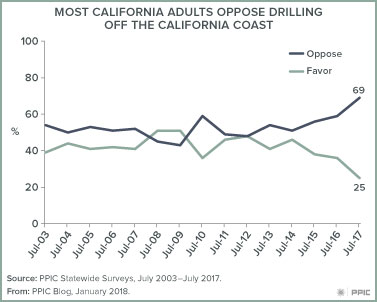
The PPIC Statewide Survey has asked the question, “Do you favor or oppose allowing more oil drilling off the California coast?” every July since 2003. In the 2017 PPIC survey, a record low 25% of California adults favored more oil drilling off the California coast while a record high 69% opposed it. What’s most remarkable is the agreement over time on the topic of offshore oil drilling. Since the early 2000s, a slim majority has been in favor of drilling only twice (51% in 2008 and 2009); in most years a majority has opposed it. Moreover, public consensus on this topic has grown. Since July 2012, support for more oil drilling has dropped by 23 points (48% to 25%) while opposition has grown by 21 points (48% to 69%).

In the 2017 PPIC Survey, a surprising level of agreement on the topic occurred across all major demographic categories of California residents. Majorities were opposed across age, education, gender, income, and racial/ethnic groups. Strong majorities across the state’s major regions opposed more drilling. That includes coastal Californians (23% favor, 72% oppose) and inland Californians (29% favor, 64% oppose) alike.
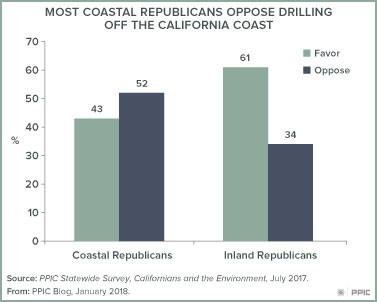
It is often said that the Trump administration is “playing to its base” in a polarized environment by proposing policies that are clearly at odds with Californians’ views. However, we found in the 2017 survey that majorities of conservatives, moderates, and liberals alike (55%, 71%, 83%, respectively) opposed more oil drilling off the coast. Democrats (14% favor, 81% opposed) and independents (30% favor, 68% opposed) were strongly opposed, while Republicans were divided (50% favor, 45% oppose). However, majorities of coastal Republicans joined with other regional and political groups in opposing more offshore oil drilling.

What’s behind the solid public opposition to more offshore oil drilling in California? In the 2017 PPIC Survey, 73% of California adults said that the condition of the ocean and beaches was very important to the economy and quality of life for California’s future. We found that those who held these views—and they were widely held across political, demographic, and regional groups—were overwhelmingly opposed to more offshore oil drilling.

Stay tuned as the PPIC Statewide Survey monitors this topic and other issues—such as the Affordable Care Act, climate change and energy, federal tax reform, marijuana legalization, and immigration—as changing federal policies may have big effects on California. We are planning for an interesting and important year for PPIC polling in 2018!

Flood Prevention 101: Stay Out of the Floodplain

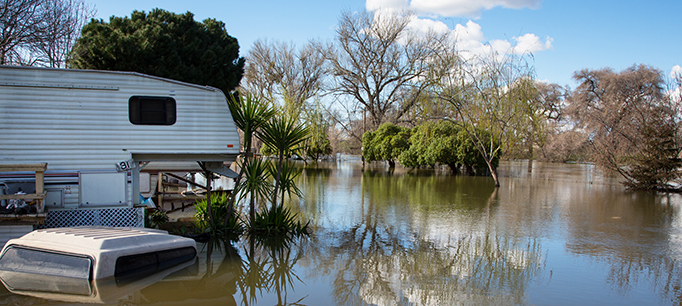
What did the catastrophic hurricane season of 2017 tell us about how we’re managing flood risk? We talked to Nicholas Pinter—a flood and floodplains expert at the UC Davis Center for Watershed Sciences and a member of the PPIC Water Policy Center research network―about improving flood management.

PPIC: Why did Hurricane Harvey result in so much damage to Houston?
Nicholas Pinter: Houston has had very bad land use planning—it is built on flood-prone land, and its inadequate storm drainage makes flooding worse. Combine these glaring flood-management flaws with the unprecedented rainfall that Harvey brought and you’ve got a truly epic flood disaster. Harvey’s damage is clearly a product of both human choices and the storm’s intensity.

The number and magnitude of recent extreme storms are consistent with predictions for a changing climate. There’s a nagging feeling among some of us who study flood disasters that maybe we’ve reached a sort of tipping point, with short-duration storms dumping unprecedented rainfalls.  Harvey may be an example of this.  And if it is happening, our window of opportunity to improve flood systems may be shrinking.

PPIC: What are your top priorities for reducing flood risk?

NP: One thing that scientists, floodplain managers, and many politicians agree on is that we must limit floodplain development. A lot of the damage from Harvey was supposed to be prevented by the National Flood Insurance Program (NFIP). But the program failed in Houston in large part due to the failure of its primary goal—to discourage development in floodplains.

With the enactment of the NFIP in 1968, the US government agreed to provide subsidized flood insurance in exchange for local controls on building in floodplains. Communities that prohibit development on their floodplains can get underwritten insurance through the program (private flood insurance options are very limited).

But enforcement of the NFIP’s floodplain rule is very mixed across the US. A good example is Illinois. For the past 25 years, that state has aggressively enforced floodplain regulations and limitations. On other end of spectrum is Texas, where they embraced development and seemed to see floodplain limitations as job killers. Differences in enforcement explain many of the documented differences in flood damages and flood resilience.

PPIC: How are we doing on flood management in California?

NP: California is doing a lot of things right, and is learning from its past mistakes. A lot of money has been invested in improving levees. California is enforcing NFIP standards and trying to limit new construction on its floodplains (though with exceptions). But the Oroville crisis was a big wake-up call. If the emergency spillway had failed—and we were within hours of it—Oroville could have been a lethal disaster similar to Katrina. All eyes are now on aging dams as well as levees.

One issue I’d like to see improvement on is flood insurance. While many other states are net recipients of NFIP, California receives something like 14 cents on every dollar it pays in premiums to the program.  This appears to reflect California’s more rigorous effort to limit flood damage in its floodplains.

FEMA (the Federal Emergency Management Agency) recognizes wide differences in NFIP enforcement nationwide and has proposed a national disaster deductible to push back on states with poor enforcement and benefit those doing a good job. A second option being considered is a state-by-state rating system. And yet another option is for California to create its own flood insurance vehicle.

PPIC: Is there an argument for learning to live with flooding and rebuild after disaster strikes?

NP: A century ago the strategy was largely to live with floods. People clustered near rivers and had a tolerance for getting their feet wet occasionally. Fast forward to current times: a big leap in the density and value of infrastructure has greatly diminished that tolerance.

It’s very easy to creep forward gradually onto floodplains and much harder to back away from the flood hazard this brings. So the first and most valuable lesson is to stop creeping forward and strictly limit new floodplain development.  In some cases, opportunities exist to set back levees and reconnect rivers to their floodplains. These kinds of efforts often can provide valuable, multi-layered benefits.

Video: Gavin Newsom’s Priorities

Gavin Newsom, California’s lieutenant governor and a candidate for governor in 2018, was asked in a San Francisco forum last week to name the three issues that will make the biggest difference in California’s future. Newsom, who is also a former mayor of San Francisco, predicted that both California and the nation will be grappling with these issues over the next ten years:

  • Debt and demographics. With California’s population aging rapidly, the state and its cities face growing public employee pension and health care liabilities. “As a progressive Democrat, I’m not naïve about the commitments we’ve made and the commitments we must fulfill,” Newsom said. “Nor am I naïve, as a former mayor, about the challenge of meeting those commitments . . . Cities like Richmond are facing the prospect that by 2021, by one estimate, upwards of 40% of their general fund will go to retiree contributions.”
  • Energy and climate change. The state has set ambitious goals to reduce greenhouse gas emissions and increase energy efficiency. “The next governor has to deliver,” he said.
  • Information technology and globalization. “The issue that animates my anxiety: work, the future of work.” The days of having a job or career have given way to something radically different, forcing us to think in terms of portable benefits and retirement security, he said. Further, workers in retail, food and beverage, and clerical jobs—the top employment categories—are on the “edge of automation.” Displacement of these workers will require us to have a different conversation about skills, education, and social mobility, Newsom said.

The conversation with Newsom was part of the PPIC Speaker Series on California’s Future. PPIC is inviting all major candidates for governor to participate in a public event if they reach a certain threshold in the polls. The goal is to give Californians a better understanding of how the candidates intend to address the challenges facing our state.

Watch all candidate videos.

Commentary: California’s Forests are Dying—They Need Better Care

This commentary was published in the San Francisco Chronicle on October 14, 2017

California’s forests are on fire, with tragic consequences for communities around the state. While the firestorm in the Wine Country has made international headlines, many small mountain communities also were aflame or on high alert.

The focus now is on saving lives and protecting property, but when the fires are out, the state will have to face up to a major problem: Our forests are too dense and dry, and, in some areas, dying. We need a new way to manage this vital natural resource.

Read the full commentary on sfchronicle.com.

What Recent Hurricanes Mean for Flood Insurance in California

Three exceptional hurricanes—Harvey, Irma, and Maria— caused staggering damages from floods, winds, and storm surge in recent weeks. It’s likely they will make the record books as the most costly natural disasters in US history.

Although California doesn’t get hurricanes, it does get large storms (called “atmospheric rivers”) that can be just as damaging to people and property. Currently, one in five Californians and close to $600 billion worth of structures are vulnerable to flooding.

One way for residents and businesses to reduce the financial risks of flooding is to carry insurance. Millions of Californians depend on the National Flood Insurance Program (NFIP), managed by the Federal Emergency Management Agency (FEMA). But at almost 50 years old—and facing an uncertain reauthorization this December—it has many problems.

The most immediate concern is the imbalance between premiums and claims. Currently, the NFIP is more than $25 billion in debt―a figure that will certainly grow once all the recent hurricane claims are processed.

“The program never charged prices that would cover a year like Hurricane Katrina, where it paid out more than it had over the life of the program.  And the string of storms since then—Ike, Sandy, and now Harvey, Irma, and Maria—have only worsened its debt,” says Carolyn Kousky, director of policy research for the Wharton Risk Center and a member of the PPIC Water Policy Center research network.  “Realistically, the program will not be able to repay this debt, so the best thing may be for Congress to simply forgive it, while also putting in place a new approach to pay for catastrophic events.”

Another problem is that too many people at risk of flooding do not enroll in the program. In Houston, approximately 80% of Harvey-flooded homes were not insured.  And here in California, just 10% of flood-prone Sacramento county households and only half of those in high-risk areas have flood insurance.  Among the reasons so few people purchase insurance, Kousky says, are “unwillingness or inability to pay, a misunderstanding about the role of insurance, an unsubstantiated faith in disaster aid, and importantly, no information or even misinformation on flood risks.”

Inadequate perception of risk stems, in part, from the way FEMA maps flood hazards and mandates insurance. Currently, FEMA requires (but does not sufficiently enforce) flood insurance for homes with a 1-in-100 chance of flooding in any given year (the so-called 100-year flood). For homes in the floodplain but out of this high-risk zone, insurance is optional.

Nicholas Pinter—the associate director of the UC Davis Center for Watershed Sciences and a member of the PPIC Water Policy Center research network―notes that this gives a false impression that those outside this zone are safer than those within it. His laboratory found that roughly half the flooding from Harvey was outside of Houston’s 100-year floodplain zone.

“The picture in California is much better than in Texas,” Pinter says. “But updating flood maps here still takes many years, and California still largely works within FEMA’s framework of the ‘all or nothing’ 100-year floodplain.”

But the state may not be getting a good deal from the NFIP.  According to Pinter, California pays much more into the program than it is getting back.  He notes that California has gotten just 14 cents in return for every dollar of premiums paid.  The Central Valley—the most flood vulnerable area of the state—got just 9 cents per dollar.

“For a variety of reasons, California may be overpaying for its actual flood risk,” Pinter suggests. “The state needs to explore whether it is cheaper to develop its own flood insurance program and to invest the savings—estimated to be at least $150 million per year—in reducing flood risk across California.”

With this year’s unprecedented string of flood disasters and uncertainty for national insurance, it’s time for real policy reforms to ensure Californians are prepared to weather the growing risk of floods. Fixing our flood insurance problems is one way to start.

Learn more
Read Floods in California (PPIC fact sheet, September 2017)
Watch our 3-minute video “Floods”
Read Financing Flood Losses by Carolyn Kousky (February 2017), and her related blog post, “Flooding and the Economics of Risk Reduction” (August 30, 2017)

Video: Improving the Health of California’s Headwater Forests

Forests in the Sierra Nevada benefit all Californians―they provide timber, wildlife habitat, recreational landscapes, two-thirds of the state’s surface water, and other benefits. But their health is in decline from drought, insect infestation, changes in management practices, and overcrowding. These changes have raised the risk of catastrophic wildfire and tree die-off. Improving forest health will require thinning trees, which will make forests more resilient.

These were some of the observations from experts gathered in Sacramento to discuss a new PPIC report on improving forest management.

Van Butsic―an assistant cooperative extension specialist from the University of California, Berkeley, and a coauthor of the  report—gave an overview of the crisis in forest health and solutions to it. A panel discussion followed, moderated by the PPIC Water Policy Center’s Jeffrey Mount. The panelists were David Edelson, Sierra Nevada project director at the Nature Conservancy; Barnie Gyant, deputy regional forester for resources for the Pacific Southwest Region of the US Forest Service; and Susie Kocher, natural resources advisor for the Central Sierra Region at the University of California Cooperative Extension.

“We looked at prescribed fire, managed wildfire, and mechanical thinning, and we realized these three treatments were actually effective,” said Butsic. “But they’re hard to use in California because of a complex management environment.”

Some essential takeaways from the event included:

  • About two-thirds of the land in California’s headwaters is federally owned, making the federal government a key player in solving this crisis.
  • Policy and budgets prioritize fire suppression over forest management. More than half of the US Forest Service budget is for fire suppression.
  • Revenue-generating logging on forest management projects can make these projects financially viable.
  • Treatments to thin forests can negatively affect species and habitat—but catastrophic wildfire is even more harmful.
  • Climate change makes solving the crisis in our forests challenging but not impossible.

Jeff Mount wrapped up the event by noting that the forest health crisis presents an “exceptional opportunity” to stakeholders and decision makers. “We’re seeing an awakening and awareness at a level we’ve never experienced,” he said. “It’s an extraordinary moment that is not to be wasted.”

Learn more
Read Improving the Health of California’s Headwater Forests (PPIC, September 2017)
Read California’s Water: Protecting Headwaters (from the California’s Water briefing kit, October 2016)
Visit the PPIC Water Policy Center’s drought resource page

California Millennials and Climate Change

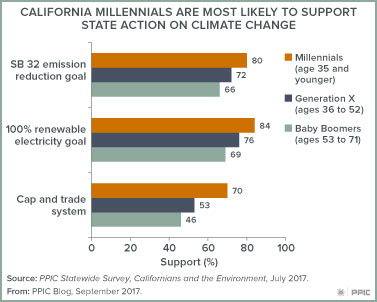
In our most recent PPIC Statewide Survey, we found a record-high share of adults (58%) saying that global warming is a very serious threat to the state’s economy and quality of life. This view is strongly related to Californians’ broad support for state climate change policies, and it is most commonly held among millennials—adults age 35 and younger. Millennials also stand out in their support for state actions to address climate change:

  • Seventy-five percent of millennials favor the state making its own policies, separate from the federal government, to address global warming.
  • Eighty percent support the new greenhouse gas emission reduction goal (SB 32) that updates California’s landmark climate change legislation, and 84% support a new target of 100% renewable electricity by 2045.
  • Seventy percent favor the state’s cap and trade system after hearing a brief description of it. In contrast, fewer than half of baby boomers (ages 53 to 71) favor the cap and trade system, in which the state enforces “caps” on greenhouse gas emissions by issuing permits that can be traded among companies.

Figure millennials and climate changeCalifornia millennials are about as likely as older adults to expect higher gas prices as a result of state climate change policies (52% millennials, 53% generation X, 55% baby boomers). But among those who expect higher gas prices, millennials are more likely than older adults to support the policies named above. Indeed, 73% of millennials expecting higher gas prices support SB 32, compared to 63% of gen Xers and 59% of baby boomers.

Also of note, majorities of younger adults support these policies, regardless of whether they call themselves liberals, moderates, or conservatives. For example, 61% of conservative millennials support cap and trade, compared to 25% of conservative baby boomers. Similarly, at least 7 in 10 millennials support SB 32, whether they are white or Latino, whether they have a college degree or not, and regardless of their income group.

Such broad support for the state’s climate change policies among younger Californians suggests that, if these opinions hold, Californians’ desire for state action on climate change is not likely to diminish in the years ahead.

Find out more about the PPIC Statewide Survey.

Testimony: Managing California’s Headwater Forests

Van Butsic, a forestry expert with UC Berkeley’s cooperative extension and a member of the PPIC Water Policy Center’s research network, testified before the Little Hoover Commission in Sacramento today (August 24, 2017).


The hearing focused on California forest management and was held in response to the sharp increase in the number of trees dying in headwater forests. Butsic drew his prepared remarks from the PPIC policy brief California’s Water: Protecting Headwaters. Here is a summary.

The committee asked Butsic to explain the risks to the state’s forested upper watersheds and ways to improve forest health. He described a number of risks, including:

  • Policies aimed at extinguishing fires as quickly as possible—combined with reduced timber harvesting—have resulted in exceptionally dense vegetation in many California forests, increasing the risk of extreme wildfires;
  • The expansion of rural communities into wildland areas has complicated efforts to manage fire risk, and;
  • Stress from drought and a changing climate.

Butsic said California stands to lose timber production, wildlife habitat, recreational opportunities, and water supply if this natural infrastructure continues to decline. He noted that the bulk of forestry funding is spent on putting out fires rather than managing forests for long-term resilience.

Butsic explained that to improve health of headwater forests, California must increase the pace and scale of management tools such as fire and forest thinning. This will require management, regulatory, and legal reforms. He described ongoing research being undertaken by PPIC into ways to improve forest management. And he noted that due to a diverse mix of land ownership in the headwaters area, collaborative approaches will be critical.

Learn more
PPIC is preparing a report on California’s headwater forests. Register to attend the related event, Improving the Health of California’s Headwater Forests.

Video: Californians and Climate Change

When it comes to climate change policy, California and the federal government are on distinctly different paths. PPIC’s annual Californians and the Environment survey finds that there is a broad consensus in favor of the direction chosen by the state.

David Kordus of the PPIC survey team presented the survey to a Sacramento audience last week. Among the key findings he described:

  • Impact of global warming: A majority of Californians (66%) think global warming is already having an effect, and most think warming is a very serious threat to California’s future economy and quality of life.
  • Goals of state climate policies: A strong majority (72%) favor the law that requires the state to reduce greenhouse gas emissions to 40 percent below 1990 levels by the year 2030. A similar majority favor proposed legislation that would require 100% of electricity to come from renewable sources by 2045.
  • Economic effects: Just 22% of Californians think the state’s actions to address global warming will result in fewer jobs. But many do expect to pay a price: 54% expect to pay more for gas.
  • Leadership: Most state residents say it’s very important that California act as a world leader in the fight against climate change, and 71% oppose President Trump’s withdrawal from the Paris climate accord. Californians give the president and Congress low ratings for their handling of environmental issues—22% and 26%, respectively. Approval ratings are much higher for Governor Brown and the state legislature—51% for each. State leaders’ ratings on environmental issues have risen sharply since the governor took office in 2011.
Learn more

Read the full survey, PPIC Statewide Survey: Californians and the Environment
Find out more about the PPIC Statewide Survey

The Search for Sustainability in the Colorado River Basin

The Colorado River is a crucial water source for seven states (Wyoming, Colorado, Utah, New Mexico, Arizona, Nevada, and California) and Mexico, and like many shared rivers has its share of challenges. We talked to Doug Kenney—director of the Western Water Policy Program at the University of Colorado and a member of the PPIC Water Policy Center research network―about balancing priorities in managing the river.

PPIC: What’s the basin’s biggest challenge currently?

DOUG KENNEY: That depends on what part of the basin you’re in and what sector you work in. There’s no shortage of things to worry about. Right now, most would probably say it’s the effort to maintain the levels of water stored in the big reservoirs, Lake Mead and Lake Powell. Those reservoirs provide a lot of benefits—drought protection, recreation, and hydropower—but only if they have enough water in them. They’re about half full right now, which is about as low as they can go before mandatory cuts in water deliveries—or curtailments—kick in. It’s a math problem, essentially—managing water coming in versus what’s going out. So far in this century, people have pulled more water out than consistently flows in. Obviously, that has to change.

The more chronic issue is that the Colorado has been treated more like a plumbing system than a river, so there’s been a lot of environmental damage to the river. The big environmental concerns in the basin are a result of reduced flows and some water quality issues, such as high salinity, loss of valuable sediments, and increased water temperatures. The real challenge is to remind people we’re talking about a river—the most important ecological resource of the southwest United States.

PPIC: What efforts are underway to address the problems?

DK: The big effort at the moment in the Lower Basin is called drought contingency planning, which would help stabilize (and ultimately increase) the amount of water stored in Lake Mead. The negotiations among California, Arizona, and Nevada have gone remarkably well in this regard, although each state still has internal challenges to work through. For example, Arizona is concerned about looming curtailments of their water supply, while in California the big sticking point is the Salton Sea. The sea has become a critical issue as successful efforts to use water more efficiently in Southern California agriculture have reduced inflows, resulting in a host of environmental and public health issues. In both of the situations, the underlying desire is to protect water supplies for urban users in a way that doesn’t impose undue burdens on agricultural regions.

Another issue worth watching is the 2012 agreement between the US and Mexico that laid out cooperative efforts to manage the river. The agreement expires at the end of this year, and a new one is needed to maintain positive momentum and cooperation. Key issues between the US and Mexico include restoring the river’s delta ecosystem, enabling Mexico to store water in Lake Mead, and sharing water shortages during drought. While cooperation on the Colorado between the US and Mexico has gotten dramatically better in the past decade, people are worried that the tensions arising from the current political environment at the national level could spill over to the negotiations. But so far, the two sides are still talking, and people still seem pretty optimistic about reaching an agreement.

PPIC: How do upstream states view California’s efforts to manage its Colorado River supplies?

DK: Everyone in the basin pays attention to what’s going on in California. California has the largest and arguably the most legally secure allocation of Colorado River water rights. California’s dependence on the river is shaped by many factors, including other water issues within the state. For example, the project to build tunnels under the Sacramento-San Joaquin Delta—if it progresses—would go a long way to create some room for compromise and creativity on how Southern California uses its Colorado River supplies. With every passing year it becomes more difficult to talk about the Delta and the Colorado as separate challenges. Everything is connected to everything else.

PPIC: How is climate change affecting the river basin?

DK: We’re already experiencing big climate-related changes in the basin. It’s already nearly 2 degrees Fahrenheit hotter this century compared to last, and by 2050 it will be closer to 5 degrees hotter. That results in higher evaporation rates, increased water demands, and reduced stream flows. Climate change is water change, and more heat works against all our water management goals. During this drought, precipitation has dropped only slightly but stream flows are way down, partly because it’s hotter. And that will continue―this is the part of climate projections we’re most certain of. Continued warming and the related reduction of stream flows is a huge problem.

Water management is traditionally based on the premise that the future will look like the past, but that’s not a safe assumption anymore. Our physical infrastructure isn’t ideally suited to the projected future hydrology. There’s a similar problem with our institutional infrastructure. We have a pretty sophisticated management regime that is increasingly out of step with evolving conditions. The good news is that key players in the basin now understand that the climate is affecting everything they do, and that they have to cooperate to find solutions to tough problems. People in the basin are committed to putting in the work, but there’s still a lot more to be done.

Learn more

Read California’s Water: The Colorado River (from the California’s Water briefing kit, October 2016)
Watch our 4-minute video “Colorado River”
Visit the PPIC Water Policy Center