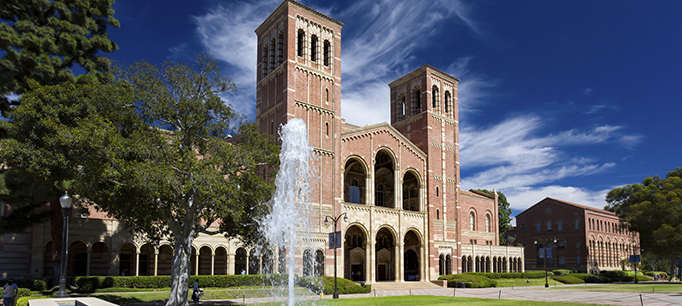
Commentary: Boosting Success in Community College


This commentary was published in EdSource on December 8, 2016

Most students entering California’s community colleges – especially Latino, African American and low-income students – start their college journey in remedial courses in math, English or both. These courses seek to prepare students for college-level work. But remedial education, also known as developmental education, is lengthy, attrition is high and outcomes are poor.

Read the full commentary on edsource.org.

Video: Strengthening Pathways to Health Careers

Health programs at California’s community colleges hold particular promise for helping students enter in-demand careers and addressing the state’s workforce needs, new PPIC research shows. These career technical education (CTE) programs, also known as vocational education, attract a large and diverse set of students. The state’s community colleges offer a broad range of programs—including nursing, respiratory therapy, medical and dental assisting, and health IT—that are linked to growing job opportunities in health services, a generally well-paying industry for Californians without a bachelor’s degree.

PPIC researchers presented two reports on the topic in Sacramento. Among the key findings summarized by report coauthor Shannon McConville: many students who have earned career tech credentials in health care have seen sizeable wage gains, and completion rates in these programs are relatively high. More than 70 percent of students who begin a program either obtain a degree or transfer to a four-year college within six years, while only about half of the overall CTE student population obtains a credential within six years.

But there is room for improvement. Completion rates vary substantially across health programs, ranging from 93% in dental hygienist programs to 44% in emergency medical services. And there are racial and ethnic achievement gaps across programs.

After the research presentation, an expert panel took up the topic. Anette Smith-Dohring, manager for workforce development at Sutter Health, underscored the need to diversify the health care workforce.

“We want our front-line health care providers to reflect the communities we serve because those are our patients,” she said. “We want them to come from [the] communities we serve—we don’t want to import health care providers.”

Linda Collins, executive director of the Career Ladders Project, which has worked with community colleges, said it is important both to expand career awareness of the range of allied health professions and to improve science proficiency in middle and high school. If a student has “a basic grounding in math and science from the high school level, that will allow a student to take almost any allied health occupation program and be successful,” she said.

All of the speakers provided examples of small-scale programs in community colleges that have improved student success rates—and expressed frustration that the funding has not been consistent enough to expand them.

Linda Zorn, statewide director of the California Community Colleges Health Workforce Initiative, summed up: “Programs that provide structure and clarity about what students need to take, and integrate both proactive and embedded student supports in the instructional experience, are critical.”

Learn more

Read Career Technical Education in Health: An Overview of Student Success at California’s Community Colleges
Read Health Training Pathways at California’s Community Colleges
Visit the PPIC Higher Education Center

Improving Math Placement Decisions

A new state law is intended to help ensure that all students—particularly those underrepresented in higher education—have access to rigorous math courses in high school. This is a key step to improving college readiness and closing achievement gaps. The centerpiece of the California Mathematics Placement Act is the requirement that districts create and implement a fair, objective, and transparent math placement policy. The law leaves many aspects of implementation up to the districts.

PPIC surveyed the state’s school districts during the 2015–16 school year to examine their placement policies and identify district needs right before the law took effect in 2016–17. In a new report, Math Placement in California’s Public Schools, research fellow Niu Gao and research associate Sara Adan found that districts face a number of challenges in implementing the law. Gao presented the report at a recent Sacramento briefing.

One issue is particularly complex: teacher recommendations. The new law calls for limiting their use due to concerns that they may be systematically biased against economically disadvantaged or Latino and African American students.

The PPIC report shows that teacher recommendations are among the most widely used measures in determining placement—and the way they are used now is complicated. Recommendations typically address both academic and “soft” skills, such as student maturity, persistence, and motivation, which are predictors of student success. The PPIC authors found cases in which teacher recommendations are biased against high-achieving minority students, but they also found cases in which teacher recommendations are advancing minority students who do not perform well on standardized tests. In other words, eliminating recommendations altogether may help some students but at the expense of others.

Gao said the critical issue is not whether teacher recommendations should be used but how they can be designed to complement objective measures, such as tests.

CSU and UC Are a Better Value Than Universities Nationwide

With college application season underway, the US Department of Education’s yearly scorecard helps prospective students and their parents by providing information on the costs, graduation rates, and student debt associated with individual colleges. Since last year, the scorecard has also included wages for former students based on federal tax data. We reported on how to interpret the earnings measure in an earlier blog post.

The scorecard also highlights 26 affordable universities with good outcomes in the form of relatively high earnings. California’s public universities do quite well: eight California State University (CSU) and University of California (UC) campuses make the list. This list uses a school’s average net price (its tuition, fees, room, board, and other expenses minus the average amount of grants and scholarships) and the typical student’s earnings 10 years after enrolling to estimate how much “bang for their buck” students get in terms of future income.

In fact, almost all CSU and UC campuses provide higher-than-average incomes given their net price when compared to four-year colleges nationwide. California’s private four-year colleges show mixed results, as they generally have higher net costs; about half have below-average earnings for their price.

These results speak to the relative success of CSU and UC compared to other universities in the nation. However, it is important to note that this isn’t the whole story: the net price and income data are only collected for students who received some form of federal aid. While this represents a majority of students in public universities, it can represent a smaller fraction of students from private universities in the state.

California’s public universities have a couple built-in advantages. The state’s generous financial aid program provides grants that cover tuition for qualifying low-income students and, in some cases, help pay for living expenses and books—substantially reducing the net price for those students. Also, workers in California earn more than those in other parts of the country, and the concentration of higher-paying jobs in California (such as in the tech industry) may contribute to the relative success of the state’s students. However, many private colleges in the state are associated with low median salaries, suggesting it’s not just location that matters.

California also likely benefits from high-quality institutions. Most UCs are highly ranked nationally, and as PPIC has shown in other research, CSUs have relatively good six-year graduation rates when compared to similar institutions. This is important, as the scorecard reports the incomes of students who attended a university, regardless of whether they graduated. College graduates tend to make more than non-graduates, so institutions with better graduation rates are more likely to produce workers with higher incomes.

While the scorecard can help students decide which college is right for them, it also shows students that the economic returns to a college degree can be had for a reasonable price in California.

For those interested in diving deeper into this finding, this chart illustrates the relationship between net price and the yearly income of students after 10 years. Each dot is a university. The CSUs (orange), UCs (dark teal), and in-state private universities (light teal) are marked alongside other universities in the nation (light grey). Nationwide, higher net prices are associated with higher earnings. This isn’t shocking, as we generally associate higher prices with higher-quality universities, which may net students a higher future income. The diagonal line shows typical earnings for a given net price. Universities above the diagonal line have higher-than-average earnings given their net price, and universities below the line have lower-than-average earnings.

Learn more

Read “What the New College Scorecard Can—and Can’t Tell You”
Visit the PPIC Higher Education Center

Preparing Community College Students for Success

Each year hundreds of thousands of students entering California’s community colleges are identified as unprepared for college work and placed in remedial courses, also known as developmental education courses. Colleges vary widely in the way they assess and place students—for example, even colleges that use the same test base their placement decisions on different cut-off scores.

The impact of remedial placement is profound. Most students who enroll in a developmental education class never go on to earn a certificate or degree or transfer to a four-year college. Latino, African American, and low-income students are overrepresented in these courses, raising equity issues at the colleges—the entry point to higher education for most students in the state.

Two PPIC reports document the state of developmental education in California and examine the reforms that have been adopted to change it. Olga Rodriguez, PPIC fellow and coauthor of both reports, presented the findings at a briefing in Sacramento last week, followed by a panel discussion of higher education experts moderated by coauthor Hans Johnson, PPIC senior fellow and director of the PPIC Higher Education Center.

Panelists included Mónica Henestroza, higher education advisor for Assembly Speaker Anthony Rendon; Myra Snell, math instructor at Los Medanos Community College and cofounder of the California Acceleration Project; and Theresa Tena, vice chancellor of institutional effectiveness in the California Community Colleges Chancellor’s Office.

The three panelists emphasized the widespread recognition that reform is needed and under way.

Henestroza said the PPIC reports underscored what she hears directly from students—that they are being sidetracked from pursuing their career goals by developmental education. She also said that the savviest students know that it’s easier to pass placement tests at some colleges than others.

Snell said that when looking at the wide variation in college placement policies and the large numbers of students placed in developmental education, many mistakenly blame high schools for not preparing students. “Really, what we’re beginning to understand is that our definitions of preparedness are problematic.”

She said that student scores on Accuplacer, a commonly used placement test, are not a reliable predictor of college success. Colleges making robust use of multiple measures—including, for example, previous high school work—in placement decisions are seeing higher student success rates, she added.

Snell also pointed to promising reforms elsewhere. Tennessee, for example, enrolls students directly into college-level courses and providing remedial support where it’s needed. In other words, she suggested, reform efforts should focus on bypassing developmental education altogether.

Tena noted that colleges are implementing redesigned courses in developmental education that are intended to improve student outcomes. PPIC is currently conducting research to evaluate these new reforms.

Learn more

Preparing Students for Success in California’s Community Colleges
Determining College Readiness in California’s Community Colleges: A Survey of Assessment and Placement Policies
Visit the PPIC Higher Education Center

Testimony: California’s Future Need for Bachelor’s Degrees


Patrick Murphy, PPIC research director, testified before the Senate Budget Subcommittee Number 1 on Education at San Diego City College in San Diego today (November 1, 2016). Here are his prepared remarks.

The Public Policy Institute of California (PPIC) projects that between now and 2030 California will fall 1.1 million bachelor’s degrees short of workforce demand. Closing this gap will require substantial improvements in access to four-year colleges, transfer rates from community colleges, and completion rates among college students. This testimony describes specific targets for California’s public and private colleges and universities to help ensure that the state will have a sufficient number of highly educated workers in the future. It also briefly describes a recent pilot program in California that offers bachelor’s degrees at community colleges and similar efforts in other states in the context of closing the workforce skills gap.

PPIC senior fellow Hans Johnson, in testimony before the Assembly Budget Subcommittee Number 2, has offered a scenario for how the state might close the workforce skills gap relative to its current baseline. Assuming that college enrollment rates, completion rates, and transfer rates remain at current levels, the state will produce 3.1 million bachelor’s degrees over the next 15 years. Our closing-the-gap scenario charts a course to producing 4.2 million bachelor’s degrees by 2030—a 36% increase over the baseline for the entire projection period. It should be emphasized that this goal cannot be realized unless the state substantially improves the attainment of degrees by currently underrepresented groups, including first-generation college students, low-income students, Latinos, and African Americans.

There are two important issues to note regarding our closing-the-gap scenario. First, successfully reaching this goal requires contributions from all three of the state’s higher education systems as well as private colleges. Our scenario sets the following targets:

  • Access to four-year public institutions will increase, with eligibility increasing 5 percentage points over current levels at UC (the top 17.5% of high school graduates will be eligible for UC, up from the 12.5% set by California’s Master Plan for Higher Education) and 6.7 percentage points at CSU (the top 40% will be eligible for CSU, up from the top third). These new eligibility levels will be phased in over an eight-year period.
  • The number of transfer students from community colleges will grow incrementally to 35% above baseline levels over a five-year period.
  • Completion rates will increase 9 percentage points at UC and 17 percentage points at CSU. At UC, completion rates for students who enroll as freshmen will increase incrementally from 83% in 2016 to 92% by 2026. Completion rates for freshmen at CSU will increase incrementally from 57% in 2016 to 74% by 2030.
  • Private nonprofit colleges, which produce about one-third of all bachelor’s degrees annually, will keep pace with the relative rate of growth, increasing their production of degrees by 26% over baseline levels.

The second notable point is that there is no single solution to closing this gap. Our scenario represents only one path toward reaching the number of bachelor’s-degree holders the state needs. Based on the structure and performance of the current system, our scenario estimates the relative contribution that higher education segments could make in the future. Other combinations are conceivable. For example, a smaller expansion in eligibility and greater improvements in completion rates could also close the gap.

The assumptions underpinning our closing-the-gap scenario are clearly ambitious. Are the assumptions realistic? Is it possible to, for example, raise the completion rate at CSUs by 17 percentage points? Based on recent improvements, we think so. In another PPIC report, my colleagues Jacob Jackson and Kevin Cook observed that, from 2009 to 2015, the CSU system increased its six-year graduation rate 6 percentage points, from 51% to 57%. These increases came at a time when the system was focused on improving completion as part of its 2015 Graduation Initiative. This past September, Chancellor White announced that CSU seeks even greater improvements as part of its 2025 Graduation Initiative. The recently announced goals, including achieving a six-year graduation rate of 70% by 2025, are consistent with our closing-the-gap scenario.

We did not include in our scenario any assumptions regarding the potential for California’s community colleges to produce bachelor’s degrees. Beginning in 2015, the California Community Colleges Chancellor’s Office granted approval to 15 colleges to offer bachelor’s degrees in specific majors as a pilot program under Senate Bill 850. At this time, these programs are quite small and it is difficult to predict what impact they may have on the long-term production of bachelor’s degrees. A brief review of the experiences of two other states provides examples of different trajectories this pilot program could take.

Community colleges in Washington State began a pilot program offering applied bachelor’s degrees following legislation passed in 2005. The program, which focuses on fields currently not addressed by the state’s four-year public institutions, became part of the state’s regular programming in 2010. Community colleges currently offer bachelor’s degrees in 30 fields but produced only about 300 (less than 1%) of the more than 33,000 bachelor’s degrees conferred in the state in 2015.

In Florida, legislation authorizing community colleges to begin offering bachelor’s degrees passed in 2001. Florida has been quite aggressive in expanding the programs and schools offering bachelor’s degrees, with 24 of the state’s 28 colleges offering a total of 170 such programs. In 2015, these colleges produced 6,900 (about 7%) of the state’s 100,500 bachelor’s degrees.

As it is currently configured, California’s pilot program resembles the Washington approach. It has the potential to supply applied degrees in specific fields, making a contribution to the demand for skilled labor in some professions. But, due to its small scale, it is unlikely to have a significant impact on the overall workforce skills gap in the near term.

This is not to suggest that community colleges do not play a role in meeting the growing demand for bachelor’s degrees. In fact, about 103,000 community college students in California transfer to four-year institutions each year. Our closing-the-gap scenario assumes an increase in the number of transfers of 35% over five years—which would mean an additional 36,000 students moving on to four-year institutions. Should those students complete their bachelor’s degrees at rates similar to today’s transfer students, this would lead to tens of thousands of additional bachelor’s-degree holders by 2025.

Community colleges, UC, CSU, and private colleges must all play a role in the state’s efforts to meet the demands of a changing economy. Closing the workforce skills gap will lead to better economic outcomes for all Californians, increased state revenues, and reduced social service demands.

Community College Placement: Lessons from North Carolina


This post is part of an occasional series examining how California can learn from policies in other states.

Every year, California’s community colleges identify the vast majority of entering students as not ready for college-level courses in math and English. Since these courses are required to earn a degree or transfer to a four-year college, students deemed underprepared are placed in developmental (also known as remedial or basic-skills) courses to prepare for college work. Placement has a profound effect on students’ college trajectory: most developmental education students never earn a degree or transfer.

Concerns about poor outcomes have led California’s community colleges to reexamine their assessment and placement policies. How do colleges currently assess and place students? Are too many students placed into developmental courses? At PPIC, we will examine this topic in the months ahead. Reforms in other states can also help inform upcoming changes in California.

Policy: Uniform Assessment Test and Cut Scores in North Carolina

Prior to 2013, the North Carolina Community College System (NCCCS) allowed a great deal of local autonomy in assessment and placement policies—similar to California’s community colleges today. NCCCS provided a list of permitted assessments, but each of the 58 colleges decided on the specific tests (e.g., Accuplacer, Compass, or Asset tests) and cut-off scores that determined students’ math and English placement. Local policymaking lets colleges take into account their course offerings—which can differ a great deal, especially at the developmental or pre-collegiate level—and the needs of the specific populations being served. But allowing individual colleges to determine placement rules inevitably leads to varying definitions of what it means to be college ready.

In 2012, research by the Community College Research Center at Columbia University found that placement tests were only weakly predictive of success in college courses at NCCCS and that high school records were as useful or better at predicting college-level course success. Beginning in 2013, NCCCS implemented several reforms that transformed its assessment and placement system: multiple measures, a customized diagnostic math assessment, and uniform placement rules. In addition, students achieving a minimum high school GPA or SAT/ACT score could enroll in college-level courses without having to take a placement test.

Policy Impact

There are a number of arguments for uniform assessment and placement policies: they can set a common definition of college readiness, align high school and college expectations, allow states to measure performance across colleges, and facilitate transfer between colleges in the same system.

Early evidence from Central Piedmont Community College in Charlotte, North Carolina, also suggests that systemwide assessment and placement reform can significantly increase the number of students directly enrolling in college-level math and English. At Central Piedmont, 54% of students enrolled directly into these courses in fall 2015, up from 36% in fall 2012. It also appears that more students were able to complete college courses with no significant changes in pass rates. As more data is collected and analyzed, it will be important to see if these promising findings hold for colleges across the system and for different student groups.

Lessons for California

As California’s community colleges plan to implement a common assessment, the system must balance centralized decision making and local autonomy as well as rigorous standards and broader access. There is mounting evidence that more consistent and broader access to college-level courses contributes to improved student progress and more equitable outcomes. But some research does suggest that these reforms could result in lower course pass rates. For this reason, broader access to college-level courses should be complemented by increased support for faculty and academic supports for struggling students.

Learn more

Read Higher Education in California: Improving College Completion
Visit the PPIC Higher Education Center

Comparing College Readiness across States

How does California compare to other states in preparing students for college? This isn’t necessarily a straightforward question to answer, because most cross-state metrics, such as Advanced Placement or SAT performance, only capture the subset of students who are thinking seriously about college. However, California’s new 11th-grade assessments are aligned to college-readiness standards and administered in many other states—allowing us see how California compares to other states in preparing all students for college.

These new Smarter Balanced Assessment Consortium (SBAC) tests are aligned with the Common Core curriculum standards. The 2015–16 school year was the second year of statewide administration of these tests for students in grades 3–8 and grade 11 in California.

A high enough score on the 11th-grade test is an early guarantee that students can take college-level courses, rather than remedial courses, upon enrolling at any California State University (CSU) and most community colleges in the state. As part of California’s Early Assessment Program, students who score in the highest level (“standard exceeded”) in English language arts (ELA) or math are exempt from remediation at participating colleges. Students who score in the second highest level (“standard met”) are considered conditionally ready for college coursework and may become exempt from remediation upon successfully completing a specified course in the 12th grade. Ten other states also participate in the exam, and while the test scores don’t affect college remediation for all colleges in every state, over 200 colleges across most of the states accept the scores.

In California, 13% of 11th graders were ready for college courses in math and 20% were conditionally ready. In English, 26% were ready and an additional 33% were conditionally ready. California ranks about in the middle of all other states taking the exams, a surprising result considering previous standardized tests such as the National Assessment of Educational Progress have consistently placed California students as among the lowest-performing in the nation. Moreover, of the states using the exams, California has the largest share of students in the federal free or reduced-lunch program (a proxy for low-income status) and by far the largest share of English Learners. Students from both groups are about half as likely to be prepared for college compared with their peers. In other words, the California scores are perhaps more impressive in light of the barriers to college readiness that more California students face.


Does this mean that California is doing a good job preparing students for college? This 11th-grade test is meant to be an early signal to students of their college readiness. Students also have their senior year to prepare for college, and the readiness levels of 59% in English and 33% in math will likely improve by the end of 12th grade. However, for students who do go to college, remediation rates are still high at CSU (40%) and community colleges (80%), and haven’t changed much since the new assessments began. These results and cross-state comparisons show us that California has room for improvement and may face more challenges than other states moving forward.

Learn more
Visit the PPIC Higher Education Center

Video: John Chiang Looks to the Future

What are the top three issues that will make a difference to California’s future? That is the first question John Chiang—state treasurer and candidate for governor—was asked by PPIC’s president and CEO, Mark Baldassare.

Chiang’s response: education, economic security and opportunity, and the environment. He elaborated on these themes in the conversation before a San Francisco audience last week.

As treasurer, Chiang is the state’s banker, whose responsibilities include selling California’s bonds, investing its money, and managing its cash. He served two terms as state controller and was also on the Board of Equalization.

Baldassare said that he would sum up Governor Brown’s philosophy about taxes and spending as “fiscal restraint” and asked Chiang to sum up his own fiscal philosophy.

“Smart financial investment,” Chiang said.

“If you have the money, you invest it in education, you invest it in safety, you invest in infrastructure, make sure that you do the core issues correctly,” he elaborated.

PPIC invited Chiang as part of PPIC’s Speaker Series on the Future, which brings thought leaders from across the political and geographic spectrum to California audiences for conversations about the state’s pressing challenges. PPIC does not endorse, support, or oppose candidates for public office.

Race, Ethnicity, and For-Profit College Enrollment

After expanding rapidly for several years, enrollment in for-profit colleges has been declining since 2011. The decline in enrollment, which PPIC has noted, coincides with investigations of predatory for-profit marketing practices, restrictions on Cal Grant eligibility for some for-profit schools, and various closures, most recently ITT Tech.

During the period of rapid growth (between 2004 and 2011), enrollment in for-profits grew across every racial/ethnic group. While white and Latino students account for more than half of enrollment, African American enrollment saw the greatest growth―total for-profit enrollment doubled, but African American enrollment more than quadrupled.

Overall African American postsecondary enrollment increased by more than 46,000 students, and three-quarters of that growth was due to increased enrollment in for-profit schools. In 2004, the statewide share of African Americans enrolled in for-profit schools (8%) was similar to the share of African American high school graduates (7%). By 2011, African Americans made up 15% of overall for-profit enrollment, compared to about 7% of high school graduates meaning they made up disproportionately high share of for-profit enrollment relative their high school graduates numbers.

Since 2011, for-profit enrollment has steadily declined. From 2011 to 2014, for-profits saw a 20% drop across all racial/ethnic groups, while total postsecondary enrollment fell by only about 4%. In the same timeframe, total African American postsecondary enrollment fell about 13%, and much of that decline was due to falling enrollment at for-profit institutions and community colleges. Even so, one in five African American students are still enrolled in for-profit institutions, compared to fewer than one in ten white, Asian, and Latino students.

The fact that the overall African American postsecondary enrollment has dropped twice as much as this group’s high school graduation rate suggests that African American college enrollment may not be shifting from for-profits to other California institutions. If additional for-profits close, the college-going rate of African American students may continue to fall. Indeed, it may have fallen over the past year—we don’t yet have data on what has happened with enrollment since the shuttering of large for-profit institutions such as Heald, Wyotech, and ITT Tech.

What can public and nonprofit colleges do to attract students who have been or would be likely to enroll in for-profits? Some community colleges are reaching out to the ITT Tech students, and several colleges are starting to adopt some of the practices many students find enticing about for-profit institutions, including online courses and more flexible course scheduling. In addition to ensuring that more Californians, and more African Americans in particular, attend college, public and nonprofit institutions could help prevent high levels of student debt, which students in for-profit colleges are more likely to accrue and default on than students at other institutions.

Learn more

Read Higher Education in California: Making College Affordable
Visit the PPIC Higher Education Center