Video: Californians Concerned about Cost but Give State’s Colleges Good Grades

Many Californians say the state’s public higher education system is going in the wrong direction, a new PPIC Statewide Survey shows. But they are more likely to say they are concerned about affordability than about the quality of the state’s colleges and universities. Just 18% of all adults say quality is a big problem, compared to 56% who call affordability a big problem.

Researcher Lunna Lopes presented the findings of PPIC’s annual survey on higher education to a Sacramento audience last week.

Among the survey findings underscoring Californians’ concerns about college affordability: 75% say the cost of college keeps students who are qualified and motivated from attending, 79% say students have to borrow too much money to pay for college, and 85% say colleges and universities should do more to make sure that all students have affordable housing options.

In contrast to Californians’ views on costs, solid majorities of residents give excellent or good ratings to the state’s community colleges, California State University, and the University of California.

Californians are divided on whether a college education is necessary to succeed in today’s work world, with half saying it is and 48% saying there are many ways to succeed without college. There are strong differences among demographic groups on this question. Two-thirds of Latinos say college is necessary, compared to just 35 percent of whites. And 59% of Californians with household incomes of $40,000 or less say college is necessary, compared to 42% of those whose incomes are $80,000 or more.

Despite this divide over whether college is necessary for success, 80% of Californians say the public higher education system is very important to the future quality of life and economic vitality of the state.

Partisan Gerrymandering and the Role of Social Science in the Courts

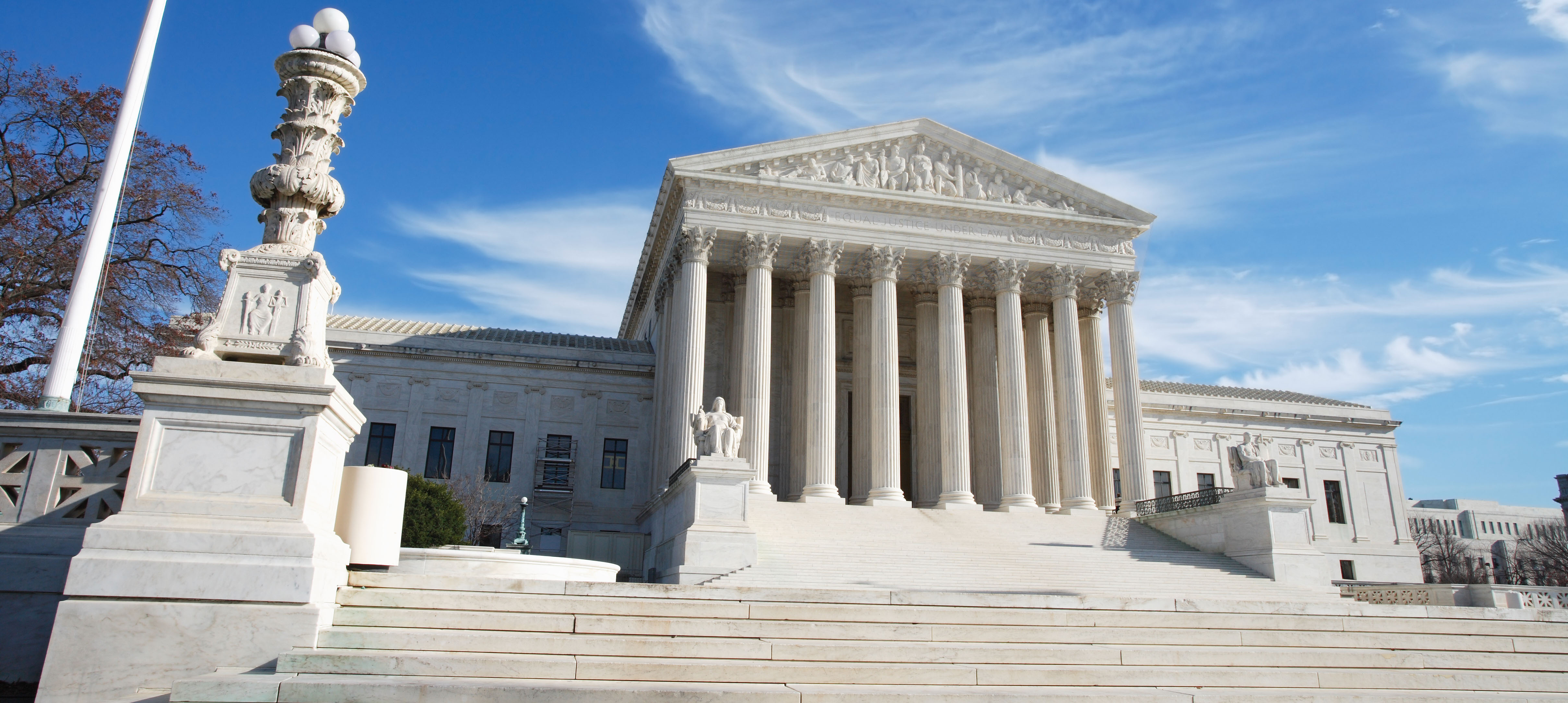
The US Supreme Court is considering a high-profile case that could change the way legislative maps are drawn and reshape elections. The court has invited social science to play an unusually significant role in its decision.

On October 3, the court heard oral arguments in Gill v Whitford, a Wisconsin case that could result in the first constitutional constraints on partisan gerrymandering. The case represents the culmination of decades of litigation on the subject. As someone who responded to the court’s call and provided a metric used in the case, I have an unusual perspective on the court’s relationship to social science and what it may say about the role of social science and the law more generally.

Partisan gerrymandering, broadly defined, is the practice of drawing the boundaries of representational districts to maximize the number of seats for one party. In 1986, the court declared this practice appropriate for judicial consideration. But the justices did not know how to define a partisan gerrymander so they could consistently identify one in a way that removed personal bias as much as possible. In the ensuing 30 years of litigation, the court has hardly strayed from this initial view—that the problem is real but difficult to define.

Partisan gerrymandering is a challenge to measure and describe because it represents the collision of two fundamental elements in American politics: geographic representation and party allegiance. Our district-based approach to elections presumes that geography trumps all other concerns. Each district is supposed to elect the best person to represent the needs of the people in that community, and each district’s needs are imagined to be distinct from the needs of other districts.

In reality, parties, not geography, drive our politics. Parties bring factions of voters in each district together into a broad, durable coalition that often has no relationship to geography at all. Voters will agree much more often with fellow partisans in other districts than they will with opposing partisans in their own district.

Parties therefore bind voters in different districts to each other. Voters who choose parties care about more than just the mechanical fact that someone has been elected to represent their district. They want their party to win, and they also want representatives from their party to be elected elsewhere.

But in our district-based system, a party that wins more votes does not necessarily win more seats. It has to win more votes in the right places: in districts where more votes will push the party over the threshold to victory.

Partisan gerrymandering exploits this fact by making sure that one party spends its votes in futile efforts: districts where it comes close to winning but will never quite get there, and districts that it will win by margins so large that victory is never in doubt. These outcomes “waste” votes because so much of the party’s support (the votes cast for losers and those cast in excess of the number required to win) do not contribute directly to victory. By playing with the number of votes each party wastes, a partisan gerrymander can manipulate the number of seats each party wins, even when the number of votes the parties receive does not change.

This leads to a real tension. One the one hand, our district-based political system suggests that parties are unnecessary and certainly not owed any particular level of representation.  On the other hand, if voters largely express their policy desires through parties, suppressing a party’s representation—as partisan gerrymandering does—seems like a serious violation of democratic norms. The court’s struggles in this area reflect this collision of ideas. The court believes the issue is real and potentially very serious, but it has trouble defining the harm within a system that does not take parties into account.

Rather than resolve this contradiction, the justices extended an open invitation to social scientists to solve it for them (or at least get them closer to a solution). This was a sensible step for the court to take. Social scientists add the most value when a clear, objective measurement is needed but the specifics of it are going to be nuanced and complex.

Moreover, social scientists have stepped up to the court’s challenge. In addition to the measure I have offered—the “efficiency gap”—social scientists have also presented several other approaches to the court. Each one measures a slightly different aspect of the concept of a partisan gerrymander, and each has its plusses and minuses. In the Whitford litigation, these quantitative options led to an unusually large amount of analysis. Graphs, tables, computer code, equations, and data all became important parts of the Whitford evidentiary record.

This is clearly a success for social science. But it also creates a problem for the court. Precisely because it takes social science to understand partisan gerrymandering, the solutions offered will be complex. The court balked at this complexity in the oral arguments, calling the social science “full of questions,” “gobbledygook,” and a “bunch of baloney.” Concerns were raised that reliance on social science would undermine the legitimacy of the court, since it might be difficult to explain the court’s decision in terms the average person could understand.

These concerns should be taken seriously, but they should not prevent the courts from addressing complex problems. As more data and computing power become available, social science will increasingly provide nuanced analyses that will be challenging to understand. These may not always be requested by the courts. In fact, it may be social science that invites the courts to get involved in issues that had once been considered untouchable—or that the courts were not even aware were problems.

The courts cannot just ignore this new evidence. Nor can they be expected to step in to defend something that they do not understand. Instead, we must find more effective ways to help the courts deal with the evidence that they see. There are a variety of options here, from staffing courts with social science experts to adding more social science analysis to law school curricula.  Perhaps we might even require judges, like doctors, to take short courses on the latest methods in order to be “re-certified” on a periodic basis.

Regardless of the solution, the struggles evident in the Whitford gerrymandering case are unlikely to get better without some change. Social science and the law are made for each other, but the marriage might need a little counseling to work itself out.

Video: How Californians View National Issues

With the nation focused on a range of contentious issues, the September PPIC Statewide Survey provides a California perspective. Dean Bonner, associate survey director, shared the key findings at a Sacramento briefing last week.

Among them:

  • A record-high share of Californians have a favorable opinion of the Affordable Care Act, and most want Republicans to work with Democrats to improve the law. While most Californians say it is the federal government’s responsibility to make sure that all Americans have health coverage, just a third favor a single-payer, government-run national health insurance system.
  • Three-fourths of Californians—also a PPIC record high—view immigrants as a benefit rather than a burden. There is broad and bipartisan support for protections provided by DACA, which shields from deportation some undocumented immigrants brought to the US as children and allows them to get a work permit if they pass a background check.
  • Half of Californians say they are very concerned about the possibility of North Korea having a nuclear missile that could reach the state.
  • Two-thirds of Californians view possible Russian interference in the 2016 as a serious issue.
  • Half of Californians say race relations have gotten worse in the United States over the last year. They are less pessimistic when it comes to race relations in the state.

California’s Partisan Divide on Higher Education

New national polling shows a big divide has opened up between Democrats and Republicans on higher education. A Pew Research Center poll taken in June shows that a majority of Republicans and those who lean Republican (58%) think colleges and universities have a negative effect on the way things are going in the country, while a vast majority of Democrats and those who lean Democrat (72%) think colleges and universities have a positive impact. This is a big change from two years ago, when majorities in both parties said higher education institutions had a positive impact on the direction of the nation.

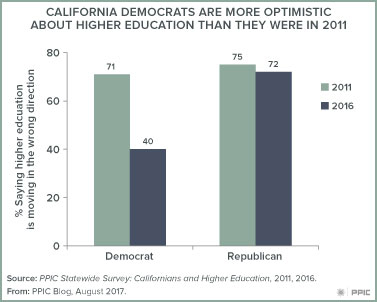
Is there a similar partisan divide over higher education in California? The PPIC Statewide Survey found a similar divergence over the past few years when we asked a different question: Is the state’s public higher education system generally going in the right or wrong direction? In 2016, California Republicans were far more likely than Democrats to say the system is headed in the wrong direction. This marked a change in the five years since we’d last asked this question. When we asked the question in 2011—toward the end of the recession and after large tuition increases—Californians in both parties overwhelmingly said higher education was moving in the wrong direction. Unlike national polling, which shows a shift in Republican opinion, PPIC surveys show a shift in the opinions of Democrats, who have become more positive, while Republicans have remained about the same.

Californians’ responses to other survey questions about higher education point to longer-term partisan divisions. Republicans have generally been more likely than Democrats to say that the overall quality of education in California’s public colleges and universities is a big problem or somewhat of a problem. Views about the direction and overall quality of public higher education are reflected in attitudes about California’s three public higher education systems. Currently about half of Republicans say that each of the systems—community colleges, California State University, and University of California—are doing an excellent or good job. More Democrats—about three-fourths—express this view.

Partisans have also historically differed on higher education funding. Compared to Republicans, Democrats are more likely to say that higher education does not receive enough funding, and Democrats are generally willing to pay higher taxes to support higher education.

Interestingly, there is some evidence that Californians’ views about the importance of college for individual success differ along party lines. A majority of Democrats (68%) say a college education is necessary for a person to be successful in today’s working world, while a majority of Republicans (72%) say there are other pathways to success. It is also true, however, that Californians in both parties have become more optimistic about the chances of success without a college degree since 2011—when the state was recovering from recession.

Finally, there are some areas of agreement. We find that members of both parties generally think that college affordability is a problem and students have to borrow too much money. Perhaps most significant is our finding that overwhelming majorities of both Republicans and Democrats say that the state’s system of higher education is important to California’s economic future and quality of life.

Learn more

Visit the PPIC Higher Education Center

Video: Californians and Climate Change

When it comes to climate change policy, California and the federal government are on distinctly different paths. PPIC’s annual Californians and the Environment survey finds that there is a broad consensus in favor of the direction chosen by the state.

David Kordus of the PPIC survey team presented the survey to a Sacramento audience last week. Among the key findings he described:

  • Impact of global warming: A majority of Californians (66%) think global warming is already having an effect, and most think warming is a very serious threat to California’s future economy and quality of life.
  • Goals of state climate policies: A strong majority (72%) favor the law that requires the state to reduce greenhouse gas emissions to 40 percent below 1990 levels by the year 2030. A similar majority favor proposed legislation that would require 100% of electricity to come from renewable sources by 2045.
  • Economic effects: Just 22% of Californians think the state’s actions to address global warming will result in fewer jobs. But many do expect to pay a price: 54% expect to pay more for gas.
  • Leadership: Most state residents say it’s very important that California act as a world leader in the fight against climate change, and 71% oppose President Trump’s withdrawal from the Paris climate accord. Californians give the president and Congress low ratings for their handling of environmental issues—22% and 26%, respectively. Approval ratings are much higher for Governor Brown and the state legislature—51% for each. State leaders’ ratings on environmental issues have risen sharply since the governor took office in 2011.
Learn more

Read the full survey, PPIC Statewide Survey: Californians and the Environment
Find out more about the PPIC Statewide Survey

In Memoriam: Dave Cogdill

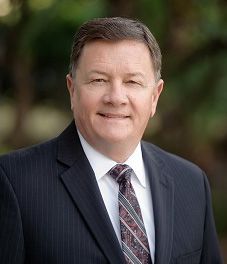
Dave CogdillFormer state senator Dave Cogdill’s death this week at 66 leaves us saddened for his family and friends and appreciative of the many ways he served California as a public servant and policy leader. Among his many efforts to address the state’s various policy challenges, Dave was a valued friend and trusted advisor to PPIC and a respected member of the PPIC Water Policy Center’s advisory council. We will greatly miss his contributions.

Dave served three terms in the state Assembly and was the Senate Republican leader from 2008–09. He also served as commissioner on the California Water Commission, assessor for Stanislaus County, chairman of the Maddy Institute at Fresno State University, and most recently as president and chief executive officer of the California Building Industry Association (CBIA).

Dave wasn’t afraid of taking on tough issues or working across the aisle. In 2010, he was awarded the Profile in Courage Award from the John F. Kennedy Library Foundation for his work on the 2009 California budget crisis. He took on the daunting issue of water with diligence and determination, playing a key role in the passage of a bipartisan package of reforms in 2009 that included the Delta Reform Act, bills to improve water use measurement and efficiency, and a water bond to support various programs, including new water storage.

“Dave negotiated some of California’s biggest water legislation ever, over two administrations,” said Deborah Gonzalez, PPIC’s director of government affairs, who worked with Dave on various policy initiatives over the years. “Water bonds are hard to negotiate under any circumstances, but he carried this one through two different governors and in true bipartisan fashion. He was instrumental in getting it passed.” The water bond that Dave helped craft was ultimately approved by voters in November 2014. Applications for state matching grants for storage projects—a priority for Dave—are due to the California Water Commission this August, with decisions due early in 2018.

At CBIA he took on the challenge of expanding housing supply to meet the needs of a growing state and made a strong effort to ensure that California’s new homes would be as water efficient as possible.

We’re thankful we had the opportunity to work with Dave.

Learn more

Read our interview with Dave on making homes more water efficient.
Read an obituary of Dave Cogdill in the Fresno Bee.

Video: California’s Voter Turnout Challenge

California has a voter turnout problem with two distinct elements. Registration is falling compared to other states, and turnout among those who are registered in midterm elections is down. A new PPIC report examines the state’s challenge and suggests some solutions. Report author and PPIC research fellow Eric McGhee presented it at a briefing in Sacramento last week. He found that each element of the state’s turnout has a different origin in the state’s demographics:

  • Registration. The composition of California’s electorate has been changing quickly. Latino and Asian American communities have become eligible to vote at faster rates in California than in other states. But these groups register to vote at lower rates than other Californians, leading to an overall decline in California’s registration rate relative to other states.
  • Turnout. One group of the state’s registered voters has become less likely to turn out in midterm elections: young people. The issue here is one of consistency, McGhee said. “Young people are showing up for presidential elections—they’re just not voting in the following midterm,” he said.

What are the solutions? McGhee said that while the state has passed a number of laws to ease voter registration, changes to the process will not necessarily solve the problem. He said these reforms will need to be coupled with aggressive outreach targeting each group—Latinos, Asian Americans, and young voters—to inspire them to participate in elections.

Read the report California’s Missing Voters: Who is Not Voting and Why.

Next Steps in Implementing California Marijuana Law

Despite uncertainty at the federal level, California is making steady progress toward creating a system to regulate the legal use of marijuana. In many ways, the most interesting activity in marijuana policy is taking place at the local level, as counties and towns wrestle with how to define the role of the industry in their communities.

This year’s state budget includes a trailer bill designed to address a number of implementation issues raised by the passage of the Medical Cannabis Regulation and Safety Act in 2015 and Proposition 64 last fall. The biggest challenge was reconciling the two laws to create a single regulatory framework for both medical and recreational marijuana, a recommendation put forth in a recent PPIC report. The trailer bill also includes other provisions that aim to clarify and fill in details around implementation. For example, the bill:

  • Enhances environmental protections and specifies organic standards.
  • Makes it possible for smaller growers to form co-ops to enable them to compete with larger producers.
  • Allows for the designation of appellations, similar to the wine industry.
  • Supports a study of driving under the influence and creates a task force to make recommendations about enforcement. It also creates a new “open container” definition for cannabis and driving, making it an offense (with a $100 fine) to have in a car marijuana that is loose or in a container that is open or has a broken seal.
  • Establishes a method to collect the cultivation and excise taxes imposed by Proposition 64.

Although Californians have supported the legalization of both medical and recreational marijuana, possession of the substance remains illegal under federal law. In past years, Congress has passed legislation that makes enforcement of federal marijuana law a low priority. However, Attorney General Jeff Sessions, who has opposed relaxing restrictions on marijuana, has reportedly sent a letter to Congress asking that it rescind that directive. Like so many federal-state issues at that moment, it is very difficult to predict future decisions concerning enforcement of federal marijuana law.

The relationship between the state and local jurisdictions is clearer. One section of the trailer bill reaffirmed that the new regulatory structure does not limit the authority of cities, towns, and counties. But the clarity of that relationship doesn’t mean that there isn’t controversy. Conflicts have emerged within communities as they try to balance different local interests.

For example, Proposition 64 allowed for the cultivation of up to six plants per individual. In January, the city of Fontana passed an ordinance requiring any resident who wanted to grow up to six plants purchase a $411 permit. Getting a permit required that the applicant have no prior drug convictions or overdue fines. The ACLU (American Civil Liberties Union) and the advocacy group Drug Policy Alliance have joined together to file a lawsuit claiming the ordinance is too restrictive.

Calaveras County also illustrates the challenges of implementing marijuana regulations at the local level. At the same time that Proposition 64 received support statewide, 67% of Calaveras voters approved a county tax on marijuana production. The tax vote appeared to signal the county’s support for the marijuana industry. This past spring, however, after four of the five seats on the county board turned over, that body began considering a ban on commercial cultivation. With more than 1,000 registered growers (who each paid $5,000 in fees to operate) in a county of 45,000 people, the proposed ban is controversial.

Findings from the PPIC Statewide Survey support the idea that cannabis becomes divisive when the issue moves closer to home. When asked about the federal role, 60% of California adults and 66% of likely voters in our May survey said that the federal government should not enforce federal marijuana law in states that have decided to allow marijuana use. And though a majority of California adults (56%) say marijuana should be legal, state residents are divided when it comes to retail sales of marijuana in their communities. While 48% favor retail sales of recreational marijuana in their city or community, a similar proportion (47%) are opposed. Regionally, opposition to retail sales is highest in Orange/San Diego Counties (53% oppose). As cities across the state determine the regulatory standards for marijuana sales, they may find divergent views within their communities.

Federal, state, and local governments all have a say in marijuana regulation. It is clear from the issues yet to be resolved that the statewide election was just the beginning of a complex process to build the regulated, legal market for cannabis that California voters supported.

Video: Attorney General Becerra on the Issues

The Trump administration has clashed with California on a range of issues, and the state’s new attorney general, Xavier Becerra, is at the forefront of the legal battles with Washington. Before a large crowd in Sacramento, Becerra talked about his views and what he has done so far on a range of issues. He spoke with Mark Baldassare, PPIC president and CEO.

Some key highlights:

  • Environment: Becerra said he has been most active so far on this issue and vowed to continue to be aggressive, whether it is initiating lawsuits, joining other suits, or moving forward with the Paris climate agreement, to the extent the state can do so. “I’ve got the governor’s back on anything he wants to do on the environment,” he said.
  • Immigration: Becerra said he favors legislation to make California a sanctuary state as long as it does not undermine the ability of local law enforcement to protect public safety by, for example, combating drug and sex trafficking.
  • Health care: Becerra said that single-payer health care is ultimately the right approach to coverage. “I hope California gets further along in recognizing that affordability only comes when you have universality,” he said.

Video: Villaraigosa on His Priorities

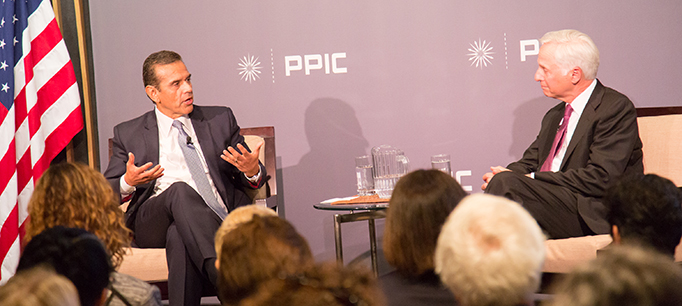
When Antonio Villaraigosa was asked to name the top issues most important to the state’s future, he started with the economy. His key concerns are poverty and the state’s business climate, its “byzantine and bureaucratic regulatory framework.”

Villaraigosa, candidate for governor and former mayor of Los Angeles, spoke at the Speaker Series on California’s Future sponsored by the Public Policy Institute of California (PPIC). As part of the series, PPIC is inviting all major candidates for governor to participate in a public event. Other highlights of his remarks:

  • Health care: He believes in universal health care but is skeptical about how to pay for the current plan before the legislature: “You’re selling snake oil when you say that single payer is something that’s going to happen any time soon.”
  • Infrastructure: He emphasized his long-term support for high-speed rail. He sees it as an economic development strategy to transform the Central Valley by connecting it to the two big centers of the economy, Los Angeles and the Bay Area.
  • Higher education: He said the state needs to look at how community colleges are funded and marshal its resources to make sure students get through the system and transfer to four-year colleges. But he’s not an advocate for making community college free to all: “It’s already free for poor people, and that’s who it should be free for.

Watch all candidate videos.