Video: Pessimism about Nation’s Direction

Californians have grown more pessimistic about the direction of the nation and the US economy since the beginning of the year, the May PPIC Statewide Survey shows. Underscoring that sentiment: just 27 percent of residents approve of the way President Trump is doing his job. Only 26 percent approve of Congress—a 10 point decline from March.

Researcher David Kordus presented these and other key findings at a survey briefing in Sacramento last week. On other federal issues, the survey found that most Californians disapprove of the House health care bill, and half expect negative effects from increased immigration enforcement.

Californians are feeling better about the state of their state by some measures: a solid majority favor Governor Brown’s budget plan, and fewer adults than in past years see the state budget situation as a big problem. But the state faces important challenges. Housing is one of them, with 59 percent of all adults saying affordability is a big problem in their part of the state. And solid majorities of Californians say the gap between rich and poor is getting larger. Majorities support state action to address these issues.

Learn more

Read the PPIC Statewide Survey: Californians and Their Government
Find out more about the PPIC Statewide Survey

Educational Progress Stalls in California

California is known as an engine of economic growth and innovation in the United States and across the world. A highly educated workforce has long gone hand in hand with the state’s robust economy.

California’s historically strong commitment to higher education—providing low-cost access to public colleges and universities at a time of rapid population growth—led to a large increase in college enrollment and completion. Baby boomers who were of prime college age during the 1960s and 1970s benefited from that expansion. Today, those boomers are the best-educated adults of that generation in the developed world. Older working-age adults (age 55–64) in California are more likely to have a bachelor’s degree than in any of the 32 member countries of the Organization for Economic Cooperation and Development (OECD).

Is California’s younger generation keeping up with other countries?

Unfortunately, generational progress in college completion has nearly stalled in California. Although more California high schoolers are completing their diploma today than 30 years ago, the share that subsequently earns a bachelor’s degree has not changed much: 33% of those age 25–34 in California today have at least a bachelor’s degree, compared to 31% of those age 55–64. Other countries have made much stronger progress. Indeed, the share of college attainment among young adults in California ranks 22nd of the 32 OECD countries, and the state’s generational progress is dead last.

The lack of generational progress in California is a cause for concern. College attainment not only benefits individuals’ earnings and employment prospects but also contributes to California’s economy by attracting businesses and keeping the state competitive in an increasingly globalized marketplace. Increasing the share of high school graduates eligible for the state’s public universities could help improve educational attainment among California’s young adults.

blog figure

California Farmers Face Labor Drought

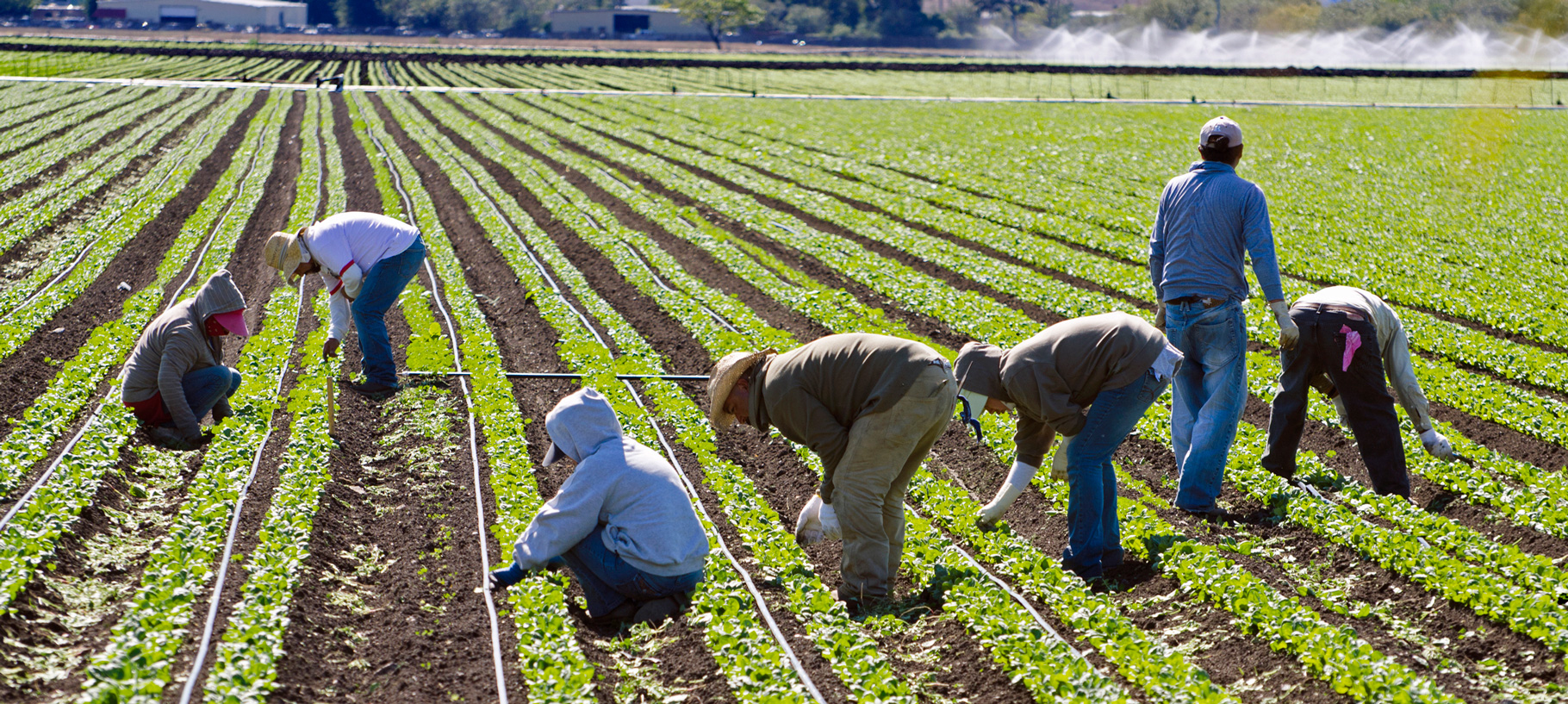
This year’s rains brought a welcome respite to California’s farmers, who had grappled with surface water supply shortages for the previous four years. But now farmers are increasingly worried about the availability of another crucial element to their farms’ productivity―farm labor. The connection between farm labor and immigration patterns was among the topics covered in a recent conference at UC Davis.

California is the nation’s largest farm state and a world market leader. This impressive productivity relies largely on an immigrant farm labor force. According to a federal survey, 9 of 10 crop farm workers in California are foreign born, largely from Mexico. More than half of crop farmworkers (56%) are undocumented immigrants.

Contrary to popular belief, immigration from Mexico to California has declined over time. In the early 2000s, close to a third of the crop farm workers were “newcomers”―foreign-born workers whose first arrival to the United States occurred within the year of the survey. The share of newcomers has fallen drastically in the last several years, and was down to 1% in 2013–14.

These immigration trends bring up short- and long-term concerns about the farm labor supply. In the long run, farm employers will have to figure out how to deal with declining immigration. The more immediate worries surround undocumented workers currently in California and the potential effects of the Trump administration’s stepped-up enforcement of immigration laws.

According to UC Davis’ Philip Martin, farmers have been employing a “4-S” strategy―satisfy, stretch, substitute, and supplement―to deal with fewer newcomers in the farm labor force. Satisfying current workers includes providing bonuses, low-cost health care, and training farm labor supervisors to improve working conditions. Stretching current workers includes providing mechanical aids to make farmworkers more productive, while substituting means replacing workers with machines where possible―or switching to less labor-intensive crops (almonds, for instance). Finally, some growers have been supplementing their workforce by using the temporary guest worker visa program. Which combination of these four strategies is likely to prevail will depend on the effects of another upcoming change―an increase in the statewide minimum wage, which will incrementally rise from $10.50 to $15 an hour by 2022.

Experts at the conference agreed it is likely that the new federal administration will build on the Obama era efforts, when a record two million foreigners were deported over eight years. A panelist at the conference argued that mass deportations are highly unlikely, mainly due to capacity constraints in the federal agencies responsible for deportations. However, the effects of increased enforcement mechanisms (such as requiring all employers to check the legal status of new hires through the online E-verify system) and other factors might shrink California’s farm labor force supply 6–9% in the short term. These effects will not be due to undocumented immigrants leaving the US (“self-deporting”) but due to their “hunkering-down”―perhaps working less hours than usual or moving from farm to farm for seasonal work less than before, in an effort to reduce their chances of deportation.

Senator Dianne Feinstein has introduced a bill that aims to shield undocumented farmworkers from deportation by putting them on a pathway to legalization. The Agricultural Worker Program Act would also provide a path to legal permanent residency to some undocumented farmworkers in the US. But immigration reform is not an easy lift, and the bill’s fate is uncertain. In the meantime, farmers will have to hope the 4-S plan can keep the crops moving from farm to table.


Learn morERead “Undocumented Immigrants in California” (PPIC fact sheet, March 2017)
Read the report Water Stress and a Changing San Joaquin Valley (March 2017)
Read California’s Water: Water for Farms (from the California’s Water briefing kit, October 2016)

Video: Tom Steyer on the Issues

Tom Steyer—business leader, philanthropist, and possible Democratic candidate for governor—has invested his money and time in activism since leaving the private sector. Moving beyond his initial environmental advocacy, Steyer supported candidates and causes across the state and nation in both the 2014 and 2016 elections.

He sat down to talk to Mark Baldassare, PPIC president and CEO, about his views on policies that will affect the future of California. Steyer would not say whether or not he’s running for governor. But he had a lot to say about the current political climate.

Asked to name three issues that will affect California’s future, Steyer listed priorities that he said are inextricably linked and cut across traditional policy areas:

  • Addressing income inequality: The state has rebounded economically since 2008, Steyer noted, but it is the top 1% of residents who have benefited. While income inequality is a critical issue across the nation, its impact is heightened in California, Steyer said, affecting housing, transportation, education, and incarceration.
  • Investing in our state to rebuild the way we live together: California needs to create a more sustainable way of living that preserves the beauty of the state. “We’ve build the state around the internal combustion engine,” Steyer said. “We have to rebuild the way we live.”
  • Protecting and strengthening our democracy: “California citizens are basically losing a silent fight with special interests,” he said, noting his support for ballot measures that were “direct contests” with special interests, including oil and tobacco companies. “I think the threat to democracy that we’re seeing coming out of Washington, DC, is as profound as I’ve seen in my lifetime.”

Students Choose College with Future Jobs in Mind

Throughout California and the nation, hundreds of thousands of high school seniors are currently making decisions about where to attend college. An increasingly important part of that decision is based on career opportunities. PPIC’s statewide survey on higher education finds that the vast majority of Californians (77%) believe the state’s higher education system is very important to the economic vitality of the state.

Students’ career goals play an important role in the decision to go to college at all. According to an annual nationwide survey of freshmen conducted by UCLA’s Higher Education Research Institute, the vast majority of students agree that a very important reason to go to college is “to be able to get a better job” (85%) and “to get training for a specific career” (76%). A record-high 60% of students say that a very important consideration in choosing a college is the ability of its graduates to obtain good jobs.

Students are right in thinking that college can give them economic advantages. Using data from the 2014 and 2015 American Community Survey, we examine some basic labor market outcomes for recent college graduates (ages 22 to 29) in California. The advantages in terms of employment and wages are clear. Young adults with a college degree are much less likely to be unemployed and, on average, earn far higher wages.

Of course, not all majors are equal when it comes to career opportunities. Among young adults with a bachelor’s degree, wages vary widely by major. Among the ten most popular majors for young adults in California, the most remunerative major is computer and information sciences; young workers with those degrees earn more than twice as much as young workers who majored in psychology. But even among those paid least, wages are still substantially higher than those of less educated workers.

Students attend college for many important reasons beyond economics. But because career opportunities are an important consideration for most, state policymakers and higher education institutions should seek ways to provide students with accurate and meaningful information about labor market outcomes by college and by major. The American Community Survey does not provide information for specific colleges nor for community college certificates, but public colleges in California can link student records with wage records from the Employment Development Department. For example, California’s community colleges have created a “Salary Surfer,” which offers useful information on wages for students contemplating different career paths and provides a good model for other colleges to follow.

Highly Educated Workers See Strong Job Gains

Recessions and recoveries have the power to reshape our economy and workforce. In California, the latest recession and recovery have had very different consequences for workers based on their educational attainment levels. During the Great Recession, most job losses occurred among less educated workers, and the subsequent recovery has seen stronger gains for highly educated workers.

After declining to a nadir in 2010 with the Great Recession, the number of employed workers in California has grown substantially, increasing by 1.6 million among adults of prime working age (20 to 64) between 2010 and 2015, according to data from the American Community Survey. During the recovery, the rate of employment growth has been highest for workers with a bachelor’s degree or graduate degree (see chart). Even though high school graduates have also fared relatively well in the recovery, they suffered the most in the recession and recent gains have still not offset the job losses they sustained from 2007 to 2010.

These employment gains reflect the changing nature of our economy. Many of the fastest-growing occupations rely on highly educated workers, such as software developers, computer scientists, and management analysts. But other fast-growing occupations depend on less educated workers, such as taxi drivers and chauffeurs (including those that work for Lyft or Uber) and food preparation workers. Overall, occupations highly dependent on college graduates—those in which a majority of workers in 2010 had at least a bachelor’s degree—experienced a much faster rate of growth (14.1%) than occupations less dependent on college graduates (9.6%).

The changing nature of the state’s economy has also created regional winners and losers. The Bay Area, with its highly educated population, led the state in employment growth, adding more than 400,000 workers overall from 2010 to 2015, with college graduates making up 75% of those job gains (see chart). In contrast, the rate of employment growth was lowest in the San Joaquin Valley, where the demand for and supply of highly educated workers is relatively weak. In the Inland Empire and the San Joaquin Valley, college graduates accounted for only 20% and 17%, respectively, of employment gains.

California’s recovery from the Great Recession highlights the importance of the state’s higher education systems in providing meaningful economic opportunities for workers. Rather than being diminished by the most recent recession and recovery, a college education has emerged as an even more important determinant of labor market success.

Learn more

Visit the PPIC Higher Education Center

Child Poverty and California’s High Cost of Living

A quarter of young children in California live in poverty, yet the local variation in poverty rates is dramatic. Our recent report shows, for example, that the areas with the lowest and highest rates of child poverty in the state are less than 20 miles apart: child poverty is 4% in Redondo Beach, Manhattan Beach, and Hermosa Beach in Los Angeles County and 68% near southeastern LA City. (Data is for 2011–2014 combined, the most recent available).

Families adapt to California’s high cost of living in ways that vary across the state. The interactive map that accompanies our report allows stakeholders to investigate how their local area (defined to have a population of roughly 100,000) stacks up relative to other areas, their region, and the state as a whole.

For example, Selma, Kerman, and Coalinga make up a local area just west and south of Fresno. The area has a relatively high poverty rate of 30% among young children. Most of these children’s parents have limited education: 55% lack a high school degree compared with a statewide average of 37%. But for the most part they are working full-time (62% vs. 50% statewide). They also report the lowest annual housing costs ($5,888) of any area in the state. (We standardized this cost to represent a family of four.) This means they have a relatively low housing burden. Specifically, 18% of families living in poverty in this area use over half of their family resources to pay for housing, compared to the statewide average of 32%.

At the same time, 52% of poor children in this area live in overcrowded housing—about the same as in the state as a whole (55%) and higher than the regional average in the Central Valley (46%). Also, the share of working parents in these poor families who commute 60 minutes or more each way is relatively high at 14%, compared with 10% in the state as a whole.

In sum, the picture that emerges shows families of young children in poverty in this local area tend to have low housing costs relative to other parts of the state. Nevertheless, the cost of housing in inland California is still high compared to the rest of the country, and the data suggest poor families with young children in Selma, Kerman, and Coalinga are indeed making adaptations to cope with these costs—such as living in more crowded conditions and, in some cases, commuting long distances.

Child poverty is a difficult problem, both because it is so high in California and because the family circumstances that poor children experience can differ so much. Investigating varying patterns of housing and commuting across the state can help suggest how policies aimed at reducing the incidence—or severity—of poverty can be tailored to meet local and regional needs.

Video: Californians’ Views of Trump and Key Proposals

Californians show their partisan colors when asked how they feel about the job performance of President Trump and a number of his proposals—building a wall on the Mexican border, reducing regulation of business, and banning travel to the US by people from six majority Muslim countries. The March PPIC Statewide Survey shows majority approval by Republicans and majority disapproval by Democrats of the president and these policies.

But there is one significant exception. As associate survey director Dean Bonner points out in a briefing on the survey, majorities of Democrats and Republicans say that undocumented immigrants living in the US should be able to stay legally rather than required to leave.

Learn more

Read the March PPIC Statewide Survey: Californians and Their Government
Learn more about the PPIC Statewide Survey

Video: Reaching Children in Poverty

Despite California’s strong economic growth, 750,000 children under age 5 live in poverty, and they live in nearly every region of the state. Their economic circumstances vary, a new PPIC report finds. The authors of the report, Geography of Child Poverty in California, conclude that approaches that take local differences into account could reach poor families more effectively. In conjunction with the release of the report, PPIC convened a panel of service providers from around the state in Sacramento to describe lessons they have learned.

Liza Bray, executive director of Partners for Children South LA, said her organization uses a “collective impact” model and works with 16 organizations to link families to services in parts of Watts and Compton. The goal is reducing the risk of involvement in the child welfare system. She said the effort began by surveying residents to assess their top concerns. Leading the list: addressing developmental delays in children, housing, child care, and access to social safety net programs such as CalFresh, or food stamps.

Sabrina Kelley, resident services manager of the Fresno Housing Authority, underscored the importance of partnerships and surveying families about their needs. Her organization provides housing subsidies to about 50,000 people, half of them children under 8, in the city and county of Fresno. Her organization learned residents’ needs by initiating neighborhood walking tours. “We just walked the life of the residents,” she said. A conversation with children playing in a vacant lot led to the creation of the Almy Street Playground—designed in a neighborhood workshop and funded after the children wrote letters to the city council and potential corporate partners. Crucial to the effort was a partnership with Habitat for Humanity and other organizations.

Speakers at the PPIC event said that local solutions need the support of state policymakers. Suzan Bateson, executive director of the Alameda County Community Food Bank, said distributing food—while essential—is not the best way to alleviate poverty. Families are better served by maintaining and funding programs like CalFresh, she said.

“We are absolutely not going to ‘food bank’ our way out of this.”

Learn more

Read the report Geography of Child Poverty in California
Learn about poverty throughout the state with the accompanying interactive map

Video: An Early Look at Views of President Trump

The January PPIC Statewide Survey asked Californians for to assess their new leaders in Washington and found that just a third of Californians, or 30%, approve of the way President Trump is doing his job. Californians gave Congress a similar rating.

Dean Bonner, associate survey director, presented these and other key findings at a briefing in Sacramento. The survey also examined contentious issues that are the focus of national debate.

  • Solid majorities of Californians favor state action—independent of the federal government—to protect the rights of undocumented immigrants and to address global warming.
  • About half of Californians have favorable opinions of the Affordable Care Act, and a slight majority oppose repealing it.
  • Most Californians—across political parties—say the government should not interfere with a woman’s access to abortion.

The survey also looked at views of Governor Brown’s job performance and his proposed budget. The governor job approval rating is at a record-high 66%. But his budget proposal and his plan to fund maintenance of the state’s roads, highways, and bridges fares less well. Just under half of residents support his budget plan and 41 percent support his transportation proposal.

Learn more

Read the January PPIC Statewide Survey
Learn more about the PPIC Statewide Survey